So, as I have mentioned before, I am launching a new video series as a companion piece to In the Frame at The Escapist. The video will typically launch with the Monday article, and be released on the magazine’s YouTube channel the following week. This is kinda cool, because we’re helping relaunch the magazine’s film channel – so if you can throw a subscription our way, it would mean a lot.
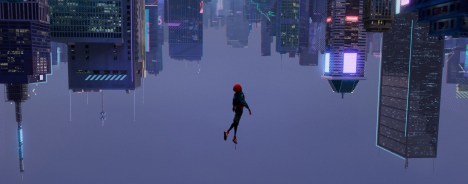
This week, we took a look at the emergence of the multiverse, which appears to be the future of various shared cinematic and television universe. Why is this idea suddenly so popular? What does it mean? What does it hold for the future?
I published a new In the Frame piece at The Escapist this evening. The past few months have seen a lot of attention directed at the multiverse, with a suggestion that both Warner Bros. and Disney would be embracing it as a storytelling model going forward.
This shift is interesting, given how much effort these companies have build into fashioning internally consistent shared universes, singular narratives unfolding across dozens of films building inexorably towards a climactic pay-off. However, this shift towards the multiverse feels like a logical response to any number of market forces: the shattering of the idea of the monoculture in the midst of the streaming wars, the pull of nostalgia, and the demands of the actors making these movies. It’s a new world. Actually, it’s several new worlds.
You can read the piece here, or click the picture below.
With a slew of Marvel Studios productions coming to Disney+ over the next six months, The Escapist has launched a weekly show discussing these series. I’ll be joining the wonderful Jack Packard and the fantastic KC Nwosu to break down WandaVision, Falcon and the Winter Soldier and Loki as they come out.
This week, we take a look at the fifth episode of WandaVision, including the tropes and conventions of eighties sitcoms, the Full House allusions, who the real bad guy is, and – of course – that universe-cracking closing cameo.
So, as I have mentioned before, I am launching a new video series as a companion piece to In the Frame at The Escapist. The video will typically launch with the Monday article, and be released on the magazine’s YouTube channel the following week. This is kinda cool, because we’re helping relaunch the magazine’s film channel – so if you can throw a subscription our way, it would mean a lot.
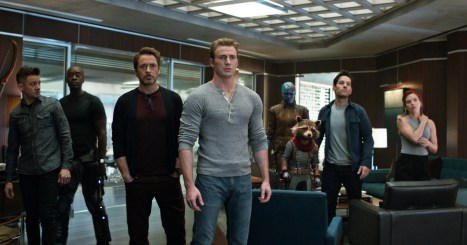
This week, with rumours that Chris Evans might be returning to the role of Steve Rogers, I took a look at why this would be a bad thing for the Marvel Cinematic Universe, which has the opportunity to push ahead and evolve in a way that the comics never have been.
So, as I have mentioned before, I am launching a new video series as a companion piece to In the Frame at The Escapist. The video will typically launch with the Monday article, and be released on the magazine’s YouTube channel the following week. This is kinda cool, because we’re helping relaunch the magazine’s film channel – so if you can throw a subscription our way, it would mean a lot.
This week, I take a look at the power fantasy of the Marvel Cinematic Universe. With Captain America: Civil War, the MCU becomes a study in power without any responsibility.
I published a new In the Frame piece at The Escapist this evening. Last week, there were rumours that Chris Evans might be returning to the Marvel Cinematic Universe, following his departure in Avengers: Endgame.
This is interesting, because it potentially undermines one of the more interesting facets of the Marvel Cinematic Universe going forward. Comic books are largely shaped and defined by nostalgia, with beloved characters filling familiar roles in perpetuity, with any major change to the status quo eventually rolling back to the default. In contrast, a cinematic universe operates by different constraints: actors move on, age out and even die. This would force a long-form shared universe to evolve in a way that comics haven’t had to. This is a good thing, as evolution is necessary.
You can read the piece here, or click the picture below.
The Escapist have launched a movie podcast, and I was thrilled to join Jack Packard and Will Cruz for the third episode of the year. We talked about the announced Wonka prequel film from Warner Bros., the rumours that Chris Evans might return to the Captain America role, and the difference in watching in a pandemic.
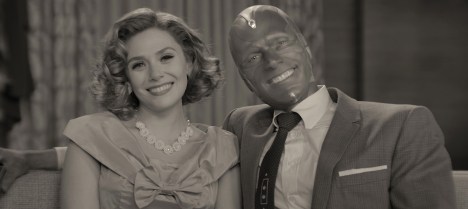
I published a new column at The Escapist last week, but didn’t get a chance to share it. With WandaVision now streaming on Disney+, it seemed like a good idea to take a look at it.
The most striking thing about WandaVision is how immersed it is in the language of television. Previous attempts to bring the MCU to television treated it as secondary to movies; Netflix shows like Daredevil or Iron Fist were treated as thirteen-hour movies, while Agents of S.H.I.E.L.D. and Agent Carter lived off scraps from the films that drove the shared universe. In contrast, WandaVision is not just a thriving celebration of television as a medium, it’s also an exploration of it. This is very firmly and very definitely the MCU coming to television.
You can read the piece here, or click the picture below.
With a slew of Marvel Studios productions coming to Disney+ over the next six months, The Escapist has launched a weekly show discussing these series. I’ll be joining the wonderful Jack Packard and the fantastic KC Nwosu to break down WandaVision, Falcon and the Winter Soldier and Loki as they come out.
The plan if for the weekly episodes to launch on Saturday, but our first episode is launching today looking at the first two episodes of WandaVision. We talk about expectations, about continuity, and about what it means for the Marvel Cinematic Universe to come to television.
I published a new In the Frame piece at The Escapist this evening. With WandaVision currently streaming on Disney+, it seemed like an interesting opportunity to look at the show’s use of the language of sitcoms.
In particular, sitcoms have long been a staple genre of American television. However, they don’t just reflect cultural norms, they also project an aspirational ideal. For generations of Americans, the domestic sitcom presented a vision of domestic life that shaped and informed popular consciousness. In WandaVision, those nostalgic fantasies become a trap and a waking nightmare, as characters build themselves a life of seeming domestic bliss dictated by decades of television. Wanda has built herself a cage, treating television as a mirror.
You can read the piece here, or click the picture below.

















 the m0vie blog