• Following Us

  • Categories

  • Check out the Archives


  • Awards & Nominations

Jessica Jones – AKA Ladies’ Night (Review)

“New York may be the city that never sleeps, but it sure does sleep around,” explains grizzled private detective Jessica Jones, the first line of Jessica Jones.

The line establishes two key themes going forward, running through the first season of the show. The more subtle theme is that of New York itself. Like Daredevil before it, Jessica Jones is rooted in a particular vision of New York; in its imagery and iconography. While Daredevil was arguably rooted in a version of Hell’s Kitchen that no longer existed, Jessica Jones seems at least a little more modern and more relevant. In AKA Ladies’ Night, and across the season, street names serve as an emotional anchor to the eponymous private eye. They are real and tangible places.

jessicajones-ladiesnight7

The second theme is more immediately pronounced. Jessica Jones might just be the most sex-positive aspect of the shared Marvel Universe. Although the usual limitations on nudity are in effect, Jessica Jones seems far more comfortable with human sexuality and sexual dynamics than any of the studio’s earlier output. AKA Ladies’ Night sets the tone for the season, opening with an awkward sequence of quick and grotty sex in (and around) a parked car. The show starts as it means to go on, embracing sex as a part of the human condition.

AKA Ladies’ Night does an effective job of setting the tone for what will follow. It is an effective introduction to the world of Jessica Jones.

jessicajones-ladiesnight12 Continue reading

The X-Files – Rush (Review)

This November, we’re taking a trip back in time to review the seventh season of The X-Files and the first (and only) season of Harsh Realm.

When did The X-Files get so old?

As with a lot of the seventh season, Rush is an episode that seems consciously aware of the series’ advancing age. Whether watching Mulder’s life go by in The Sixth Extinction II: Amor Fati or battling zombies in Millennium, the seventh season is acutely aware of the fact that any prime-time drama that has been on the air for seven years is rapidly approaching obsolescence. What was once young and fresh becomes old and tired. There is a sense that the series really wouldn’t mind the prospect of retirement, now that it’s well past the syndication mark.

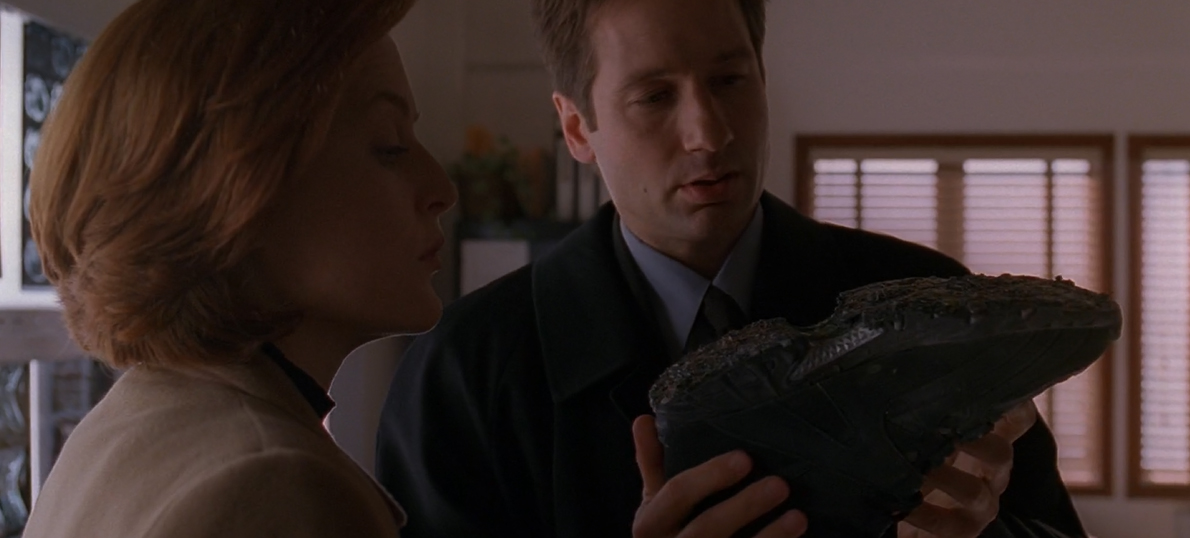
"He wore sneakers... for sneaking."

“He wore sneakers… for sneaking.”

Rush emphasises the advancing years of the show, often awkwardly putting its tongue in its cheeky as it suggests that Mulder and Scully are really lumbering dinosaurs trying to navigate the fast-paced world of high school. David Amann’s script is occasionally a little too wry and self-aware for its own good; this is an episode based around a laboured pun about how “speed” is also a drug, after all. Rush often demotes Mulder and Scully to passive observes, quipping and flirting from the sidelines as the plot unfolds around them.

Rush lacks the charm and dynamism that define the show’s (and the season’s) standout hours, but it is a well-constructed and enjoyable standalone adventure on its own terms. As with Hungry, it feels like a conscious effort to get “back to basics” with the series. If the seventh season is going to fixate on the series’ status as a televisual lame duck counting down its last few episodes, this is not such a bad way to do it.

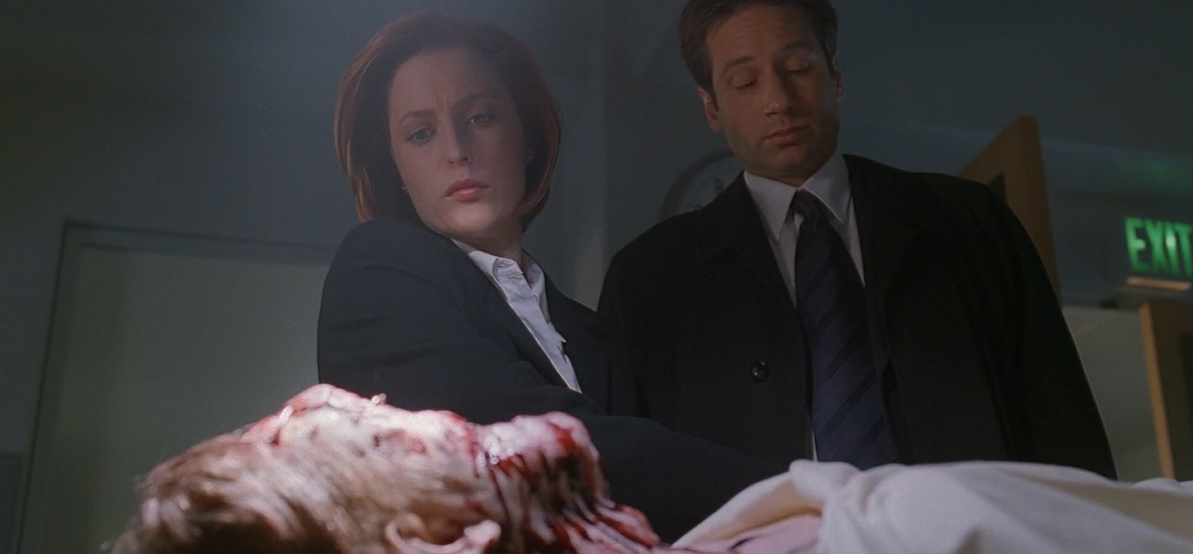
Scully'll take a run at this...

Scully’ll take a run at this…

Continue reading

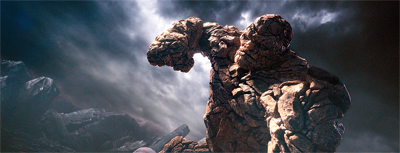
Non-Review Review: Fantastic Four (2015)

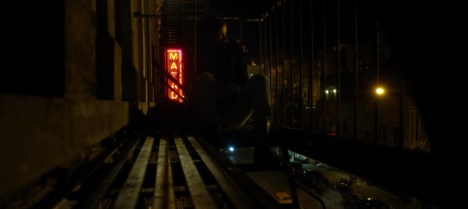
The second scene of Fantastic Four opens on a shot of a red neon sign reading “Grimm”, panning down slowly to a scrapyard packed with exhausted husks of old vehicles that have long outlived their usefulness. If you were to reduce Josh Trank’s Fantastic Four down to a single shot, that would be it; the purest possible distillation of this hundred-minute effort to adapt Marvel’s (literal) first family to the silver screen. It is possible to make a good Fantastic Four film, even if the movies bearing the family’s name suggest otherwise; The Incredibles proved as much.

What is remarkable about Fantastic Four is just how thoroughly and meticulously the edges have been sanded down, replaced with a misshapen grey blob that wants to be X-Men or The Avengers, or anything but what it is. All the moving parts of the film are compelling on their own merits. This is the first studio effort from Josh Trank. It is a vehicle for Miles Teller. It has a soundtrack from Philip Glass (and Marco Beltrami). It features Victor Von Doom in an era when studios have demonstrated they are not afraid of comic book tropes and absurdities.

Fantastic finish?

Fantastic finish?

Fantastic Four effortlessly squanders just about all that good will in a ruthlessly efficient manner, a demonstration of how brutal a bad script and a cynical edit can be. Trank only fleetingly shines through, commandeering the film for about ten minutes in the middle. Miles Teller is reduced to an exposition machine. Any unique identifiers on the Philip Glass soundtrack are pared down for generic superhero movie bombast. The film is so concerned that the audience won’t take a character named Doctor Doom seriously that he’s barely in the film.

The most interesting aspect of Fantastic Four is the recurring sense that the characters themselves openly resent the direction that the project took. Sadly, even Reed Richards cannot stretch far enough to bend the film back into shape.

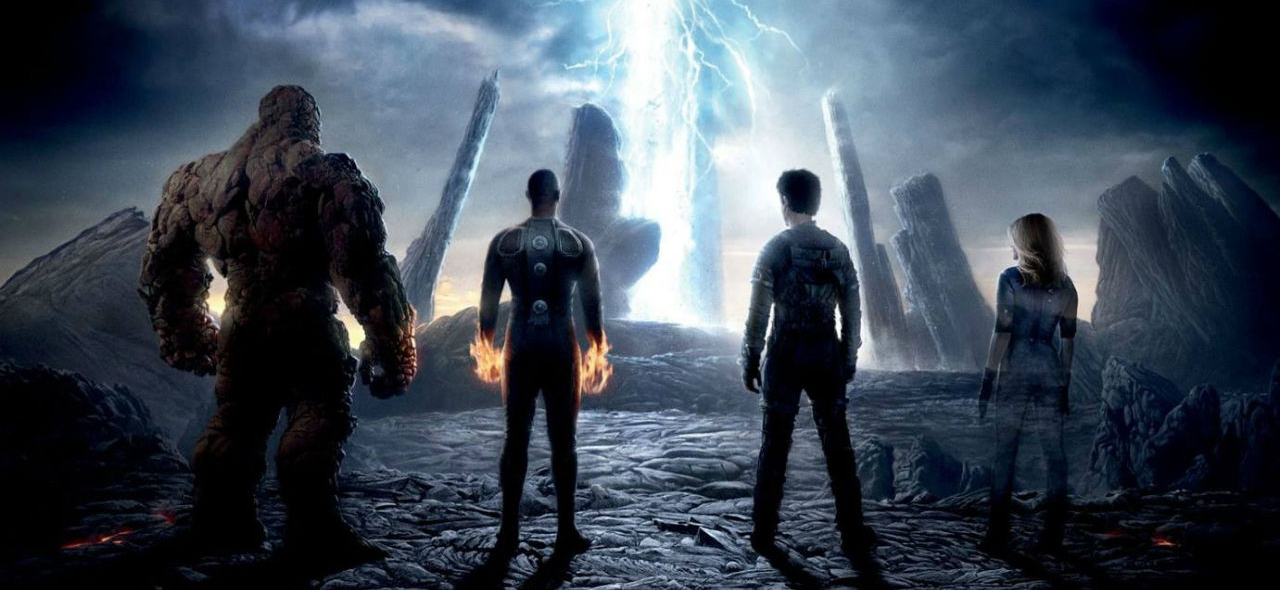
Clobbering time...

Clobbering time…

Continue reading

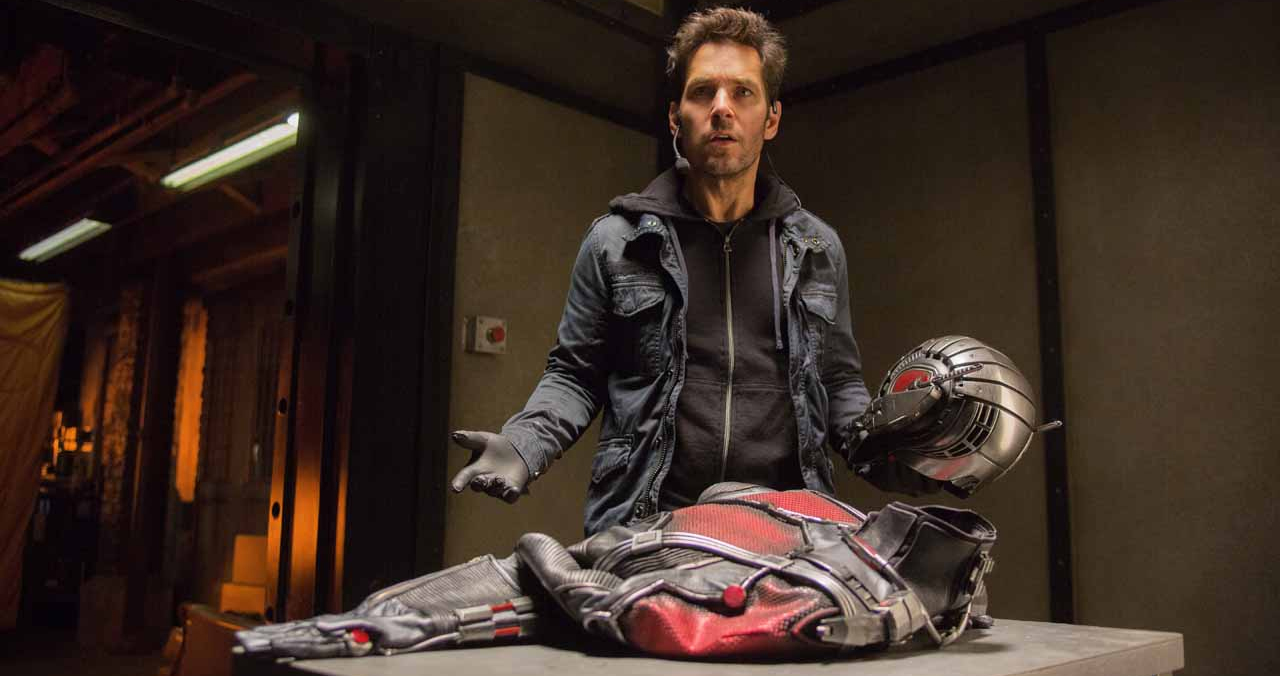
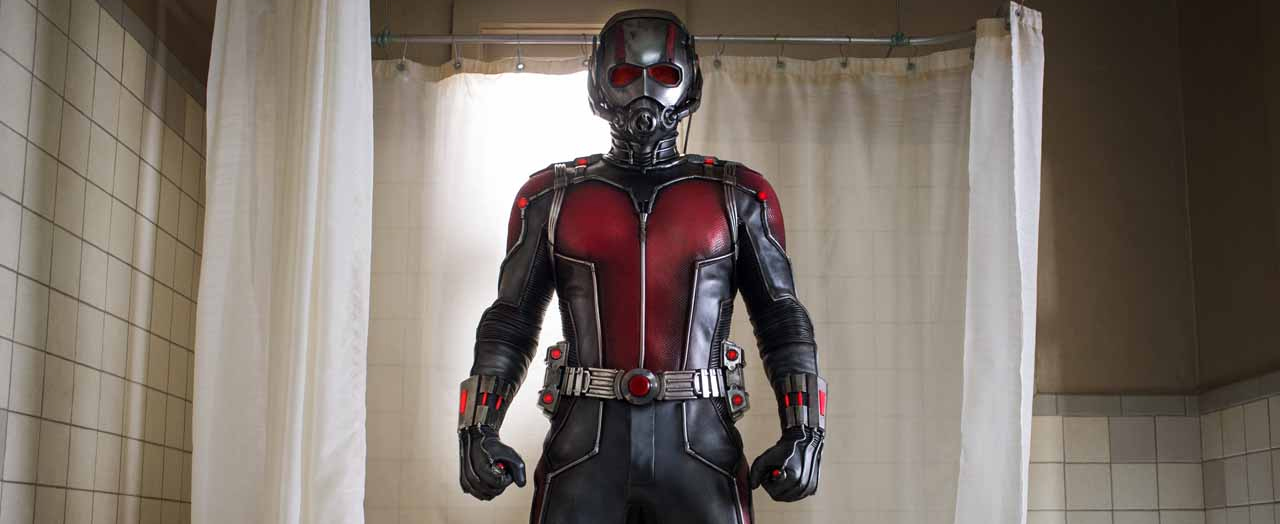
Non-Review Review: Ant Man

Ant Man was always going to be a tough one to crack.

There are obvious reasons. Some of them involve the unique production history of the film, which arguably serves as an example of the downside of the tight managerial style operated by Disney and Marvel. Some of them are more fundamental, tied into the legacy and impact of the source material that make adapting Hank Pym and Janet Van Dyne to screen a particularly dicey proposal for a family-friendly blockbuster movie studio. There’s a lot of pressure on the film, and a lot that could go wrong.

"You couldn't have called him 'Giant Man'?"

“You couldn’t have called him ‘Giant Man’?”

As such, director Peyton Reed does a pretty good job bringing the character to screen. Adam McKay and Paul Rudd adapted the original story written by Edgar Wright and Joe Cornish, providing a movie that sits more comfortably within the framework of the ever-expanding shared universe. Ant Man is a little clumsy in places, suffering from some of the stock weaknesses of the Marvel film franchises, but it is also clever and fun. All involved shrewdly play to the Marvel house style, offering a light run around populated by likable characters with clear-cut conflicts.

However, Ant Man‘s real strengths become obvious when the film deviates (even slightly) from the standard formula. After seven years of watching superhero films grow bigger and bigger, it’s nice to have a smaller story.

"One size fits all, eh?"

“One size fits all, eh?”

Continue reading

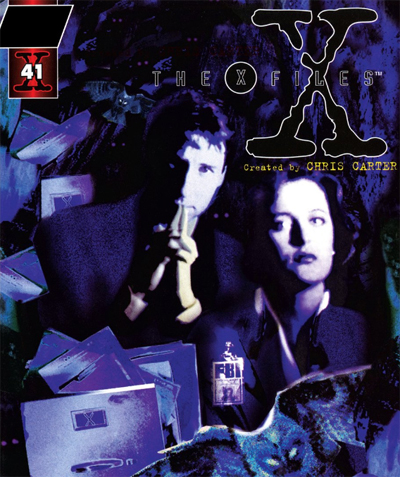
The X-Files (Topps) #41 – Severed (Review)

This May and June, we’re taking a trip back in time to review the fifth season of The X-Files and the second season of Millennium.

This is the end.

Severed is the last X-Files comic book to be published by Topps. It was released in September 1998, after the release of The X-Files: Fight the Future and before the broadcast of The Beginning. The company had actually solicited a number of X-Files comics that were never actually published – including Season One adaptations of The Jersey Devil and Ghost in the Machine. It seems quite likely that Severed was the last comic book to be published by the comic book division of Topps, who had decided to retreat from the industry following market trends.

Filed away...

Filed away…

Topps wrapped up the bulk of its publishing operations over the summer of 1998, releasing the last few tie-in comics for Xena: Warrior Princess and Hercules: The Legendary Journeys. Severed was actually delayed significantly. Devil’s Advocate had been published in June, leaving a three-month gap between the two issues. It is interesting to wonder what the delays behind publication might have been; certainly writer John Rozum and Alex Saviuk had proven themselves quite capable of managing a monthly schedule.

Whatever was happening behind the scenes, Severed is very much damp squib of an ending. It’s a bland and forgettable story, but one that is sadly par for the course in the stage of the book’s life cycle.

The transformed man...

The transformed man…

Continue reading

Daredevil – Stick (Review)

To celebrate the launch of Marvel’s Daredevil and the release of Avengers: Age of Ultron, we are reviewing all thirteen episodes of the first season of Marvel and Netflix’s Daredevil. Check back daily for the latest review.

Sitting smack bang in the middle of the season, Stick is something of an oddity.

It demonstrates just how episodic Daredevil can be in structure. Stick lets its focus move away from Matt’s conflict with Wilson Fisk, offering an episode built around a guest star and shedding some light on one of the members of Fisk’s cabal. “Ride with me tonight,” Stick urges Matt. “Help me destroy Black Sky, keep it off the streets, and I promise you this: Wilson Fisk will know the taste of fear the day he faces you ’cause he’ll know that you kicked the guy he’s afraid of right in the nuts.” Fisk is still a target here, albeit one temporarily shifted to the background.

daredevil-stick20

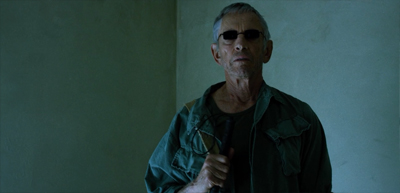
There are obviously ripples from Stick that reverberate through the rest of the season. Nobu’s loss here helps to mount more pressure on Fisk in Shadows in the Glass, while it leads to a very physical confrontation between Nobu and Matt in Speak of the Devil. At the same time, it remains curiously disengaged from the show around it. Despite the fact that the casting of Scott Glenn was announced with the fanfare reserved for primary cast members like Rosario Dawson or Vincent D’Onofrio, this is his only appearance in the whole thirteen-episode season.

Of course, there might very well be a reason for this. Stick is the only episode of the first season with a closing scene that hints at something far beyond the scope of this individual show – a coming “war” between mystical and magical forces. In some ways, Stick feels like it takes advantage of the episodic structure of a thirteen-episode season to relegate all the obligatory set-up and world-building for material outside the show to a single episode in the middle of the season. This is perhaps the ideal place for it, not distracting from the beginning or the end of the run.
daredevil-stick5

A lot of this feels like set-up for the Defenders project that will unite all four of the Netflix and Marvel miniseries, bringing together characters like Matt Murdock, Jessica Jones, Luke Cage and Danny Rand to fight an incredible evil in much the same way that The Avengers brought together Iron Man, Captain America, Thor and Hulk. Stick seems to allude to something decidedly more epic in scope than the details of this individual thirteen-episode run. It is, essentially, the second act of Iron Man 2 structured as a mid-season episode of Daredevil.

However, it all works. Stick might be divorced from the larger plot concerns of the season around it, but it never loses sight of its main characters. After a run of episodes focusing on Wilson Fisk, Stick brings the focus back to Matt Murdock. The return of Matt’s childhood mentor might be tied to some larger plot, but it also helps explain Matt’s character a bit more. Meeting Stick, we get to know a little bit more about how Matt ended up this way.

daredevil-stick

Continue reading

Non-Review Review: Avengers – Age of Ultron

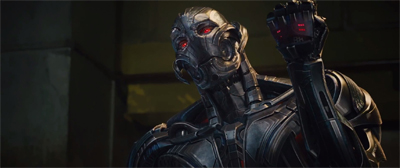
Avengers: Age of Ultron is a hot mess.

It is fun, witty and fast-moving. However, it is also disjointed, uneven and awkward. Age of Ultron is a big and bombastic summer blockbuster, but it feels like Marvel learned very little from The Avengers. Rather than simply taking what worked in the first film, it often seems like Age of Ultron doubles down on every part of its predecessor. There’s more action, there’s higher stakes, there’s bigger conflict, there’s more Tony, there’s even less of an idea what to do with Thor, there’s more continuity.

"Hey, at least I beat the Terminator prequel to cinemas, right?"

“Hey, at least I beat the Terminator prequel to cinemas, right?”

“More” seems to the be the word here. Age of Ultron is bigger than its predecessor in just about every way. The film boasts an ensemble so large that it threatens to collapse under its own weight – a fact perhaps wryly acknowledged by the genocidal robot’s evil plan at the climax. While it is nice to have more diversity in the cast – The Avengers are no longer a bunch of white guys and their token female colleague – it does seem like Age of Ultron strains and groans under all that Joss Whedon and Marvel heap upon it.

Bigger is not always better.

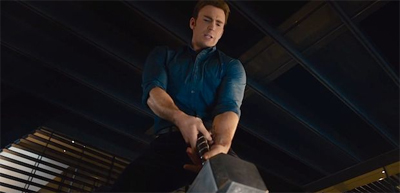
You know, "pull Thor's hammer" is probably not a family friendly party game...

You know, “pull Thor’s hammer” is probably not a family friendly party game…

Continue reading

Netflix and Marvel’s Daredevil – Season 1 (Review)

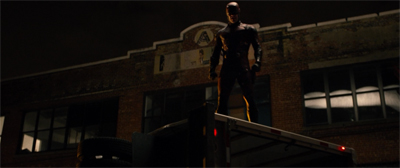
Marvel and Netflix’s Daredevil owes as much to the work of Christopher Nolan as it does to the larger Marvel Cinematic Universe. Taking advantage of the change in platform and format, the thirteen-episode season is a bit rougher and meaner than most of Marvel’s recent output. The show never reaches the excesses of The Punisher or Punisher: War Zone, but the show has a much rougher edge to it than many of its contemporaries. It is very much grounded in an urban noir storytelling style.

With thirteen episodes released to stream simultaneously, Daredevil is a unique venture for a studio that has been experiment in different media and different delivery methods. Daredevil is much more cohesive than either Agents of S.H.I.E.L.D. and Peggy Carter, feeling much more like its own thing. While each of the thirteen episodes is structured as an episode in its own right, the whole season amounts to a single long-form story. Distilled to its essence, Daredevil is the story of the conflict between an emergent vigilante and an ascendant crime lord.

daredevil-daredevil14

The series is not flawless; there are some pacing and structural issues that do haunt the series. However, it is a bold piece of work that stands unique among the prolific output from Marvel Studios. It is hard to imagine that either Avengers: Age of Ultron or Ant-Man will feel anything like this more grounded adventure, giving Daredevil a distinctive texture and demonstrating that Marvel is willing to experiment with the tone and style of some of its product. Given the volume of the studio’s output, this is inherently a good thing.

Daredevil is anchored in a set of terrific central performances and a clear sense of purpose. It might lose focus at points, or stumble into some plotting or pacing issues, but it marks a high point in Marvel’s television output.

daredevil-theonesweleavebehind8

Continue reading

My 12 for ’14: Guardians of the Galaxy and “the Day I Left Earth”…

With 2014 coming to a close, we’re counting down our top twelve films of the year. Check back daily for the latest featured film.

Guardians of the Galaxy is a Marvel movie through-and-through. It comes with burdened with all the trappings that one expects from a Marvel film. Thanos provides a mostly superfluous element that clouds the narrative while serving as an advertisement for a film several years away. Ronan the Accuser makes for a suitably banal villain, like a cosplaying fan who won’t choose between his deep abiding affection for Thor and his love of the Smurfs. The third act is a jumbled mess, one that occasionally loses sight of its characters amid all the CGI spectacle.

And, yet, it works in spite all this. One of Marvel’s biggest problems as a movie studio is the way that it tends to smother individual creators in pursuit of a more consistent project. The studio’s best films  – Jon Favreau’s Iron Man, Kenneth Branagh’s Thor, Shane Black’s Iron Man 3 – are the films that aren’t afraid to let a writer or director’s voice shine through. In contrast, the weakest entries – Captain America: The First Avenger, Thor: The Dark World, Iron Man 2 – try desperately to drown out any hint of personality in pursuit of something that can be homogenised; rendered safely within the studio’s comfort zone.

guardiansofthegalaxy1

After all, Marvel is a company that likes to play it safe. It is a studio that would replace Edgar Wright with Peyton Reed for Ant Man. It is a movie that would gladly have Agents of S.H.I.E.L.D. spin its wheels for two-thirds of a season so it can wait for Captain America: The Winter Soldier to arrive in theatres. It is a studio that has build six movies around blonde white actors named Chris without a single female- or minority-led superhero film. (Sure, Black Panther and Captain Marvel are coming… eventually, but Black Widow remains a rotating co-star.)

To be fair to Marvel, this system makes a certain amount of sense. It avoids horrific misfires like Catwoman or Elektra, but also does not allow for anything as transcendental and unique as Tim Burton or Christopher Nolan’s work with Batman. Guardians of the Galaxy is very much a product of this system. It is safe, hitting all the necessary plot beats and offering minutes of screentime (and plot convolutions) as tribute to the shared universe. However, there is just enough of James Gunn left in the final product to make it all worthwhile. The film retains a sense of oddness and charm that prevents it from ever feeling generic.

guardiansofthegalaxy6

Continue reading

Star Trek (Marvel Comics, 1980) #4-5 – The Haunting of Thallus!/The Haunting of the Enterprise! (Review)

The first Star Trek pilot, The Cage, was produced in 1964. To celebrate its fiftieth anniversary, this December we are reviewing the second season of the original Star Trek show. You can check out our first season reviews here. Check back daily for the latest review.

Marvel certainly had an unconventional approach to publishing Star Trek.

The company had licensed the comic book rights following the release of Star Trek: The Motion Picture. They had released a successful adaptation of the film as part of their Marvel Super Special line and had re-package the three-part adaptation as the first three issues of an on-going Star Trek comic book. Written by Marv Wolfman and illustrated by Dave Cockrum, it was clear that Marvel had big plans for Star Trek. However, it also quickly became clear that they had no idea where they wanted to go with the comic.

Here there be monsters...

Here there be monsters…

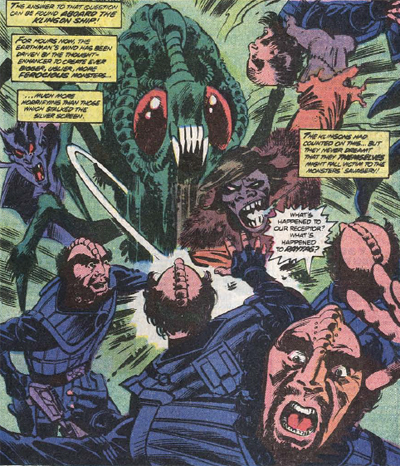
After all, they immediately followed up the big three-issue opening arc with a comic where the Enterprise discovered a haunted house floating in space. While it was certainly a catchy image, it wasn’t exactly a quintessential Star Trek premise. It seemed that Marvel had no idea what to do with the comic. Writer Marv Wolfman wrote the first of the two issues comprising the storyline, handing the second issue over to Mike W. Barr. He would only stick around for two issues before handing the comic over to Tom DeFalco. DeFalco wrote a single issue before moving on.

It is a rather disjointed comic book, one which lacks the strong narrative voices that DC would give to their late-eighties licensed Star Trek comics. Then again, it is probably easy enough to deduce all of this from the fact that the first original Star Trek storyline published by Marvel featured a haunted house floating in space.

In space, everyone can hear you scream...

In space, everyone can hear you scream…

Continue reading