• Following Us

  • Categories

  • Check out the Archives


  • Awards & Nominations

Non-Review Review: The Kingsman

The creators of The Kingsman either really love or really hate the classic Roger Moore Bond films. Probably both.

Another creative collaboration between Matthew Vaughn, Jane Goldman and Mark Millar, The Kingsman is just as juvenile, crass and ultimately charming as Kick-Ass. There is a sense of mischievous and cheeky fun to this classic spy film homage. It is effectively an update of those seventies and eighties spy films with a more cynical and self-aware attitude. There is a sense that The Kingsman is simply more transparent than its inspirations in its infectiously juvenile and borderline offensive sensibilities.
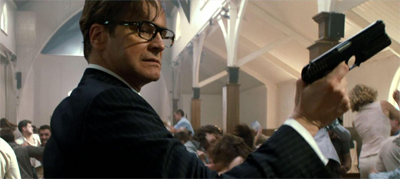
Sound and Firthy...

Sound and Firthy…

It is hard to tell how much of this homage is genuine nostalgic affection, and how much is witty subversion. The Kingsman is a spy film that not only uses outdated (and occasionally insensitive) spy movie tropes, it practically revels in them. Although the third act occasionally feels a little too mean-spirited in its riff on classic Bond sensibilities, The Kingsman has enough boundless energy and raw enthusiasm to keep the audience watching. The script is well-observed and the direction is tight. A superb central cast helps to anchor the film.

The Kingsman is an odd beast. It is that rare homage that seems quite likely to shock and offend many fans that otherwise share its nostalgic inclinations. However, those willing to be a bit more adventurous will find much to love in this updated spy caper.

Matthew Vaughn's fingerprints are all over this...

Matthew Vaughn’s fingerprints are all over this…

Continue reading

Watch! Tribute to 50 Years of Bond…

It’s no secret that I am a massive James Bond fan. After all, Skyfall was one of my favourite movies of 2012. So when I found this tribute to fifty years of the secret agent – set to Adele’s wonderful Oscar-winning theme song – I had to share it. Check it out below and let me know what you think. Enjoy!

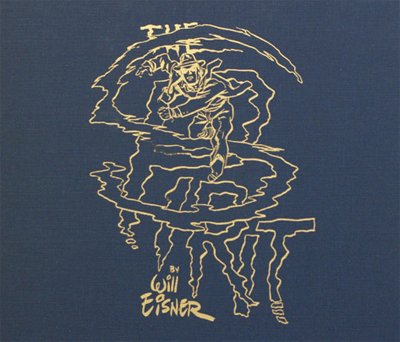
The Spirit Archives, Vol. 26 (Review/Retrospective)

It’s strange reading The Spirit Archives, Vol. 26. Not just because it’s a collection of absolutely everything (from stories to pin-ups to posters to sketches) rather than a set of comic strips. Also because of the scope of this final hardcover collection in DC’s Spirit Archives programme. While, with the exception of the last volume, each book collected six months of the weekly strip, this final book collects pretty-much everything Will Eisner did with the character from the time that the weekly strip ended through to his death in 2005.  I’m a bit surprised that there’s only one book of this material, although it does allow the reader to flick through the decades following the end of the strip as if examining a family photo albums – watching the subtle changes as time marches on.

Despite the fact that he was cancelled, The Spirit never seemed to quite go away. There was a lot of work featuring the character by other writers and artists, but most of that isn’t collected here. Instead, this admittedly disjointed collection reads best as a sort of a documentary charting the on-going relationship between Will Eisner and arguably his most popular creation.

Still making waves…

Continue reading

The Spirit Archives, Vol. 16 (Review/Retrospective)

We’re more than half-way through Will Eisner’s tenure on The Spirit, and I find myself struggling, just a bit, to come up with something novel to say about it. After all, I’ve gone on and on (and on and on) about how Eisner has handled the weekly strip for the bones of about 10,000 words at this point. As much as I like to examine each six-month period on its own terms and merits, there comes a point where I have to concede that this is just one giant project, and a lot of what I can say about it I have already said. Sure, there are some new themes and ideas, and Eisner always enjoys putting a new slant on old concepts, but I can’t help but feel that this extended bunch of reviews and retrospectives will wind up tripping over each other. (I say that as if they haven’t already.)

With that in mind, just because I might have a bit less to say about The Spirit Archives, Vol. 16 doesn’t mean that it isn’t a great collection of stories. We are, after all, in the middle of the most celebrated part of Eisner’s run. This collection is pretty consistently smart, funny and moving. Just because this reviewer is struggling not to cover old ground doesn’t mean that Eisner is any less of a master.

A web of deceit...

A web of deceit…

Continue reading

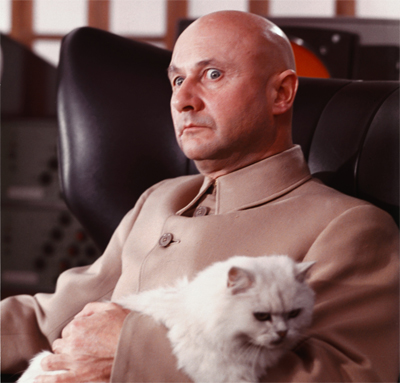
A View to a Bond Baddie: Ernst Stavro Blofeld

To celebrate James Bond’s 50th birthday on screen, we’re going to take a look at the character and his films. We’ve already reviewed all the classic movies, so we’ll be looking at his iconic baddies, and even at the character himself.

Blofeld is unique among the Bond villains for his capacity to keep turning up. He’s appeared in more on-screen adventures than any other Bond baddie, and he survives in the popular imagination, with a lot of gossip about the next Bond film likely to debate whether or not they’re bringing Blofeld back. The character has endured in the public imagination as the Bond baddie, and he’s perhaps best immortalised as Micheal Myers’ Doctor Evil from the Austin Powers movies. However, watching his appearances again, I’m actually struck by how little consistency there is in the portrayal of his character, and I can’t help but wonder if the reason he endures is because of his versatility as an adversary.

Bond movies have a remarkable adaptability. They can be serious, campy, ridiculous, sombre, mature and juvenile, often all at the same time. As far as Bond villains go, Blofeld’s really the only villain who can compete with that.

He looks like the cat who got the canary…

Continue reading

The Six Faces of 007: Daniel Craig

To celebrate James Bond’s 50th birthday on screen (and the release of Skyfall), we’re going to take a look at the character and his films. We’ve already reviewed all the classic movies, so we’ll be looking at his iconic baddies, and even at the character himself.

The Daniel Craig iteration of James Bond is the first time that a change of actor has been explicitly confirmed as a new character, rather than a continuation of the same character. (Unless you count Lazenby’s ad-libbed “this never happened to the other fella” bit.) Going back to the first of Fleming’s novels for his first film, Casino Royale, there was a conscious effort to bring the character back to basics, but also an effort to humanise him considerably. The result has been somewhat contentious, but I think Craig has managed to put his own stamp on the role and to define it in his own terms that are respectful to his five predecessors, but also define the character as his own.

All-time high?

Note: As a look at Daniel Craig’s take on the iconic character, this article contains spoilers for Skyfall. Consider yourself warned.

Continue reading

The Six Faces of 007: Sean Connery

To celebrate James Bond’s 50th birthday on screen (and the release of Skyfall), we’re going to take a look at the character and his films. We’ve already reviewed all the classic movies, so we’ll be looking at his iconic baddies, and even at the character himself.

Ian Fleming created James Bond. However, he crafted the character as a “blunt instrument”, a relatively bland character that might serve as a vehicle for all manner of adventures. It’s fair to argue that a lot of what modern audiences take for granted in the character of James Bond came from Sean Connery, the tall Scotsman who played the character for the first five films in the series, before returning once officially (and once more unofficially). Connery’s portrayal of the secret agent was so definitive that even Fleming himself retroactively gave Bond Scottish roots in tribute to the actor.

The name’s Connery, Sean Connery…

Continue reading

A View to a Bond Baddie: Le Chiffre

To celebrate James Bond’s 50th birthday on screen (and the release of Skyfall), we’re going to take a look at the character and his films. We’ve already reviewed all the classic movies, so we’ll be looking at his iconic baddies, and even at the character himself.

A new era of Bond deserved a new type of villain. Or, at least, a renewed look at the oldest. Casino Royale had been the first James Bond novel written, but it was only the twenty-first filmed – long past the point where the series had even paid lip-service to Fleming’s novel and short story titles, let alone their plots. Much like the Bond girl Vesper Lynd, Martin Campbell’s Casino Royale radically reimagined the story’s villain, while remaining relatively true to the character’s roots. The result is a rather interesting addition to Bond’s iconic selection of foes, as brought to life by Mads Mikkelsen.

Playing his cards right?

Continue reading

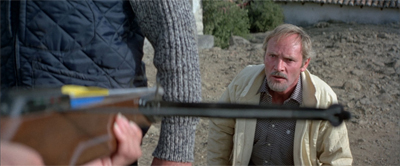
A View to a Bond Baddie: Aristotle “Aris” Kristatos

To celebrate James Bond’s 50th birthday on screen (and the release of Skyfall), we’re going to take a look at the character and his films. We’ve already reviewed all the classic movies, so we’ll be looking at his iconic baddies, and even at the character himself.

For Your Eyes Only is often overlooked when discussing Roger Moore’s time as the iconic secret agent. Positioned between the camp excesses of Moonraker and the rather disappointing blandness of Octopussy, Moore’s fifth film in the role is arguably the actor’s best. It distinguishes itself from its peers in several ways. Most obviously, it’s a relatively low-key espionage thriller, rather than a spectacular action film. The narrative is driven by mystery and intrigue at least as much as it is by action and adventure. The stakes are relatively grounded when compared to those in Moore’s other films. There’s no planned genocide here, not even the immediate threat of nuclear war. It almost feels like a spiritual companion to the Timothy Dalton films, or the early Sean Connery adventures. And yet, despite the fact its tone feels a little out of character, For Your Eyes Only really feels like it plays to Roger Moore’s strengths. Perhaps the most obvious example of this is the villain, Aristotle “Aris” Kristatos, who serves as the best foil for Roger Moore’s Bond in any of Moore’s seven films.

One to cross(bow) off the list…

Continue reading

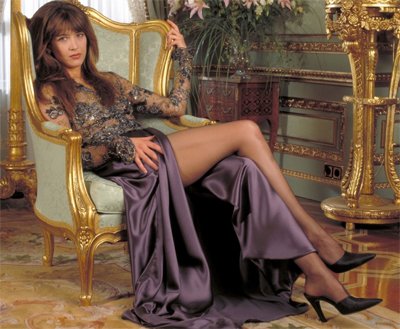
A View to a Bond Baddie: Elektra King

To celebrate James Bond’s 50th birthday on screen (and the release of Skyfall), we’re going to take a look at the character and his films. We’ve already reviewed all the classic movies, so we’ll be looking at his iconic baddies, and even at the character himself.

Elektra King remains unique among Bond’s selection of big-screen baddies if only because she’ really the only major female villain. Of course, Bond villains have employed henchwomen before. Rosa Klebb was a major menace in From Russia With Love, even if she was answering to a mostly absent Blofeld. Largo employed the sinister Fiona in Thunderball, immune to the charms Bond used to seduce Pussy Galore in Goldfinger. A View to a Kill even gave us a female villain who wasn’t defined by her sexuality, with Mayday defined by her physical strength more than anything else. Still, it seemed like a villainess would never quite break the Bond movie glass ceiling, which makes Elektra such a fascinating character.

Of course, she’s trapped in a pretty terrible film.

It’s good to be the King…

Continue reading