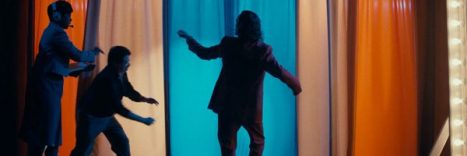
I published a new In the Frame piece at The Escapist this evening. It’s been roughly a year since the release of Joker, so it seems appropriate to take a look back at the controversy surrounding the film.
The controversy around Joker is interesting, because it was at once so loud and so meaningless. In the lead-up to the film’s release, there was a lot of hyperbole around the movie, arguing that it might empower or encourage a certain audience – angry young men – to commit acts of violence. This made the release of the film something of a wry practical joke, with Joker ultimately bending over backwards to avoid any potentially inflammatory choices. The result was a storm that raged in a tea cup, but which seemed eager to bubble over.
You can read the piece here, or click the picture below.
So, as I have mentioned before, I am launching a new video series as a companion piece to In the Frame at The Escapist. The video will typically launch with the Monday article, and be released on the magazine’s YouTube channel the following week. This month, it will be releasing on the Thursday.
With that in mind, here is last week’s episode, covering the long-looming release of The Snyder Cut of Justice League, and why this might represent an attractive model for studios desperately looking for new (and affordable) content in the midst of a pandemic.
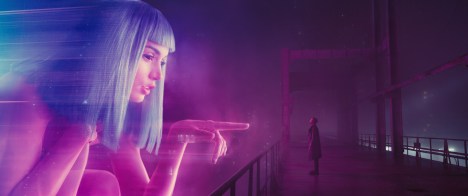
I published a new In the Frame piece at The Escapist this evening. Since Blade Runner 2049 opened three years ago this week, I thought it was worth taking a look back at the science-fiction sequel.
One of the interesting tensions within Blade Runner 2049 is the way that the film continuously gestures at an epic plot – a story of a lost replicant messiah, of “miracles” and “angels”, of wars and revolutions. However, the film largely eschews this in favour of focusing on a much more intimate and personal level of drama. Blade Runner 2049 is a story about a character wrestling with the fact that they were never a “chosen one”, in a manner that perhaps reflects the mood of the culture around it.
You can read the piece here, or click the picture below.
So, as I have mentioned before, I am launching a new video series as a companion piece to In the Frame at The Escapist. The video will typically launch with the Monday article, and be released on the magazine’s YouTube channel the following week. This month, it will be releasing on the Thursday.
With that in mind, here is last week’s episode, covering the directorial craft of Christopher Nolan and how that comes into play with The Dark Knight, particularly the way in which the Joker hijacks the film around him. You can watch the pilot video here, and read the companion article here.
I published a new In the Frame piece at The Escapist this evening. With news that Zack Snyder will be reuniting with actors like Henry Cavill, Ben Affleck and Gal Gadot to shoot new scenes for his long-gestating cut of Justice League.
Although there’s been some understandable confusion at the news that Snyder will be shooting new footage to extend his planned film into a miniseries, the reality of Justice League is that it represents one possible path through the pandemic for Hollywood studios, allowing for the production of a blockbuster-level spectacle both for a reasonable budget and in relative safety. As the industry braces for an uncertain future, Zack Snyder’s Justice League might represent an unlikely model for the medium-term.
You can read the piece here, or click the picture below.
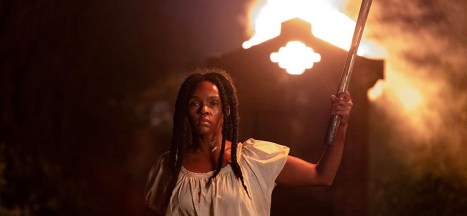
I published a new In the Frame piece at The Escapist on Friday. Since Antebellum has been out for two weeks now, it seemed fair to discuss the movie’s twist – and, in particular, what it is that makes a “good” twist and how such a twist serves the movie of which it is part.
Arguably, any movie with a twist has to be two movies: the movie that the audience watches for the first time blind, and the one that they rewatch knowing the twist. As such, for a movie with a twist to be truly good, it has to succeed as two (occasionally wildly) different movies. That’s a lot of pressure, and illustrates why truly great twists are so rare and why they are often elevated to the status of cinematic legend. However, a bad twist can ultimately undercut both of the movies that it needs to be, making the failure even more noticeable.
You can read the piece here, or click the picture below.
So, as I have mentioned before, I am launching a new video series as a companion piece to In the Frame at The Escapist. The video will typically launch with the Monday article, and be released on the magazine’s YouTube channel the following week.
With that in mind, here is last week’s episode, covering the frequent argument that Disney needed a “plan” for the sequel trilogy, when in fact Star Wars: Episode IX – The Rise of Skywalker just needed a vision. You can watch the pilot video here, and read the companion article here.
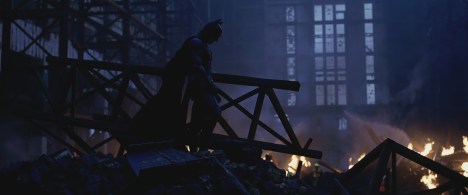
I published a new In the Frame piece at The Escapist this evening. Because the Monday column is now published with a companion video, we thought it might be worth trying something a bit more visual than usual. Because TENET is still in wide release, we thought it might be interesting to try something visual that was related to Christopher Nolan.
The Dark Knight is an interesting film for a number of reasons. Interestingly, it is the rare Christopher Nolan movie that is almost entirely linear. Nolan’s other films tend to jump around a lot in time, but The Dark Knight progresses quite clearly from beginning to end. This is interesting, because it serves to provide an interesting and compelling contrast to the Joker. Because The Dark Knight is so linear, there’s an interesting tension as the Joker struggles to take control of the narrative and bend the view to his perspective. Sometimes in a very literal manner.
You can read the piece here, or click the picture below.
The Best of Both Worlds, Part I is widely accepted as one of the best cliffhangers in television history. However, the episode is really the culmination of the growth and development of Star Trek: The Next Generation. The spin-off had a rocky first couple of seasons, but really came into its own during a much more ambitious and consistent third year. That third year built inexorably towards that cliffhanger, demonstrating the effectiveness of that approach to storytelling.
You can read the piece here, or click the picture below.
In truth, this is at best a simple solution to a complex problem. After all, fans have hardly proven themselves willing to offer movies the benefit of the doubt because they were “planned” in advance. The Star Wars prequel trilogy was not greeted with any greater warmth or understanding because George Lucas knew where he was going. Instead, the problem is that The Rise of Skywalker needed a strong vision of what it wanted to be and what it wanted to say.
You can read the piece here, or click the picture below.

















 the m0vie blog