• Following Us

  • Categories

  • Check out the Archives


  • Awards & Nominations

Harsh Realm – Leviathan (Review)

This November, we’re taking a trip back in time to review the seventh season of The X-Files and the first (and only) season of Harsh Realm.

The first three episodes of Harsh Realm are an interesting combination, and not just because they were the only three episodes of the show to air before cancellation.

All three episodes are written by Chris Carter. The first two are directed by Daniel Sackheim. Taken together, they form a loose triptych. They are effectively three separate stories that come together to form a three-part pilot for the show. It is only by the end of Inga Fossa that Thomas Hobbes (and the audience) fully accept the virtual world into which they have been placed, embracing the hero’s journey that lies ahead. It isn’t until Kein Ausgang that the show really offers the audience a sense of how it might work on a weekly basis.

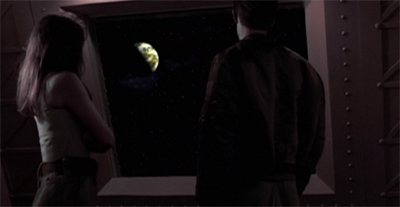
Fading out...

Fading out…

This is not to suggest that the events of The Pilot flow elegantly into Leviathan, nor that the events of Leviathan bleed over into Inga Fossa. All three episodes of television are discreet and individual; foreshadowing the format that the show would take in its relatively brief life. Interestingly, Carter does not take advantage of the show’s video game structure to enforce more rigid serialisation. If anything, most the nine episodes (particularly the back six) are rigidly episodic.

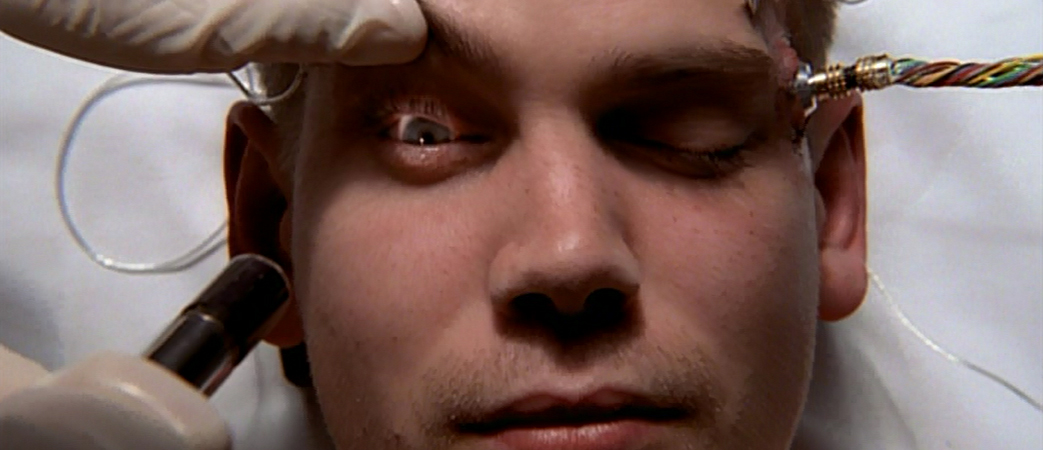
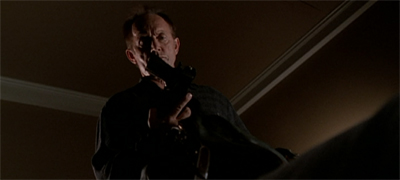
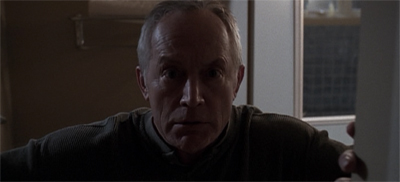
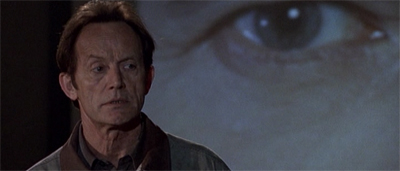
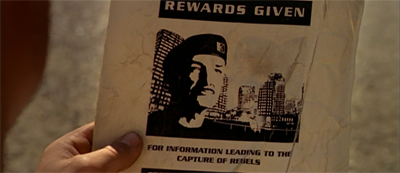
Leviathan is particularly relaxed in its structure. The Pilot offered all the spectacle and exposition necessary to establish Harsh Realm. In contrast, Leviathan is a bit more focused on mood and atmosphere. There is an impressive action sequence to close out the episode, but there is a larger sense that Leviathan is about establishing what day-to-day existence must be like in this virtual world.
General problems...

General problems…

Continue reading

Harsh Realm – Pilot (Review)

This November, we’re taking a trip back in time to review the seventh season of The X-Files and the first (and only) season of Harsh Realm.

Hereby it is manifest, that during the time men live without a common Power to keep them all in awe, they are in that conditions called Warre; and such a warre, as is of every man, against every man.

– Thomas Hobbes, Leviathan, The First Part, Chapter XIII

Harsh Realm is essentially a war story, or a collection of war stories.

To be fair, there are other themes that bleed through the show’s short nine-episode run; a critique of late-stage capitalism, a healthy dose of Chris Carter’s patented nineties existential spirituality, an exploration of American masculinity. The show plays on all sorts of genres across its short lifespan, from horror story to western to modern noir film. However, all of these unfold against the backdrop of a world locked in total warfare. The opening scenes of The Pilot unfold against the Siege of Sarajevo, setting the tone for the rest of the series.

Tom's not here, man...

Tom’s not here, man…

Carter tends to wear his cinematic and televisual influences on his sleeves. The X-Files was a spiritual successor to Kolchak: The Night Stalker, with a little bit of The Parallax View and The Silence of the Lambs thrown in for good measure. Millennium launched in 1996 and owed a lot to the look and feel of David Fincher’s work on se7en. Harsh Realm owes a lot to the resurgence in war movies towards the end of the twentieth century, coming less than a year after Saving Private Ryan and The Thin Red Line both scored Best Picture nominations.

On the commentary for The Pilot, Chris Carter notes that the show’s protagonist was named for the philosopher Thomas Hobbes. Carter cites that Hobbes’ most famous observation is that life is “solitary, poor, nasty, brutish, and short.” The same might be said of the life of Harsh Realm.

Fading out...

Fading out…

Continue reading

Non-Review Review: Fantastic Four (2015)

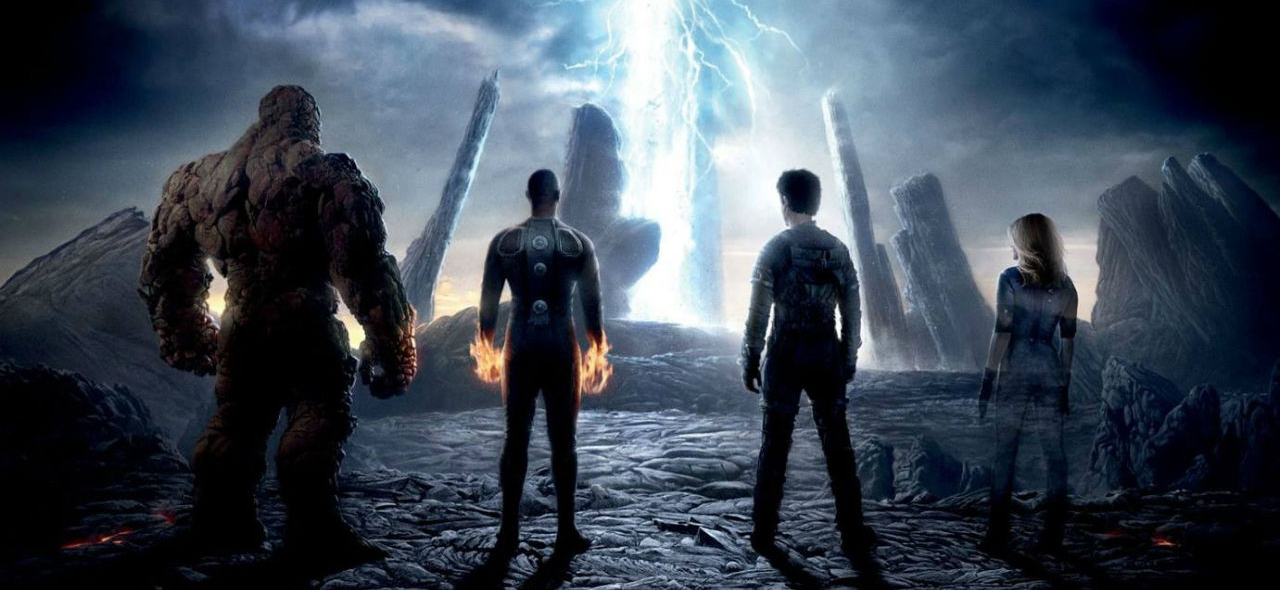
The second scene of Fantastic Four opens on a shot of a red neon sign reading “Grimm”, panning down slowly to a scrapyard packed with exhausted husks of old vehicles that have long outlived their usefulness. If you were to reduce Josh Trank’s Fantastic Four down to a single shot, that would be it; the purest possible distillation of this hundred-minute effort to adapt Marvel’s (literal) first family to the silver screen. It is possible to make a good Fantastic Four film, even if the movies bearing the family’s name suggest otherwise; The Incredibles proved as much.

What is remarkable about Fantastic Four is just how thoroughly and meticulously the edges have been sanded down, replaced with a misshapen grey blob that wants to be X-Men or The Avengers, or anything but what it is. All the moving parts of the film are compelling on their own merits. This is the first studio effort from Josh Trank. It is a vehicle for Miles Teller. It has a soundtrack from Philip Glass (and Marco Beltrami). It features Victor Von Doom in an era when studios have demonstrated they are not afraid of comic book tropes and absurdities.

Fantastic finish?

Fantastic finish?

Fantastic Four effortlessly squanders just about all that good will in a ruthlessly efficient manner, a demonstration of how brutal a bad script and a cynical edit can be. Trank only fleetingly shines through, commandeering the film for about ten minutes in the middle. Miles Teller is reduced to an exposition machine. Any unique identifiers on the Philip Glass soundtrack are pared down for generic superhero movie bombast. The film is so concerned that the audience won’t take a character named Doctor Doom seriously that he’s barely in the film.

The most interesting aspect of Fantastic Four is the recurring sense that the characters themselves openly resent the direction that the project took. Sadly, even Reed Richards cannot stretch far enough to bend the film back into shape.

Clobbering time...

Clobbering time…

Continue reading

Millennium – Season 3 (Review)

This July, we’re taking a trip back in time to review the sixth season of The X-Files and the third (and final) season of Millennium.

Three seasons is a good run.

It’s not a great run, but it is worth noting that Millennium ran longer than any of Chris Carter’s creations other than The X-Files. Given you grim and esoteric Millennium turned out to be, that is quite impressive. Notably, even the third season of Millennium performed better in the ratings than the first season of Harsh Realm. In many respects, Millennium is a very odd television show; it seems surprising that it lasted for three seasons. While fans (and many who worked on it) might have wanted more, Millennium is not a failure.

millennium-thesoundofsnow28

That said, the third season of Millennium is a disaster. There are a lot of reasons for this. The show was renewed by Fox quite late in the process, meaning the production team had little time to prepare. Glen Morgan and James Wong had no interest in returning to run the show, even if the rest of the staff would have them. Either due to time constraints or frustration, nobody asked Morgan and Wong about resolving the ending of The Time is Now. Michael Duggan was hired as showrunner, only to depart eight episodes into the season.

With all of this going on, the problems with the third season are entirely understandable. The season feels like a disjointed mess because there was chaos behind the scenes. The season was confused about its own continuity because the production team had no idea what to make of the second season. With ratings plunging, the show sought comfort in the familiar; there is an extended stretch near the start of the third season where it feels like the production team were trying to turn the show into a copy of The X-Files.

millennium-teotwawki22

The third season of Millennium has fairly terrible reputation among fans. This is not entirely undeserved; the early stretch of the third season contains a string of the worst episodes that Millennium ever produced. As sympathetic as the surrounding circumstances might make an audience to the show, that goodwill evaporates when confronted with episodes like The Innocents, Exegesis, TEOTWAWKI, Skull and Bones, Through a Glass Darkly, Human Essence and Omertà. The series improves dramatically in its middle section; but it is never consistent.

The third season contains a number of underrated episodes that do count among the best that the show ever produced, and a whole host of more interesting failures around those episodes. Perhaps the best thing that might be said about the third season is that it is interesting at least as often as it is bad. That might not sound like a ringing endorsement. It isn’t. The third season of Millennium doesn’t work. The reasons for this are entirely understandable, but that does not make it any easier to watch.

millennium-sevenandone24

Continue reading

Millennium – Season 1 (Review)

This February and March, we’re taking a trip back in time to review the fourth season of The X-Files and the first season of Millennium.

Millennium is a strange television show.

It is quite clear that Chris Carter and Fox both had a very different understanding about how best to follow on from the success of The X-Files. Fox clearly wanted another popular hit, a television show that it could plug comfortably into its 9pm Friday slot and grow into a multimedia franchise. The network spent a phenomenal amount of money promoting Millennium, with advertising and screenings and other publicity attempts. This approach paid off; The Pilot broke all sorts of records for Fox.

millennium-lamentation11

However, Millennium could not sustain those viewing figures. Over the first season, it haemorrhaged viewers. Chris Carter was not trying to present an accessible and popular pop hit; instead, Carter was taking advantage of the success of The X-Files to construct something decidedly more esoteric. Millennium is a tough show to watch. It is grim, unrelenting and oppressive. It is a show about darkness in the world that tends to roll up its sleeves and jump right in. Millennium has a clear idea of what it wants to be, but what it wants to be is alienating and uncomfortable.

On just about any level, the first season of Millennium is more accomplished than the first season of The X-Files. The production is more confident, the ideas are much bolder, the themes are much clearer. In fact, the first season of Millennium even holds up well when stacked against the fourth season of The X-Files on an episode-by-episode basis. But that’s not the problem. By definition, “Lance Henriksen fights serial killers and the concept of evil in America” will never be as popular as “David Duchovny and Gillian Anderson fight aliens and monsters and weird stuff!”

millennium-pilot11

The first season of Millennium is a show that offers a distinctive and uncompromising auteur vision which cares little for what the audience might want or expect. For better or worse, that approach would prevent Millennium from ever approaching the critical or popular support that The X-Files had already begun to accrue at the end of its own first season. The result is a television show that was never going to rival The X-Files as a pop culture phenomenon , but which serves as a bold philosophical statement from its creator.

“This is who we are,” the opening credits state, unapologetically. They seem to be speaking for the show as much for society.

millennium-bloodrelatives13 Continue reading

The Simpsons – The Springfield Files (Review)

This February and March, we’re taking a trip back in time to review the fourth season of The X-Files and the first season of Millennium.

A young network hungry to find its place in the American television market, Fox managed to produce two of the television shows that defined the nineties. Both The X-Files and The Simpsons were bold and innovative television shows that captured the zietgeist perfectly. Both shows offered an insightful, innovative and occasionally subversive look at American pop culture in the last decade of the twentieth century. Both have endured quite well, speaking to a generation that came of age in the nineties.

While The X-Files wound itself up in 2002, The Simpsons endures. The show has been running for almost a quarter-of-a-century at this point, and there is no sense that it will ever let up. While there are stock criticisms to be made about how The Simpsons is not as funny as it once was, the series has continually and perpetually reinvented itself. The success of these various iterations has varied. The Simpsons was a different show in 1989 than it was in 1992 or 1996 or 2000.

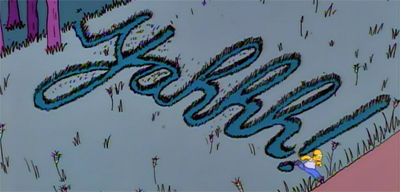
"Mulder and Scully. FBI."

“Agents Mulder and Scully. FBI.”

However, the show was in the middle of an incredible hot streak in January 1997. The show was in its eighth season, and on the cusp of overtaking The Flintstones as the longest-running prime-time animated series in the United States. This was a phenomenal accomplishment, and there was no indication that the show was in decline. Although fans will argue about exactly how long the so-called “golden age” of the Simpsons actually lasted, the series was still in the middle of it by January 1997.

So The Springfield Files makes a lot of sense as an obvious overlap between the two most important weekly shows airing on Fox at this moment in time. The Springfield Files was treated as a big deal at the time. It aired two weeks before Superbowl XXI, which would help give The X-Files its highest-ever ratings with Leonard Betts. It was sent to the press for review before it aired, to help generate word of mouth. The result is a delightfully satisfying intersection of two massively successful and influential shows.

Reading the scene...

Reading the scene…

Continue reading

Millennium – Pilot (Review)

This February and March, we’re taking a trip back in time to review the fourth season of The X-Files and the first season of Millennium.

You think you’re protecting me but you make it worse, Frank. You can’t shut the world out for me. You can’t ask me to pretend that I don’t know what you do.

Everyone pretends. We all make believe. These men I help catch – make us.

We’re raising a daughter, Frank. The real world starts to seep in. You can’t stop it.

I want you to make believe that I can.

Fade to Black...

Fade to Black…

Continue reading

Space: Above and Beyond (Review)

This November (and a little of December), we’re taking a trip back in time to review the third season of The X-Files and the first (and only) season of Space: Above and Beyond.

It is very hard to judge a series based on the first season alone. After all, many long-running series evolve quickly and radically from their debut year. In many cases, the first season is about desperately trying to find a footing as everybody gets used to the realities of producing a television show. Assessing a first season is often an exercising in gauging potential, which makes it a risky proposition when trying to evaluate the first and only season of a cancelled television show.

Space: Above and Beyond contains its fair share of clunkers, as does any first season with twenty-odd episodes. There are episodes that seem at odds with the premise and mood of the show, being written by staff writers before the show went to air or simply trying to do something with which the show isn’t comfortable. There are episodes that have interesting ideas, but don’t place emphasis on the show’s strengths.

spaceaboveandbeyond-pilot32

However, this is all but expected for a first season. A first season is a learning experience for all involved. After all, the first season of The X-Files was packed with episodes like Shadows, Fire, Lazarus, Young at Heart and Born Again. It is very rare for the first season of any show – particularly a genre show – to be the strongest. There are rules to be learned, beats to be established, foundations to be laid. If shows are lucky, that work gets to pay off in later seasons, as everybody gets more comfortable.

Space: Above and Beyond never got that chance, which is a shame. Because there is a phenomenal amount of potential on display here.

spaceaboveandbeyond-thefarthestmanfromhome24

Continue reading

The X-Files – Jose Chung’s “From Outer Space” (Review)

This November (and a little of December), we’re taking a trip back in time to review the third season of The X-Files and the first (and only) season of Space: Above and Beyond.

Then there are those who care not about extraterrestrials, searching for meaning in other human beings. Rare or lucky are those who find it. For although we may not be alone in the universe, in our own separate ways, on this planet, we are all alone.

– Darin Morgan takes his bow

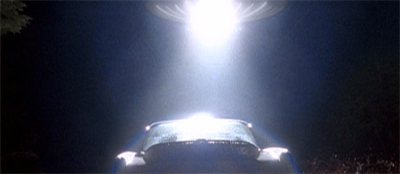
It came from beyond the stars...

It came from beyond the stars…

Continue reading

Space: Above and Beyond – R & R (Review)

This November (and a little of December), we’re taking a trip back in time to review the third season of The X-Files and the first (and only) season of Space: Above and Beyond.

R & R is what might be described as a “monkey’s paw” situation.

Space: Above and Beyond finally gets to air on Friday nights. It had been promised a Friday night slot in early development, before Fox moved it to Sunday to make room for Strange Luck. Glen Morgan and James Wong had been promised the coveted Friday night slot again in January 1996, but it never materialised. Finally, late in the season, Fox manage to air an episode of Space: Above and Beyond on a Friday night. That episode would even air directly before The X-Files. And not just any episode of The X-Files. Jose Chung’s “From Outer Space”, a classic.

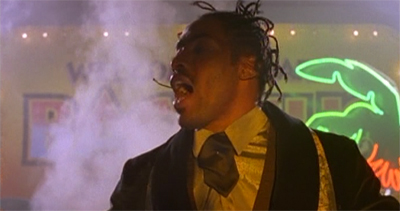
Everything is Coolio!

Everything is Coolio!

However, as the Host himself points out in R & R, everything has its price. Here, it seemed like Fox had chosen the most stereotypically network-friendly episode of Space: Above and Beyond to air in that Friday night slot. So there were hot young people at night clubs, celebrity cameos, romance, angst, melodrama, absurdity. It is one of the most grotesquely heightened episodes of Space: Above and Beyond ever produced, to the point that Hawkes picks up and drops a drug addiction as only one of the episode’s three primary plot threads.

R & R is not a good episode of television. It is the weakest that Space: Above and Beyond has been in quite some time, and the weakest it would be from this point onwards. It seems like a cruel irony that it finally managed to get that Friday night slot it so desperately wanted.

Chalk it up as a misfire...

Chalk it up as a misfire…

Continue reading