• Following Us

  • Categories

  • Check out the Archives


  • Awards & Nominations

New Podcast! Scannain Podcast (2018) #42!

It’s time for the latest Scannain podcast!

This week, I join Jay Coyle, Ronan Doyle, Grace Duffy and Doctor Jennifer O’Meara from the Dublin Feminist Film Festival to discuss the week in film. As usual, we talk about the top ten and the new releases, as well as what we’ve watched this week. In this episode, Jay discusses The Other Side of the Wind, Ronan rewatches Waltz with Bashir, Grace celebrates Netflix Christmas movies, and Jennifer contemplates The Congress.

The big news feature this week is Doctor Jennifer O’Meara discussing the fifth annual Dublin Feminist Film Festival, which is taking place the 20th-22nd November in the Lighthouse Cinema. Jennifer walks us through some programme highlights. We also discuss the iffy short film festival, Netflix’s collaboration with Nora Twomey and Cartoon Saloon on My Father’s Dragon, a recent Prime Time Investigates look at reports of bullying the Irish film industry and highlights of the Screen Ireland funding decisions for the third quarter.

The top ten:

  1. 7 Emotions
  2. First Man
  3. Venom
  4. Halloween
  5. Goosebumps II: Haunted Halloween
  6. Johnny English Strikes Again
  7. The Nutcracker and the Four Realms
  8. Smallfoot
  9. A Star is Born
  10. Bohemian Rhapsody

New releases:

You can download the episode here, or listen to it below.

The Great Inception, and the Movies that Made Us…

This week, the podcast I host, The 250, will be marking its one hundredth episode with a look at Christopher Nolan’s “Inception.” I’m very much looking forward to it. It’ll be available on Saturday from 6pm UTC. I also have a book coming out on Christopher Nolan, titled “Christopher Nolan: A Critical Study of the Films.” This is a much more personal (and much less detailed) discussion of Inception than the one in the book. So, if you like this piece, it might be worth a look.

I’ve always been somewhat wary of Inception.

I mean, Inception is a fantastic movie. There is a reason that it is so beloved and so highly regarded. It is perhaps one of the four core Christopher Nolan films, along with Memento, The Prestige and The Dark Knight. It is the rare big budget blockbuster with no longstanding association to established intellectual property, and one of the few to succeed on that sort of level. Indeed, the only other comparable examples on a similar scale are Interstellar and Dunkirk, both directed by Christopher Nolan.
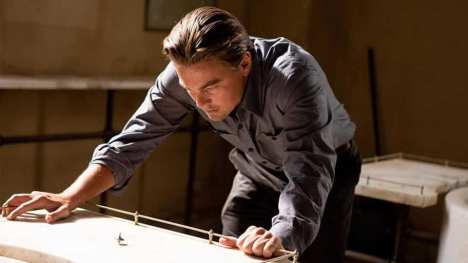
More than that, Inception has permeated the popular consciousness. It is a film that has become part of the broader conversation. It seems that barely a few months can go by without another hot take on that closing scene, with news coverage of commencement speeches or interviews with actors. More than that, the film itself has become something of a critical and popular shorthand. It is a stock comparison for any movie or television show with a vaguely similar concept. Maniac is the most recent example, even inviting the comparison with an elaborate hallway action scene in its penultimate episode.

And yet, in spite of that, Inception is a movie of which I’ve had a somewhat strained relationship. I still adore it, as I adore most of Nolan’s filmography. I think its reputation is well-earned, and I think it excels by every measure that it sets itself. It delivers on just about every front, showcasing Nolan as a director with incredible command of both the form itself and the audiences watching these films. Inception is a big and broad crowdpleaser that is also a surprisingly intimate and personal film, which works as both a story and as a showcase. It is thrilling, it is engaging, it is compelling.

However, there’s something underneath the surface that makes me feel a little uncomfortable. A large part of this is simply down to the fact that it’s a movie that is fundamentally about movies. This is nothing new of itself. All of Nolan’s movies are about stories, whether personal or cultural. In fact, it could be argued that the central trilogy of Nolan’s work is actually The Prestige, The Dark Knight and Inception, a trilogy of films that seem to be about the challenges of constructing and maintaining spectacle, arriving at a point in the director’s career where Nolan was transitioning from smaller films to high-profile epics.

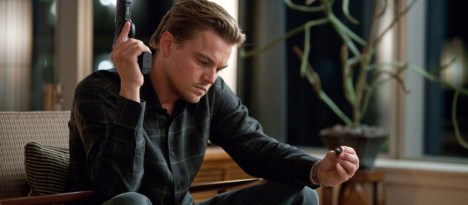
Inception is the most transparent of these films, exploring most directly the mechanics of how storytelling works within a cinematic framework. There are even scenes of characters discussing in relatively clinical terms the mechanics of catharsis and how best to emotional manipulate their target audience. Inception feels very much like Nolan is stopping and deconstructing his stopwatch storytelling for the benefit of the audience, revealing how the trick is done and how the pieces fit together. As with everything Nolan does, he does this with a great deal of skill and nuance. However, it can’t help but feel a little cynical.
Continue reading

“The Things You Gotta Remember Are the Details”: Reservoir Dogs and the Fragility of Memory and Meaning in the Nineties…

It’s always interesting to understand how much of being one of the defining artists of a cultural moment is down to understanding the zeitgeist, and how much of it is down to simply being in the right place at the right time.

This is not to denigrate the incredible skill and talent required to be perfectly positioned “in the right place at the right time”, as any amount of sustained success requires both a great deal of determination and an incredible amount of talent. Quentin Tarantino is undeniably determined and impressively talented. Tarantino has a unique knack with dialogue, a keen understanding of genre, and a fine appreciation of the history the medium. It is hard to imagine a world in which Tarantino would ever have been unable to parlay those skills into some form of success in filmmaking.

Still, there are very few directors who were so perfectly in step with the nineties as Quentin Tarantino. Tarantino is a writer and director who emerged almost fully formed, to the point that many critics and pundits would argue that his first two films are the best films in his filmography; Reservoir Dogs and Pulp Fiction. (As an aside, there are a not-insignificant number of pundits who would argue that Tarantino’s best film was his third, the underrated Jackie Brown.) It seems fair to describe Tarantino, however controversial his legacy and however divisive his modern films might be, as a defining nineties filmmaker.

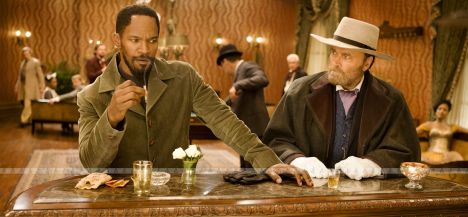
(As an aside, it should be acknowledged that Tarantino arguably had something of a similar moment towards the end of the first decade and into the second decade of the twenty-first century. Inglourious Basterds, Django Unchained and The Hateful Eight are films that have generated a lot of polarised debate, but they also seemed very much on-the-pulse in terms of the tensions and anxieties that bubbled to the surface of American popular consciousness at towards the end of the twenty-tens. However, that is perhaps a debate for another time.)

Reservoir Dogs and Pulp Fiction speaks specifically to a collection of nineties anxieties and uncertainties that seem only to have crystalised in retrospect, as if working through an existential crisis that the decade didn’t realise it was having in real time. Reservoir Dogs and Pulp Fictions are stories about memory and meaning, and how fleeting the human understanding of a chaotic world can be. They are stories about the breakdown of social order, and of trying to find some way to navigate increasingly turbulent and unstable times.

They are films that embody the tensions of nineties as effectively as Forrest Gump or the films of Oliver Stone or Chris Carter’s work on The X-Files and Millennium.

Continue reading

New Podcast! Scannain Podcast (2018) #14!

Skipping unlucky number thirteen for the moment, the fourteenth edition of the Scannain podcast is available for your aural delectation now.

This week, I’m joining Jason Coyle and Ronan Doyle to discuss the week in film, including the passing of both R. Lee Ermey and Milos Forman. As usual, we discuss what we’ve watched over the past week or so, jump into the top ten, and talk about the new releases landing in Irish cinemas. Included in the discussion are films like Rampage, The Cured and Love, Simon.

Check it out here, or give it a listen below.

Non-Review Review: Ready Player One

Don’t hate the player, hate the game.

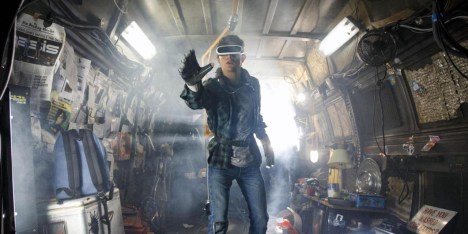
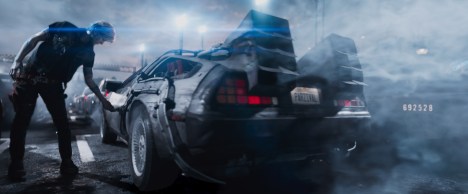
Reader Player One is a very curious piece of cinema. It is an incredibly flawed piece of work, with a lot of its flaws so fundamental that they are threaded into the very architecture of the film. Screenwriter Zak Penn has offered a very thorough and involved reinvention of Ernest Cline’s source novel, a ground-up renovation of Cline’s catalogue of popular culture references and collection of narrative tropes. Indeed, Penn’s screenplay improves a great deal on the novel that inspired it; junking and reworking entire sequences, bulking up supporting characters, trying to find a beating human heart.

Worlds apart.

More than that, Ready Player One provides Spielberg with the opportunity to go “all out.” There is a sense watching Ready Player One that Spielberg has approached the film not as a collection of popular culture references and in-jokes, but instead as an attempt to reconnect with a younger audience. Whether or not Reader Player One is the right source material for such an attempt, there is no denying Spielberg’s energy and vigour. Ready Player One is a dynamic piece of film, Spielberg demonstrating all the technique for which he is known, but with an enthusiasm that puts younger directors to shame.

However, there is no escaping the biggest issue with the film remains its source material. The problem with Ready Player One as a film is that it is an adaptation of Ready Player One as a novel.

Back to the past.

Continue reading

70. Shichinin no Samurai (Seven Samurai) (#19)

Hosted by Andrew Quinn and Darren Mooney and this week with special guest Chris Lavery, The 250 is a (mostly) weekly trip through some of the best (and worst) movies ever made, as voted for by Internet Movie Database Users. New episodes are released every Saturday at 6pm GMT, with the occasional bonus episode thrown in.

This time, Akira Kurosawa’s Shichinin no Samurai.

In feudal Japan, a small village finds itself threatened by an army of bandits. In a desperate attempt to protect their barley crop from the marauding menace, the villages decide to hire a samurai to the protect the village. Inevitably, they end up with more than they bargained for.

At time of recording, it was ranked the 19th best movie of all time on the Internet Movie Database.

Continue reading

New Podcast! Scannain Podcast (2018) #7!

Before the storm…

The arrival of “Storm Emma” and the “Beast from the East” ensured one of the most memorable Audi Dublin International Film Festivals in recent memory. Myself, Jason Coyle and Ronan Doyle took a bit of a breather in the middle of it all to talk about the best of what we’d already seen, what we thought would win at the Oscars, as well as the usual trip through the weekly top ten and the new releases.

Check it out here, or give it a listen below.

Non-Review Review: Marlina the Murderer in Four Acts

This film was seen as part of the Audi Dublin International Film Festival 2018.

Marlina the Murderer in Four Acts is a tough film to classify.

Visually and narratively, Marlina the Murderer in Four Acts feels very much like a western. Writer and director Mouly Surya crafts a story that is recognisable as a classic western tale. The eponymous lead character lies alone in a remote part of Sumba, managing a farm following the death of her husband. When bandits arrive to raid the property, Marlina finds herself forced to embark on a journey across the region in search of justice – or maybe just even peace. Along the way, there is violence, retribution and reconciliation.

Director Mouly Surya and cinematographer Yunus Pasolang tell the story using the visual language of the western. The film features any number of striking and beautiful compositions, the camera taking in the sparse beauty of the Indonesian countryside in rich browns and yellows, the deep blue of the ocean occasionally visible in the distance or the background. Marlina the Murderer in Four Acts even includes sequences of its protagonist riding on horseback, hoping to deliver a bounty to the forces of justice in a seemingly lawless land.

However, these trappings serve to provide a framework for a much more compelling and fascinating character study. Marlina the Murderer in Four Acts is a quiet and introspective film, one that finds a strange warmth in the quiet resolve of its central character.

Continue reading

59. Heat (#124)

Hosted by Andrew Quinn and Darren Mooney and this week with special guests Phil Bagnall and Joe Griffin, The 250 is a (mostly) weekly trip through some of the best (and worst) movies ever made, as voted for by Internet Movie Database Users. New episodes are released every second Saturday at 6pm GMT, with the occasional bonus episode between them.

This time, Michael Mann’s Heat.

Michael Mann’s Los Angeles crime epic finds lives intersecting and overlapping in the City of Angels. At the heart of the story, career criminal Neil McCauley and driven detective Vincent Hanna find themselves on a collision course that leave countless lives shattered in their wake.

At time of recording, it was ranked the 124th best movie of all time on the Internet Movie Database.

Continue reading

Dublin Film Critics Circle Awards, 2017

It’s the most wonderful time of the year!

Snow! Christmas! Terrible but enjoyable music! End of year “best of” lists!

I’m a member of a couple of critics’ organisations, so we’ll be releasing a couple of these lists upon which I voted. I’ll also hopefully be releasing my own top ten as part of a Scannain end-of-year podcast some time next week.

In the meantime, the Dublin Film Critics Circle have released their end of year awards. Thrilled to be a part of the group, who are voting on films released in Ireland during the calendar year of 2017. As such, it will be a different pool of films than the Online Film Critics Society awards.

A massive thanks to the wonderful Tara Brady for organising the awards this year, balloting members and collating results.

Anyway, without further ado…

Continue reading