• Following Us

  • Categories

  • Check out the Archives


  • Awards & Nominations

Non-Review: His House

His House is a striking and unsettling piece of piece of work, and an impressive feature debut for director Remi Weekes.

His House focuses on Bol and Rial, a refugee couple who have fled war-torn Sudan and arrived in the United Kingdom. Against all odds, the couple are allowed out of the detention centre and assigned their own living space. It is a rundown old house on an estate. “You must have won the jackpot,” explains their case worker Mark, even as the front door falls off its hinges. It is a big house, one in need of a lot of care and work. However, it all belongs to Bol and Rial – and whatever they have brought with them.

That sinking feeling.

His House works on a number of levels. Most obviously and most importantly, it is genuinely unsettling. Weekes understands the mechanics of horror, and works closely with composer Roque Baños and cinematographer Jo Willems to construct a genuinely creepy horror. Weekes makes excellent use of negative space and framing to make the audience uncomfortable, and generally does an excellent job with mounting tension and dread. His House is an impressive piece of horror, judged simply as a genre piece.

However, the film is also quite pointed and well-observed in its horror. His Horror riffs on the tropes and conventions of the familiar haunted house story, particularly as a metaphor for trauma. What elevates Weekes’ screenplay, from a premise by Felicity Evans and Toby Venables, is an understanding that sometimes the ghosts that fill a haunted house arrive with the owners.

It is certainly a fixer-upper.

Continue reading

Non-Review Review: The Craft – Legacy

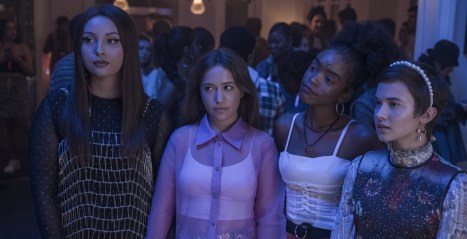
The Craft: Legacy is, as the title implies, a legacy sequel to The Craft.

The Craft is an interesting film. It received something of a critical drubbing on initial release, but there have since been conscious efforts to reevaluate it. This is not unusual in female-focused horror; Jennifer’s Body has undergone another recent critical reappraisal, and deservedly so. The Craft is an interesting film in this sense; it is certainly a better movie than many critics thought it was, if not quite the hidden masterpiece that its modern defenders would want it to be.

Picture imperfect.

One of the key and enduring strengths of The Craft was that it was a relatively rare example of a female-focused supernatural horror movie when it was released, explicitly engaged with the idea of female empowerment in the context of the mid-nineties, filtered through a teenage perspective. (It arrived a year before Buffy the Vampire Slayer.) The fact that this was an underserved market was perhaps best illustrated by the launch of the similarly-themed television show Charmed two years later, which would quietly run for eight seasons.

The Craft was imperfect, but it scratched a very strong itch. The Craft: Legacy naturally arrives at a very different time. While audiences looking for these sorts of genre stories about young women grappling with supernatural metaphors for empowerment in a hostile world, there are far more options than there were in 1994. The Craft: Legacy needs to do more than just offer a nostalgic reminder of a film that has slowly and surely built up a cult following. Unfortunately, the film can’t even do that.

Getting Coven with Stepdad.

Continue reading

New Escapist Column! On “Borat Subsequent Moviefilm” and How “Borat” Has Changed Over 14 Years…

I published a new In the Frame piece at The Escapist this evening. With the release of Borat Subsequent Moviefilm last week, it seemed an interesting opportunity to take a look at the return of the Kazakh caricature, and examine how the character had shifted in the fourteen years since the release of Borat.

Perhaps the most surprising aspect of Borat Subsequent Moviefilm is the way in which it offers a much more conventional structure – and even character arc – than the original film. It’s a strange choice, particularly in the context of the film’s mockumentary sensibility and the outlandish nature of the character. However, it also illustrates how much the world has changed since the release of the original film. Borat Subsequent Moviefilm realises that the world has changed, so maybe Borat should as well.

You can read the piece here, or click the picture below.

Non-Review Review: The Witches (2020)

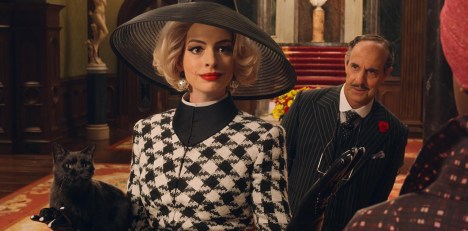
The Witches offers a clumsy American update of the classic Roald Dahl novel.

To be fair, there is something potentially interesting in attempting to update The Witches, both for modern audiences and for American viewers. It’s to the credit of director Robert Zemeckis and co-writers Kenya Barris and Guillermo del Toro that they at least understand this. The Witches makes a number of alterations to its source material, and at least some of those reflect a genuine and compelling attempt to update the story to fit in a modern and American context.

Any witch way but loose…

At the same time, The Witches is a mess. Part of this is down to the way in which a lot of the appeal of Dahl’s story is lost in translation, as a wry and arch British story gets filtered through the hypersaturated Americana of one of the defining American directors, an even more exaggerated effect of what happened with Steven Spielberg’s work on The B.F.G. However, some of this is more fundamental, as Zemeckis struggles to balance tone and mood across the film, and finds his attentions drawn more to what his interests desire than what the plot demands.

The Witches is a misfire, but an intriguing one. There are hints of a much more compelling movie to found, sifting between its more misjudged moments.

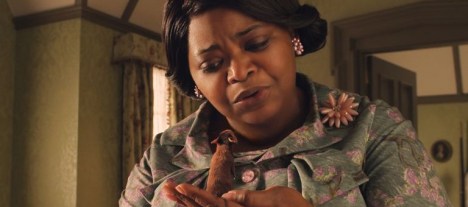
Putting a (ro)dent in his reputation…

Continue reading

Non-Review Review: On the Rocks

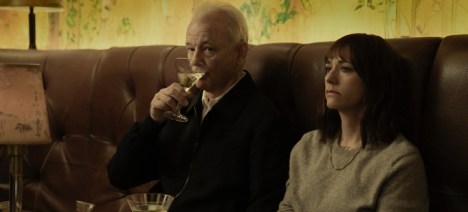
On the Rocks is a disarmingly charming film.

Sofia Coppola’s latest is built around the relationship between Laura and her father Felix. Laura is happily married with two young girls, but has begun to suspect that her marriage is dysfunctional. There are small clues. Her husband Dean seems less interested in physical intimacy, and has been spending more time at the office with his co-worker Fiona. As her suspicions mount, Laura reaches out to her father Felix, who has spent his life as a debonair playboy with a somewhat cynical perspective of the masculine psyche.

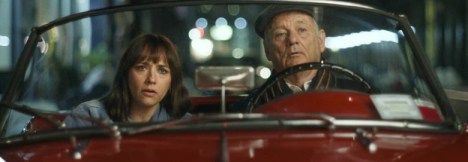
Daddy daughter day.

On the Rocks is an earnest dramedy, following the dynamic between Laura and Felix as they launch an investigation into her husband’s potential affair. It’s elevated by two superb central performances, a clever script, and direction that allows its characters and its actors room to work. There’s a surprising amount of honest and introspection in On the Rocks, but also a surprising earnestness. On the Rocks is a surprisingly empathic film, never judging or condemning its characters as easily as it might.

The results are engaging and heartening. In some ways, particularly given the central dynamic of an older man played by Bill Murray and a younger woman managing her own life crisis, it’s hard not to see On the Rocks as a companion piece to Coppola’s breakout film Lost in Translation. However, there’s a lot more maturity and reflection at play here, a kindness and gentleness that feels earned through the two decades between then and now.

“Enjoying a nice Mar-team-ee.”

Continue reading

New Podcast! The Escapist Movie Podcast – “The Excellence of The Haunting of Bly Manor”

The Escapist have launched a movie podcast, and I was thrilled to join Jack Packard for the eighth episode. It was a light enough week for film news, so we talked about Disney’s pivot to streaming, the rumours about the upcoming sequel to Spider-Man: Homecoming and Spider-Man: Far From Home, and the joys of The Haunting of Bly Manor.

You can listen to the episode here, back episodes of the podcast here, click the link below or even listen directly.

Non-Review Review: Rebecca

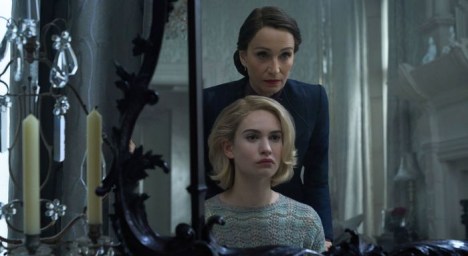
The most shocking thing about Ben Wheatley’s adaptation of Rebecca is how tame it feels.

The bulk of the coverage of the adaptation of Daphne du Maurier’s gothic romance focuses on the idea that Wheatley is tilting at cinematic windmills by daring to explore the same ground that Alfred Hitchcock had already so memorably mapped. Hitchcock is as close to a cinematic sacred cow as exists, and to attempt to remake one of his most beloved films would be tantamount to making another version of Gone with the Wind or restaging Casablanca. It is one of the rare lines that exists in a modern pop culture built around recycling existing intellectual property.

Maxim-um fun.

In truth, there’s nothing wrong with daring to approach the cinema of Alfred Hitchcock. After all, Park Chan-wook’s Stoker was very much an update of Hitchcock’s Shadow of a Doubt. More than that, there are perhaps valid reasons for wanting to go to Manderley again. Hitchcock’s adaptation of du Maurier’s novel was constrained by the demands of the Production Code Authority, and forced to change key plot points and obscure others through subtext. While some observers might argue this renders the film more “artful”, it does justify a revisit in a less puritanical time.

However, Wheatley never manages to bring these ideas to the surface. His version of Rebecca never manages to quite articulate or express the anxieties lurking in the shadow of Hitchcock’s classic. Rebecca is a sleek and stylish production with a set of solid performances and a few flashes of visual vigour, but it lacks a strong sense of its own identity – often seeming disjointedly caught between its influences and its impulses, failing to reconcile the two into anything especially compelling.

A time for reflection.

Continue reading

203. Kundun – Summer of Scorsese (#—)

Hosted by Andrew Quinn, Jay Coyle and Darren Mooney, The 250 is a (mostly) weekly trip through some of the best (and worst) movies ever made, as voted for by Internet Movie Database Users. New episodes are released every Saturday at 6pm GMT.

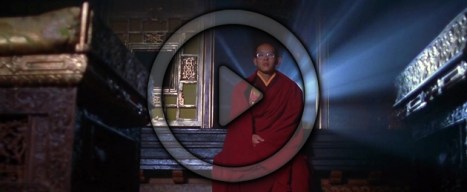
This time, continuing our Summer of Scorsese season, Martin Scorsese’s Kundun.

Martin Scorsese is one of the defining directors in American cinema, with a host of massively successful (and cult) hits that have shaped and defined cinema across generations: New York, New York, Raging Bull, The Colour of Money, Goodfellas, Casino, Shutter Island, The Irishman. The Summer of Scorsese season offers a trip through his filmography via the IMDb‘s 250.

The fourteenth Dalai Lama navigates the complicated web of faith and politics at a highly volatile time in the history of Tibet, meditating on both his divine responsibilities and the looming threat of Chinese intervention as the world changes around him.

At time of recording, it was not ranked on the Internet Movie Database‘s list of the best movies of all-time.

Continue reading

Non-Review Review: Possessor

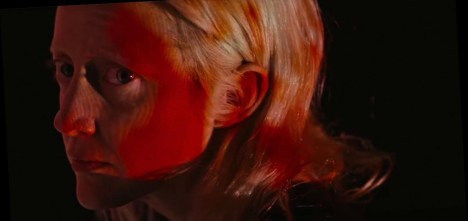
Possessor is a brutal and graphic slice of body horror, unsettling and uncanny in equal measure.

It seems unfair to define writer and director Brandon Cronenberg by his relationship to his father, Canadian horror maestro David Cronenberg. The fact that it’s possible to draw a clear line from his father’s work on films like Scanners, The Brood and Videodrome through to Possessor only makes these comparisons more obvious and ubiquitous. However, Brandon Cronenberg has already established himself as a potent force in the body horror genre with his feature debut, AntiViral.

She can explain the plot until she’s red in the face…

Possessor is a grotesque and creepy addition to the genre. The movie focuses on Tasya Vos, a professional assassin who completes her assignments by hijacking the body of somebody close to her target, allowing her to infiltrate their inner circle and carry out the murder in that persona. As the premise suggests, Possessor is rife with body horror. The film is built around the classic body horror nightmare, the realisation that the human body is ultimately nothing more than an often malfunctioning machine made of meat, equally often at odds with the mind driving it.

At the same time, Possessor is perhaps a little too broad and too abstract. Possessor is obviously a body horror, but its storytelling often feels closer to the more abstract social horrors that are popular in modern American independent cinema, films like She Dies Tomorrow. This is interesting in some respects, but also leaves the film feeling a little too vague at points. The problem isn’t that Possessor has nothing to say, it’s more that it’s trying to say everything at once. While this confusion is occasionally effective given the themes of the story, it is also frequently frustrating.

Piecing it together.

Continue reading

“Your Reminiscence”: Martin Scorsese’s “Cape Fear”, Nostalgia, and Parental Anxiety…

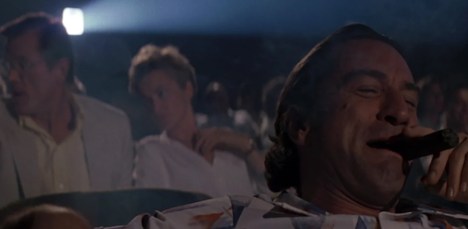
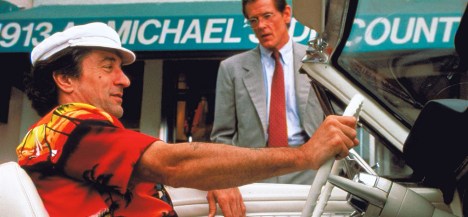
The podcast that I co-host, The 250, continued our belated Summer of Scorsese last week with a look at Goodfellas. This week, we’ll looking at Casino. It is a fun and broad discussion that is well worth your time, but the season skips over large swathes of Scorsese’s filmography. So I thought it might be worth taking a look back at Cape Fear.

Cape Fear is often overlooked in terms of Martin Scorsese’s filmography.

It falls in the gap between the instant classic Goodfellas and the sleeper masterpiece Casino. It shares that gap with The Age of Innocence, which is one of the films in Scorsese’s filmography that has been begging for a reappraisal and seems more likely to receive critical attention than a trashy remake of a pulpy sixties thriller. (The Age of Innocence recently received a re-release as part of the high-end Criterion Collection.) Indeed, Cape Fear seems designed to be seen as disposable in the context of Scorsese’s filmography.

At best, Cape Fear is typically seen as a curiosity – and potentially a worrying one. While Roger Ebert praised the film, he lamented “a certain impersonality in a film by this most personal of directors.” There was a whiff of moral panic to Kenneth Turan’s review, which asked, “Are we, perhaps, too quick to heap praise on films just because they are expertly done, shrugging off the troubling nature of the content? Is an audience’s increasing avid addiction to increasingly twisted thrills any justification for cheering on the people who provide them?”

However, there’s a lot interesting happening in Cape Fear. Most obviously, the film is a vehicle for Scorsese’s love of a certain style of directorial technique. The original Cape Fear had been directed by J. Lee Thompson, who had worked as a dialogue coach under Alfred Hitchcock. The film arrived two years after Alfred Hitchcock’s Psycho, and the influence of Hitchcock is obvious on Thompson’s work; it’s scored by Hitchcock collaborator Bernard Herrmann, editted by Hitchcock veteran George Tomasini and features art direction from Robert Boyle and Alexander Golitzen.

However, what’s particularly interesting about Cape Fear is the way in which it actively translates the original movie from the early sixties to the early nineties, playing not only on the same underlying fears that informed the original, but also understanding that they existed in a different context during the nineties. It’s a movie that cannily and shrewdly transposes those two times, tapping into the same fears, but in a way that demonstrates both how those fears have evolved – and also how they haven’t.

Cape Fear is a lurid b-movie thriller, but in the most interesting and unsettling ways. It is a film fascinated by what lurks beneath the surface.

Continue reading