• Following Us

  • Categories

  • Check out the Archives


  • Awards & Nominations

Daredevil – Stick (Review)

To celebrate the launch of Marvel’s Daredevil and the release of Avengers: Age of Ultron, we are reviewing all thirteen episodes of the first season of Marvel and Netflix’s Daredevil. Check back daily for the latest review.

Sitting smack bang in the middle of the season, Stick is something of an oddity.

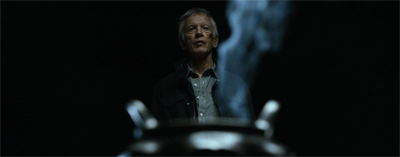
It demonstrates just how episodic Daredevil can be in structure. Stick lets its focus move away from Matt’s conflict with Wilson Fisk, offering an episode built around a guest star and shedding some light on one of the members of Fisk’s cabal. “Ride with me tonight,” Stick urges Matt. “Help me destroy Black Sky, keep it off the streets, and I promise you this: Wilson Fisk will know the taste of fear the day he faces you ’cause he’ll know that you kicked the guy he’s afraid of right in the nuts.” Fisk is still a target here, albeit one temporarily shifted to the background.
daredevil-stick20

There are obviously ripples from Stick that reverberate through the rest of the season. Nobu’s loss here helps to mount more pressure on Fisk in Shadows in the Glass, while it leads to a very physical confrontation between Nobu and Matt in Speak of the Devil. At the same time, it remains curiously disengaged from the show around it. Despite the fact that the casting of Scott Glenn was announced with the fanfare reserved for primary cast members like Rosario Dawson or Vincent D’Onofrio, this is his only appearance in the whole thirteen-episode season.

Of course, there might very well be a reason for this. Stick is the only episode of the first season with a closing scene that hints at something far beyond the scope of this individual show – a coming “war” between mystical and magical forces. In some ways, Stick feels like it takes advantage of the episodic structure of a thirteen-episode season to relegate all the obligatory set-up and world-building for material outside the show to a single episode in the middle of the season. This is perhaps the ideal place for it, not distracting from the beginning or the end of the run.

daredevil-stick5

A lot of this feels like set-up for the Defenders project that will unite all four of the Netflix and Marvel miniseries, bringing together characters like Matt Murdock, Jessica Jones, Luke Cage and Danny Rand to fight an incredible evil in much the same way that The Avengers brought together Iron Man, Captain America, Thor and Hulk. Stick seems to allude to something decidedly more epic in scope than the details of this individual thirteen-episode run. It is, essentially, the second act of Iron Man 2 structured as a mid-season episode of Daredevil.

However, it all works. Stick might be divorced from the larger plot concerns of the season around it, but it never loses sight of its main characters. After a run of episodes focusing on Wilson Fisk, Stick brings the focus back to Matt Murdock. The return of Matt’s childhood mentor might be tied to some larger plot, but it also helps explain Matt’s character a bit more. Meeting Stick, we get to know a little bit more about how Matt ended up this way.
daredevil-stick

Continue reading

Star Trek: Enterprise – Dawn (Review)

Next year, Star Trek is fifty years old. We have some special stuff planned for that, but – in the meantime – we’re reviewing all of Star Trek: Enterprise this year as something of a prequel to that anniversary. This April, we’re doing the second season. Check back daily for the latest review.

Dawn arrives at a very delicate moment in Star Trek history.

Star Trek: Nemesis had hit cinemas the weekend before The Catwalk aired. It had been an immediate and humiliating disaster for Paramount. It arrived in a stuffed Christmas season, amid a relentless onslaught of big budget blockbuster fare – competing for space against Harry Potter and the Chamber of Secrets, Die Another Day and Lord of the Rings: The Two Towers. It was the first Star Trek film not to open at the top of the United States box office, landing second to Maid in Manhattan.

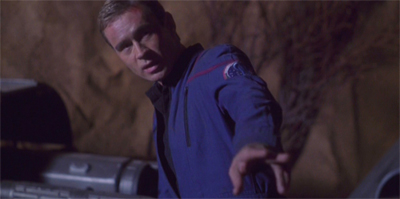
Engineering a solution...

Engineering a solution…

The prognosis for Star Trek as a franchise had not been particularly optimistic for quite some time. The ratings had been in decline since Star Trek: The Next Generation went off the air. Star Trek: Enterprise was airing on a dying network. Changing management at UPN was less friendly to the franchise than it had been. However, the spectacular failure of Star Trek: Nemesis was perhaps the most public blow the franchise had taken. The critics now had ammunition; the vultures were circling; the franchise was on the ropes for the world to see.

The Catwalk had aired a few days after Nemesis crash-landed, when the franchise was still reeling. The first episode of Star Trek to air in 2003, Dawn was broadcast after the franchise and the public had time to properly process the disaster. It goes without saying that there was a lot of pressure on the episode.

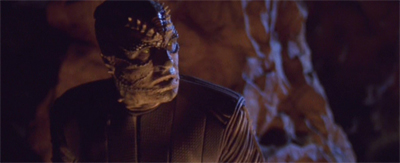
Alien nation...

Alien nation…

Continue reading

The X-Files: Season One (Topps) #2 – Deep Throat (Review)

This February and March, we’re taking a trip back in time to review the fourth season of The X-Files and the first season of Millennium.

Season One feels like a very odd way to franchise The X-Files.

Topps had enjoyed tremendous success with their licensed tie-in comic book, so it made a certain amount of sense to try to milk the franchise as much as possible. After all, they had already tried a number of other promotions, like releasing “digests” to supplement that monthly series and releasing tie-in comics to appear with magazines like Wizard. So offering another series that would publish on a regular basis starring Mulder and Scully made perfectly logical sense.

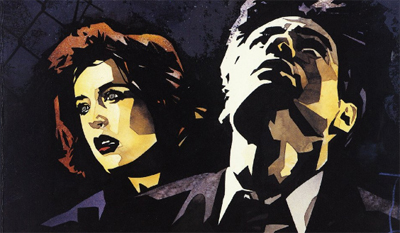
The truth is up there...

The truth is up there…

About a year after the release of their adaptation of The Pilot, Topps decided to push ahead with a series of regular adaptations of first season episodes of The X-Files. They reissued their adaptation of The Pilot as the first comic in the series, and then began publishing new adaptations of those early episodes written by Roy Thomas and illustrated by a rotating team of artists. The comics would be about twice as long as the issues of the monthly series, but would only publish once every two months. The monthly series was priced a $2.50, with Season One priced at $4.95.

It is hard not to feel quite cynical about Season One, particularly in an era where these classic episodes of The X-Files stream of Netflix and entire seasons are available to purchase at very low prices.

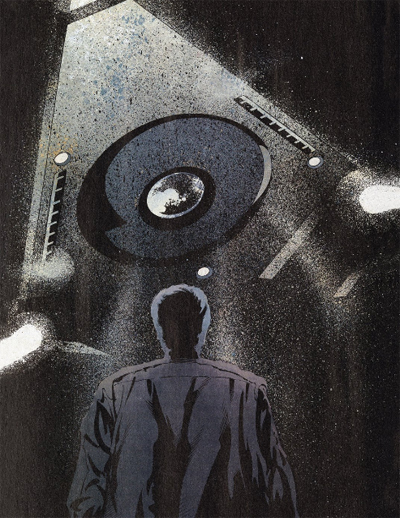
The shape of things to come...

The shape of things to come…

Continue reading

Star Trek: Enterprise – Dead Stop (Review)

Next year, Star Trek is fifty years old. We have some special stuff planned for that, but – in the meantime – we’re reviewing all of Star Trek: Enterprise this year as something of a prequel to that anniversary. This April, we’re doing the second season. Check back daily for the latest review.

Dead Stop is an interesting beast.

One of the stronger episodes from the second season of Star Trek: Enterprise, Dead Stop follows on directly from the events of the previous episode without serving as a direct continuation. It is very rare to see this approach taken on Star Trek, and it’s the perfect example of the sort of episode-to-episode connections that were lacking during the show’s first two seasons. Dead Stop is not a direct follow-on to Minefield, but it is fascinated with the fallout from that episode.

A model ship...

A model ship…

And yet, despite this, Dead Stop is also based around one of the most generic premises imaginable – a sentient space station with a sinister agenda. With a few choice edits, the premise could easily be adapted for Star Trek: The Next Generation or Star Trek: Voyager. Indeed, it’s not too difficult to imagine Kirk and Spock dealing with the rogue space station at some point during their five year mission. It is a story that could – in broad strokes – even work for a television anthology series.

The beauty of Dead Stop is the way that it blends these two conflicting elements together, to construct a show that feels like it showcases the best parts of Enterprise while working from a core story that could be told across the franchise.

Piecing it together...

Piecing it together…

Continue reading

Star Trek: Enterprise – Minefield (Review)

Next year, Star Trek is fifty years old. We have some special stuff planned for that, but – in the meantime – we’re reviewing all of Star Trek: Enterprise this year as something of a prequel to that anniversary. This April, we’re doing the second season. Check back daily for the latest review.

Shuttlepod One worked very well in the first season, didn’t it?

The episode was one of the highlights of the first season, received very well by both the cast and fandom. So it makes sense to revisit that basic set-up early in the second season. This time it isn’t Malcolm Reed and Charles Tucker facing death in the cold void of space. Instead, Jonathan Archer and Malcolm Reed find themselves struggling with a mine as a countdown ticks away in the background. Facing all-but-certain death, characters are thrown into conflict with one another. Sparks fly, drama happens.

Let's go outside.

Let’s go outside.

To be fair, Minefield ups the stakes dramatically. It takes the same high-stakes characters-against-the-void drama that made Shuttlepod One such a success and then blends it with Star Trek: First Contact and throws the Romulans into the mix just two months before the release of Star Trek: Nemesis. It is very much a high-concept cocktail of episode, a show with a lot going on and a lot of focus in contrast to the more relaxed pace of something like Carbon Creek.

Minefield does feel a little bit too derivative and like it is promising something that never quite arrives. However, it is built around a very sound structure, makes good use of the special effects available for the show, and gives Scott Bakula and Dominic Keating a chance to play off one another. It offers a lot of promise for the second season, only to be retroactively tainted by the fact that the second season never delivers on any of these promises.

All I need is the air that I breath...

All I need is the air that I breath…

Continue reading

Star Trek: Enterprise – Carbon Creek (Review)

Next year, Star Trek is fifty years old. We have some special stuff planned for that, but – in the meantime – we’re reviewing all of Star Trek: Enterprise this year as something of a prequel to that anniversary. This April, we’re doing the second season. Check back daily for the latest review.

Although it was the second episode of the season broadcast, Carbon Creek was the first episode of the second season produced.

There are a variety of reasons for this. The fact that it only featured three primary cast members would have meant that everybody else got a little extra vacation time. With a lot of location shooting and a production design outside the Star Trek norm, it likely made sense to get it out of the way first. From a budgeting and production standpoint, the show likely benefited from a bit more time than episodes like Shockwave, Part II or Minefield.

"We come in peace...

“We come in peace…”

However, even outside of these pragmatic production concerns, Carbon Creek helps to set the tone for the second season of Star Trek: Enterprise. It is a largely nostalgic and romantic exercise, a rather light stand-alone episode that feels like it wallows in the iconography and conventions of Star Trek. Indeed, the teleplay is credited to Chris Black, the only new writer to survive the writing staff departures that Mike Sussman jokingly referred to as “purges.”

Black is in many respects the first “native” Enterprise writer – the first writer to last more than a season who had not worked on Star Trek: Voyager. As such, it seems only appropriate that he should set the tone for the season ahead.

Vulcan hustle...

Vulcan hustle…

Continue reading

The X-Files – Demons (Review)

This February and March, we’re taking a trip back in time to review the fourth season of The X-Files and the first season of Millennium.

The fourth season of The X-Files is an oddity.

That is particularly true when it comes to the show’s mythology. Not only has any sense of narrative progression stalled after the “to be continued…” hook of Talitha Cumi, the fourth season seems to branch the mythology out in multiple directions that never really get anywhere. Tunguska and Terma introduce a Russian conspiracy that quickly becomes a footnote. Tempus Fugit and Max focuses on private military contractors who are never mentioned again. Memento Mori gives Scully cancer halfway through the season, and the rest of the year tries to catch up.

A cigarette-smoking spectre...

A cigarette-smoking spectre…

Demons is an episode that sits rather awkwardly as the penultimate episode of the season. An episode about Mulder undergoing aggressive therapy to recover lost memories seems a little out of place with everything else going on around him. After Memento Mori, you would imagine he would be worried about Scully. After Zero Sum, you imagine he would be wary about putting himself in a vulnerable position. Demons feels very much like it would make a good first season episode, a product of the time when Samantha Mulder was our lead’s primary driving motivation.

Instead, Demons sits awkwardly before the big season finalé with its own clear agenda. Scully’s closing monologue is clearly designed to lead into Gethsemane as almost a four-part season-bridging epic. However, the execution feels a little too haphazard, a little too casual, a little too disorganised. Demons feels less like the lead-in to an earth-shattering story and more like a script designed to plug a gap late in the season.

"Hey, look on the bright side, this time next year, you'll be in a psychiatric institution."

“Hey, look on the bright side, this time next year, you’ll be in a psychiatric institution.”

Continue reading

Star Trek: Enterprise – Shockwave, Part II (Review)

Next year, Star Trek is fifty years old. We have some special stuff planned for that, but – in the meantime – we’re reviewing all of Star Trek: Enterprise this year as something of a prequel to that anniversary. This April, we’re doing the second season. Check back daily for the latest review.

Shockwave, Part I was one of the stronger episodes of the first season of Star Trek: Enterprise.

Shockwave, Part II is not one of the stronger episodes of the second season of Star Trek: Enterprise.

"Tell me how many seasons we get!"

“Tell me how many seasons we get!”

Continue reading

The X-Files – Unrequited (Review)

This February and March, we’re taking a trip back in time to review the fourth season of The X-Files and the first season of Millennium.

Unrequited opens with Mulder and Scully’s attempts to stop an assassination attempt by an invisible man, before jumping back twelve hours to explain how our heroes got into this situation. With that set-up, Unrequited falls into a lot of the narrative traps associated with an in media res teaser. After all, there’s not really anything special about the teaser. There is no mystery to be solved, no strange behaviour to explain. What questions are we meant to ask, based on that opening scene? How are we meant to look at the rest of the episode differently, knowing what we know?

Sure, Mulder and Scully are protecting Major General Benjamin Bloch. That would seem to be a little bit outside the remit of “the FBI’s most unwanted”, but that is not too strange a situation for the duo. They are FBI agents, so there is a certain flexibility in their job description. The Field Where I Died – an episode with a much more effective non-linear teaser – featured Mulder and Scully collaborating with the ATF. So it isn’t as if the set-up should be striking or compelling.

Stop, or my Mulder will shoot!

Stop, or my Mulder will shoot!

It seems like we are meant to focus on the monster of the week – Vietnam veteran Nathaniel Teager. Teager has the ability to turn himself invisible, which is quite something. Sure enough, the teaser to Unrequited offers a glimpse of that ability in action. But why is it important to have show us that ability in a scene from the climax of the episode? With a few adjustments, Teager’s first murder in the back of the limousine would serve the same purpose; introducing the audience to his powers without the need to recycle several minutes of footage from the climax.

After all, the most dissatisfying aspect of the in media res teaser is not the fact that it is completely inessential. Instead, the decision to use footage from the climax means that the audience has to sit through the same sequence twice. The teaser for Unrequited works well enough the first time around, but the sequence is not clever or inventive enough to merit a live-action replay towards the end of the hour. It just saps momentum from episode, rendering the final sequences somewhat tedious. That is the biggest problem with the opening of Unrequited, even beyond laziness.

Flags of our father figures...

Flags of our father figures…

Continue reading

The X-Files – Paper Hearts (Review)

This February and March, we’re taking a trip back in time to review the fourth season of The X-Files and the first season of Millennium.

Paper Hearts is one of the best scripts that Vince Gilligan would write for The X-Files, and one of the best episodes of the fourth season. This is enough to put it in the frontrunners of any possible “best episode ever” ranking.

The episode is spectacular. It works on just about every conceivable level. It has a great script from a great young staff writer. It has a great guest star in Tom Noonan. It features a great performance from David Duchovny. Rob Bowman does a spectacular job directing. Mark Snow is one of the most consistent composers working in nineties television, and his score for Paper Hearts manages to be simple, effective and memorable. It is thoughtful, atmospheric, emotional and compelling. It is the perfect storm.

The truth is buried...

The truth is buried…

However, the real cherry on Paper Hearts is just how easy it would be to mess up an episode like this. On paper, Paper Hearts seems like a disaster waiting to happen. It is an episode that teases the audience with a potentially massive reversal of one of the show’s core truths. It posits an alternative theory for the abduction of Samantha Mulder that would shake the show to its very core. If Paper Hearts followed through on that basic premise, everything would change. Much like Never Again, this is an episode with the potential to poison the show.

Which makes it inevitable that Paper Hearts will back away from its potentially game-changing premise, which brings its own challenges. It is one thing to up-end the apple cart; it is another to pretend to up-end the apple cart only to restore the status quo at the end of the hour. On paper, and from any synopsis, Paper Hearts seems like the biggest cheat imaginable. “Everything is different!” it seems to yell. “And then it’s not!” The real beauty of Paper Hearts is the way that the episode works almost perfectly even with these huge hurdles to clear.

The heart of the matter...

The heart of the matter…

Continue reading