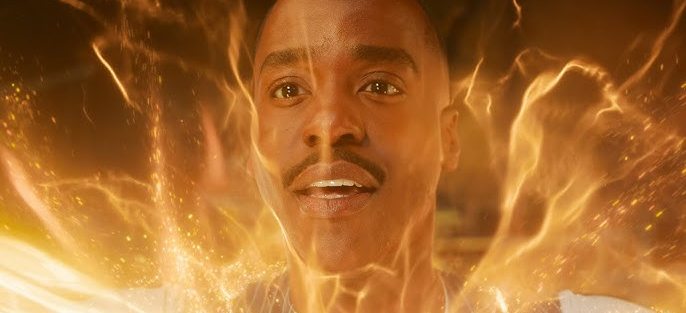
In many ways, Wish World feels like a thesis statement for Davies’ return to Doctor Who.
It is a story that is, very overtly, about the power of stories and narratives to warp reality. It is a story about the violence that comes from attempts to impose restrictive and suffocating conformist narratives upon people, and how media can bend reality to a point that doubt can cause the world itself to literally crack open. Davies’ return to Doctor Who has been fascinated by the porous nature of reality and the power of television as a medium, and all of that comes crashing to a head with Wish World.
A delightful John-ty adventure.
Wish World is very obviously setting up The Reality War, the big blockbuster-sized finale that will be the first episode of Doctor Who to premiere on BBC One since The Giggle, allowing for the Christmas Specials The Church on Ruby Road and Joy to the World. A significant portion of the episode amounts to pieces being moved around the board so that they can deliver in the season finale, to the point that the Rani herself has to acknowledge that the final act of the episode is largely “exposition.” It is always difficult to discuss the first part of a two-part episode in isolation, and that is especially true of a the first part of a season finale.
However, Wish World works largely on its own terms, crystalising the ideas that have been simmering across these twenty episodes since The Star Beast, articulating themes that are clearly weighing on Davies’ mind.
The Well is a strange and triumphant exercise, a collection of contradictions that coheres remarkably well.
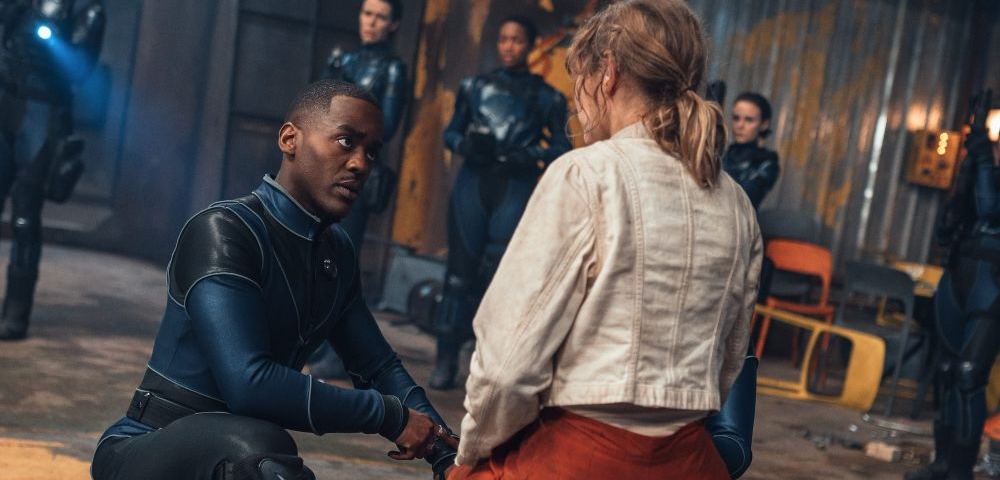
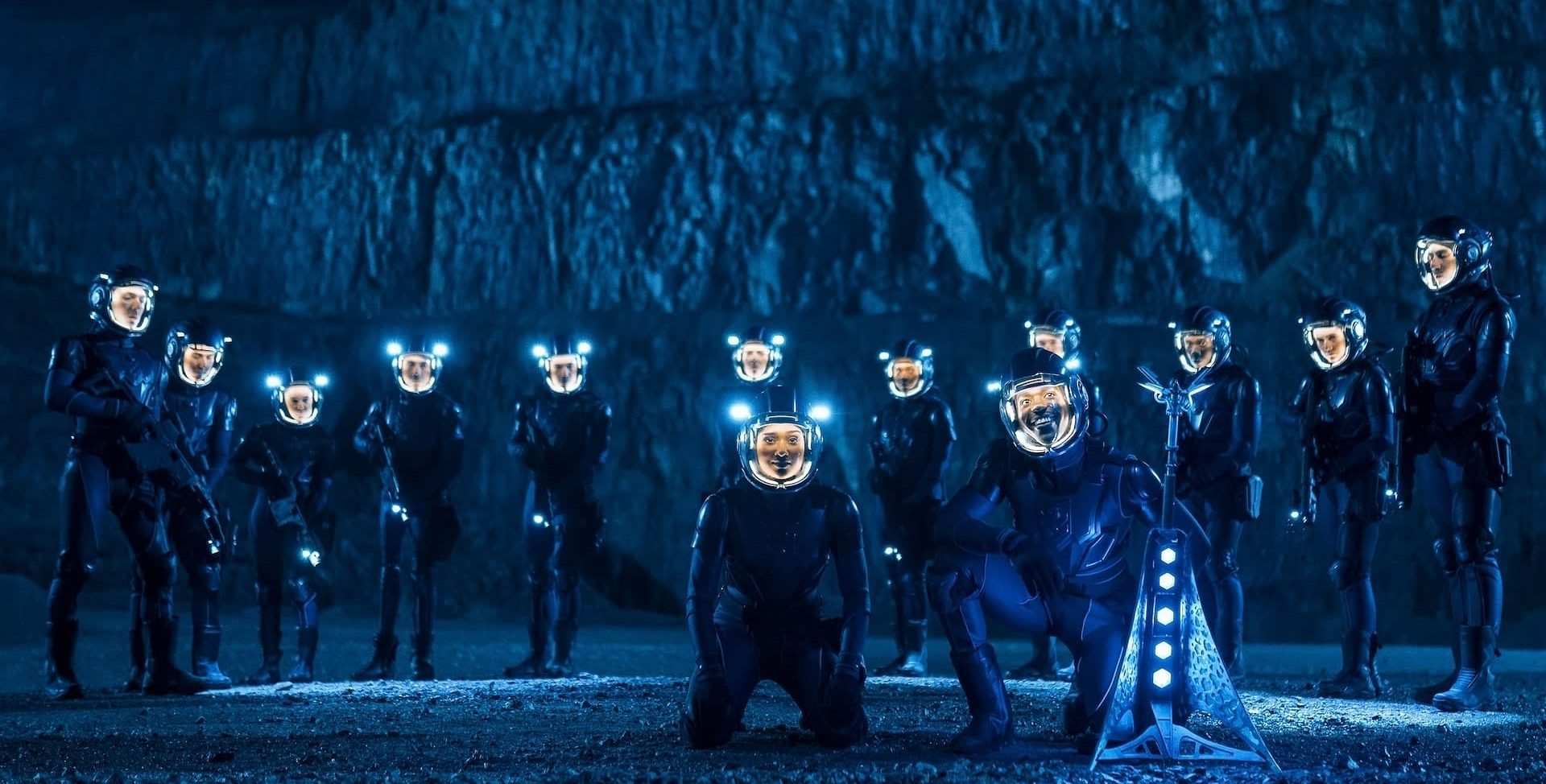
It is a chamber piece, a very basic Doctor Who story that could easily have been executed on the classic BBC budget, blown up with Disney+ money. It is a very obvious sequel to at least one beloved story from Davies’ original tenure as showrunner, and saturated with references to others, while still feeling undeniably like a produce of his second era overseeing the show. It is an exercise in nostalgia, but also a story about how that nostalgia is cursed. It is also Russell T. Davies revisiting his early work, while taking cues from Steven Moffat.
All’s well…
It shouldn’t work. The Well should collapse under its own weight. It should feel like an indulgent mess, a collection of clashing recycled imagery and iconography. However, The Well manages to strike a very careful balance between its competing priorities, allowing the individual elements to add up to more than the sum of its individual parts. It’s an episode that feels like an extension of Davies work in both The Robot Revolution and Lux, solidifying a rich thematic vein running through the first three stories of the season.
Hosted by Andrew Quinn and Darren Mooney, The 250 is a weekly trip through some of the best (and worst) movies ever made, as voted for by Internet Movie Database Users. New episodes are released Saturdays at 6pm GMT.
This week, William Shatner’s Star Trek V: The Final Frontier.
The planet Nimbus III was supposed to be “the Planet of Galactic Peace”, but it has descended into a wretched hive of scum and villainy. From the desert comes a stranger, a mysterious Vulcan named Sybok with an incredible gift for recruiting followers. Sybok has a divine mission. He plans to journey to the centre of the galaxy and speak to God. He just needs a starship to do so. And, to get that, Sybok will be reunited with his estranged half-brother: Spock.
At time of recording, it was not ranked on the list of the best movies of all time on the Internet Movie Database.
Hosted by Andrew Quinn, Darren Mooney and Joey Keogh, this week with special guest Scott Mendelson, The 250 is a weekly trip through some of the best (and worst) movies ever made, as voted for by Internet Movie Database Users. New episodes are released Saturdays at 6pm GMT.
This year, we are running a season looking at the films in the Halloween franchise. So this week, Steve Miner’s Halloween H20: Twenty Years Later.
Two decades after the horrific Halloween night in which Michael Myers returned to Haddenfield, Laurie Strode finds herself desperately trying to put her life back together under an assumed name at an elite private school. Raising her son, Laurie is still haunted by the trauma of that night twenty years ago, unaware that a Shape is lumbering through the darkness directly towards her.
At time of recording, it was not ranked on the list of the best movies of all time on the Internet Movie Database.
Hosted by Andrew Quinn, Darren Mooney and Joey Keogh, this week with special guests Ciara Moloney and Dean Buckley, The 250 is a weekly trip through some of the best (and worst) movies ever made, as voted for by Internet Movie Database Users. New episodes are released Saturdays at 6pm GMT.
This year, we are running a season looking at the films in the Halloween franchise. So this week, Tommy Lee Wallace’s Halloween III: Season of the Witch.
With just a week to go before Halloween, Doctor Daniel Challis finds his routine upset by the arrival of a mysterious patient. Raving mad and clutching a mask, the man is murdered later that night and his assailant imolates himself in a car bomb. Working with the patient’s daughter, Ellie, Daniel decides to investigate the case, which leads him to the gigantic Silver Shamrock corporation headed by the mysterious Conal Cochran. Daniel and Ellie soon discover that Cochran has a particularly malicious trick lined up for Halloween night.
At time of recording, it was not ranked on the list of the best movies of all time on the Internet Movie Database.
I published a new piece at The Escapist earlier this week. We’re doing a series of recaps and reviews of Star Trek: Strange New Worlds, which is streaming weekly on Paramount+. So we thought we’d take a look at the second episode of the second season.
Strange New Worlds is obviously a nostalgic appeal to classic Star Trek, particularly the Berman era of the nineties. However, the show has been somewhat reluctant to engage with some of the blindspots of that era, in particular its refusal to acknowledge or engage with the ongoing debate around gay rights. Ad Astra Per Aspera represents a long overdue reckoning with this failure on the part of the franchise, constructing a very classic Star Trek narrative that reckons very overtly with the marginalisation of these minorities.
You can read the piece here, or click the picture below.
We’ll be running weekly reviews of Secret Invasion at The Escapist. To start with, the premiere.
Secret Invasion is notable as the first Marvel Studios project to truly foreground Nick Fury, a character who has been essential to the shared universe dating back to the closing credits of Iron Man. It’s interesting that it took the shared universe fifteen years to build a narrative around Samuel L. Jackson. Secret Invasion adopts an interesting approach to the character, treating him as an avatar for the increasingly beleagured media franchise, a veteran and hero that might be over the hill with his best years behind him.
You can read the piece here, or click the picture below.
I published a new In the Frame piece at The Escapist this evening. With The Flash releasing this weekend, it seemed like as good an opportunity to talk about the themes of the movie, and how those ideas exist in direct opposition to its central purpose.
Thematically, The Flash is a story about how the idea of a “reset” is fundamentally pointless. It is a tale about how individuals are often the sum total of their life experiences, including the traumatic ones, and that any attempt to erase those traumas would be to erase the person that they created. However, this is very much at odds with what the film functionally is. It is an opportunity for Warner Bros. to shift around their established continuity and intellectual property, to reset characters and to recast actors. In short, The Flash is a movie about its own monstrosity.
You can read the piece here, or click the picture below.




















 the m0vie blog