• Following Us

  • Categories

  • Check out the Archives


  • Awards & Nominations

The X-Files – Small Potatoes (Review)

This February and March, we’re taking a trip back in time to review the fourth season of The X-Files and the first season of Millennium.

Darin Morgan’s absence haunts the fourth season of The X-Files.

According to Frank Spotnitz, Darin Morgan had originally hoped to contribute a script in the middle of the season. Unfortunately, that idea fell through. The scramble to fill that gap in the schedule led to Memento Mori, which ultimately became the centre of the fourth season’s mythology arc, for better or worse. Scully’s cancer arc was just one result of the Darin-Morgan-shaped hole in the fourth season. Small Potatoes is another, the show’s first real “comedy” episode since Morgan departed the staff at the end of the third season.

A sting in the tale...

A sting in the tail…

Darin Morgan often gets credit for introducing the concept of comedy to The X-Files. That is not entirely fair; Glen Morgan and James Wong wrote Die Hand Die Verletzt shortly before Darin Morgan wrote Humbug. However, Morgan did refine the idea of comedy on The X-Files. Darin Morgan won an Emmy for writing Clyde Bruckman’s Final Repose, and he still considers Jose Chung’s “From Outer Space” to be among the best things that he has ever written.

Despite Morgan’s departure, it was clear that The X-Files could not completely avoid comedy. Once a show has demonstrated that it can do something particularly well, it becomes very difficult to stop doing that thing. Comedy episodes became something of a staple on The X-Files, with the show regularly churning out light-hearted and funny episodes (with varying degrees of success) until the show was finally cancelled after its ninth season. However, there was a long stretch after Morgan departed where the series seemed quite grim. Somebody would have to go first.
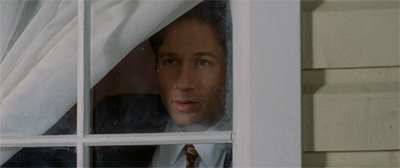
The inside, looking out...

The inside, looking out…

So Vince Gilligan stepped up to bat. Gilligan had been on staff for a bout a year at this point. He had quickly established himself as one of the most promising young writers in the room. While his first script for the show – Soft Light – was arguably more interesting than successful, Gilligan enjoyed an incredible hot streak when he joined the staff. Pusher, Unruhe and Paper Hearts are among the best scripts of the third and fourth seasons. With Small Potatoes, he seemed to position himself as the logical successor to Darin Morgan.

Darin Morgan even appears in Small Potatoes to pass the metaphorical baton.
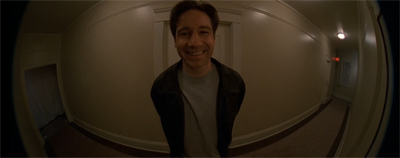
"Here's Mulder!"

“Here’s Mulder!”

Continue reading

Star Trek: Enterprise – Acquisition (Review)

Next year, Star Trek is fifty years old. We have some special stuff planned for that, but – in the meantime – we’re reviewing all of Star Trek: Enterprise this year as something of a prequel to that anniversary. This January, we’re doing the first season. Check back daily for the latest review.

Acquisition feels like a misstep for the first season of Star Trek: Enterprise.

It’s not the worst episode of the season. In fact, it falls rather comfortably into the show’s “big middle” – the random and generic episodes that take Star Trek clichés and execute them in a competent manner while overlooking the opportunity to do something a bit more novel and exciting. Acquisition ranks with failures like Civilisation or Sleeping Dogs or Rogue Planet. It is competently executed and contains a few moments of merit, but there’s a feeling that this has all been seen before.

"Take us to your leader."

“Take us to your leader.”

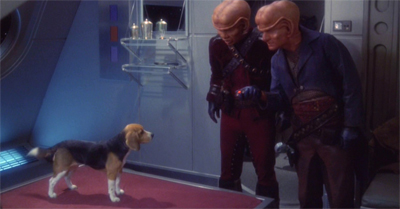
Of course, Acquisition serves to foreground a number of pressing concerns about the production of Enterprise. It’s something of a lightening rod to certain aggressive elements of fandom. Bringing back the Ferengi for a guest appearance proves that the show is more of a prequel to Star Trek: The Next Generation than to the original Star Trek. Glossing over continuity issues by refusing to name these marauding aliens demonstrates that the show clearly doesn’t care about continuity at all. Trying to do a comedy episode featuring the Ferengi demonstrates the producers have no idea what does and doesn’t work in Star Trek production.

All of this is, of course, nonsense. Acquisition isn’t a bad episode because it plays with continuity, or because it features the Ferengi. It’s a bad episode because it’s a comedy adventure that isn’t particularly funny or exciting.

"Hey, at least we got here before the Borg..."

“Hey, at least we got here before the Borg…”

Continue reading

Star Trek: Enterprise – Unexpected (Review)

Next year, Star Trek is fifty years old. We have some special stuff planned for that, but – in the meantime – we’re reviewing all of Star Trek: Enterprise this year as something of a prequel to that anniversary. This January, we’re doing the first season. Check back daily for the latest review.

So, male pregnancy, eh?

Talk about a nipple slip...

Talk about a nipple slip…

Continue reading

Star Trek – By Any Other Name (Review)

The first Star Trek pilot, The Cage, was produced in 1964. To celebrate its fiftieth anniversary, this December we are reviewing the second season of the original Star Trek show. You can check out our first season reviews here. Check back daily for the latest review.

By Any Other Name is very much a stock episode of Star Trek. It hits on all manner of familiar themes and ideas. It’s a story about powerful aliens who seem to overpower the crew, only to be outmanoeuvred themselves. It is about the Enterprise literally going where no human has gone before. It is about how humans are undeniably and incomparably special – about how becoming human opens up the aliens to a world of sense and experience.

However, By Any Other Name never really has anything particularly insightful to say about any of this stuff. The script to the episode is a mess, despite the best efforts of D.C. Fontana to develop the character beats. For a show based around such core Star Trek concepts and storytelling devices, By Any Other Name is surprisingly all over the place, with a wildly dissonant tone and a sense that the script was desperately padded in order to extend it out to the requisite fifty minutes.

"No dice, Captain..."

“No dice, Captain…”

By Any Other Name is not a terrible episode of Star Trek, but it’s not a particularly good one either. It is just “there.” In many ways, it feels like an example of an episode designed to fill a gap in twenty-odd-episodes-a-year schedule. After all, the last eight episodes of the season were pushed into production at short notice when NBC opted to pick up the show for the rest of the season during the production of The Gamesters of Triskelion. It makes sense that the episodes in this final stretch of the third season are somewhat rough.

By Any Other Name is a familiar Star Trek plot with a somewhat bloated script and a sense that the show is just trying to eat up minutes between here and the end of the season.

"It appears the rock knows as little as we do, sir..."

“It appears the rock knows as little as we do, sir…”

Continue reading

My 12 for ’14: The Lego Movie and Everything is Awesome…

With 2014 coming to a close, we’re counting down our top twelve films of the year. Check back daily for the latest featured film.

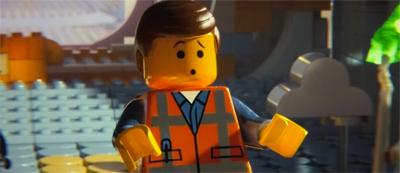
The very idea of The Lego Movie invites cynicism.

It is the latest in the long line of toy-to-film adaptations that includes such auspicious cinematic magics Transformers and Battleship. More than that, it is a film about a toy that has found particular success licensing existing properties – so it would be very easy to turn The Lego Movie into a collection of recognisable characters having generic adventures while selling their toys to an eager young audience. In a market where studios like Pixar had raised the bar for family-friendly animation, The Lego Movie seemed like it could be cringe-worthy.

thelegomovie

Instead, The Lego Movie is one of the most purely enjoyable movies of 2014. It is a film that appeals to all children, no matter their age. From seven to seventy, The Lego Movie is constructed with such energy and enthusiasm that it is impossible to resist. Even the most hardened cynic and most ruthless pessimism will struggle not to smile at certain points as The Lego Movie marches to its own wryly and playfully subversive beat. The amount of charm on display here should win over everybody.

The Lego Movie is still a feature-length advertisement for a world-renowned brand, but it manages to capture the fun and the excitement of that brand in a way that will feel familiar to those viewers who do remember playing with blocks; no matter how long ago.

thelegomovie3 Continue reading

Star Trek – The Trouble With Tribbles (Review)

The first Star Trek pilot, The Cage, was produced in 1964. To celebrate its fiftieth anniversary, this December we are reviewing the second season of the original Star Trek show. You can check out our first season reviews here. Check back daily for the latest review.

This is a classic.

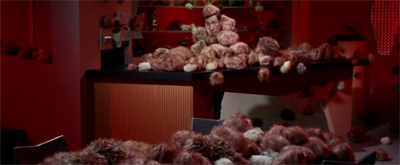
The Trouble With Tribbles is an episode that can make a legitimate claim to being the best episode of Star Trek, if not the best episode of the entire franchise. It is a genuine classic in countless ways, perfectly embodying so much of what makes Star Trek classic and iconic and loved. David Gerrold’s script, polished by Gene Coon, is easily the best comedy episode that the franchise has ever produced, but never at the expense of the show’s credibility. The Trouble With Tribbles may be silly, but it is also very clever and insightful.

Nobody knows the Tribbles I've seen...

Nobody knows the Tribbles I’ve seen…

Continue reading

Star Trek – I, Mudd (Review)

The first Star Trek pilot, The Cage, was produced in 1964. To celebrate its fiftieth anniversary, this December we are reviewing the second season of the original Star Trek show. You can check out our first season reviews here. Check back daily for the latest review.

I, Mudd is delightfully silly.

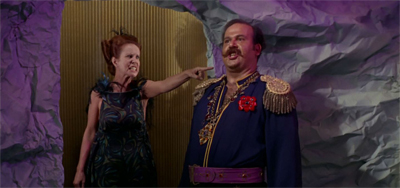
This is probably the broadest Star Trek comedy episode ever produced. It is very difficult to imagine any Star Trek ensemble outside the original cast pulling off an episode like this. While The Trouble With Tribbles is easily the show’s most iconic comedy episode (and the franchise’s, to boot), there is something rather plucky and endearing about I, Mudd. One of features of the later Star Trek spin-offs was a tendency to take themselves quite seriously. This isn’t a problem of itself, but it does make it impossible to do a show like I, Mudd.

Mudd in yer eye...

Mudd in yer eye…

As with other second-season episodes, there is a sense that the show is stretching its wings a bit. Catspaw was a clear attempt to do a horror story, and Wolf in the Fold was a slasher or occult film in Star Trek form. Episodes like Amok Time and Journey to Babel are very consciously building out the Star Trek universe. Episodes like I, Mudd and The Trouble With Tribbles demonstrate that Star Trek can do comedy.

To be fair, it is perfectly reasonably to argue that shows like I, Mudd led the show to think that Spock’s Brain was a good idea. Still, I, Mudd is just so much fun – demonstrating the sense of goofy and theatrical fun that ran through so much of classic Star Trek.

"Stella, Stella... You're putting me through hell-a!"

“Stella, Stella… You’re putting me through hell-a!”

Continue reading

Non-Review Review: Birdman (or, The Unexpected Virtue of Ignorance)

Birdman is a staggeringly cynical piece of work.

Alejandro González Iñárritu’s showbusiness satire has its knives out from the opening sequence, and never puts them away. It is a movie that is relentlessly snarky and bitter about just about any facet of the artistic process. The movie seldom pulls its punches, lawing into its targets with a vengeance. There are points where it almost seems too much, where it feels like Iñárritu might be better served to pull back or ease off for a moment as the film becomes just a little bit too much.

Showtime!

Showtime!

Then again, Iñárritu turns the film’s relentlessness into a visual motif, structuring Birdman as one long unbroken take. This structure is only slightly disingenuous. While there are any number of “cheats” that allow Birdman to stitch together multiple takes, the end result is still a hugely ambitious and impressive piece of work. Even viewers as cynical as the film itself may find themselves marvelling at some of the incredibly fluid transitions and extended sequences. Birdman‘s anger might occasionally come close to suffocating, but its energy is infectious.

That is to say nothing of the performance at the centre of the film, with Michael Keaton playing a washed-up has-been celebrity desperately (and pathetically) fighting for artistic credibility after a career spent in blockbuster cinema. One of the more interesting aspects of Birdman is that it seems just as dismissive of the attempts at artistic rehabilitation as it does of the original “sell out” work. Birdman is a wry, clever and vicious piece of work. It is also a phenomenal accomplishment.

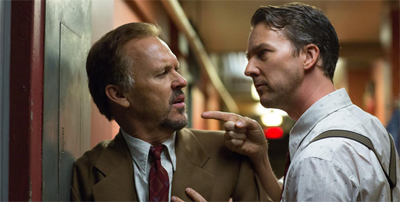
You wouldn't like him when he's angry...

You wouldn’t like him when he’s angry…

Continue reading

Non-Review Review: The Penguins of Madagascar

The Penguins of Madagascar is solid family entertainment. It does not rank among the best of Dreamworks’ animated output, nor among the year’s best animated films. However it is a fun adventure movie that moves along at just the right pace – allowing a number of action set-pieces and a solid cast carry most of the weight. The Penguins of Madagascar is fun and solid; it is arguably more fun and more solid than any of the three Madagascar movies that spawned this spin-off.

The Penguins of Madagascar is just what the doctor ordered with the holiday season approaching. It is a film that makes for a solid family diversion, a movie that will appeal to kids without pandering too heavily, and will acknowledge the adults in the audience without losing focus. It is an enjoyable romp, one that delivers almost perfectly on what it sets out to do. It isn’t transcendental or brilliant in the way that The Lego Movie was, but it is more than merely functional.

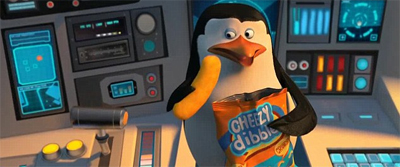
Cheesy? Sure.

Cheesy? Sure.

Continue reading

Star Trek: Deep Space Nine – Fascination (Review)

This September and October, we’re taking a look at the jam-packed 1994 to 1995 season of Star Trek, including Star Trek: Deep Space Nine and Star Trek: Voyager. Check back daily for the latest review.

Well, that could have been much more unpleasant than it ultimately was.

Yes, that’s damning with faint praise, but Fascination feels like a long sigh of exhaustion after what has been a tough run of episodes. The last episode of Star Trek: Deep Space Nine to air in 1994, Fascination came at the end of a production crunch that had seen the show desperately grasping for time. Quite a few of the first ten episodes of the season had been rushed through, with varying results – from Second Skin to Meridian.

So the fact that Fascination is not a massive soul-destroying screw-up on the scale of Meridian is a good thing, even if the episode’s plot does smell a little bit of desperation.

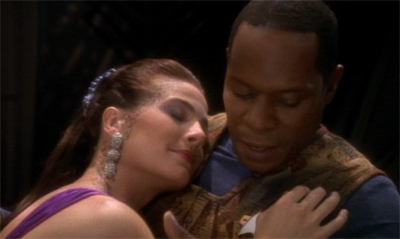
Dax can be quite touchy...

Dax can be quite touchy…

Continue reading