• Following Us

  • Categories

  • Check out the Archives


  • Awards & Nominations

Ultimate Spider-Man – Vol. 12 (Hardcover) (Review)

You know, Jeph Loeb actually managed to make quite the impression on Marvel’s Ultimate line of comics. While his Ultimatum was intended to serve as a “shot in the arm” to a comic book line with waning sales and interest, it’s telling that Marvel organised another event almost directly afterwards, with The Death of Spider-Man serving to reorganise that fictional universe once again. This collection, the twelfth in the Ultimate Spider-Man line, sees author Brian Michael Bendis guiding the book between Ultimatum and The Death of Spider-Man. (Indeed, the next book in the set is the Death of Spider-Man omnibus collection.)

As such, it’s not too surprising that these fourteen issues feel a bit disjointed and uneven, as Bendis deals with the aftermath of one radical status quo change while gearing up for another. That said, I still think that Ultimate Spider-Man represents the single most consistent run on the title, and Bendis still manages to keep things interesting, even if this collection doesn’t quite compile the author’s strongest run of issues.

Spider-Men…

Continue reading

J. Michael Straczynski’s (and John Romita Jr.’s) Run on the Amazing Spider-Man – The Best of Spider-Man, Vol. 3-4 (Review/Retrospective)

I honestly believe that had J. Michael Straczynski’s Amazing Spider-Man run ended with his collaborator John Romita Jr., his time on Marvel’s iconic web-crawler would have gone down as one of the great runs. Sure, it is flawed – sometimes significantly so. However, if you divorce it from Sins Past and the mess of crisis crossover tie-in issues and awkward continuity reboots that followed, Straczynski’s early run was bold, exciting and entertaining enough to get away with doing something relatively new to Peter Parker. Given that the run includes the five hundredth issue headlined by the hero, that’s quite an accomplishment in-and-of itself. It’s not perfect, and I don’t think it’s as strong as many of the runs happening simultaneously at Marvel, but it is an intriguing direction for the pop culture icon.

How many iconic villains do you spy dere?

Note: The fourth hardcover also includes the start of Mike Deodato’s run. I am going to cover those issues separately. This review or retrospective is going to be concerned with the second half of the collaboration between John Romita and J. Michael Straczynski, culminating in The Amazing Spider-Man #508.

Continue reading

Untold Tales of Spider-Man by Kurt Busiek Omnibus (Review/Retrospective)

I am of two minds about Kurt Busiek’s and Pat Olliffe’s celebrated Untold Tales of Spider-Man run. On the one hand, Busiek manages to affectionately evoke the spirit of those classic Stan Lee and Steve Ditko Spider-Man stories, without getting too bogged down in minor or confusing continuity. On the other hand, the stories feel somewhat trapped and confined by having to contort around the existing storylines. Naturally, for example, Busiek can’t resolve any plot threads he doesn’t keep exclusive to the book, and we all know how various situations unfold. It’s a strange cocktail, and it works slightly more often than it doesn’t work. It’s very much in the spirit of the author’s much-loved work on the Avengers, and there’s no denying the skill and love that went into crafting the issues collected here, but I find that I respect The Untold Tales of Spider-Man more than I love it.

They were on fire with this run…

Continue reading

J. Michael Straczynski’s (and John Romita Jr.’s) Run on the Amazing Spider-Man – The Best of Spider-Man, Vol. 1-2 (Review/Retrospective)

It’s easy to forget just how iconoclastic that early parts of the new millennium were at Marvel. The comic company was in the midst of recovering from its bankrupcy, and was going throw a massive creative shake-up. Many would argue that the late nineties represented the company’s creative nadir, and there was a very definite sense of change in the air. Some of that change involved a radical restructuring of core concepts, placing them in the hands of more radical creators.

The early part of the last decade gave us Peter Milligan on X-Force, Grant Morrison on New X-Men and Garth Ennis on Marvel Knights: Punisher. It also saw a number of big-name creators working on these characters. Kevin Smith wrote the introductory arc of the new Daredevil book. While J. Michael Straczynski’s Amazing Spider-Man has a controversial and divisive legacy, it was a product of those times. While it was flawed even in its early days, it’s still a bold re-working of an iconic comic book mythos.

King of the swingers…

Continue reading

Ultimate Marvel Team-Up (Review/Retrospective)

Ultimate Marvel Team-Up occupies a strange place in Marvel canon. Written by Brian Michael Bendis and illustrated by a rake of top-tier talent, it was essentially a series designed to showcase these impressive artists while adding a bit of depth and breadth to the then-fledgeling Ultimate Marvel Universe. Essentially a continuity that had been launched from scratch, with the goal of attracting new fans put off by decades of back story in the regular shared universe, Brian Michael Bendis had pioneered the line with his superb Ultimate Spider-Man, a book that he is still writing today (albeit in a slightly different form). Due to its nature, Ultimate Marvel Team-Up is a somewhat disjointed effort, where quality varies almost from issue-to-issue, but it’s still worth a look for anybody with any interest in Bendis’ Ultimate Spider-Man work.

Who says there aren’t crocodiles in the sewer?

Continue reading

No Venom Intended: Thoughts on the Inevitable Amazing Spider-Man Spin-Off…

Apparently Sony is pressing full speed ahead with this Spider-Man license. I suspect they looked at the massive success that Marvel, Paramount and ultimately Disney have had with their series of Avengers films. Releasing a series of relatively independent superhero films that all tied together proved to be quite the financial success, becoming one of the biggest earners of all time. It’s easy enough to understand why other studios might want to follow the business model. The problem? Sony only really has the license to Spidey and his supporting cast. How do you build a multi-character franchise when you only own the rights to one admittedly iconic? You spin-off his supporting characters, of course. In this case, it’s the villain Venom, who is reportedly getting a film from director Josh Trank, who made quite the impression with his début directing Chronicle, and possibly tying into the sequel to The Amazing Spider-Man.

He’s coming right at you!

Continue reading

Captain America: The New Deal (Review/Retrospective)

Oh, God — How could this happen here?

– Steve Rogers, Captain America #1

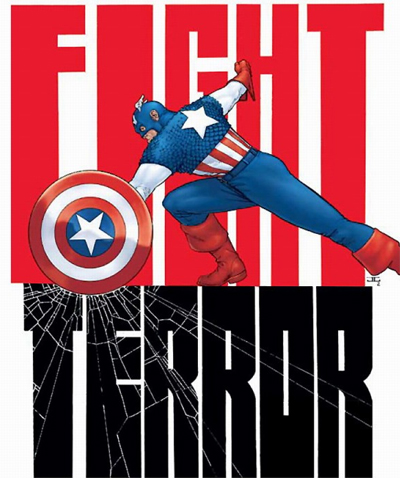
It seemed inevitable that Captain America would have to respond to September 11th. After all, the terrorist atrocities were an attack on the American way of life, and the iconic superhero was perhaps the hero best equipped to explore the scars left by the still-recent attacks upon the American psyche, much as his Secret Empire plot allowed him to respond to the Watergate Scandal. Unfortunately, John Ney Rieber’s work on the character is – while well-intentioned – clumsy, awkward, groan-inducing and cliché-ridden. Even the fantastic artwork of John Cassaday cannot salvage the run from its own tired and trite pseudo-philosophical ramblings.

Subtle.

Continue reading

Avengers Disassembled: Thor (Review/Retrospective)

Thor: Disassembled is easily the strongest solo arc to stem from the events in Brian Michael Bendis’ Avengers Disassembled. It’s  full of interesting and clever ideas about the nature of stories, and serves to wrap up Thor’s story fairly efficiently, leading into the big reshuffle of the Marvel Universe. Rather than merely treading water waiting for J. Michael Straczynski’s Thor, writer Mike Avon Oeming takes advantage of the unique set of circumstances before him to present that rarest type of superhero story: one with an ending.

Thunderbolts and lightening, very, very frighteningly…

Continue reading

Avengers Disassembled: Iron Man – Turf War (Review/Retrospective)

It’s probably true that in comics, like in any other medium, you have a preference towards the stories that brought you into that medium. While I think Marvel was doing some truly exceptional stuff during the early part of the 2000s, like Morrison’s New X-Men or Waid’s Fantastic Four or Garth Ennis’ Marvel Knights: Punisher, I think that the Avengers line of books were all struggling to find a direction. While I have some issues with the clunky crossover- and tie-in-reliant nature of the period, I do think that there was a lot more energy for the Avengers-related titles after Brian Michael Bendis’ Avengers Disassembled. Ed Brubaker’s Captain America and J. Michael Straczynski’s Thor can stand alongside the best interpretations of the characters, with Matt Fraction’s later Invincible Iron Man run also standing as a classic Iron Man run.

These Disassembled tie-in issues offer a pretty solid indication of where Marvel’s Avengers comic book line was just before the crossover, and most of them seemed to be in very serious trouble. There are two arcs from The Invincible Iron Man collected here, from two very different teams, and neither seems to know exactly what it is doing.

Iron Man decompressed?

Continue reading

Secret War (Review/Retrospective)

April (and a little bit of May) are “Avengers month” at the m0vie blog. In anticipation of Joss Whedon’s superhero epic, we’ll have a variety of articles and reviews published looking at various aspects of “Earth’s Mightiest Heroes.” Yesterday and today we’re taking a look at the two Brian Michael Bendis events that kick-started the writer’s work on the franchise.

In many ways, Secret War feels like a companion piece to DC’s Identity Crisis crossover. Both miniseries essentially deconstructed the relatively simplistic nature of those superhero universes – daring to question what might happen if you approached these plot devices with a bit more cynicism. Bendis’ Secret War miniseries not only sets up the status quo and suggests the themes he would develop over the course of his New Avengers run, it also darkens the entire tone of the shared Marvel Universe. You can almost plot a straight line between Secret War and Siege, considering it one gigantic and messy saga adopting a cynical approach to the mechanics of this fictional world.

The war at home…

Continue reading