• Following Us

  • Categories

  • Check out the Archives


  • Awards & Nominations

Stan Lee & Jack Kirby’s Thor – The Might Thor Omnibus, Vol. 1 (Review/Retrospective)

To celebrate the release of Thor: The Dark World towards the end of next month, we’ll be looking at some Thor and Avenger-related comics throughout September. Check back weekly for the latest reviews and retrospectives.

I am a massive fan of The Mighty Thor. There’s just something so clever and playful about the idea of a classic Norse deity reimagined as a Marvel superhero, a self-aware take on the whole “modern myth” approach to American comic book storytelling that it’s hard not to love. Indeed, I would rank portions of Lee and Kirby’s work on Thor among the best of their output from the Silver Age, a truly epic large-scale epic fantasy narrative that isn’t anchored or tethered to any limitations beyond the imaginations of those working on it.

While The Fantastic Four is a lot more consistent and a lot more important in the grand scheme of comic book history, Thor is a bit rockier. It took Lee and Kirby a considerable amount of time to find their creative voice on Thor – a difficulty compounded by the fact that heavy work loads on other Marvel often forced the duo to delegate the early issues of the book to other writers and artists. As a result, this mammoth tome of Thor serves more as a learning curve, building towards a point where the duo will have figured out quite how to tell compelling and exciting stories featuring the God of Thunders.

Taking the hammer for a spin...

Taking the hammer for a spin…

Continue reading

Jameson Cult Film Club: Die Hard

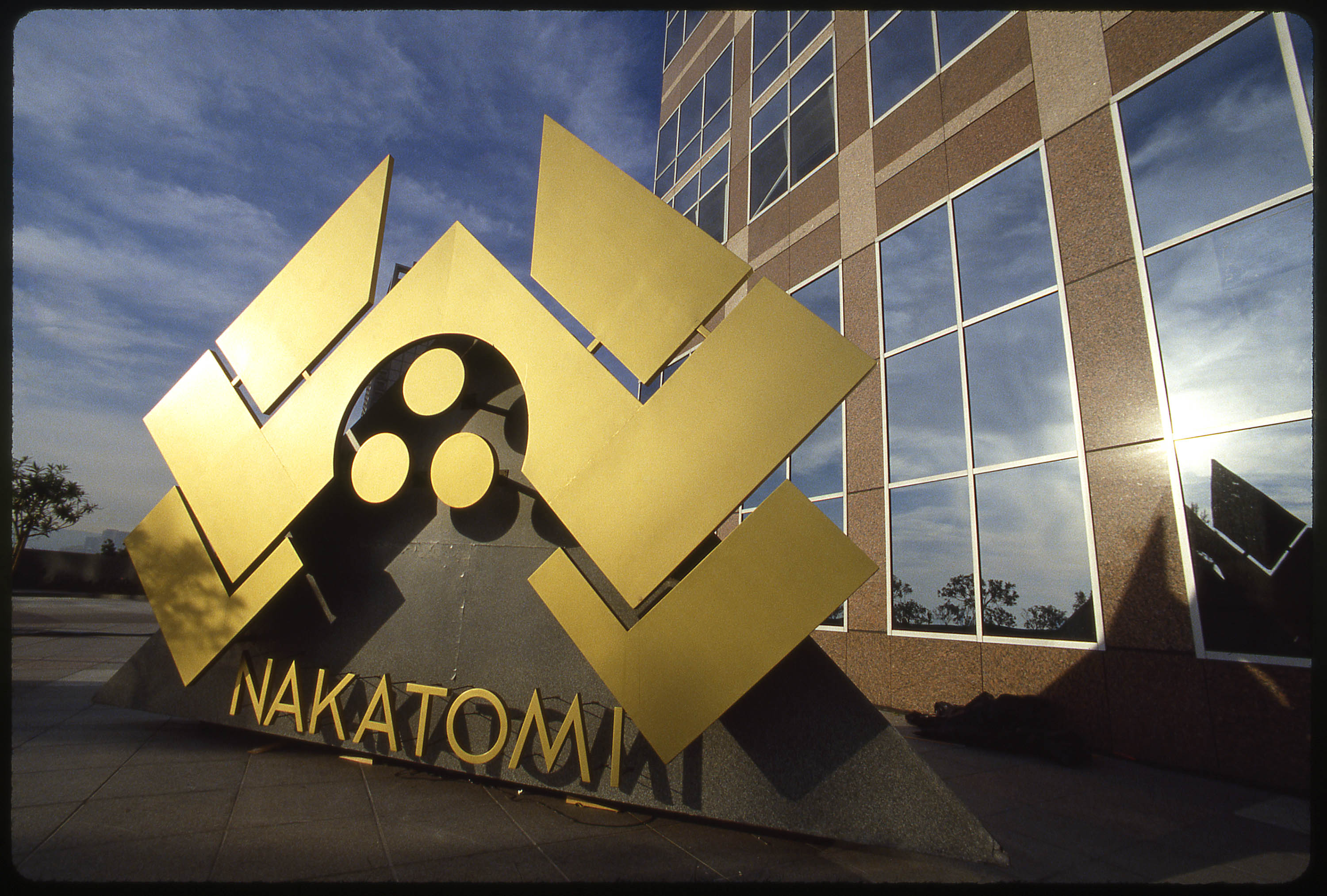
I had the pleasure of attending Wednesday evening’s Jameson Cult Film Club screening of Die Hard. As we’ve come to expect from the guys, it was a wonderful evening hosted in the Tivoli Theatre, from the black-and-white cop car waiting to greet us outside right down to the cut out copy the Nakatomi lobby sculpture, the team clearly put the usual amount of love and affection into crafting an immersive experience for the audience.

(My personal favourite moment was the decision to announce that the film would be starting shortly by having an Alan-Rickman look-alike and his goons storm the dance floor. It was a lovely touch, particularly given the decision to have the directions shouted by the gun-weilding goons rather than the Rickman impersonator.)

Photos and more after the jump.

Click to enlarge.

Click to enlarge.

Continue reading

Non-Review Review: About Time

About Time is pretty much vintage Richard Curtis. I don’t mean that in a bad way – certainly not in an entirely bad way. Curtis knows how to structure a romance, has a gift for distinguishing characters in a large ensemble, and has the capacity to employ sentimentality to calculated and devastating effect. About Time has moments of brilliance and emotional punch, framing the main character’s inexplicable ability to time travel in delightful metaphorical terms.

At the same time, Curtis has his weaknesses. Most notably, there’s the sense that his lead characters are all variations on the same character – with more cynical pundits suggesting the base model might be Curtis himself. Similarly, his ensembles are constructed efficiently as a collection of quirky characters who do quirky things quirkily, living out the most quaintly British of lives involving afternoon tea and indulging in the most stereotypical of exclamations (“just a tick…”, “oh gosh…”, etc). There’s a sense that Curtis’ world exists inside old-fashioned post cards more than in anything approaching the real world.

More than that, though, Curtis labours his point just a little bit too much, as if worried the audience might miss the whole “we’re all travelling in time” metaphor and the “secret to being happy” philosophy if it isn’t explicitly articulated in a voice-over monologue set to an upbeat pop song.

Time enough at last...

Time enough at last…

Continue reading

Star Trek: Deep Space Nine – Prophecy & Change: Ha’Mara by Kevin G. Summers (Review)

Star Trek: Deep Space Nine is twenty years old this year. To celebrate, I’m taking a look at the first season. Check back daily for the latest review or retrospective.

We’ll be supplementing our coverage of the episodes with some additional materials – mainly novels and comics and films. This is one such entry.

Comparing and contrasting the anniversary short story anthologies for Star Trek: The Next Generation and Star Trek: Deep Space Nine can be highly informative. The Sky’s the Limit, released to celebrate the twentieth anniversary of The Next Generation, features fourteen stories. Most of these stories serve as prologues or epilogues to existing Next Generation episodes. Suicide Note provides closure to The Defector; Turncoats follows a character from Face of the Enemy after the camera stops rolling; Four Lights is an epilogue to Chain of Command.

In contrast, Prophecy and Change, released to celebrate the tenth anniversary of Deep Space Nine, tends to focus on short stories that fit gracefully between episodes – fleshing out connective tissue and explaining how one plot development or character decision led to another. That says quite a lot about the two shows and the way that their stories were told, with much of Prophecy and Change feeling ling deleted scenes or inserts loosely inserted between what was seen in television.

Ha’Mara is the first short story of the collection, following the introduction and the mysterious Revisited – a book-ending wrap-around written by an author who has yet to be publicly identified. Written by Kevin G. Summers, who provided Isolation Ward 4 to Strange New Worlds IV, the short story is set in the immediate aftermath of Emissary, attempting to smooth over the rough edges transitioning from the pilot to the rest of the show.

ds9-prophecyandchange

Continue reading

Jameson Film Club: Die Hard Double Screening!

Due to popular demand, the Jameson Cult Film Club is returning to Dublin for their biggest and most electrifying double screening to date. Continuing on from this year’s successful screenings of Intermission and LA Confidential, the Jameson Cult Film Club promises to transport the audience right into the world of the high suspense action classic, Die Hard (1988), which will be screened at a secret Dublin location on Tuesday 17th and Wednesday 18th September 2013.

Jameson Cult Film Club screening of Die Hard

If you want to get your ‘Hans’ on some tickets, register now on www.jamesoncultfilmclub.ie. These free events are more than just your typical screening, as characters from the movie, live theatre and special effects timed perfectly with on-screen action help to create an electric atmosphere throughout the screening.

DH-265

The venue is only revealed to ticket holders and will be completely transformed into a series of sets from the film.  DJ Aidan Kelly will be spinning the sounds from the movie before and after the screening while guests are treated to ‘Yippee-Ki-Yay’ burgers and refreshing Jameson, Ginger and Lime long drinks.

Die Hard DVD Jameson-CFC-Landscape-WHITE copy

jameson drinkaware 1 line 18pt

Watch! New All Is Lost Trailer

Universal sent over the latest trailer for All is Lost. Starring Robert Redford as a man adrift, the movie is written by and directed by J.C. Chandor. Chandor made a name for himself as the writer and director of Margin Call, a peek behind the curtain at the events leading up to the financial crisis. All is Lost looks to be an entirely different animal. With only one credited role (Redford as “our man”), it looks like a showcase for the leading actor’s talents.

The film has been generating good buzz (I hear it was well-received at the Galway Film Fleadh), and it looks like a fascinating old-school man-against-unforgiving-nature survival drama. Check out the trailer below.

Hannibal – Ceuf (Review)

Ceuf is somewhat overshadowed by the controversy it generated, an episode of Hannibal pulled from broadcast following several national tragedies (including the Boston bombings and the Newtown tragedy). In the wake of these two high-profile incidents, it was felt that broadcasting the full episode so close to the events would have been a bit much. This move naturally generated a host on on-line commentary with various people adopting various positions on the topic of whether or not Bryan Fuller was right to pull the show from the air. In a way, Ceuf is far more interesting for what it ended up being than as a chapter of Hannibal.

Something to chew over...

Something to chew over…

Continue reading

Non-Review Review: Elysium

Elysium is good old-fashioned high-concept science-fiction. With production design alternately evoking the seventies (the upper class satellite that gives the movie its name) and eighties (the apocalyptic wasteland of future Los Angeles), Elysium feels like a conscious attempt to evoke classic genre films. Blomkamp builds in a healthy amount of social commentary, and there’s something quite satisfying in seeing a large-scale science-fiction film that isn’t afraid of big bold ideas.

However, the execution feels just a little bit muddled. The plotting is a little convoluted, and the third act becomes incredibly messy. The characters inhabiting the world never seem organic, with their motivations and behaviour prone to change rapidly to meet the rapidly-changing demands of a very messy script.

In a bit of a fix...

In a bit of a fix…

Continue reading

Non-Review Review: The Canyons

The Canyons struggles to surmount the weight of productions stories bearing down on it. Paul Schrader’s latest film was famously the subject of a 7,000-word article in the New York Times documenting the trials and tribulations behind the scenes. In a way, these troubles made the film somewhat larger-than-life, turning it into one giant attempt at career resurrection for director Paul Schrader and lead actor Lindsay Lohan.

Given the film’s much publicised sexual content (and the decision to cast pornography actor James Deen in the lead role), there’s a sense that this could be Lohan’s Last Tango in Paris, a bold and blistering performance from a once-respected talent eclipsed by years of behind-the-scenes gossip and idle chatter. Ironically, it’s none of the established talent that impresses with The Canyons. Bret Easton Ellis’ story feels like a shallow pastiche of Ellis-ian touches, while Schrader’s direction is intrusive and overwhelming. Lohan shows flickers of honesty and risk-taking, but is lost in the shuffle and the hum-drum plotting.

In contrast, it’s relative newcomer (as much a man with a filmography containing over 1,000 titles can be a newcomer) James Deen who makes the strongest impression as a surprisingly efficient Ellis-ian protagonist.

thecanyons1

Continue reading

Roy Thomas & Werner Roth’s X-Men – X-Men Omnibus, Vol. 1-2 (Review/Retrospective)

To celebrate the release of The Wolverine later in the month, we’re taking a look at some classic X-Men and Wolverine comics every Monday, Wednesday and Friday here. I’m also writing a series of reviews of the classic X-Men television show at comicbuzz every weekday, so feel free to check those out.

The X-Men were not, to put it frankly, a comic book franchise that hit the ground running. Despite the considerable talent involved in their first nineteen issues, the comic struggled to find its own niche, unsure of just how far it dared to venture from the standard superhero template, and how confined it was by the whole “mutant superhero” bit. Writer Roy Thomas was tapped to take over the book when Stan Lee left.

Thomas is one of the underrated Silver Age writers. His work on The Avengers, spanning more than a half-a-decade, is arguably more influential and definitive than Lee’s original run on the title. He is responsible for The Kree-Skrull War, which remains one of the stronger early Avengers stories. He would work on X-Men twice before the book was finally cancelled. His second run, with Neal Adams pencilling, is arguably a lot stronger than his work here, which feels a little muddled and unfocused.

To be fair to Thomas, it’s quite clear that he recognised that the X-Men needed a shake-up and to find their own voice distinct from the initial run written by Lee and Kirby. Unfortunately, Thomas doesn’t seem entirely sure of what that voice is.

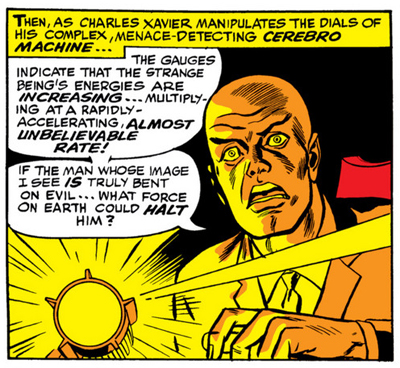
Lighten up, Charles!

Lighten up, Charles!

Continue reading