• Following Us

  • Categories

  • Check out the Archives


  • Awards & Nominations

Non-Review Review: The Summit

This film was seen as part of the Jameson Dublin International Film Festival 2013.

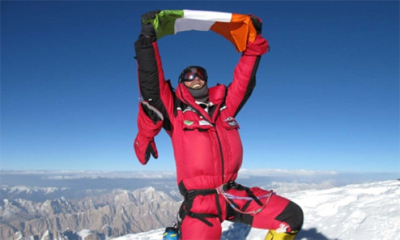
The Summit is a powerful exploration of the infamous loss of eleven lives within 24 hours on K2. This is the largest disaster in the history of K2 mountaineering, and – as The Summit concedes – that we won’t necessarily ever know the full details behind this tragic loss of life. However, while the incident serves as a bit of a flashpoint, one big event that it is impossible to overlook, The Summit drops an absolutely fascinating piece of information early one, and one which contextualises that horrible accident.

Apparently one in every four people to make it to the summit of K2 doesn’t make it back down.
thesummit4

Continue reading

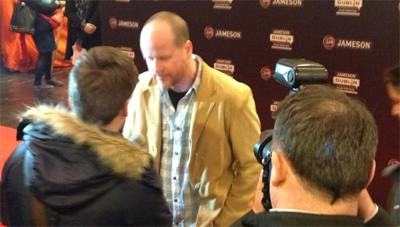
Joss Whedon at the Jameson Dublin International Film Festival 2013

This event was part of the Jameson Dublin International Film Festival 2013. It was hosted after a screening of Whedon’s Much Ado About Nothing.

It has been a pretty great year for great guests at the Jameson Dublin International Film Festival. Robert Towne gave an interview and a workshop of screenwriting. Danny DeVito popped along to the Jameson Cult Film Club screening of L.A. Confidential. And Joss Whedon came to Dublin, with tickets to Much Ado About Nothing selling out so fast that they almost crashed the JDIFF servers. Whedon hung around afterwards for a rapid-fire questions-and-answers session, talking a bit about the film and his future plans, as well as his frequent artistic collaborators.

Image from JDIFF twitter feed.

Image from JDIFF twitter feed.

Continue reading

Non-Review Review: Blancanieves

This film was seen as part of the Jameson Dublin International Film Festival 2013.

Blancanieves feels like either a film that has its finger firmly on the pop culture zeitgeist, or the victim of the worst timing. It appears less than a year after The Artist won the Best Picture Oscar, becoming a massive critical and popular success. Given the relative dearth of high-profile silent black-and-white films, Blancanieves is somewhat trapped within that shadow. More than that, though, it emerges following a year that demonstrated popular culture’s fixation on the Snow White story. 2012 saw the release of both Mirror Mirror and Snow White & The Huntsman, both reimaginings of the classic tale. Blancanieves is, for its own part, an adaptation of the fairy tale, and it seems like the story was weighing on the popular imagination.

In any other context, Blancanieves would seem like a breath of fresh air. An affectionate homage to the classic era silent cinema, retelling the Snow White story in an unfamiliar setting, there’s a lot to recommend it. Indeed, Blancanieves is easily the best Snow White adaptation of the past year. Unfortunately, it suffers because it’s not quite as charming, witty and well-constructed as The Artist.

Dark materials...

Dark materials…

Continue reading

Dario Marianelli at the National Concert Hall (Jameson Dublin International Film Festival)

This event was part of the Jameson Dublin International Film Festival 2013.

I’ve argued it before, but one of the best parts of the Jameson Dublin International Film Festival is the way that it isn’t just confined to the cinemas. The feast of fine Irish and international cinema is something that any film fan can celebrate, but the capital city itself becomes a hotbed for the celebration of film as an artform. So there’s all manner of wonderful extras going on – from classes in film criticism to workshops with Robert Towne, to the Jameson Cult Film Club screening of L.A. Confidential. The National Concert Hall typical does a nice job of getting into the mood, hosting celebrations of the sound of cinema. In the past, for example, they hosted the newly-written live musical accompanyment to The Four Horseman and a tribute to Danny Elfman.

This year, they invited composer Dario Marianelli over to showcase and introduce several selections of music from his distinguished career. It’s always a fantastic time to recognise and to celebrate Marianelli’s work, but to host the composer in Dublin less than a week before the Oscars is a very rare pleasure indeed.

dariomarianelli

Continue reading

Non-Review Review: Le Capital

This film was seen as part of the Jameson Dublin International Film Festival 2013.

Thanks to Costa-Gavras, Le Capital looks amazing. It’s crisp, it’s vibrant and it’s beautiful. For a movie about financial corruption, it moves along relatively quickly and with a lot of visual flair. The problem with Le Capital, though, is that it’s really a very simplistic version of a story we’ve all seen countless times before. A person assumes a large amount of power, only for that power to have a potentially corrupting influence. Okay, Marc Tourneuil is already a successful executive when good fortune thrusts him into the role of CEO of one of France’s largest banks, and he’s certainly not naive when he negotiates his salary and bonus scheme, but Le Capital hints early on that there is some level of decency to Tourneuil before the wealth and influence start chipping away. As such, as the movie explores his corruption and the way that power erodes him, Le Capital feels like an engaging modern telling of a story that we’ve already heard quite frequently.

Byrne the bondholders...

Byrne the bondholders…

Continue reading

Non-Review Review: Far Out Isn’t Far Enough – The Tomi Ungerer Story

This film was seen as part of the Jameson Dublin International Film Festival 2013.

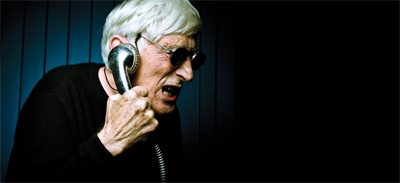
A lot of the strength of a documentary lies in the subject matter. If you can find an interesting premise or subject, then you’ve got a hook. Far Out Isn’t Far Enough, the debut from director Brad Bernstein, picks a fascinating central character – writer and artist Tomi Ungerer. It is very tough to reduce Ungerer to a one-line synopsis or to define him in a relatively short strong of words, but Far Out Isn’t Far Enough takes a look at the life and times of the artist who made an enormous impression on American popular consciousness, only to fade from view surprisingly quickly – retiring first to Nova Scotia and then to Ireland. Far Out Isn’t Far Enough is a fascinating portrayal of a unique talent, with Ungerer making for a charming and engaging subject. While Far Out Isn’t Far Enough might gloss over his departure from the scene a bit, it’s a fascinating overview of the life and work of a truly gifted individual.

faroutisntfarenough1

Continue reading

Non-Review Review: The Hardy Bucks Movie

This film was seen as part of the Jameson Dublin International Film Festival 2013.

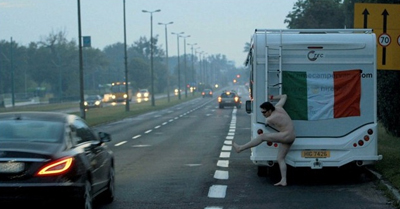
I’ll be the first to admit that I’m not a massive fan of The Hardy Bucks. Still, it’s hard not to smile at an Irish success story that seen a bunch of lads fooling around on YouTube, brought them to national television and launched a feature film. The Hardy Bucks Movie isn’t revolutionary. It’s not a work of comedy genius for the ages. Quite a lot of it feels overly familiar, an Irish spin on the “young men go wild abroad” subgenre that has proven popular in the past number of years. And yet, despite that, there’s a quaint charm to The Hardy Bucks Movie that makes it reasonably entertaining. The lads from Castletown has survived the transition to the big screen with their dignity – such that it is – intact.

The naked truth...

The naked truth…

Continue reading

Non-Review Review: Side Effects

This film was seen as part of the Jameson Dublin International Film Festival 2013.

On one level, Side Effects is a deliciously pulpy medical thriller, with the kind of zig-zagging twisty plot that you’d expect from a Michael Crichton novel. It’s more than satisfying on these terms, almost serving as a feature-length pilot for an imaginary medical drama starring Jude Law. After all, with House off the air, there’s a clear gap in the market for a smooth English actor playing the lead in an unconventional medical drama. If he is sarcastic, all the better. While the genius of the early years of House came from mashing up the medical subgenre with the police procedural to produce a then-unique hybrid, Scott Z. Burns instead blends the medical drama with a decidedly more trashy and sordid thriller to provide a satisfyingly twisty drama.

However, on another level, Side Effects teases issues that are far more interesting than the movie it eventually becomes. It’s very frustrating when your red herrings feel like they’d produce a more thoughtful or insightful piece of cinema than the final story. Side Effects broaches topics that mainstream cinema hasn’t really engaged with, and the opening scenes flirt with the idea of providing an entirely different film. It’s not always fair to judge a film for what it isn’t, but the problem is that Side Effects sets up a much more tempting and intriguing look at medicine than we get with the final product.

Love isn't the only drug...

Love isn’t the only drug…

Continue reading

Doctor Who: Horror of Fang Rock (Review)

To celebrate the fiftieth anniversary of the longest-running science-fiction show in the world, I’ll be taking weekly looks at some of my own personal favourite stories and arcs, from the old and new series, with a view to encapsulating the sublime, the clever and the fiendishly odd of the BBC’s Doctor Who.

Horror of Fang Rock originally aired in 1977.

So you found the trouble then?

Yes, I always find trouble.

– Vince and the Doctor

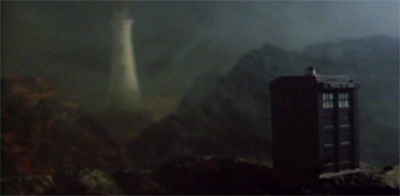
The show was on something of a hot streak when Horror of Fang Rock aired. While producer Philip Hinchcliffe’s tenure on the show is roundly praised, and is a personal favourite, the standard of the show had been particularly high. The beloved Talons of Weng-Chiang had closed out the previous season, following hot-on-the-heels of the well-regarded Robots of Death – both classic and iconic stories that stand as the very best of Tom Baker’s time in the lead role. Horror of Fang Rockis right on up there, as perhaps one of the best gothic horrors that the series has ever produced.

Something wicked this way comes...

Continue reading

Non-Review Review: Wreck It Ralph

Wreck It Ralph is a charming animated film, and one with all manner of interesting ideas. It teases a fascinating take on the archetypal children’s movie narrative – the notion that perhaps roles in stories cannot be so easily devolved into “good guy” and “bad guy” stereotypes. It raises all manner of insightful possibilities, drawing on a diverse cast of characters to offer us what amounts to the story of two outcasts dealing with the fact that they don’t necessarily get to be part of narratives that might make them a hero.

Unfortunately, there’s only so far you can bend this sort of hero’s journey before it breaks – or snaps back in your face, if you’re watching a slapstick cartoon. Wreck It Ralph compromises a bit too much in its final act, undermining a lot of what had been its appeal in order to offer a staggeringly conventional ending. It’s a shame, because it’s willingness to subvert so many narrative norms is a large part of the appeal of the film.

Sometimes life isn't two-dimensional...

Sometimes life isn’t two-dimensional…

Continue reading