• Following Us

  • Categories

  • Check out the Archives


  • Awards & Nominations

October 2011 In Review

I occasionally post a little section at the end of the month reviewing some of the more interesting stuff I’ve written – perhaps it might be helpful to a reader navigating the archives, but it’s really for myself, looking back from time to time. Anyway, I hope you enjoy it.

It was a fun month here at the m0vie blog, and one in which we gleefully got to indulge our nerdy little interests. To celebrate the release of Spielberg’s The Adventures of Tintin: The Secret of the Unicorn, I decided to try to review all 24 of Hergé’s Adventures of Tintin. In case you want to browse the reviews, here they are:

It was also a fun month because I somehow ended up on the front page of IMDb, recommended on their hit-list for an article I wrote about my anticipation around the release of Tintin. It’s always a huge pleasure to be cited by people who you admire and respect, in a field where they are really the very big players, and I’m honestly humbled by the experience.

And then there was this

Paul Cornell, comic book writer at DC and writer for the revived Doctor Who (and the novels that preceded it), linked to my review of his superb run on Action Comics. It’s one of the truly great modern comic book runs, and wholeheartedly recommended, but it’s just really, really cool to have Mr. Cornell acknowledge the review. At the risk of gushing, he’s a writer that I’ve been following ever since I caught a repeat of Father’s Day, which was the episode that convinced me that Doctor Who was well worth my time. So, the idea that the guy somehow innocuously clicked on to this blog made my week.

So, yep, at the risk of geeking, it was an awesome month.

Out With the New: What’s Wrong With A Little Reimagining…?

I have to admit, I’m looking forward to The Muppets. That makes it all the more unfair that I’ll have to wait until 2012 to see it in a cinema – something that breaks my heart just a little bit. However, I’ve been fascinated by some of the discussions generated by the film, particularly with classic “muppet” staff coming out of the woodwork to comment on what they’ve seen of the rebooted muppets so far. Frank Oz has even offered some pretty harsh commentary:

“I wasn’t happy with the script,” he said about his decision to turn down the film. “I don’t think they respected the characters. But I don’t want to go on about it like a sourpuss and hurt the movie.”

There’s been quite a bit of focus around Fozzie the Bear’s “fart shoes” featured in one trailer:

“We wouldn’t do that; it’s too cheap. It may not seem like much in this world of [Judd] Apatow humor, but the characters don’t go to that place,” said one Muppets veteran. Another laments, “They’re looking at the script on a joke-by-joke basis, rather than as a construction of character and story.” Another is even concerned about stepping outside the established mythology saying that the upcoming film “creates a false history that the characters were forced to act out for the sake of this movie.”

I can certainly understand the feeling. However, part of me wonders if we are too concerned with preserving the “integrity”of classic franchises and stories, and if trying to limit the risks taken with them might ultimately be counterproductive.

Driving the franchise to ruin?

Continue reading

Non-Review Review: Despicable Me

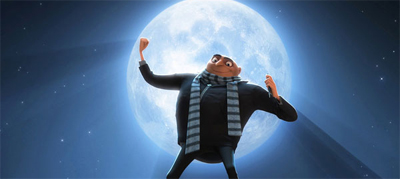
I think that, as a general trend, the quality of computer-animated films has increased significantly over the past number of years. I think there are a variety of reasons for this – the most obvious being that it seems to be easier to do, and so more companies are trying; but also because there’s an increasing body of work that offers hints on what to do and how to do it. While Pixar remain the undisputed champions of computer-generated animation, I think we’ve seen an increasing number of high-quality releases from all studios in the past few years. Despicable Mesees a new studio throwing their hat into the ring and it makes for an impressive debut. While there’s still room for improvement, Despicable Me is fast and fun, and remarkably uncynical for a children’s movie about super-villains.

Aiming for the moon...

Continue reading

The Beginning of the End? Is It Too Early To Be Talking About “The Best of the Year”?

The New York Critics’ Circle has moved the date of their annual awards forward to 28th November. I don’t know about you, but that sounds like an awfully early date for a festival designed to celebrate the best of the year that has been – especially when you consider that the logistics of posting and counting votes. It’s a full month before the end of the year! How many films are yet to be screened at this point? It got me thinking about the “best of…” polls that we inevitably see as the year draws to a close? When do people start compiling those lists?

Well, I guess we can all cut this one out of our NYCC pools...

Continue reading

Non-Review Review: The American

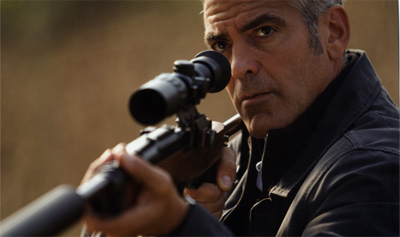
The American is a slow-moving introspective film. Director Anton Corbijn seems to be trying to evoke Sergio Leone, with the story of an American hired gun lying low in a small Italian village. Slow-moving and subtle, The American feels quite meditative for most of its runtime, although it does occasionally seem almost comatose. Still, George Clooney makes for a convincing leading man, adding a great deal of depth to an archetype we’ve seen countless times before. While it’s a little too slow for its own good, it’s never less than beautiful and often fascinating.

Beautifully shot...

Continue reading

Paul Cornell’s Run on Action Comics – The Black Ring (Volumes I & II) (Review)

LEX LUTHOR!!! — Kneel before GRODD! You have walked into my ambush! And I have brought my biggest combat spoon– to eat your tasty brains!!!

– the moment I fell in love with Paul Cornell’s Action Comics

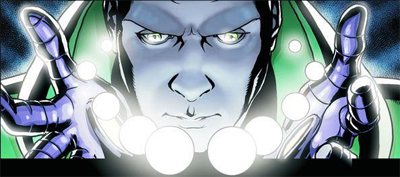
I adore Paul Cornell. He’s just a fantastic writer. His most notable work to date has probably been two episodes of the televised Doctor Who (Father’s Day and Human Nature/Family of Blood), but he’s also made a rather fantastic addition to the stable of writers at DC comics. If you wanted proof of up-and-coming new blood at the company, Cornell’s increasing contributions over the past few years certainly make a case for it. I think his Action Comics might be one of the most shamelessly “fun” runs in modern comic books, an adventure that rejoices in the sheer ridiculousness of comic books, without sacrificing character or depth for cheap spectacle. It helps that Cornell manages to take one of the most fascinating characters in comic book history and craft in insightful look at his protagonist’s personality in a single year-long storyline.

This is Lex Luthor’s time to shine. And not just because he’s bald, although the glare on that thing must be something.

The power of the world in the palm of his hand...

Continue reading

Vault-emort: Harry Potter and the Disney Vault: Won’t Somebody Think of the Children?

I’ve known about the “Disney Vault” ever since I started buying DVDs, well over a decade ago. It’s the reason why you can’t simply go into a movie shop and ask for a copy of every Disney movie, as the company regulates the titles coming in and out of release on various home entertainment platforms at any given moment, giving consumers only the smallest window of opportunity to pick up a given childhood classic before snatching it away for another six or seven years. While I have some serious problems with the practice, it’s a shrewd economic move, and I always wondered why Disney were the only studio to really do it.

Well, Warner Brothers recently announced that they’d be doing something similar, pulling the theatrical versions of the Harry Potter films from DVD and blu ray on the 29th December 2011. That leaves movie fans with only forty-eight days in which to pick up their copy of Harry Potter and the Deathly Hallows: Part II. I suppose this sort of development was inevitable, but it doesn’t mean I have to like it.

Will a lot of film fans feel a bit hallowed by the news?

Continue reading

Is Captain Haddock the Ultimate Hero of Hergé’s Tintin?

I think it’s safe to agree that Captain Archibald Haddock was the breakout character of Hergé’s The Adventures of Tintin. Introduced in The Crab With the Golden Claws, one of three adventures to form the basis of Spielberg’s The Adventures of Tintin: The Secret of the Unicorn, Haddock has rarely been absent from the series in the time that followed. Indeed, Hergé even went back and wrote him into the end of a story (The Land of Black Gold) that he began before Haddock was even created. Haddock’s appeal seems to be incredible, with the blue-turtleneck-wearing sea-captain almost as iconic as Tintin and Snowy. Returning to the series for the first time in years, as the release of the new movie approaches, I couldn’t help but wonder if Haddock was the real hero of the series.

He'll never desert Tintin...

Continue reading

Non-Review Review: The Ides of March

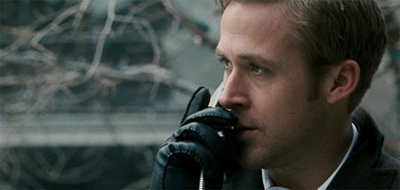
It’s very hard to make a movie about politics without feeling a little bit forced – as if you’re shoehorning in a particular viewpoint or an ideology, setting up strawmen for the movie to bulldoze over on the way to the final scene. It’s to director (and actor) George Clooney’s credit that The Ides of March manages to avoid seeming too preachy or too staged, instead opting to comment on the nature of political integrity, rather than accusing specific ideologies of having it or lacking it. Set within a Democratic Presidential Primary, the movie shrewdly avoids focusing on an ideological or political gap, instead contemplating the harsh realities of any political maneuvering.

Are the gloves coming off?

Continue reading

Tintin: Tintin and the Alph-Art (Review)

In the lead-up to the release of The Adventures of Tintin: The Secret of the Unicorn, I’m going to be taking a look at Hergé’s celebrated comic book character, from his humble beginnings through to the incomplete post-modern finale. I hope you enjoy the ride.

Tintin and the Alph-Art is a strange little story. It’s the last Tintin adventure that Hergé began before his death, more than fifty years after the intrepid reporter had debuted in Tintin in the Land of the Soviets. I’ve also found something strangely wonderful in the idea that the final Tintin pages that Hergé drew threatened to close the series forever, with the boy reporter trapped in a polyester sculpture, entombed forever as a work of art – it’s not exactly a happy ending, but I’d argue it was a fitting one. There isn’t a definitive finished version of the story available – Hergé died leaving notes and sketches and half-formulated ideas, but there’s little real sense of how he wanted the story to end, or even how he’d get Tintin out of that one final death trap. Of all the “unofficial” Tintin works out there, and there are quite a few, Tintin and Alph-Art is perhaps the one most closely associated with Hergé, drawing from a story he never finished to try to cap off a saga five decades in the making.

And then... nothing...

Note: I am discussing the “unofficial” version of the story completed by Yves Rodier. I will also make reference to the annotated Hergé script released a while back.

Continue reading