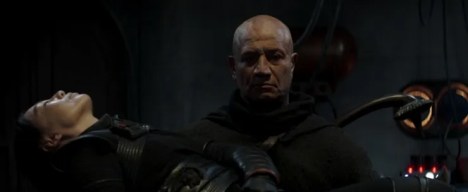
I published a new review at The Escapist today. I’m reviewing new episodes of The Book of Boba Fett weekly, so this week I’m covering Return of the Mandalorian.
Return of the Mandalorian is an odd episode, in large part because it feels like an episode of a different show. Not in an abstract or metaphorical way, but in a very direct and literal way. Return of the Mandalorian feels like a lost episode of The Mandalorian, following that show’s title character in the gap between the second and third seasons. The episode isn’t bad. In fact, it’s arguably the strongest episode of The Book of Boba Fett to date. However, when the strongest episode of a first season feels like an episode of another show, that perhaps suggests more fundamental underlying problems.
You can read the piece here, or click the picture below.
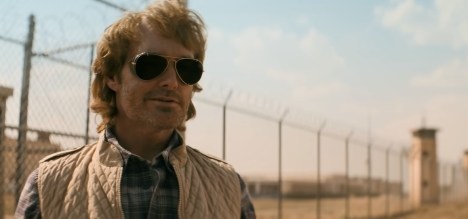
I published a new In the Frame piece at The Escapist this evening. With the recent release of MacGruber and Peacemaker, it seemed like an interesting opportunity to reflect on two comedy streaming shows that are very firmly anchored in a very particular nostalgia for a certain kind of eighties Reagan era action hero.
MacGruber and Peacemaker are essentially extended riffs on a very archetypal form of American heroism, a very militaristic and jingoistic expression of heroism. While both shows are reasonably affectionate and surprisingly sympathetic to its subjects, they are also quite aggressive in their desconstruction of this archetype. Both MacGruber and Peacemaker are shows about characters who are deeply unpleasant and incredibly juvenile, in what feels like an interesting interrogation of the action heroes of the era. It’s an interesting angle on this nostalgia, feeling at times like a tempered reflection.
You can read the piece here, or click the picture below.
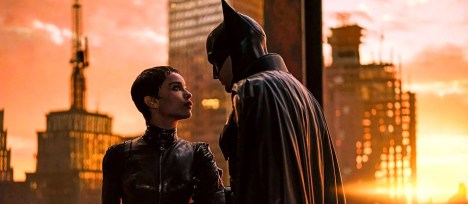
I published a new column at The Escapist earlier this week. It’s been an interesting few weeks and months in terms of pop culture. There’s been a lot of debate about critics and the role of critics, there’s been a lot of news about pop culture that the internet doesn’t seem too excited about, and there’s been a lot of coverage about mundane aspects of The Batman.
All of these things speak to an interesting and ongoing anxiety about the “monoculture”, the idea of pieces of pop culture that are seismic enough to become part of the shared vernacular. The pandemic has had a number of major impacts on the production and the consumption of popular culture, and part of that has been an increasing sense of disconnect from a shared sense of the monoculture. However, is the monoculture truly dead? Or is it simply resting?
You can read the piece here, or click the picture below.
Hosted by Andrew Quinn and Darren Mooney, The 250 is a weekly trip through some of the best (and worst) movies ever made, as voted for by Internet Movie Database Users. New episodes are released Saturdays at 6pm GMT.
So this week, Ramkumar’s Ratsasan.
Arun Kumar aspires to be a director. He has the perfect serial killer script, but nobody will make it. Resigned to this reality, Arun accepts a job in the police force, working with his brother-in-law. However, it isn’t too long before Arun discovers that his unique insight into serial killers might help to catch a monster currently targetting teenager girls. It will take all of Arun’s wits and courage to earn his happy ending.
At time of recording, it was ranked 250th on the list of the best movies of all time on the Internet Movie Database.
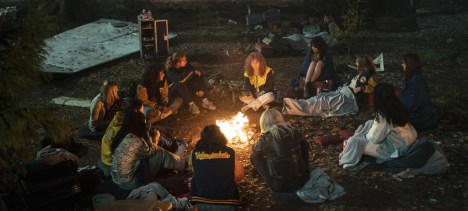
I published a new In the Frame piece at The Escapist this evening. The first season of Yellowjackets wrapped up this week, so it seemed like the perfect opportunity to take a look at what has become the buzziest show on television.
Yellowjackets has a premise very similar to Lost, featuring a time-shifted narrative following a bunch of plane-crash survivors trapped in the wilderness as potentially supernatural events unfold around them. However, Yellowjackets follows the survivors after their return to civilisation rather than before the crash. Yellowjackets is essentially a paranoid survival horror, and one that resonates with these divided and chaotic times. It’s a show about the horrors of what happens when civilisation collapses and when people turn to monstrous belief in sheer desperation, but also about what it’s like to live with that.
You can read the piece here, or click the picture below.
I published a new piece at The Escapist this evening. We’re hopefully doing a series of recaps and reviews of James Gunn’s Peacemaker, which is streaming weekly on HBO Max. The fourth episode of the show released today, and it seemed like a good opportunity to take a look at the series.
Gunn’s projects return time and again to the relationship between parents and children. In particular, Gunn’s films and television shows are often about childrens trying to escape from the shadow of their abusive parents. This was true of Guardians of the Galaxy, Guardians of the Galaxy, Vol. 2 and The Suicide Squad. It is also true of Peacemaker, with the show placing a lot of emphasis on the relationship between its central character and his racist father, Auggie.
You can read the piece here, or click the picture below.
I published a new review at The Escapist today. I’m reviewing new episodes of The Book of Boba Fett weekly, so this week I’m covering The Gathering Storm.
The Gathering Storm marks the midpoint of this season of The Book of Boba Fett. It also seems to mark the end of the extended flashbacks that have taken up so much of this first season. However, it does this with perhaps the most unnecessary flashback to date, one that eesentially fills in details that absolutely did not need to be filled in about what exactly Boba Fett got up to between Star Wars: Episode VI – Return of the Jedi and his reappearance in The Mandalorian, including – strangely enough – searching for armour that the audience has already seen him recover.
You can read the piece here, or click the picture below.
The Escapist have launched a new pop culture podcast, and I was thrilled to join Jack Packard and Marty Silva for the third episode. With the recent release of The Matrix Resurrections and The Book of Boba Fett, it seemed like a good opportunity to talk about both.
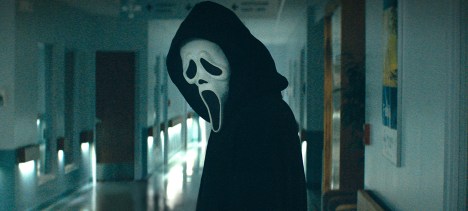
I published a new In the Frame piece at The Escapist this evening. With the release of Scream this weekend, it seemed like a good opportunity to delve into the latest entry in the beloved horror franchise.
What is most interesting about the latest Scream is the extent to which it feels largely divorced and separated from the horror genre, particularly compared to the earlier films in the franchise. Instead, Scream seems much more engaged with the modern Star Wars films, borrowing key plot points and background lore from recent entries in the franchise. More than that, it’s a film that is very aggressively engaged with the fandom discussion around those films.
You can read the piece here, or click the picture below.
Hosted by Andrew Quinn and Darren Mooney, The 250 is a weekly trip through some of the best (and worst) movies ever made, as voted for by Internet Movie Database Users. New episodes are released Saturdays at 6pm GMT.
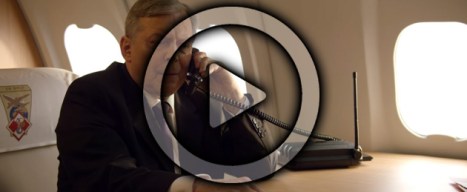
So this week, Antoni Krauze’s Smolensk.
After a horrific plane accident wipes out a significant portion of the Polish political class, people begin to question the official narrative. Nina is a journalist who initially sets out to confirm the official story, but who begins to spot gaps and lacunas, all of which point to something a little more sinister.
At time of recording, it was ranked 35th on the list of the worst movies of all time on the Internet Movie Database.



















 the m0vie blog