• Following Us

  • Categories

  • Check out the Archives


  • Awards & Nominations

The X-Files – Dreamland II (Review)

This July, we’re taking a trip back in time to review the sixth season of The X-Files and the third (and final) season of Millennium.

Morris Fletcher is (and remains) one of the more interesting aspects of the Dreamland two-parter.

Fletcher would go on to become perhaps the most unlikely recurring character in the history of The X-Files. Michael McKean would reprise the role for a brief cameo in Three of a Kind at the end of the season. As with Kersh, he would disappear from the show’s world for the troubled seventh season, but would return the following year. He made a guest appearance in All About Yves, the finalé of The Lone Gunmen. Fletcher would then follow the Lone Gunmen back to The X-Files, appearing in Jump the Shark during the final season.

And the shippers went wild...

And the shippers went wild…

A large part of what makes Fletcher work is the wonderful guest performance of Michael McKean. McKean is a veteran actor with a long history of great work, dating back to his breakout role as Lenny (and Squiggy) on the sitcom Laverne and Shirley. Along with the move to Los Angeles, the sixth season of The X-Files began to drift away from Chris Carter’s initial reluctance to cast recognisable actors in significant roles. The X-Files: Fight the Future had featured guest appearances from Martin Landau, Blythe Danner, Armin Muller-Stahl and Glenne Headly.

The two-parter built around Michael McKean paves the way for appearances from Ed Asner, Lily Tomlin and Bruce Campbell. These are all superb guest performances, and consciously play into the idea that the sixth season of The X-Files has taken on a more playful or vaudevillian style. It is too much to describe these guest roles as “stunt casting” in the same way that putting Jerry Springer in The Post-Modern Prometheus or Burt Reynolds in Improbable was stunt casting, but the casting decisions are part of a broader change in the show.

Our man Morris...

Our man Morris…

On paper, Morris Fletcher could easily come off as a one-note creep. After all, he is a character who thinks nothing of using his body swap with Fox Mulder to cheat on his wife of twenty years. There is a creepy and pervy banality to his evil, one that mirrors that of Eddie Van Blundht in Small Potatoes. However, while Small Potatoes felt a little too sympathetic to pathetic Eddie Van Blundht, Dreamland strikes a better balance in its portrayal of Morris Fletcher. McKean plays Fletcher as a very human character, but one who is no less creepy for his well-practiced charm.

It goes almost without saying that Michael McKean’s guest performance is a major reason why Dreamland (mostly) works.

Not particularly reflective...

Not particularly reflective…

Continue reading →

The X-Files – Dreamland I (Review)

This July, we’re taking a trip back in time to review the sixth season of The X-Files and the third (and final) season of Millennium.

It occasionally seems like the sixth season of The X-Files is having something approaching a midlife crisis.

It has gone through a fairly massive change in routine and lifestyle; the show recently pulled up sticks and moved to Los Angeles. It has gotten a lot more ostentatious; it looks to be spending a lot more money than it was before, and it is hanging around with a whole new caliber of guest star. It has reinvented itself completely; no longer the brooding and atmospheric show it once was, it is now downright goofy and silly. Old acquaintances would be forgiven if they had trouble recognising the show. And it’s perfectly understandable.
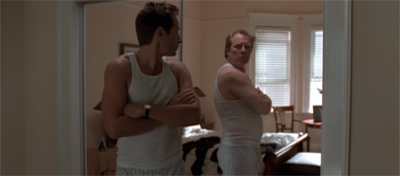
Back to back...

Back to back…

This is the sixth season. Dreamland I is the one-hundred-and-twenty-first episode of The X-Files. The show is well past what Chris Carter had originally planned, and well past just about any measure of success. Most shows are lucky to reach a sixth season, let alone come into the sixth season off the back of a summer film and with a great deal of security about the future. David Duchovny, Gillian Anderson and Chris Carter were all committed through to the end of the seventh season. There was even talk of a sequel to The X-Files: Fight the Future being released in 2000.

Dreamland I and Dreamland II just externalise that midlife crisis, using the classic “freaky friday” body swap set up putting Fox Mulder in a dead-end job with a family that hates him as Morris Fletcher tries to help the FBI agent grow up just a little bit.

"Yep. It's a little... out there."

“Yep. It’s a little… out there.”

Continue reading →

The X-Files – Triangle (Review)

This July, we’re taking a trip back in time to review the sixth season of The X-Files and the third (and final) season of Millennium.

There are a lot of reasons to celebrate Triangle.

The episode gets a lot of attention for its wonderful use of long tracking shots. According to Chris Carter’s commentary, there are only twenty-four individual shots stitched together to produce the forty-five-minute episode. Considering the amount of split-screen action at the climax, that is not a lot. Triangle is an artistic tour de force for writer and director Chris Carter. The success that both Birdman and True Detective enjoyed in 2014 due to their extended takes suggests that Carter was significantly ahead of the curve.

Dragging up the past...

Dragging up the past…

There are other aspects to note. Triangle also ushers in a new mood and tone for the sixth season of The X-Files. The show had moved to Los Angeles, and would struggle with how to retain its identity in the new (and bright) surroundings of California. The Beginning and Drive had both answered the question in their own way, but Triangle ushers in a whole new approach to storytelling. Triangle is the first of a series of light and breezy episodes in the early stretch of the sixth season where The X-Files almost turns into a paranormal sitcom.

However, there is one other reason to celebrate Triangle. It is an extended forty-five minute pun on the word “ship.”

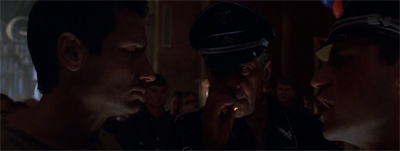
Cigarette-Smoking Nazi...

Cigarette-Smoking Nazi…

Continue reading →

The X-Files – Drive (Review)

This July, we’re taking a trip back in time to review the sixth season of The X-Files and the third (and final) season of Millennium.

In many ways, Drive feels like an episode that tackles the move to California head-on.

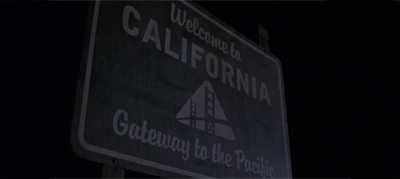
After all, the plot of Drive essentially finds Mulder trapped in a car heading westwards through Nevada and into California. The episode even lingers on a “welcome to California” sign, tacitly acknowledging the massive change that had taken place behind the scenes between the fifth and sixth seasons of The X-Files. It is a very clever way of addressing a major change to the production of the show, one that is candid and open about the fact that things are inherently different now.

"Running out of west..."

“Running out of west…”

More than that, Drive figures out how to build an episode of The X-Files around the change in production location. The sixth season often finds the production team struggling to find the right tone and mood to match the new location; after all, the show cannot simply pretend that it is still filming in Vancouver. California is sunnier, hotter and drier than Vancouver ever was – the sixth season of The X-Files spends a little time trying to adapt to those new filming conditions.

This challenge is arguably most obvious in the string of (literally and metaphorically) lighter episodes in the first stretch of the season. The sixth season is quite controversial among fans of the show because there is a period of time where it seems like The X-Files might transform itself into a quirky romantic sit-com. Episodes like Triangle, Dreamland I, Dreamland II, How the Ghosts Stole Christmas and The Rain King would be the lighter episodes of any previous season; they seem to pile in on top of one another at the start of the sixth season.

Feels like going home...

Feels like going home…

In contrast, Drive is very much a quintessential episode of The X-Files. It is a classic episode of the show. It is scary, it is tense, it is meticulously constructed. There is humour to be found, but the stakes feel real and personal. Writer Vince Gilligan very shrewdly plays into the constraints of the new Los Angeles production realities. A lot of Drive takes place during the day on long desert roads. It takes advantage of California’s impressive interstate system, with twenty-five highways covering almost two-and-half thousand miles.

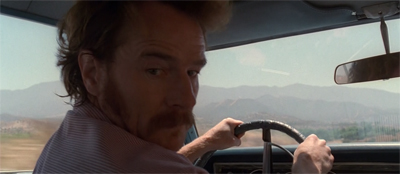
However, Drive is more than simply a demonstration that The X-Files can still work in its new home. Drive is a superb piece of television in its own right. It is highly regarded as one of the finest episodes of The X-Files from the second half of the run. It is notable for a wonderful premise, a great script, and a mesmerising guest performance from Bryan Cranston. Drive would be the first collaboration between writer Vince Gilligan and actor Bryan Cranston, but not the last.

Drive of your life...

Drive of your life…

Continue reading →

Millennium – Through a Glass Darkly (Review)

This July, we’re taking a trip back in time to review the sixth season of The X-Files and the third (and final) season of Millennium.

Through a Glass Darkly is a terrible piece of television.

There is no nice way to say it. There is no excusing it. Through a Glass Darkly is an absolutely wretched script directed in a cloying manner. It is cliché, it is clumsy, it is trite. It is manipulative and cynical. There are no redeeming features to Through a Glass Darkly beyond the fact that it makes Human Essence and Omerta look significantly better than they actually are. This is an abysmal production, and one of the worst forty-five minutes of television that Ten Thirteen has broadcast to this point. It is up there with Excelsis Dei.

"You are a paedophile, you are a nonce, you're a perv, you're a slot badger, you're a two pin din plug, you're a bush dodger, you're a small bean regarder, you're an unabummer, you're a nut administrator, you're a bent ref, you're the crazy world of Arthur Brown, you're a fence foal, you're a free willy, you're a chimney bottler, you're a bunty man, you're a shrub rocketeer..."

“You are a paedophile, you are a nonce, you’re a perv, you’re a slot badger, you’re a two pin din plug, you’re a bush dodger, you’re a small bean regarder, you’re a unabummer, you’re a nut administrator, you’re a bent ref, you’re the crazy world of Arthur Brown, you’re a fence foal, you’re a free willy, you’re a chimney bottler, you’re a bunty man, you’re a shrub rocketeer…”

Child sex abuse is an absolutely horrific reality. The world is not always a nice place, and the world is not always a safe place. In the late nineties, film and television were growing more comfortable with exploring and addressing issues of child abuse. However, it was something that needed to be handled with a great deal of care and skill. Millennium had already learned how difficult it could be to tell a story about child abuse, with Chris Carter’s well-intentioned but clumsy The Well-Worn Lock.

Through a Glass Darkly manages to retroactively make The Well-Worn Lock seem like a work of genius.

 "...this paedophile has disguised himself as a school in Sheffield."

“…this paedophile has disguised himself as a school in Sheffield.”

Continue reading →

Non-Review Review: Ted 2

Ted 2 is a Seth McFarlane movie that ends with an extended sequence set at New York Comic Con, that hub of nerd culture populated by people dressed like any number of iconic pop culture characters.

As such, it seems perfectly reasonable to describe Ted 2 as the quintessential McFarlane movie, for better or for worse.

Unbearable?

Unbearable?

Continue reading →

The X-Files – The Beginning (Review)

This July, we’re taking a trip back in time to review the sixth season of The X-Files and the third (and final) season of Millennium.

The more things change, the more they stay the same.

The opening shot of The Beginning makes it quite clear that things have changed. The camera opens staring at the sunny cloudless sky of California, doubling for Arizona. It pans down to an open desert. As the production team conceded with Anasazi, the desert was just about the only American environment that Vancouver could not easily mimic – to the point where the team had to paint rocks red in order to convincingly set a scene in New Mexico. California makes for a much more convincing desert.

Bursting on to the scene...

Bursting on to the scene…

The contrast is striking. The sixth season of The X-Files is bright and sunny; it is aware of its new production reality and chooses to embrace them rather than pointlessly resist them. Things had changed, and there was nothing to be gained from pretending otherwise. It is no wonder that the opening sequence of The Beginning features a group of working-stiff conspirators in transit; the perfect opening image for a season still figuring out how Los Angeles works. The Beginning loads all of that into its opening shot, getting it out in the open before it gets down to business.

At the same time, The Beginning is keen to stress that not too much has actually changed. The naming of the fifth season finalé and the sixth season premiere is decidedly symmetrical – The End and The Beginning. In fact, naming the second part of a two-part episode “The Beginning” is a very clear attempt at reassurance. It is a beginning without actually being a beginning; it is a conclusion without actually being a conclusion. The wheel keeps on turning. All that is missing is the ouroboros.

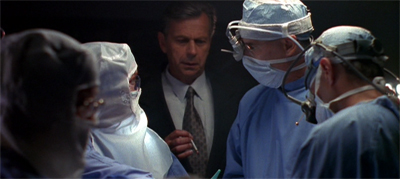
Dude, that's totally not sterile...

Dude, that’s totally not sterile…

The closing shot as much as confirms this, revealing that the bold new alien design revealed in The X-Files: Fight the Future is not so bold and new after all. Instead, the monster obviously inspired by Alien is something of a missing link, a tether connecting the grey aliens seen in episodes like Duane Barry to the black oil introduced in Piper Maru. It is all one big circle in perpetual motion. Everything is connected. Everything fits together. The show might have moved two thousand miles south, but it hasn’t missed a step.

For better or worse, The Beginning is about assuring viewers that – no matter what has changed – everything remains the same. It is up to the viewer to decide whether that is a good or a bad thing.

The truth is in there...

The truth is in there…

Continue reading →

Non-Review Review: Ant Man

Ant Man was always going to be a tough one to crack.

There are obvious reasons. Some of them involve the unique production history of the film, which arguably serves as an example of the downside of the tight managerial style operated by Disney and Marvel. Some of them are more fundamental, tied into the legacy and impact of the source material that make adapting Hank Pym and Janet Van Dyne to screen a particularly dicey proposal for a family-friendly blockbuster movie studio. There’s a lot of pressure on the film, and a lot that could go wrong.

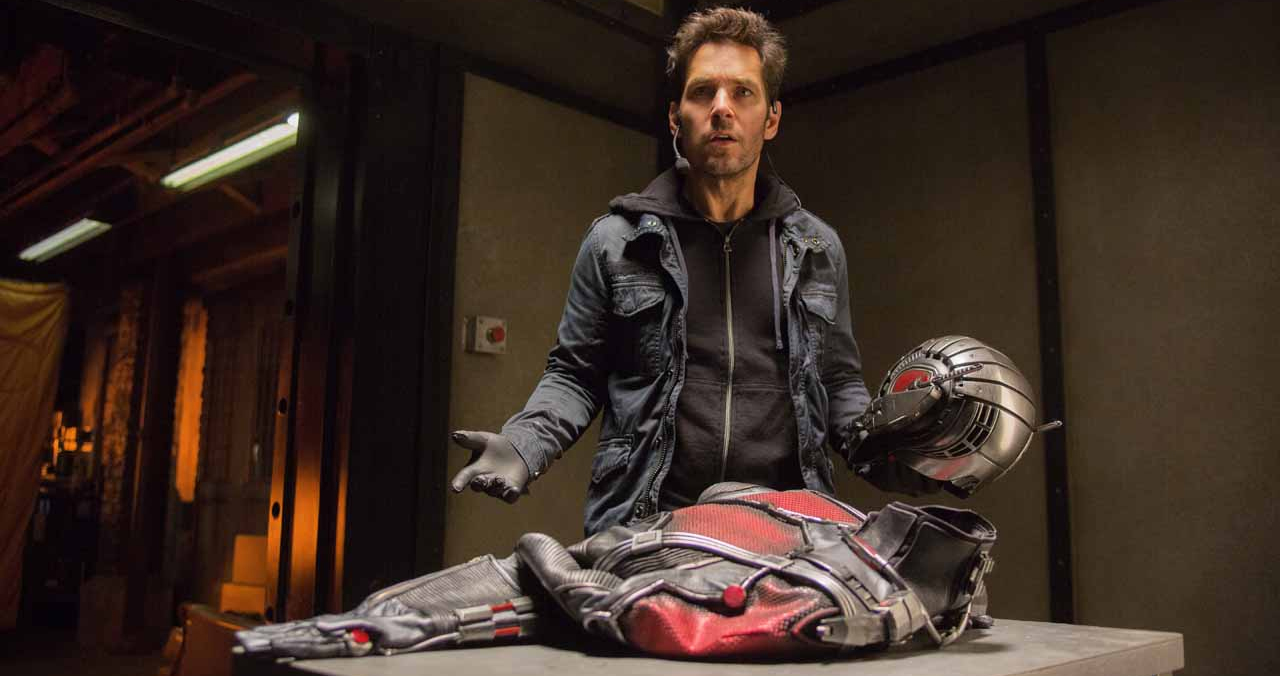
"You couldn't have called him 'Giant Man'?"

“You couldn’t have called him ‘Giant Man’?”

As such, director Peyton Reed does a pretty good job bringing the character to screen. Adam McKay and Paul Rudd adapted the original story written by Edgar Wright and Joe Cornish, providing a movie that sits more comfortably within the framework of the ever-expanding shared universe. Ant Man is a little clumsy in places, suffering from some of the stock weaknesses of the Marvel film franchises, but it is also clever and fun. All involved shrewdly play to the Marvel house style, offering a light run around populated by likable characters with clear-cut conflicts.

However, Ant Man‘s real strengths become obvious when the film deviates (even slightly) from the standard formula. After seven years of watching superhero films grow bigger and bigger, it’s nice to have a smaller story.

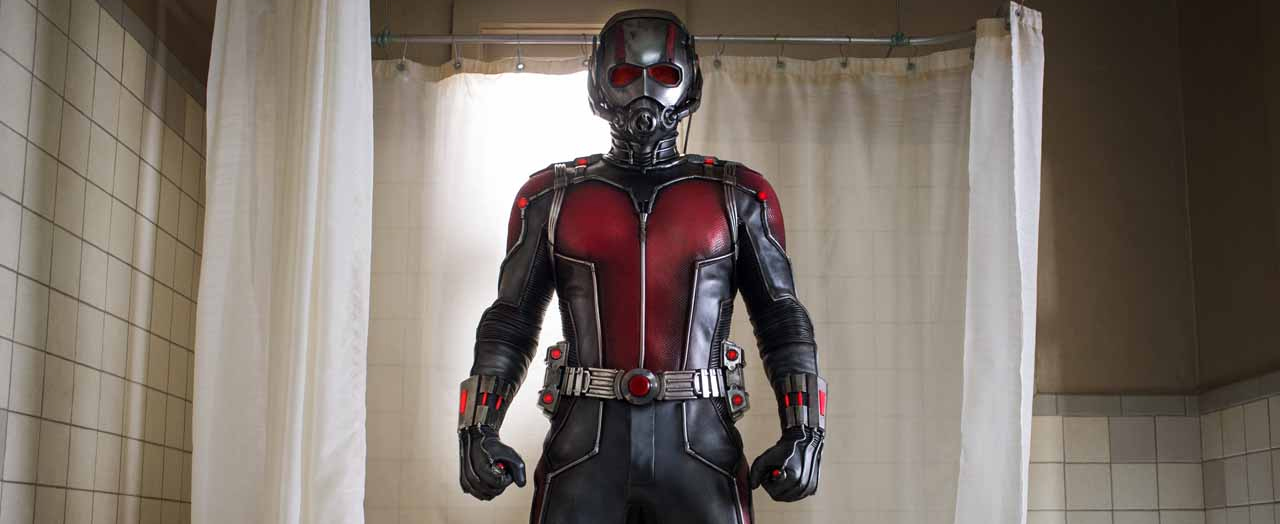
"One size fits all, eh?"

“One size fits all, eh?”

Continue reading →

Millennium – Skull and Bones (Review)

This July, we’re taking a trip back in time to review the sixth season of The X-Files and the third (and final) season of Millennium.

Skull and Bones brings a lot of the problems with the third season of Millennium to the fore.

Most obviously, the third season of Millennium is making a conscious effort to return to the aesthetic and style of the first season, with an emphasis on horrific crimes and abhorrent psychologies. In interviews around the launch of the third season, Chris Carter repeatedly suggested that something had been lost in the second season. TEOTWAWKI was an issue-driven episode about school shootings and Y2K. Closure was a story about how spree killers can engage in random patterns of violence and there is no way to reliably discern a pattern of logic in truly evil behaviour.

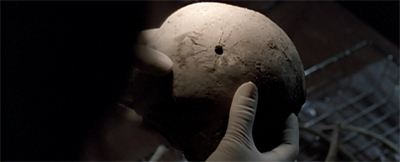
The hole in things...

The hole in things…

At the same time, the third season is struggling to deal with the legacy and impact of the second season. The Innocents and Exegesis rather clumsily attempted to write their way out of The Fourth Horseman and The Time is Now by downplaying the impact of the end of the world at the end of the second season. However, the third cannot completely erase what happened. The absence of Catherine Black and the presence of Peter Watts are constant reminders. The Millennium Group itself cannot revert back to its first season self.

Skull and Bones plays out this conflict, creating an impression of a show trapped at a crossroads with a problem it cannot resolve. Skull and Bones is an episode that attempts to both minimise the impact of the second season of Millennium while still acknowledging and building upon it. It is not an approach that lends itself to satisfactory or fulfilling storytelling. However, it does articulate just how confused the show must be at this point in its life cycle.

There are going to be a lot of Yorrick captions this time...

There are going to be a lot of Yorrick captions this time…

Continue reading →

Millennium – … Thirteen Years Later (Review)

This July, we’re taking a trip back in time to review the sixth season of The X-Files and the third (and final) season of Millennium.

… Thirteen Years Later is infamously silly. That may not be such a bad thing.

There are a lot of details that would seem to weigh against … Thirteen Years Later. It is the show’s first attempt at comedy since Darin Morgan left the staff at the end of the second season; any episode will suffer in comparison to Jose Chung’s “Doomsday Defense” or Somehow, Satan Got Behind Me. It is an episode built around a guest appearance from the rock band KISS to promote the release of their latest album, Psycho Circus. It is also an attempt to do wry self-aware meta-commentary and Hollywood satire, which could easily become indulgent.

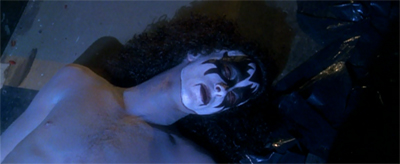
KISS was 'ere...

KISS was ‘ere…

To be quite frank, … Thirteen Years Later doesn’t really work. It is messy and convoluted. A lot of the gags are obvious, and a lot of its satire of Hollywood feels somewhat stock. The framing device builds to a pretty lame (and entirely predictable) punchline. Some of the best gags in … Thirteen Years Later are shamelessly poached from better second season episodes – the idea of Frank Black in Hawaiian shirt comes from Jose Chung’s “Doomsday Defense” while the idea of Frank Black critiquing serial killer movies was hilarious in Midnight of the Century.

However, in spite of all that, … Thirteen Years Later has an energy and momentum that is sorely missing from much of the season around it. The third season has seen a return to the mood and aesthetic of the first season, which occasionally wallowed in gloom and self-importance. … Thirteen Years Later completely skewers that sense of self-importance. Its best jokes seem to be affectionate jabs at Millennium itself, demonstrating that the show still has a great sense of humour; even if it has gotten quite effective at hiding it.

The camera never lies...

The camera never lies…

Continue reading →