• Following Us

  • Categories

  • Check out the Archives


  • Awards & Nominations

New Escapist Column! On Colin Farrell and the Shifting Definition of Movie Stardom…

We’re launching a new column at The Escapist, called Out of Focus. It will publish every Wednesday, and the plan is to use it to look at some film and television that would maybe fall outside the remit of In the Frame, more marginal titles or objects of cult interest. This week, we took a look at the fascinating career of Colin Farrell.

Farrell is in many ways the perfect encapsulation of an interesting trend in post-movie-star Hollywood: a character actor trapped in a leading man’s body. Farrell is an incredibly handsome and charismatic performer, but he seems particularly liberated in smaller projects and stranger roles. He tends towards larger performances and physical transformation, often playing with and subverting his movie star presence to do something more interesting. Farrell is one of the finest examples of a larger movement in modern Hollywood that includes actors as diverse as Jon Hamm, Chris Hemsworth and James Franco.

You can read the piece here, or click the picture below.


New Escapist Column! On “The Last of Us” As A Study of Evolving Masculinity…

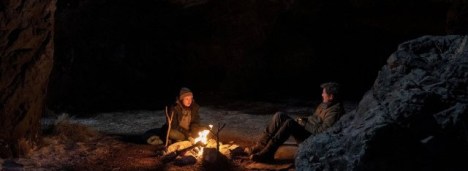
I am doing weekly reviews of The Last of Us at The Escapist. They’ll be dropping every Sunday evening while the show is on, looking at the video game adaptation as the show progresses. This week, the show’s sixth episode.

The sixth episode of The Last of Us, Kin, is steeped in the iconography of the western: there’s a frontier town, two indigenous characters, and even a horse on the railroad tracks. However, there’s also a sense that Joel and Ellie have reached the end of their push westward, their journey from Boston to Jackson. In that sense then, the show explores the legacy of the western in American consciousness, particularly the genre’s archetypal portrayal of masculinity. What does it mean or Joel to be a man or a father? How does that reconcile with the image he has cast for himself as a cynical and weary outlaw? Can he move past that?

You can read the piece here, or click the picture below.

New Escapist Column! On How “Ant-Man and the Wasp: Quantumania” Fails as an Introduction to Kang the Conqueror…

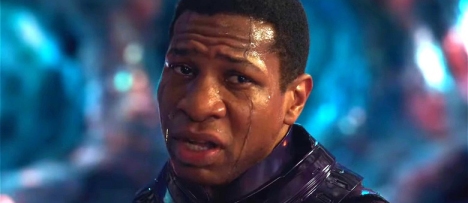
I published a new In the Frame piece at The Escapist this evening. With the release of Ant-Man and the Wasp: Quantumania this weekend, and how much of that movie is predicated on the introduction of Kang the Conqueror as the new “big bad” of the shared universe, it seemed like a good opportunity to take a look at whether the film accomplished this.

Quantumania fails to establish Kang as a credible threat, in large part because the movie is afraid of upsetting its audience. There are no stakes in Quantumania, no losses and no sense of ambiguity or compromise. The heroes survive their confrontation with Kang handily, easily overwhelming the villainous invader and even laughing at the idea of there being long-term consequences for their actions. Quantumania is so worried about potentially alienating fans of Ant-Man that it undersells its supposed big bad.

You can read the piece here, or click the picture below.

New Escapist Column! On “The Bad Batch” as a Show About Veterans of a Forever War…

I published a new piece at The Escapist last week. With the release of the second season of The Bad Batch, it seemed like a good opportunity to talk about one of the more interesting facets of the series.

The Star Wars franchise has always been intensely political. George Lucas tied the original films to the Vietnam War, and the prequels to the Iraq and Afghanistan Wars. The Bad Batch feels like a culmination of this trend, a follow-up to the prequel trilogy, released in the wake of the American withdrawal from Iraq and Afghanistan, that is very much engaged with the question of what happens to an army of soldiers at the end of an ostensible “forever war.” It’s a meaty theme for an animated series, and The Bad Batch is at its most interesting tapping into it.

You can read the piece here, or click the picture below.

New Escapist Column! On The Third Season of “Star Trek: Picard” as an Exercise in Justifying Nostalgia…

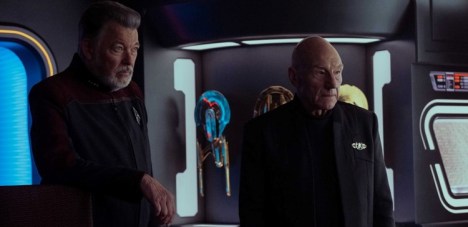
I am doing weekly reviews of Star Trek: Picard at The Escapist. They’ll be dropping every Thursday morning while the show is on, looking at the third season as the show progresses. This week, the premiere.

The third season of Picard is a staggering work of fan service nostalgia, a collection of imagery and iconography that the audience recognises, with little to tie it together beyond assumed familiarity. Part of what is so interesting about the series is that it seems to understand this. Picard is largely built around justifying that nostalgia, to itself and its audience, as if trying to desperately reassure viewers that it’s fine to give up the future and retreat into the comforts of an illusory past.

You can read the piece here, or click the picture below.

New Escapist Column! On “Ant-Man and the Wasp: Quantumania” as a Parable About the Legacies of Interventionism…

I published a new In the Frame piece at The Escapist this evening. With the release of Ant-Man and the Wasp: Quantumania, it seemed like a good opportunity to look at the movie’s thematic preoccupations.

Quantumania is something of a frustrating jumble of a movie. However, there are some interesting ideas nestled within it. Most engagingly, Quantumania feels like a movie that is about the legacy of foreign interventionism, dropping its characters into a strange realm that was forever altered by the pragmatic alliances made decades earlier. It’s a film about whether characters that call themselves heroes owe any obligation to help those less fortunate, particularly when that suffering is a direct consequence of earlier choices and actions. Quantumania doesn’t necessarily say any of this particularly well, but it tries.

You can read the piece here, or click the picture below.

New Escapist Video! “Ant-Man and the Wasp: Quantumania is a Buggy Start to Phase 5”

I’m thrilled to be launching movie and television reviews on The Escapist. Over the coming weeks and months, I will be joining a set of contributors in adding these reviews to the channel. For the moment, I’m honoured to contribute a five-minute film review of Ant-Man and the Wasp: Quantumania, which was released in cinemas this weekend.

New Escapist Column! On “Magic Mike’s Last Dance” as a Story of Love In the Time of Capitalism…

We’re launching a new column at The Escapist, called Out of Focus. It will publish every second Wednesday, and the plan is to use it to look at some film and television that would maybe fall outside the remit of In the Frame, more marginal titles or objects of cult interest. This week, we took a look at Steven Soderbergh’s Magic Mike’s Last Dance.

In interviews around the film, Soderbergh has returned time and against to thirties romances as a point of reference, and it shows. Magic Mike’s Last Dance is movie very firmly tied to the traditions and roots of those classic romances, right down to making the butler a supporting character. As with a lot of Soderbergh’s recent films, Magic Mike’s Last Dance is a movie fascinated with commodification and globalisation, in particular the idea of the packaging and selling of intimacy and emotional connection. It’s a film about sex, power and money – and the intersection of those three things.

You can read the piece here, or click the picture below.

New Escapist Column! On M. Night Shyamalan’s Fascination with Faith…

We’re launching a new column at The Escapist, called Out of Focus. It will publish every Wednesday, and the plan is to use it to look at some film and television that would maybe fall outside the remit of In the Frame, more marginal titles or objects of cult interest. This week, with the release of Knock at the Cabin, it seemed wothing taking a look at the films of M. Night Shyamalan.

Shyamalan is a filmmaker with a unique perspective, and many of his films circle around the same sets of themes concerned with family and horror. However, Shyamalan is also a director fascinated by faith and belief. He’s often horrified by characters who hold firmly to seemingly irrational beliefs. More than that, though, Shyamalan’s films often mine a sense of dread and horror from something even more fundamental: the fear that, against all odds, these irrational understandings of the universe might be correct.

You can read the piece here, or click the picture below.

New Escapist Column! On The “Ant-Man” Movies as the Most Marvel of the Marvel Movies…

I published a new In the Frame piece at The Escapist this evening. With the upcoming release of Ant-Man and the Wasp: Quantumania, it seemed like a good opportunity to take a look back at Ant-Man and Ant-Man and the Wasp, and the way in which these films – for better and worse – feel like the statistical mean of the Marvel Cinematic Universe.

Part of what in interesting about the Ant-Man movies is how little they actually adapt from the source comics, largely marginalising characters like Hank Pym and Janet Van Dyne in favour of porting over out-of-continuity characters like Hope van Dyne. They deliberately structure themselves to avoid key character and plot beats from the comic book franchise, and so offer the purest distillation of the adaptation storytelling of the comic book film franchise. The Ant-Man franchise is the Marvel Studios franchise that feels most generic, most cribbed together using the studio’s narrative shorthand.

You can read the piece here, or click the picture below.