• Following Us

  • Categories

  • Check out the Archives


  • Awards & Nominations

Iron Fist – Under Leaf Pluck Lotus (Review)

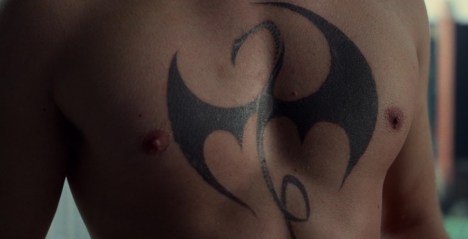
With Under Leaf Pluck Lotus, Iron Fist truly embraces its inner Batman Begins.

To be fair, there were shades of this in the earlier episodes. Snow Gives Way introduced Danny Rand as a long-lost (legally dead) billionaire who returned home from a trip to the orient. Rolling Thunder Cannon Punch embroiled Danny in battle to take control of his company and reclaim his father’s legacy. Indeed, it seemed fair to reflect that if Daredevil had gorged itself on many of the more interesting and compelling facets of Christopher Nolan’s superhero origin story, then Iron Fist had been left to gently pick over the remains of that particular corpse.

Ain’t gonna Gao…

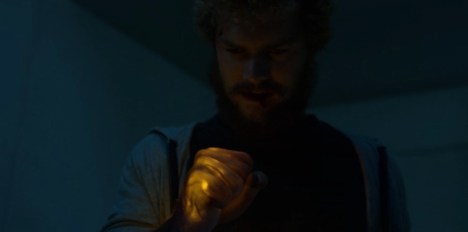
Under Leaf Pluck Lotus finds Iron Fist borrowing even more from Batman Begins, lifting plot points and story beats that were already stolen by Daredevil. The bulk of Under Leaf Pluck Lotus focuses on Danny’s discovery that a cult of secret ninjas have been using his company to smuggle dangerous materials into the city, having made a dangerous alliance with “the chemist.” This leads to a dangerous confrontation on the docks, recalling one of the most memorable sequences in Batman Begins and Matt Murdock’s own dockland adventures in Into the Ring or Stick.

When Under Leaf Pluck Lotus isn’t borrowing heavily from Batman Begins, it is awkwardly emulating Daredevil. Once again, the Hand are using the docks to smuggle something dangerous into New York City. Once again, that dangerous object turns out to be a person rather than an object. All of this feels very familiar, almost suffocatingly so. There are any number of interesting stories to be told about the character of Danny Rand and using the Immortal Iron Fist. Why settle for a dull retread of a story that has already been told within this run of television series?

On the defensive.

Continue reading

Iron Fist – Eight Diagram Dragon Palm (Review)

Iron Fist takes a long time to say very little.

There are arguments to be made that series like Jessica Jones and Luke Cage were somewhat over extended. Jessica Jones had an incredibly frustrating tendency to have Jessica capture Kilgrave, only for him to escape and prolong the series; AKA The Sandwich Saved Me, AKA Sin Bin and AKA 1,000 Cuts all played the same card. Luke Cage fell apart in its second half, taking its protagonist out of action for several episodes while essentially repeating itself over the final four episodes, with Luke going from fugitive to hero to fugitive to hero.

My kung fu is better than yours.

However, Iron Fist is particularly notable for placing this drag at the very start of the season. The first four episodes of Iron Fist can effectively be written off, accomplishing very little in terms of moving the plot forward and establishing a series of obstacles that are handily dispatched and which fail to either move the plot forward or provide keen insight into the characters. Luke Cage might have opened slowly with Moment of Truth and Code of the Streets, but at least it provided a sense of character and place. Jessica Jones built up its sense characters.

In contrast, the driving plot of Iron Fist only comes into focus at the end of Eight Diagram Dragon Palm. Which makes the preceding four episodes seem like a waste of time and energy.

“Yes, Father. I shall become a dragon.”

Continue reading

Iron Fist – Rolling Thunder Cannon Punch (Review)

Iron Fist draws its influences from the strangest possible places.

As a rule, the Marvel Netflix shows are heavily rooted in the reinvention of Marvel’s street level heroes that began around the turn of the millennium. There are generally two key creative figures associated with this era, artist-turned-editor Joe Quesada and writer Brian Michael Bendis. Working the bunch of street-level properties, these two figures invented and reinvented a number of characters and concepts that would become a cornerstone of this shared television universe.

Hitting the wall…

Sometimes the influence was rather direct. Jessica Jones draws fairly heavily and literally from Brian Michael Bendis and Michael Gaydos’ twenty-eight issue run on Alias. Sometimes that influence was more conceptual. Luke Cage tells its own unique story, but it is heavily influenced by Brian Michael Bendis’ rehabilitation of the title character during his runs on Alias and New Avengers. In some ways, Daredevil is an outlier, drawing on the iconic eighties run by Frank Miller, but it is still heavily influenced by millennial runs by Brian Bendis and Ed Brubaker.

Given this existing framework, there is a very obvious influence from which the creative team might draw. Written by Ed Brubaker and Matt Fraction, and illustrated primarily by David Aja, The Immortal Iron Fist was launched in November 2006. The run was launched during the tenure of Joe Quesada and spun directly out of Daredevil. It was also praised by critics and adored by fans for its radical and thoughtful reinvention of the Iron Fist mythos. It was also just plain fun, with Michal Chabon summarising it as “pure, yummy martial-arts-fantasy deliciousness.”

More like bored room, am I right?

With all of this in mind, it seems like Iron Fist should not have to look very hard for an influence. The Immortal Iron Fist was a comic that reinvented a long-forgotten character in a way that made him accessible to modern audiences that had never latched on to Danny Rand. More than that, by focusing on the history and legacy of the title, Fraction and Brubaker had found (some small way) to defuse the potential racial controversy simmering beneath the production. Emphasising the tradition of K’un Lun, The Immortal Iron Fist diversified the mythos.

And yet, in spite of all of that, Iron Fist chooses to draw most heavily and most overtly from the original appearances of Danny Rand in Marvel Premiere and Iron Fist, a run largely forgotten by history and notable primarily as a stepping stone to much greater things.

Hardly gripping.

Continue reading

Iron Fist – Shadow Hawk Takes Flight (Review)

Who is Danny Rand?

It is a question that any television show should be asking of its lead. The audience will be spending an extended period of time with this character in this world, so the character needs to be interesting and compelling in their own right. The other Netflix Marvel shows made a point of answering this challenge out of the gate. Into the Ring made it clear that Matt Murdock was a ball of repressed rage buried beneath Catholic Guilt. AKA Ladies’ Night established Jessica Jones as a self-destructive super-strong survivor. Moment of Truth sets up Luke as the immovable object.

There are probably easier ways to make sure that Finn Jones stops giving interviews.

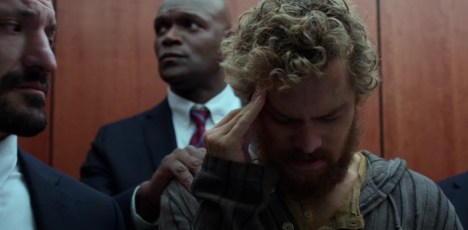
There is a recurring sense that Iron Fist understands that establishing its lead character is an important thing to do. Certainly, Snow Gives Way spends enough time on Danny Rand asserting his identity as the sole heir of the Rand Corporation. Shadow Hawk Takes Flight locks Danny in a psychiatric institution in which he is forced to prove his identity to people who believe that he has lost his mind. These are all plot points that, in theory, hinge upon Danny demonstrating who he is. They are, in theory, a solid way to introduce the character to audiences.

However, in practice, there is a recurring sense that Iron Fist simply doesn’t care about making Danny Rand interesting. Iron Fist seems to think that it is enough that the character exists and loosely resembles a superhero. Just like Iron Fist seems to think that it is enough that the show exists and loosely resembles a superhero show.

Not quite a glowing endorsement.

Continue reading

Marvel and Netflix’s Iron Fist (Review)

Iron Fist is a spectacular failure.

There are a lot of different reasons for this. On a purely practical level, so much of the show disappoints. The cast are bland and forgettable. The dialogue is awful. The stunt work is pedestrian. The direction is sterile. The special effects work looks like it was lifted from the later nineties. The editing is jarring. The attempt to recreate foreign locales looks like something from nineties television. These are all very significant problems with the production, aspects that would be irritating on their own, but come together to create a larger problem.

However, the flaws with Iron Fist are even more fundamental than this. Iron Fist is a show with an interesting premise but a complete lack of ambition. The show has no sense of its own identity or direction, its very existence dictated by external factors. It is a series that exists simply because it must exist, not because the writing staff had something interesting to say or because Danny Rand was the perfect hero for this cultural moment. Iron Fist exists because there is a slot in the schedule that needs to be filled, and Iron Fist aspires to do nothing more than fill it.

This is perhaps the most severe problem with Iron Fist. It is not that the show is bad, although it is definitely bad. The unforgivable flaw with Iron Fist is that the show is boring.

Continue reading

Iron Fist – Snow Gives Way (Review)

So, what is Iron Fist about?

To be fair, it is a tough question to answer. The final Netflix series, publicised as “the Last Defender”, seems to have been a hard sell. Indeed, the emphasis on the show’s position as “the Last Defender” recalls the marketing of Captain America: The First Avenger. In both cases, Marvel was selling a property that posed a creative challenge by tethering it to a looming mass-market crossover, counting on its position as “the last piece of the puzzle” to draw in audiences that might otherwise hold little interest in the material.

Fist first.

And, by and large, Iron Fist is defined by these outside demands. Any audience member trying to figure out what Iron Fist is or what purpose it serves will arguably get a better sense of that by tracing the outline established by the other Marvel Netflix shows. Iron Fist is not a television show that defines itself, instead existing in a narrative and marketing space that has already been defined for it by the demands of other multimedia. Iron Fist is not so much a television show as a bunch of stuff that fits in that space before The Defenders.

That much is evident even as early as Snow Gives Way, the first episode of the Netflix series. The pilot is arguably as instructive in what it fails to do as it is in what it actually accomplishes. It eats up fifty minutes of airtime without providing the audience with any real sense of who these people are, what they want, or what the series is trying to say that isn’t on the agenda already set up by the other Marvel Netflix shows.

He’s acting. Really hard.

Continue reading

Star Trek: Deep Space Nine – Who Mourns for Morn? (Review)

Who Mourns for Morn? suffers a great deal from its place in the sixth season.

Who Mourns for Morn? is the second broad comedy in the last three episodes. It is the third light-hearted episode of the last six. That would be a lot of comedy for any season of Star Trek, but it is particularly apparent in the context of the sixth season of Star Trek: Deep Space Nine. After all, there is supposed to be a war raging in the background. The cathartic release of You Are Cordially Invited made a great deal of sense after the opening six-episode arc, and The Magnificent Ferengi was a brilliant comedy episode. However, this is just too much.

Painting a picture of a life...

Painting a picture of a life…

To be fair, the structure of the season contributes to this sense of humour fatigue. The decision to open the sixth season with a six-episode arc focusing on the retaking of Deep Space Nine was bold and ambitious, but it left little room for comedy or humour. As a result, the comedy episodes were concentrated in the aftermath of that sprawling war story, making for a particularly jarring contrast. The first half of the sixth season of Deep Space Nine only has three comedy episode, which is not too much by any measure. However, they arrive in rapid succession.

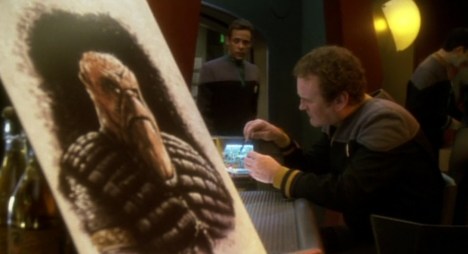
Taken on its own terms, Who Mourns for Morn? is a solid and enjoyable episode. It is not as funny as House of Quark or Little Green Men, but it moves quickly and works from a clever premise. It is populated with quirky supporting characters, none of whom outstay their welcome. Who Mourns for Morn? is a fun little runaround. Unfortunately, it arrives at a point in the season where the audience is exhausted from all those runarounds.

A very messy, very dirty business.

A very messy, very dirty business.

Continue reading

Star Trek: Voyager – Message in a Bottle (Review)

Message in a Bottle is an intriguing episode, although not necessarily for the most obvious of reasons.

Working with Andy Dick can be tough.

Working with Andy Dick can be tough.

Message in a Bottle is notable for its stunt casting, featuring controversial comedian Andy Dick as the Emergency Medical Hologram, Mark II. Given his background and his interests, Andy Dick is a very strange choice for a Star Trek guest role. Then again, it takes all sorts; Star Trek: Deep Space Nine cast Iggy Pop in The Magnificent Ferengi and Star Trek: Voyager finds room for the Rock in Tsunkatse. However, the last time the franchise attempted to cast a famous comedian, Star Trek: The Next Generation ended up with The Outrageous Okona.

Understand, Andy Dick tends to be the focal point for discussion around Message in a Bottle. However, the episode is notable for other reasons. In a weird way, Message in a Bottle kicks off a very loose serialised arc that plays through the next handful of episodes. It introduces the communications grid that plays a major role in Hunters, and features the first glimpse of the Hirogen. The Hirogen go on to play a major role in episodes like Prey, The Killing Game, Part I and The Killing Game, Part II.

"What the hell are YOU doing in my Star Trek show?"

“What the hell are YOU doing in my Star Trek show?”

Message in a Bottle also comes at the half-way point in Voyager‘s run, speaking in terms of structure rather than episode count. Message in a Bottle is positioned mid-way through the middle season of Voyager‘s seven year run. Although the count is skewed somewhat by the series’ abridged first season, it feels like the last point at which Voyager is closer to its beginning than to its end. As such, there is something strangely appropriate in the fact that Message in a Bottle allows Voyager to reconnect with Starfleet and the Alpha Quadrant.

This is perhaps the point where the end of the journey “seems a little closer.”

"This never would have happened if they'd just gone with the Bashir model!"

“This never would have happened if they’d just gone with the Bashir model!”

Continue reading

Star Trek: Voyager – Waking Moments (Review)

Waking Moments feels very much like a first or second season episode of Star Trek: Voyager that somehow entered production in the middle of the fourth season.

A lot of this is down to the simple texture of the episode. Waking Moments centres around a decidedly “weird” alien species, a touch that recalls the early mysteries of Delta Quadrant life suggested by episodes like Phage, The Cloud, Heroes and Demons, Cathexis and even Emanations. These are aliens that do not conform to standard Star Trek logic, stalking their prey through dreams rather than with advanced technology. In fact, the emphasis on dreams in Waking Moments harks back to the vague New Age sentiment of Michael Piller’s time on Voyager.

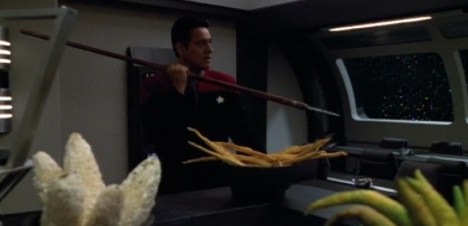
No, Chakotay. Hunters and Prey are next week.

No, Chakotay. Hunters and Prey are next week.

In fact, Waking Moments returns to a very New Age cliché version of Chakotay. Following on directly from Mortal Coil, Chakotay is once again repeating “ah-koo-chee-moya” and talking about “vision quests.” He mentions his father as a connection to his Native American heritage for the first time since Basics, Part I, and even evoked Tattoo in discussing his rejection of shared activities in his youth. Waking Moments feels like an episode that was originally written while Michael Piller was overseeing the show, but has finally made it to air.

Of course, Waking Moments feels rather retrograde in other ways. It is a very clumsy ensemble piece that treats tired old plot twists as innovative and exciting, moving along at a leaden pace without any sense of what makes this story interesting or compelling in its own right. Waking Moments is a surprisingly tiring piece of television.

An artist's impression of the audience watching Waking Moments.

An artist’s impression of the audience watching Waking Moments.

Continue reading

New Podcast! The X-Cast – Episode 80 (Chris Carter’s “The After)

Just a quick link to a recent guest appearance on a lovely bonus episode of The X-Cast, a great X-Files podcast run by the prolific Tony Black.

Taking a quick break from the show’s coverage of the second season, I chatted with Tony about Chris Carter’s pilot for Amazon, The After. The After is an interesting addition to Carter’s filmography, and in many ways prefigures the direction in which he would take his six-episode revival of The X-Files. We got to talk about all sorts of fun things, from Irish stereotypes to dead bees to capitalising most effectively on the lack of broadcast standards and practices. Check it out the episode here, or click the link below.

Continue reading