• Following Us

  • Categories

  • Check out the Archives


  • Awards & Nominations

New Podcast! The Pensky File – Star Trek: Deep Space Nine, Season 3, Episode 9 (“Defiant”)

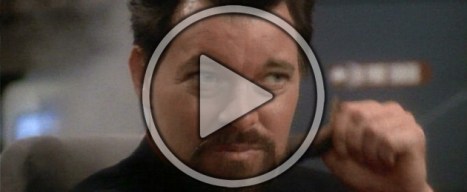
This weekend, I had the pleasure of dropping by The Pensky Files to discuss one of the more interesting episodes of the third season of Star Trek: Deep Space Nine.

Defiant is a gleefully insane episode of Star Trek, in which William Riker’s evil transporter duplicate hijacks the Defiant to lead a mission into the heart of Cardassian territory to expose a government conspiracy that might threaten the security of the entire Alpha Quadrant. Along the way, there’s discussions of terrorism and heroism, of missed family birthdays, and of just how absurd Picard’s log entries must sound when they are read aloud.

It was a pleasure to record with Wes and Clay, diving deep on everything from Riker’s “woman in need of relaxation”-dar to the franchise’s complicated attitude towards the Maquis. You can find more from The Pensky Podcast here, and listen to the podcast by clicking the link or just listening below.

Continue reading

Luke Cage – Wig Out (Review)

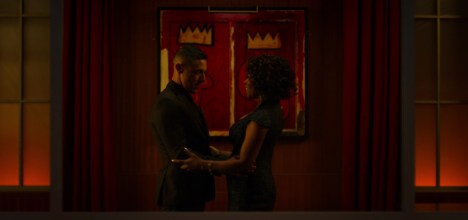
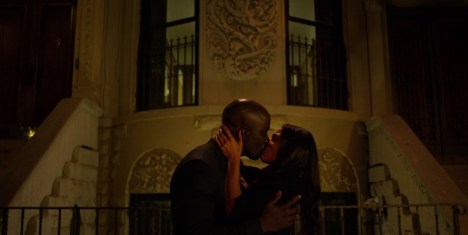
The second season of Luke Cage engages with the idea of masculinity in a number of interesting ways.

This is an interesting choice on a number of levels. Most obviously, the idea of exploring masculinity within the framework of a Marvel Netflix show should (in theory) belong to Jessica Jones. With the character of Kilgrave, it was the streaming service’s first female-led superhero series that marked out the idea of masculinity as a concept worth exploring within the framework of a superhero narrative. However, the second season of Jessica Jones is very engaged with the idea of female relationships, whether friendly or familial.

In doing so, Jessica Jones may have passed the theme on to the second season of Luke Cage. This makes sense on a number of levels. Most superficially, Luke Cage was actually introduced as a recurring guest star on the first season of Jessica Jones, and so ideas about masculinity are clearly woven into the character’s core identity. Beyond that, there is some value in Luke Cage in exploring the idea from a different perspective. After all, Luke Cage is a series with a male heroic lead. Its approach to the theme of masculine identity would be radically different.

As such, the second season of Luke Cage is perfectly positioned to explore notions of masculine identity.

Continue reading

Luke Cage – Straighten It Out (Review)

The black experience is not monolithic.

This should be obvious. Dark-skinned Americans are not a single political or cultural entity with one easily defined ethnic identity, much like light-skinned Americans have their own diverse heritages and experiences. The Irish American experience is different from the Dutch American experience or the Italian American experience or the German American experience. As such, it makes sense that the ethnic group that might be casually classed as “African American” is itself a composite of a wide array of backgrounds and histories.

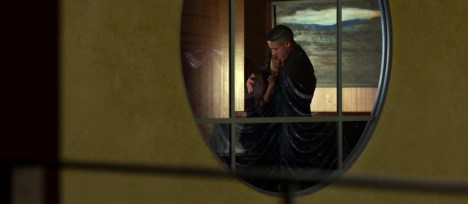
One of the most remarkable aspects of the second season of Luke Cage is the ease and willingness with which the series looks outside of the culture and history of Harlem to broaden and deepen its exploration of a variety of black perspectives and experiences. The second season of Luke Cage builds on the first season in establishing a world populated by black characters and black voices, but has the luxury of extending its focus into exploring how those experiences and individuals differ from one another.

For a broad comic book television series about a superhero with bulletproof skin, that is quite the accomplishment.

Continue reading

Luke Cage – Soul Brother #1 (Review)

The Netflix Marvel shows benefit greatly from a sense of place, a firm geography.

Part of this is down to the simple logistics of their production. DaredevilJessica JonesLuke CageIron FistThe Defenders and The Punisher actually shoot on location in New York City, especially in Manhattan. Film and television often use other locations for filming purposes, often to capitalise on tax incentives. For its first fives seasons, The X-Files used Vancouver to double for all of the New United States. Spider-Man might be an iconic New York fixture, but Spider-Man: Homecoming was shot primarily in Atlanta to capitalise on filming incentives.

This lends the portrayal of New York an authenticity that is often lacking in other productions, a real sense of existing in a real space. After all, The Incredible Hulk filmed its climactic Harlem battle in Toronto of all places. At least You Know My Steez was able to shoot Harlem for Harlem. Of course, there have been points where this location shooting has been an issue, such as attempts to use New York to double for China in The Blessing of Many Fractures, but it mostly works. (The Jamaican scenes in The Creator work much better. In part because they were filmed there.)

More than that, each of the Marvel Netflix series unfolds in a particular version of New York City, distinct in time and space. Jessica Jones unfolds in an archetypal disconnected beautiful city version of New York, with Jessica standing atop the Brooklyn Bridge to bid farewell to the city in AKA Top Shelf Perverts. In contrast, Daredevil and The Punisher unfold in a version of the city that is perpetually stuck in the late seventies and early eighties, perhaps typified by the mood and tone of Bang. In contrast, Luke Cage is firmly anchored in the mood and the tone of Harlem.

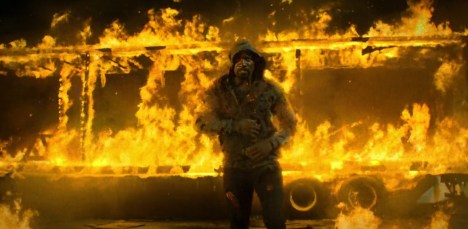
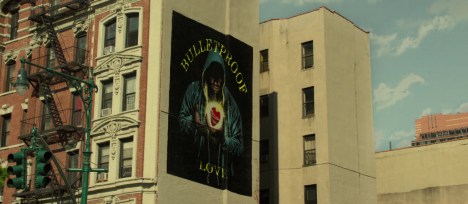
However, the second season of Luke Cage does something very interesting with its Harlem setting. The second season develops a parallel version of Harlem that seems to branch off its real-life counterpart. In keeping with the pulpy comic book aesthetic of Luke Cage, there is a consciously heightened quality to the Harlem inhabited by its central characters, defined by its own geography and its own spaces. The second season of Luke Cage suggests a version of Harlem with its own archetypal environments and settings, its own iconography and geography.

The production team infuse Luke Cage with an authentic Harlem aesthetic, but they also understand that the power of superhero stories is rooted in iconography and symbolism. The version of Harlem created in the first season of Luke Cage and developed in the second season is very much a point of intersection between the real world and the more stylised realm of comic book superheroics.

Continue reading

Netflix and Marvel’s Luke Cage – Season 2 (Review)

The second season of Luke Cage is a fascinating piece of work.

It is far more cohesive than the first season when taken as a whole, and harks back to the sturdy consistency of earlier seasons like the first seasons of Daredevil and Jessica Jones. It is a show with a very clear idea of what it is trying to do and say, and with a much stronger sense of structure than its stablemates like Iron Fist, The Defenders and The Punisher. It also avoids the surplus of ambitions and lack of structure that undercut the second seasons of Daredevil and Jessica Jones.

It is fair to describe Luke Cage as the first Marvel Netflix series to tangibly improve in the transition from its first season to its second season, to learn from some of the mistakes that the production made in their initial thirteen episodes and to render a more satisfying and cohesive whole. Indeed, there’s a reasonable argument to be made that the second season of Luke Cage does what a lot of really great sequels should do, in that it deepens the themes of the original while also refining what works and expelling what doesn’t.

This is not to say that the second season of Luke Cage is perfect. The season suffers from the now-familiar “Netflix bloat”, the sense that the writers are effectively padding the series to reach a preordained episode count that is tied to outdated notions of what television is or should be. There is no reason for the second season of Luke Cage to be a loose thirteen episodes, when it could easily work as a tighter eight. There are points in the season where the show enters a conscious holding pattern, like a song that keeps looping its bridge to stall before the crescendo.

However, even allowing for these problems, there is a sense that the production team are trying to find a way to make these thirteen episodes work. There are several points in the season in which the show allows its characters room to breath in sequences that could have been shortened or rendered more efficient, allowing the audience to spend extended amount of time with these individuals between the big dramatic beats to capture a sense of humanity that might be lost in a tighter or more efficient version of the series.

The second season of Luke Cage is a fascinating and engaging piece of work, even if it suffers a bit in terms of padding and pacing. Nevertheless, it represents a significant improvement on most of the recent collaborations between Netflix and Marvel Studios, having a strong sense of identity that was sorely lacking from most of the material produced since the end of its first season.

Continue reading

Star Trek: Voyager – Fury (Review)

Normally, the return of an old cast member to an established show is a cause for celebration, akin to a belated family reunion.

The obvious examples involve the appearances of cast members from other shows on later spin-offs. Think of the reverence and sincerity with which Star Trek: The Next Generation treated Spock and Scotty in episodes like Unification, Part I, Unification, Part II and Relics. Think about the delight with which Star Trek: Voyager greeted Geordi LaForge in Timeless or Deanna Troi in Pathfinder. Even when Star Trek: Deep Space Nine subverted expectations with Jonathan Frakes’ appearance in Defiant, it was still joyful. If anything, Star Trek: Enterprise went too far in accommodating Troi and Riker in These Are the Voyages…

Self-control.

Even within individual shows, the return of long-absent cast members is often treated as an opportunity to celebrate that character, and perhaps even to acknowledge past missteps involving them. Yesterday’s Enterprise brought back the character of Tasha Yar, and used the opportunity to rewrite her mean-spirited and pointless death in Skin of Evil. When mirror!Bareil visited in Resurrection, the episode became a meditation upon how the character’s intrinsic decency was strong enough to transcend dimensions and to define even the worst version of himself.

This approach to the return of established characters makes a great deal of sense for a wide variety of reasons. Most obviously, the production team have gone out of their way to recruit these actors for this specific purpose; it makes sense that these episodes should serve as a celebration of their contributions to the franchise. Even beyond that, it is safe to say that almost any lead character on a Star Trek series has something resembling a fan base; think about the ominously-named “Friends of Vedek Bareil.” Why bring back a character, and attract in those fans, just to do something horrific?

That healthy blue glow.

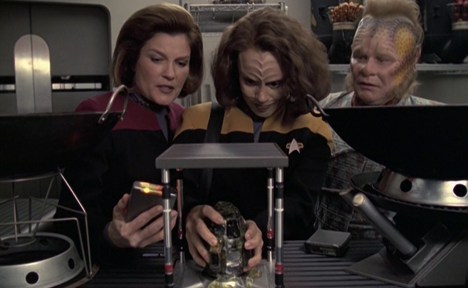
All of this serves to make Fury all the more perplexing. Fury is an episode of Voyager that effectively resurrects the character of Kes, a regular on the first three seasons of Voyager who departed the series in The Gift at the start of the fourth season. The return of Kes is a strange choice, in large part because the production team often struggled with what to do with the character while she was part of the core cast. Still, there are any number of interesting possibilities. And there is the possibility that, like Yesterday’s Enterprise or Resurrection, the production team might use the occasion to say something interesting about Kes.

Unfortunately, Fury is a spectacular mess of an episode with half-developed character motivations and a highly surreal premise that undercuts a lot of the appeal of bringing Kes back in the first place.

Having its cake and eating it too.

Continue reading

Star Trek: Voyager – Muse (Review)

In its own way, Muse marks the end of an era for Star Trek: Voyager, as Joe Menosky’s last solo script for the series.

To be fair, this is not Menosky’s last script credit on the series. Menosky would collaborate with Brannon Braga on the season-bridging two-parter Unimatrix Zero, Part I and Unimatrix Zero, Part II. In fact, those episodes have themes that play directly into Menosky’s interests; the two-parter is a story about dreams and narratives, about worlds that exist beyond the literal and the concrete. More than that, Menosky would work on the writing staff of Star Trek: Discovery, contributing the script to Lethe, one of the season’s stand-out episodes that was also about narratives – albeit internalised ones.

Dropping the mask.

However, Muse still feels like it marks the end of an era. Menosky had been a fixture of the Berman era of Star Trek dating back to the fourth season of Star Trek: The Next Generation, making his debut with Legacy and arguably making his biggest impression with Darmok early the following season. Menosky’s involvement with the franchise ebbed and flowed in the intervening years, but his influence was often felt. Indeed, Menosky even contributed a handful of scripts and stories to Star Trek: Deep Space Nine, including the teleplay for the underrated Dramatis Personae.

With Menosky’s departure from Voyager at the end of the sixth season, Brannon Braga would become the longest-serving writer working on the Star Trek franchise. His tenure on the television franchise would surpass that of Ronald D. Moore, and of any writer who hadn’t spanned the gap from the end of the original Star Trek to the early seasons of The Next Generation, with the arguable exception of producer Rick Berman. As such, Muse feels very much like the end of an era. It marks the departure of one of the guiding light of the Star Trek franchise, albeit one often overlooked or ignored.

Storyteller.

Muse is an episode that speaks to Menosky’s key interests within the Star Trek franchise, the idea of Star Trek as something akin to a modern mythology. More than any other writer on Star Trek, Menosky is invested in stories that are fundamentally about stories. His influence on Voyager is more subtle than that of Michael Piller, Jeri Taylor or Brannon Braga, but can felt in the recurring idea that Voyager itself is a Delta Quadrant myth. More than any of the other Star Trek series, Voyager feels like it is a story about a collection of archetypes rather than characters.

Menosky first articulated this idea in the closing scene of his otherwise forgettable script for False Profits, but reinforced it in episodes like Distant Origin, Living Witness and Blink of an Eye. It could reasonably be argued that this idea became part of the show’s identity, to the point that it can even be traced through episodes not explicitly credited to Menosky, like Live Fast and Prosper. It seems appropriate that this idea should serve as the central theme of Muse, an episode that might be read as a thesis statement on Menosky’s approach to the franchise.

Acting out.

Continue reading

Star Trek: Voyager – Live Fast and Prosper (Review)

Live Fast and Prosper is a reasonably adequate mid-tier episode of Star Trek: Voyager.

It is not awful. It has an interesting premise, with some interesting potential for development and exploration. It fits with some of the larger fascinations of Voyager – in particularly recurring themes of identity and narrative, and the intersection of the two. More than that, unlike a lot of Voyager episodes, it has a story that feels somewhat original. This is not a dull rehash of a familiar story, a shiny new exterior hastily assembled over a familiar storytelling engine.

“Get this… whatever it is… to Sickbay!”

At the same time, it is also not very good of itself. Although Live Fast and Prosper has an absolutely ingenious premise, it never seems to push itself beyond that point. It never makes the leap that the best stories make, from an interesting premise into a satisfying execution. Live Fast and Prosper is pretty much exactly the episode that every audience member would anticipate given the one-line plot description of “Voyager encounters a group of con artists who have been impersonating them for shady business deals.”

The result is an hour of television that is solid, if not impressive. Live Fast and Prosper feels like a middling delivery on a fantastic promise, to the point where its status as merely adequate is almost as severe a disappointment as some of the spectacular misfires around it.

Unfamiliar faces…

Continue reading

New Podcast! The X-Cast – Season 3, Episode 2 (“Paper Clip”)

A real pleasure to re-team with Tony Black to round out our coverage of “the unopened file” on The X-Cast, following on from our discussions of Anasazi and The Blessing Way. And this time, it’s an even stronger line-up. The wonderful Chris Knowles is joins us for the discussion of the final part of the season-bridging trilogy.

As ever, a huge thrill to be a part of this. Anasazi, The Blessing Way and Paper Clip represent a landmark moment for The X-Files as a television show, and it’s been an honour to talk through those changes with Tony. However, Paper Clip is something special because it’s clear how much Chris loves this episode. There are few pleasures in life quite as satisfying as sitting down with somebody to talk about something they love.

I’ll be back on The X-Cast later in the season, to the point that I think the members of the Patreon may already have access to one of my own smaller side projects as part of the podcast. However, it was a delight to get to talk about three episodes that are so close to the core of what The X-Files is for a combined runtime of close to four hours.

The truth is in here. You can listen to the episode here, or click the link below.

Continue reading

New Podcast! The X-Cast – Season 3, Episode 1 (“The Blessing Way”)

I was thrilled to join Tony Black to launch the third season of The X-Cast, a podcast taking a tour through Chris Carter’s The X-Files.

I’ve been lucky enough to guest on a number of episodes, including the one covering the second season finale, Anasazi. After finishing up the second season, Tony took a bit of a break to rush through a podwatch of the entire series; I was thrilled to be invited to take part in that, commenting on episodes from Aubrey to Musings of a Cigarette-Smoking Man to Never Again to The Post-Modern Prometheus to The Unnatural and beyond. It was a real pleasure to be a part of that. And to contribute to Tony’s coverage of the eleventh season, including the final two episodes, maybe forever, Nothing Lasts Forever and My Struggle IV.

However, with Tony having covered all of that, we jumped right back into the regularly scheduled coverage. It was an absolute pleasure to talk about The Blessing Way, which is the third season premiere. I’ve gone on record in the past as both being a tremendous fan of the third season as a whole, which I think is one of the best twenty-odd episode seasons of television ever produced. I’ve also been a bit skeptical of The Blessing Way at the same time. I hope I’m fair to it here, where I confess why it’s both one of my least favourite episodes of the season and something that I’m very glad exists in this form.

As even, Tony was a fantastic host, and we had a fun and wide-ranging discussion about everything from abstract concepts of “truth” to why we love the Well-Manicured Man so much to the recurring theme of mirroring and doubling that plays through this three-parter in particular and the X-Files in general. Check it out the episode here, or click the link below.

Continue reading