• Following Us

  • Categories

  • Check out the Archives


  • Awards & Nominations

New Podcast! The X-Cast – Fight the Future Minute #52 (“A Well-Manicured Man (Again!)”)

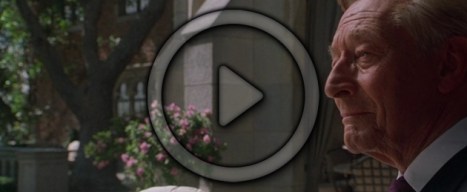
So The X-Cast reached the end of the show’s fifth season, and approached The X-Files: Fight the Future. This naturally meant it was time for another breathtakingly ambitious project, so the podcast is going literally minute-by-minute through the first X-Files feature film. I’m joining the wonderful Kurt North for two brief stretches featuring the Well-Manicured Man.

The Well-Manicured Man is – not so secretly – one of my favourite characters in the larger X-Files pantheon. This is partly because he’s played by the wonderful character actor John Neville, but also because he serves as an excellent analogy for the corrupting influence of the sort of power that runs through The X-Files. While the Cigarette-Smoking Man is transparently evil, and while the Elders are vaguely defined at best, the Well-Manicured Man is interesting in large part because he seems actually conflicted about what he has committed to.

In the first of this stretch of minutes, Fight the Future reintroduces the Well-Manicured Man in what is effectively a microcosm of the movie’s approach to storytelling. The audience is immediately given some understanding of who this character is, what he represents and what his motivations might be. It is more economical and effective than elegant, and a prime example of how Fight the Future was trying to position itself as a blockbuster rather than a cult film.

You can listen to the episode here, or click the link below.


“I Deny This Reality”: On the Broken Reality of Philip Hinchcliffe and Robert Holmes’ “Doctor Who”….

The fourteenth season of the classic Doctor Who was recently released on blu ray. In an unprecedented movie, there is a reissue of the blu ray box set coming in July. With the twelfth and fourteenth seasons available on blu ray, the bulk of the era overseen by producer Philip Hinchcliffe has been packaged on the latest home media format. As such, I thought it might be worth taking a moment to reflect on the era, and its subtext – which is eerily resonant on contemporary rewatch.

For an entire generation, Tom Baker will always be the star of Doctor Who. There is a reason, after all, why Baker was the only previous lead actor to get a major role in The Day of the Doctor, as opposed to being shunted off into specials or shorts or other supplemental material. There’s a number of reasons for this. Part of it is simple math, with Baker spending more time in the role than any other actors. Part of it is simply that Baker’s performance is iconic. Part of it is that Baker was the actor who tended to be featured on airings of the show on PBS in the United States.

However, there’s also the simple fact that Tom Baker had a pretty good run – at least at first. While there are certainly defenders of Baker’s final four seasons in the role, Baker’s first three years headlining Doctor Who count among the most consistently satisfying periods in the history of the show. From his admittedly rough around the edges introduction in Robot to his third season finale in The Talons of Weng-Chiang, there is a remarkable consistency to Doctor Who. Arguably it is the longest such period of consistency until Peter Capaldi was cast nearly four decades later.
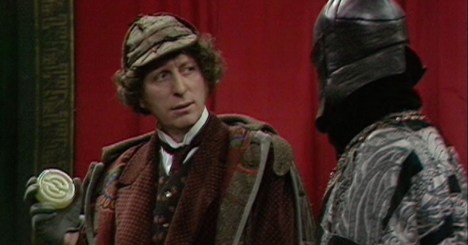
These three seasons were overseen by producer Philip Hinchcliffe and script editor Robert Holmes. Hinchcliffe and Holmes were lucky to be inheriting the show from a successful pairing of producer Barry Letts and script editor Terrance Dicks, which gave them a solid springboard from which they might launch themselves. Hinchcliffe and Holmes immediately veered the show towards horror, with stories like The Ark in Space or The Sontaran Experiment. It was a radical departure from the action adventure that defined the previous era, but was just what the show needed.

Hinchcliffe and Holmes codified a certain aesthetic of Doctor Who. Indeed, within the revival, there’s about a fifty-fifty chance that any historical episode is going to play like an homage to their work, with examples like The Unquiet Dead or Tooth and Claw coming to mind. This was the era that attracted the ire of Mary Whitehouse, who famously described it as “teatime brutality for tots.” It codified the idea of watching Doctor Who from “behind the sofa.” When writer Peter Harness was commissioned to write Kill the Moon, he was directed to “Hinchcliffe the sh!t” out of the first half.
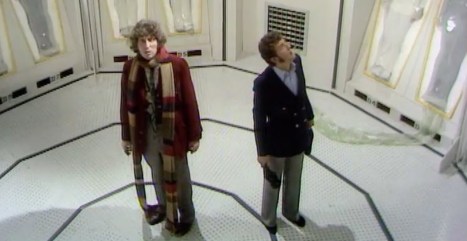
Rewatching these stories today, it’s interesting how much they resonate and how much the horror at their core still works. This era of Doctor Who has its fair share of iconic monsters like the Wirrn from The Ark in Space, but a lot of the horror is abstract. The Hinchcliffe era is firmly anchored in classic horror stories, with Pyramids of Mars and Brain of Morbius most overtly evoking Hammer Horror and stories like Planet of Evil drawing from stories like The Strange Case of Doctor Jekyll and Mister Hyde, but its horror is more existential than that.

The Hinchcliffe era is preoccupied with the notion of long-dormant threats resurfacing and threatening the established order of the universe, long-vanquished foes reviving themselves and causing existential crises. More than that, these three seasons are particularly preoccupied with the anxiety about a fracturing and warping reality, in a way that feels strangely prescient and probably resonates even more strongly these days than it did on original broadcast.

Continue reading

New Podcast! The Time is Now – Season 2, Episode 21 (“Somehow, Satan Got Behind Me…”)

I’m thrilled to appear on another episode of The Time is Now, discussing the second season of Millennium, which remains one of my favourite seasons of television ever. It’s a huge pleasure to have been asked back to discuss the last standalone episode of the season, Darin Morgan’s superb Somehow, Satan Got Behind Me, with the wonderful duo of Kurt North and Michael John Petty.

Somehow, Satan Got Behind me is a fascinating piece of television. It is effectively a miniature anthology episode, a collection of short stories, in which Frank Black doesn’t play a major role. Instead, Somehow, Satan Got Behind Me offers a decidedly off-kilter meditation on some of the core themes of Millennium in general and the second season in particular. These are stories about evil, but in its most petty and mundane forms. Four demons trade stories over coffee and pastry, reflecting on what mankind has made of the world that they were given.

As ever, you can listen directly to the episode here, subscribe to the podcast here, or click the link below.

Continue reading

New Podcast! The Time is Now – Season 2, Episode 20 (“A Room With No View”)

I have been lucky enough to appear quite frequently on the second season of The Time is Now, discussing the second season of Millennium, which remains one of my favourite seasons of television ever. So I was flattered to get asked back to join Tony Black to discuss the second season’s big Lucy Butler episode, A Room With No View.

A Room With No View is an interesting episode in a number of ways. Most obviously, it forms part of an arc that nominally connects the three otherwise disjointed seasons of Millennium, focusing on demonic forces at work in the world. However, it is also an episode that feels like it belongs to the second season specifically. It is a tale about the banality of evil and the intimacy of apocalypse, which are themes that play across the season. The result is something of a strange hybrid, and an episode of television that feels very distinct.

As ever, you can listen directly to the episode here, subscribe to the podcast here, or click the link below.

Continue reading

New Podcast! The Sanctuary – “A Private Little Vietnam”

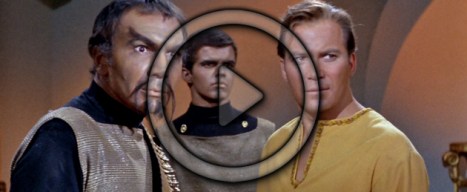
I was flattered to be asked by the wonderful Tony Black to help him launch a new Star Trek podcast. The Sanctuary hopes to be a look at the politics and the social commentary of the larger Star Trek franchise, and will feature Tony and a host of guests looking at how the franchise examines a big issue.

As a pilot, Tony suggested that we might discuss how the original Star Trek series looked at the Vietnam War. It’s an interesting discussion, because it’s a very complex and evolving conversation that takes place across the run of the show, between various creative voices within the show. This is interesting, because the show itself unfolded against a backdrop of shifting public opinion on the topic, which means that it’s not as simple as a “pro” or “anti” position.

Anyway, it was a huge honour to be invited on to help launch the show, and I hope you enjoy it. You can subscribe to the show here. You can listen to the episode here, or click the link below.


New Escapist Column! On Harley Quinn and Brand Conscious Self-Awareness…

I published a new In the Frame piece at Escapist Magazine this evening. I don’t really have anything major to tie this one to, aside from the fact that I’ve been watching some television.

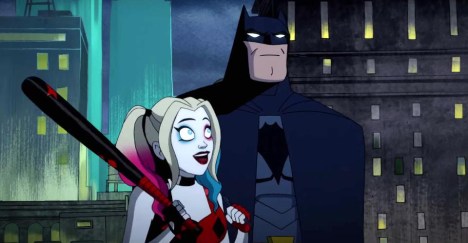
The DC Universe cartoon Harley Quinn is a fascinating piece of television. It’s immediately recognisable as belonging to a certain kind of adult-focused animation, shows like Rick and Morty or The Venture Bros. However, it’s rare to see this approach taken with an established brand, let alone an established brand tied to a blockbuster shared universe. After all, Harvey Birdman: Attorney at Law was hardly working with a smashing success and Deadpool didn’t emerge in the Marvel Cinematic Universe.

As such, it’s interesting to see a television show in which Diedrich Bader can reprise his role as the Caped Crusader from The Brave & The Bold, which also includes fans wearing “Release the Snyder Cut” t-shirts. You can read the piece here, or click the picture below.

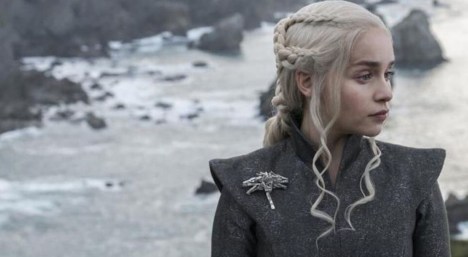
New Escapist Column! On the Fan Reaction to the Final Season of “Game of Thrones”…

I published a new In the Frame piece at Escapist Magazine this evening. It’s the one year anniversary of the end of Game of Thrones, so it seemed appropriate to look back on the fan reaction to that final season.

The final season is admittedly a flawed season of television. However, that doesn’t quite explain the level of vitriol that it provokes online. After all, the finale was widely enjoyed by general audiences, performed reasonably well at the Emmys and is doing very well for itself in streaming in social isolation. This contrast is interesting, suggesting that there’s something particularly prickly about the final season that alienated its most vocal fans so extremely.

In hindsight, this seems to be the actions of Daenerys Targaryen in the second half of the season. In the home strange, Daenerys ceased to be seen as a “liberator” of the continent, and instead became a conqueror. She did what all conquerors do, raining down death and destruction on those civilisations that do not welcome her. This was all very clearly seeded across the previous seven seasons, but it turned rather sharply against the audience’s sympathy for Daenerys. In doing so, it made the audience complicit in the carnage. One suspects that complicity stings.

You can read the piece here, or click the picture below.

New Podcast! The Time is Now – Season 2, Episode 15 (“Roosters”)

I have had the immense good fortune to appear on The Time is Now quite a lot lately, but was particularly flattered to be invited on to talk about Owls and Roosters, the big “mythology” two-parter in the late second season of Millennium. It’s an honour to join Kurt North for the second part of this conversation.

Owls and Roosters are two of my favourite episodes of television, because they demonstrate everything that Millennium did so well. They’re incredibly densely packed with information, in a way that really captures the sense of modern living – a constant influx of often contradictory stimulae that the individual often struggles to parse or process. In many ways, the second season of Millennium has aged remarkably well, capturing a sense of information overload in a manner that resonates even more strongly today than it did on broadcast.

As ever, you can listen directly to the episode here, subscribe to the podcast here, or click the link below.

Continue reading

New Podcast! The Time is Now – Season 2, Episode 15 (“Owls”)

I have had the immense good fortune to appear on The Time is Now quite a lot lately, but was particularly flattered to be invited on to talk about Owls and Roosters, the big “mythology” two-parter in the late second season of Millennium. It’s an honour to join Kurt North for the conversation.

Owls and Roosters rank among my favourite mythology episodes in the Ten Thirteen canon, largely because they serve as a conscious unravelling of conspiracy theory. It is very common to compare Millennium to The X-Files, and with good reason. There’s considerable thematic overlap between the two shows; in fact, Patient X and The Red and the Black work as interesting companion pieces to Owls and Roosters. Both are stories about the limits of conspiracy, and the idea that entropy must eventually kick in and erode these empires of sand.

However, while The X-Files maintained a consistent belief in a singular unifying mythology, a belief in a single account of history, however convoluted that arc might be, Millennium opted for a more adventurous and postmodern approach. Millennium suggested a world in which all conspiracies were true, in which there were multiple competing narratives of history struggling against one another, with no clear or correct answer. Owls and Roosters offer the culmination of this approach, a car crash of competing narratives trying to account for a period of great instability.

As ever, you can listen directly to the episode here, subscribe to the podcast here, or click the link below.

Continue reading

New Escapist Column! On “Devs”, “Westworld” and Determinism…

I published a new In the Frame piece at Escapist Magazine this evening. Devs recently wrapped up, and Westworld is hurdling towards its season finale, so it seemed an appropriate time to reflect on both of those.

There’s an interesting synchronicity between the third season of Westworld and Devs. Both are stories about tech companies trying to build deterministic models of the world. Although both series approach this basic framework in very different ways, they seem to tap into the same core anxieties. Westworld and Devs are stories about free will and choice in the face of inhuman systems that argues the world could only ever be as it is. There’s something fascinating in seeing these themes boiling to the surface so close together.

You can read the piece here, or click the picture below.