• Following Us

  • Categories

  • Check out the Archives


  • Awards & Nominations

New Escapist Column! On How “Secret Invasion” isn’t Marvel’s “Andor”…

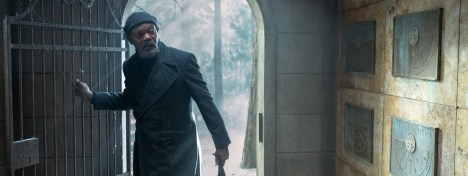
We’ll be running weekly reviews of Secret Invasion at The Escapist. But first, a review of the episodes that were previewed for press.

For months, the gossip has been that Marvel Studios have seen Secret Invasion as their answer to Andor, a show that could revitalise interest in a franchise that has been in something of a slow and steady decline, with disappointments like Ant-Man and the Wasp: Quantumania. Unfortunately, Secret Invasion really doesn’t live up to that potential. It offers glimpses of a show tht aspires to push the shared universe outside of its comfort zone, but lacks the necessary killer instinct.

You can read the piece here, or click the picture below.
New Escapist Column! On What Makes a Great Series Finale…

We’re launching a new column at The Escapist, called Out of Focus. It will publish every Wednesday, and the plan is to use it to look at some film and television that would maybe fall outside the remit of In the Frame, more marginal titles or objects of cult interest. With the recent wrap-up of shows like Barry and Succession, it seemed like a good opportunity to take a look at what makes a great television finale.

Interestingly, from The Sopranos to The Leftovers, one of the hallmarks of a truly impressive television finale is the way that it leaves room for the audiece. After all, television shows involve considerable investment from viewers, and offer a chance for the audience to really get to know and understand the characters and the themes of this world. The best of these finales are clear endings to the story being told, but which leave room for the viewer to reach their own conclusion about these characters and their journey.

You can read the piece here, or click the picture below.

New Escapist Column! On How “Strange New Worlds” is a Relic of an Older Form of Television…

I published a new piece at The Escapist yesterday. We’re doing a series of recaps and reviews of Star Trek: Strange New Worlds, which is streaming weekly on Paramount+. The second season will premiere later this week.

Strange New Worlds is an inherently nostalgic piece of Star Trek, a throwback to a kind of franchise storytelling that was inexoribly rooted in the realities of nineties television. Indeed, given the decline of the franchise during Star Trek: Voyager and Star Trek: Enterprise, there is a solid argument to be made that this mode of storytelling was specifically tied to the medium of syndicated mass media broadcast television during the nineties, which makes it an awkward and uncomfortable fit for the modern age of streaming media.

You can read the piece here, or click the picture below.

New Escapist Column! On “I Think You Should Leave” as Peak Internet Comedy…

We’re launching a new column at The Escapist, called Out of Focus. It will publish every Wednesday, and the plan is to use it to look at some film and television that would maybe fall outside the remit of In the Frame, more marginal titles or objects of cult interest. With the release of the third season of I Think You Should Leave this week, it seemed like a good opportunity to take a look the show.

It is ultimately reductive to try to boil a sketch comedy show down to a single thematic idea. However, there is something fascinating in how I Think You Should Leave operates as a sketch show that isn’t just perfectly suited to internet distribution – short clips, memes, absurdist gags – but also how it feels like a show that is in some ways about the internet. Obviously, not in a literal sense, in that I Think You Should Leave is about awkward social situations. However, it captures the sense in which online spaces can truly break social interactions.

You can read the piece here, or click the picture below.

New Escapist Column! On the Myths and Lies of “Barry”…

We’re launching a new column at The Escapist, called Out of Focus. It will publish every Wednesday, and the plan is to use it to look at some film and television that would maybe fall outside the remit of In the Frame, more marginal titles or objects of cult interest. With the end of Barry this week, it seemed like a good opportunity to take a look the show’s final season.

Barry is a show about Hollywood, but it is also a show about America. It is a show about mythmaking and self-delusion, about the stories that people tell themselves to feel better and about the stories that are told about people to make everybody else feel better. It’s a black comedy about a hitman who becomes an actor, but over the course of its four seasons it evolved into something decidedly more complex and compelling. Like Succession, it is a show that speaks perfectly to the current moment, holding a mirror to a nation in crisis.

You can read the piece here, or click the picture below.

New Podcast! The Recap – “Succession and Barry Are Masterclasses in Series Finales…”

We’re thrilled to be launching a weekly multimedia podcast at The Escapist, called The Recap. I’m hoping to be a regular fixture of it, stremaing live every Tuesday evening. This is kinda cool, because we’re helping relaunch the magazine’s film content – so if you can throw a subscription our way, it would mean a lot.

This week, with the ending of Succession, Barry and Ted Lasso, it seemed like a good opportunity to ruminate on what it means to actually end a long-running series. What is is that makes a finale compelling and effective?

New Podcast! The TARDIS Crew – “Torchwood – Children of Earth (Part 2)”

I was thrilled to be invited to join the great Ben and Baz Greenland for an episode of their podcast, The TARDIS Crew.

This is the second half of the episode covering Torchwood: Children of Earth, and it’s fun to get to discuss the five-episode miniseries as the culmination of Russell T. Davies’ work on both Torchwood and Doctor Who. We discuss the metaphor at the heart of the show, the queer-coding of the central narrative, and the way in which it effectively completes Jack’s arc of transforming the character into an even more dysfunctional version of the Doctor.

You can listen directly to the episode below or by clicking here.

New Escapist Column! On the Trump Era Paranoia of “Star Trek: Picard”…

I am doing weekly reviews of Star Trek: Picard at The Escapist. They’ll be dropping every Thursday morning while the show is on, looking at the third season as the show progresses. This week, the season’s fifth episode.

The third season of Picard is fascinating, in large part because it’s so narratively and thematically empty. So much of the show is given over to empty nostalgia, that there’s little sense of what this story is supposed to be about, beyond a loose assemblage of familiar clichés into a recognisable pattern. There’s none of the urgency of the immigration and xenophobia metaphors that informed the first two seasons, as clumsy as those were. Instead, Picard falls back on a set of unfortunate science-fiction clichés that speak to the worst impulses of the current moment, a paranoia that feels tied to the worst of the American zeitgeist.

You can read the piece here, or click the picture below.

New Podcast! The TARDIS Crew – “Torchwood – Children of Earth (Part 1)”

I was thrilled to be invited to join the great Ben and Baz Greenland for an episode of their podcast, The TARDIS Crew.

The guys are doing a retrospective deep dive on Russell T. Davies’ last tenure overseeing the Doctor Who franchise, and asked if I’d like to talk about any of his specific work on the show. I was delighted to get the chance to talk about Torchwood: Children of Earth, which stands out as not only the best that Torchwood has ever been, but belongs in the conversation as one of the best pieces of Doctor Who ever made. It’s a fun and freeform discussion, that we split into two parts for ease of listening.

You can listen directly to the episode below or by clicking here.

New Escapist Column! On the Use of Violence in “The Last of Us”…

I published a new In the Frame piece at The Escapist earlier this week. With The Last of Us wrapping up its first season, it seemed like a good opportunity to take a look back at the show, and in particular the way that the show tells its story.

The Last of Us is, in many ways, a study of violence. It’s a study of brutality and horror. What makes The Last of Us so interesting is the way that it chooses to portray such violence and brutality. Indeed, the show is remarkably restrained in its depiction of graphic on-screen violence. Instead, the show’s cinematic language focuses on the idea that violence ultimately wounds both perpetrator and victim. In many cases, it’s the people left behind who have to carry that with them.

You can read the piece here, or click the picture below.