• Following Us

  • Categories

  • Check out the Archives


  • Awards & Nominations

The Sopranos: Pax Soprana (Review)

I think it’s possible to make the argument that The Sopranos can be read as that illusive “great American novel”, just handily divided into eighty-six chapters and televised as opposed to written. Sure, it’s a show about the mob, but it’s also a compelling examination of the disillusionment festering at the heart of the American psyche. Tony might be a New Jersey mob boss, but most of his problems aren’t too far disconnected from those eating away at the American middle class. (Hell, I’d argue that it speaks volumes to the Irish psyche and probably many other nationalities as well.) As such, across the crucial first season, Chase and his team of writers seem to lay down and establish the core themes, allowing Tony to confront and explore just one of the many gnawing insecurities eating away at any middle-class father. In College, Tony wrestled with the idea that his daughter might discover who he truly is, while Pax Soprana explores the notion of impotence and insecurity – some times literally.

Psyche!

Continue reading

The Sopranos: College (Review)

College is interesting because it perfectly captures a lot of the themes at the heart of The Sopranos, effortlessly blending Tony’s upper-middle-class concerns with his familial obligations (both to his nuclear family and to the mob). At the same time, it explores many of the inherently contradictory aspects of modern living, including the implied acquiesce to a culture of greed and corruption. College is the first time that we really see Tony get his own hands dirty, and it’s the point at which we explore how complicit Carmela is in his shady dealings and illegal activities. I think it’s a show that really pins down what the show is going to be – and it’s no surprise that the episode won Chase his first writing Emmy for the show, and is reportedly his favourite episode of the series.

Driving the conversation...

Continue reading

Game of Thrones: Season 1 (Review)

In many ways, Game of Thrones feels like a fitting successor to Peter Jackson’s epic adaptation of The Lord of the Rings. Undoubtedly fans of either work are getting a bit tired of the comparisons, understandably feeling that such a point of reference is a crutch for writers or reviews with little knowledge of the fantasy genre outside those tent poles. Still, it has been a while since an adaptation of such a well-received literary work has managed to make such an impact on popular culture. A decade after the release of the first film in Jackson’s trilogy, I think that G.R.R. Martin’s work builds upon the conventions Jackson taught us to embrace so easily. In fact, the celebrated HBO series works so very well because it so radically and gleefully subverts the audience expectations that were so firmly entrenched by Peter Jackson’s fantasy landmarks.

It’s really Throne me…

Continue reading

Sopranos: Meadowlands (Review)

It’s interesting how slowly The Sopranos approached the violence of what Tony does. Of course, the pilot episode (The Sopranos) featured Tony brutally beating a debtor in an attempt to earn his money back and the subsequent episode (46 Long) featured Tony beating up an employee at the Bada-Bing for failing to work the telephone properly, but the show generally eased us into seeing Tony as a truly “bad” guy.

It was never ambiguous about his mob connections or the crimes and violence that he committed or that he authorised others to commit, but the first few episodes generally keep that violence somewhat insulated from Tony. Paulie and Pussy brutalise the car thieves to reclaim a teacher’s lost car, while Tony’s threatened castration of a Jewish man refusing to play ball is kept off-screen. While Tony would commit his first on-screen murder in the next episode (College), Meadowlands feels like the first episode to truly present Tony as a borderline sociopath, and to demonstrate just how aggressive and possessive he can be.

Paying respects...

Continue reading

The Sopranos: Denial, Anger, Acceptance (Review)

Denial, Anger, Acceptance marks the first episode of The Sopranos not written by creator David Chase. In the United Kingdom, it’s traditional for a particular writer (or writers) to write every episode of a given series, to the point where you are quite likely to find a television show credited “by” a particular person. In the United States, due to longer seasons and various other concerns, such an approach isn’t feasible. (There are exceptions, such as Aaron Sorkin’s tenure on The West Wing, where he contributed eight-one scripts in the show’s first four seasons.) However, The Sopranos remains associated with its creator, David Chase, so it’s interesting to look at Denial, Anger, Acceptance as the first episode written by a writer other than Chase, in this case Mark Saraceni.

Sticking his neck out...

Continue reading

Trailer for Aaron Sorkin’s The Newsroom…

This has been doing the rounds for a few days, but I’m still quite excited for Aaron Sorkin’s upcoming HBO drama, The Newsroom. While I’m not quite as fond of The West Wing as most are, I’ll concede that the dialogue and characterisation of the first four seasons were almost flawless, and I’m a huge fan of Sorkin’s work on both The Social Network and Moneyball. Taking place inside a network news show, The Newsroom should allow Sorkin to explore the culture of news broadcasting, and should provide ample fodder for his superb cast. Seriously, look at it – you’ve got Jeff Daniels, Emily Mortimer, Alison Pill and Dev Patel. It’s starting on HBO in June, and I can only hope it’ll be coming to Sky Atlantic shortly thereafter for us Irish and UK television junkies.

This is getting added to the planner, even though I’m already well behind on the other shows I’m following (and trying to catch up on retroactively). Check out the trailer below.

To Play the King (Review)

The wonderful folks at the BBC have given me access to their BBC Global iPlayer for a month to give the service a go and trawl through the archives. Read my thoughts on the service here, but I thought I’d also take the opportunity to enjoy some of the fantastic content.

You’ve got the King against the Prime Minister, the Lords against the Commons. The bishops are in now, you’ve got “don’t blame the royals”, and – in particular – you’ve got Urquhart’s plan to bring down the monarchy for good and all. And they’ve all played the personal morality card. Every one of them. Which means, in my book, that everybody’s private life is now up for grabs. And I mean everybody’s!

– Sir Bruce Bullerby sums it up

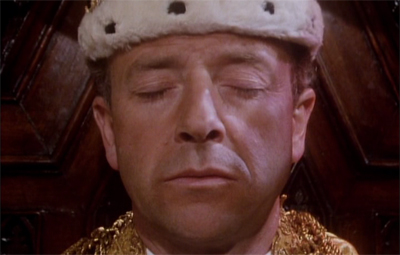
The second part of the House of Cards trilogy has some fairly interesting subject matter. While Francis Urquharts Machiavellian rise to power was enough to ground the first four-part serial, it does occasionally feel like To Play The King has just a bit too much going on. Of course, Andrew Davies’ tight scripting ensures that all the necessary subplots are tidied up before we reach the end credits of the final episode, but things do occasionally feel just a little bit too packed. Still, it’s hard to blame a television show for having too much substance, and there’s a compelling issue at the heart of To Play The King, as novelist Michael Dodds takes the opportunity to explore Britain’s constitutional monarchy, and the possibility of friction that a proactive King might present.

A crowning accomplishment for the BBC?

Continue reading

House of Cards (Review)

The wonderful folks at the BBC have given me access to their BBC Global iPlayer for a month to give the service a go and trawl through the archives. Read my thoughts on the service here, but I thought I’d also take the opportunity to enjoy some of the fantastic content.

You might very well think that… I couldn’t possibly comment.

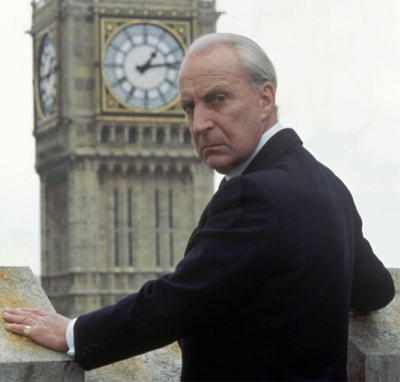
House of Cards is an uncanny political drama. Based on the book written by Michael Dodds, the former “baby faced assassin” for Margaret Thatcher, one wonders just how much of this very dark thriller might actually be based on fact. Charting the rise of the Chief Whip of the Conservative Party, Francis Urquhart, it’s a disturbing exploration of the workings of the system as our villainous protagonist manages to efficiently (and sometimes brutally) remove any obstacles on his path to power. It’s often darkly hilarious, brutally sinister and strangely compelling – sometimes at the same time. While airing, it was granted a sense of relevance by the resignation of then-sitting Prime Minister Margaret Thatcher, but it remains a gripping example of British television drama even two decades after it originally aired.

Clocking in as a compelling lead actor...

Continue reading

The Thick of It – Series III (Review)

The wonderful folks at the BBC have given me access to their BBC Global iPlayer for a month to give the service a go and trawl through the archives. I’ll have some thoughts on the service at the end of the month, but I thought I’d also take the opportunity to enjoy some of the fantastic content.

No one forgot their first carpeting from Tucker – it was like a red hot poker.

– the BBC’s career retrospective on Malcolm Tucker

The first two seasons of The Thick of It proved to be quite the success for BBC4. Critics were raving about, the politicians it sought to ridicule were loving it. Creator Armando Iannucci even got to produce a movie with HBO using characters from the series (In The Loop) and plans were underway for a US adaptation. (In fairness, the adaptation was killed very quickly, which might be for the best given Iannucci’s opinion of it, but he’s currently working on Veep for HBO with Julie Louis Dreyfus.) So it seems fitting that the series came back to television in a big way. Fresh off two specials, with a new minister and a new slot on BBC2, the show was commissioned for eight glorious episodes. And it was great. The decision to re-focus the series on Malcolm Tucker, the Prime Minister’s advisor who thinks of himself”as a thin, white Mugabe.”

It's Party (Conference) time...

Continue reading

The Thick of It: Rise of the Nutters (Review)

The wonderful folks at the BBC have given me access to their BBC Global iPlayer for a month to give the service a go and trawl through the archives. I’ll have some thoughts on the service at the end of the month, but I thought I’d also take the opportunity to enjoy some of the fantastic content.

Are you f***ing kidding me? I mean, you’ve just watched me break my not-inconsiderable balls trying to get you the second spot on Newsnight. And succeeding! I can’t back down! No, no, you’re on, pal, right? And it better not be too boring, and it better not be too interesting either, ok? And it better not cost too much. It can’t be an old thing, obviously, and don’t make it too new. And whatever you do, please try not to embarrass yourself, right?

– Malcolm tells Swain his media strategy

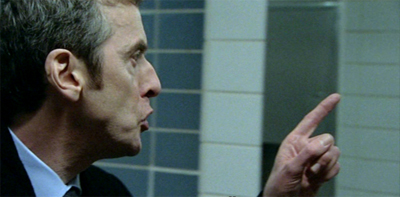
I love the BBC’s Christmas specials. I mean, I know that other networks do Christmas-themed episodes of their shows, but the BBC does tend to go the extra mile. We get the opportunity to spend some time with a series that is on hiatus or even to provide an epilogue to a series that has ended. It generally affords considerably more leeway to a series to tell a different kind of story than they normally would. Here, in the hour-long Christmas special, Armando Iannucci’s political comedy gets a chance to drift its attention away from the fictional surroundings of the Department of Social Affairs and Citizenship to explore the resignation of the sitting Prime Minister. Mirroring Tony Blair’s decision to step down at the same time, it lends the series a somewhat especially timely feeling, as well as allowing more focus to fall on the show’s main attraction, the brilliantly cynical and manipulative political advisor Malcolm Tucker, brought to life by Peter Capaldi.

Bully to that...

Continue reading