• Following Us

  • Categories

  • Check out the Archives


  • Awards & Nominations

New Podcast! The Escapist Movie Podcast – “Hubie Halloween, The Witches and Possessor Uncut”

The Escapist have launched a movie podcast, and I was thrilled to join Jack Packard and Bob Chipman for the seventh episode. There was quite a lot of Halloween-related news this week, including the release of Adam Sandler’s Hubie Halloween on Netflix, the trailer for The Witches on HBO Max in the United States, and the release of Brandon Cronenberg’s Possessor Uncut wherever cinemas were open.

You can listen to the episode here, back episodes of the podcast here, click the link below or even listen directly.

New Escapist Column! On the Rejection of the “Chosen One” in “Blade Runner 2049″…

I published a new In the Frame piece at The Escapist this evening. Since Blade Runner 2049 opened three years ago this week, I thought it was worth taking a look back at the science-fiction sequel.

One of the interesting tensions within Blade Runner 2049 is the way that the film continuously gestures at an epic plot – a story of a lost replicant messiah, of “miracles” and “angels”, of wars and revolutions. However, the film largely eschews this in favour of focusing on a much more intimate and personal level of drama. Blade Runner 2049 is a story about a character wrestling with the fact that they were never a “chosen one”, in a manner that perhaps reflects the mood of the culture around it.

You can read the piece here, or click the picture below.

New Escapist Video! On How the Joker Hijacks “The Dark Knight”…

So, as I have mentioned before, I am launching a new video series as a companion piece to In the Frame at The Escapist. The video will typically launch with the Monday article, and be released on the magazine’s YouTube channel the following week. This month, it will be releasing on the Thursday.

With that in mind, here is last week’s episode, covering the directorial craft of Christopher Nolan and how that comes into play with The Dark Knight, particularly the way in which the Joker hijacks the film around him. You can watch the pilot video here, and read the companion article here.

“The Blood Stays on the Blade”: The Birth of a Nation in Scorsese’s “Gangs of New York”…

The podcast that I co-host, The 250, continued our belated Summer of Scorsese last week with a look at Kundun. This week, we’re looking at Gangs of New York. It is a fun and broad discussion that is well worth your time, but it spurred some of my own thoughts about Martin Scorsese’s complicated and messy 2002 passion project.

Martin Scorsese had wanted to make Gangs of New York for over thirty years.

The director had reportedly stumbled across a copy of Herbert Asbury’s book while house-sitting for a friend over New Year in 1970. Gangs of New York became one of the projects that Scorsese desperately wanted to make, alongside The Last Temptation of Christ, which had been given to him by Barbara Hershey on the set of Boxcar Bertha. Of course, Scorsese would not get to make either The Last Temptation of Christ or Gangs of New York during the seventies. Instead, the implosion of New York, New York would set his plans back years.

Scorsese had reportedly been hoping to make either The Last Temptation of Christ or Gangs of New York following the release of New York, New York, when Robert DeNiro convinced him to direct Raging Bull instead. Scorsese would spend the eighties adapting to the collapse of the New Hollywood movement, and would just about manage to get The Last Temptation of Christ produced. He never gave up on Gangs of New York, and the film went through various iterations over the years. It might have starred Jim Belushi and Dan Aykroyd or Mel Gibson and Willem Dafoe.

When the possibility of making Gangs of New York emerged in the late nineties, it might have seemed like a culmination. As the project lurched closer and closer to actually materialising, it must have seemed like it would be one of Scorsese’s last major motion pictures. After all, Scorsese was almost sixty. Steven Spielberg and George Lucas were the only two other “movie brats” who were still making high-profile and big-budget films. There was perhaps a sense that Scorsese might just about have this film left in him, before retiring to less mainstream and more esoteric works.
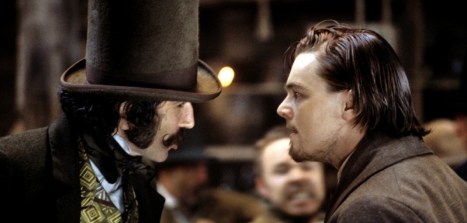
While Scorsese had entered the nineties on a high note with Goodfellas, the films that followed were not as universally welcomed. Roger Ebert complained about “a certain impersonality” in Cape Fear, the film following Goodfellas. The Age of Innocence arrived with a shrug. Casino was treated as highly derivative of Goodfellas, with Peter Travers sighing that “the black cloud of letdown hung over Scorsese’s epic tale.” Kundun sparked a diplomatic incident with China, and was quietly buried by Disney. Bringing Out the Dead felt like a curiosity more than a classic.

Of course, history has been kind to all (or at least most) of those films. Scorsese’s nineties output is recognised in hindsight as a vibrant and important part of his career. Nevertheless, as Gangs of New York slowly and awkwardly forced itself into being, it might have looked like the last swing of the bat from one of the great American directors. A film that had been simmering in the director’s imagination for decades, it might serve as a definitive and concluding statement about the city and the nation that he loved.
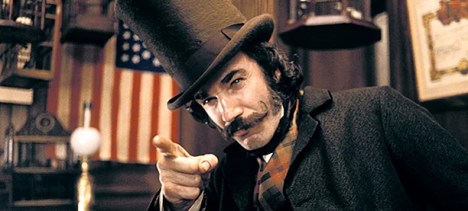
More than twenty years after the shutters came down on the New Hollywood movement, Scorsese would finally get to make an epic that was comparable to Francis Ford Coppola’s Apocalypse Now or Michael Cimino’s Heaven’s Gate. Of course, those sorts of projects feel like capstones – Heaven’s Gate famously brought United Artists tumbling down, while Coppola would never direct anything with as much freedom or cultural impact after Apocalypse Now. As such, Scorsese’s long-delayed shot at making his epic passion project seemed like closure.

Looking back at Gangs of New York, this seems absurd. Almost two decades after Gangs of New York, Scorsese is still making films. Scorsese is enjoying larger budgets on films like The Irishman and The Killers of the Flower Moon than he did earlier in his career. If anything, Gangs of New York is a watershed. It is not Scorsese’s epic finale, but is instead the first in a series of epics that includes films like The Aviator or The Wolf of Wall Street. It introduced Scorsese to a young actor who “reignited” his enthusiasm for film making.
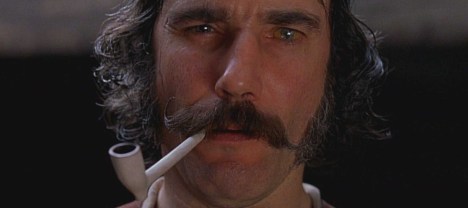
Indeed, time has been very kind to Gangs of New York. The film seemed to arrive at a crucial moment, both for Scorsese as director and for the United States as a nation. Gangs of New York offers a snapshot of American history that resonates strongly. It is not so much a historical picture as a dive into the depths of a shared unconscious and an excavation of the scars left on the American psyche. The catchy Oscar-nominated theme song might have boasted that the film was about “the hands that built America”, but the film was decidedly less optimistic in its perspective.

Gangs of New York is a story about the blood that stains those hands, and how history tends to repeat for those who refuse to learn from it.
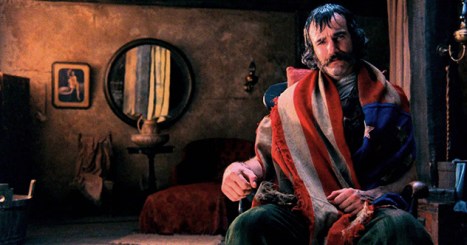
Continue reading

New Escapist Column! On the Snyder Cut and the Future of Pandemic Production…

I published a new In the Frame piece at The Escapist this evening. With news that Zack Snyder will be reuniting with actors like Henry Cavill, Ben Affleck and Gal Gadot to shoot new scenes for his long-gestating cut of Justice League.

Although there’s been some understandable confusion at the news that Snyder will be shooting new footage to extend his planned film into a miniseries, the reality of Justice League is that it represents one possible path through the pandemic for Hollywood studios, allowing for the production of a blockbuster-level spectacle both for a reasonable budget and in relative safety. As the industry braces for an uncertain future, Zack Snyder’s Justice League might represent an unlikely model for the medium-term.

You can read the piece here, or click the picture below.

Non-Review Review: Possessor

Possessor is a brutal and graphic slice of body horror, unsettling and uncanny in equal measure.

It seems unfair to define writer and director Brandon Cronenberg by his relationship to his father, Canadian horror maestro David Cronenberg. The fact that it’s possible to draw a clear line from his father’s work on films like Scanners, The Brood and Videodrome through to Possessor only makes these comparisons more obvious and ubiquitous. However, Brandon Cronenberg has already established himself as a potent force in the body horror genre with his feature debut, AntiViral.

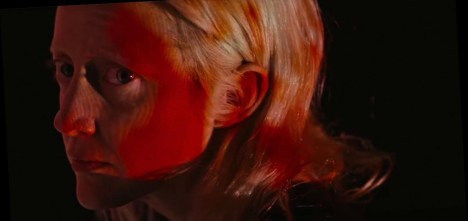
She can explain the plot until she’s red in the face…

Possessor is a grotesque and creepy addition to the genre. The movie focuses on Tasya Vos, a professional assassin who completes her assignments by hijacking the body of somebody close to her target, allowing her to infiltrate their inner circle and carry out the murder in that persona. As the premise suggests, Possessor is rife with body horror. The film is built around the classic body horror nightmare, the realisation that the human body is ultimately nothing more than an often malfunctioning machine made of meat, equally often at odds with the mind driving it.

At the same time, Possessor is perhaps a little too broad and too abstract. Possessor is obviously a body horror, but its storytelling often feels closer to the more abstract social horrors that are popular in modern American independent cinema, films like She Dies Tomorrow. This is interesting in some respects, but also leaves the film feeling a little too vague at points. The problem isn’t that Possessor has nothing to say, it’s more that it’s trying to say everything at once. While this confusion is occasionally effective given the themes of the story, it is also frequently frustrating.

Piecing it together.

Continue reading

New Escapist Column! On “Antebellum” and What Makes a Good Twist…

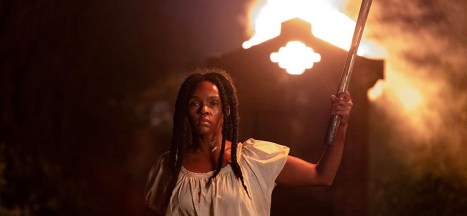
I published a new In the Frame piece at The Escapist on Friday. Since Antebellum has been out for two weeks now, it seemed fair to discuss the movie’s twist – and, in particular, what it is that makes a “good” twist and how such a twist serves the movie of which it is part.

Arguably, any movie with a twist has to be two movies: the movie that the audience watches for the first time blind, and the one that they rewatch knowing the twist. As such, for a movie with a twist to be truly good, it has to succeed as two (occasionally wildly) different movies. That’s a lot of pressure, and illustrates why truly great twists are so rare and why they are often elevated to the status of cinematic legend. However, a bad twist can ultimately undercut both of the movies that it needs to be, making the failure even more noticeable.

You can read the piece here, or click the picture below.

Burning unease.

Non-Review Review: Cats and Dogs III – Paws Unite

The pandemic has been an interesting time for film critics.

The general dearth of mainstream theatrical releases has allowed critics to essentially pick and choose the films that they cover on streaming. As a general rule, this has led to the elevation of good films, with critics generally picking films out of the mass of streaming service releases that merit coverage and attention – films like Palm Springs or Greyhound. Of course, there have been a couple of stinkers, particularly among children’s fare with mass audience appeal like Artemis Fowl or Scoob!, but by and large critics have been able to avoid true stinkers.

Dogsbody work.

As such, the arrival of Cats and Dogs III – Paws Unite! marks something of a return to normality and business as usual. It is the kind of film that critics would have had to see and review as a matter of course in the pre-pandemic era as a major theatrical release, but which might have slipped under the radar had it gone straight to streaming. Watching Cats and Dogs III – Paws Unite is a reminder of a time not too long ago when critics were expected to see every major theatrical release, no matter how dark or how soul-destroying that experience might be.

With that in mind, there is something almost reassuring in the awfulness of Cats and Dogs III – Paws Unite!, a movie that few critics would actively seek out if it weren’t for the obligations of their job. In a world that is desperately scrambling for any vague sense of a return to normality, Paws Unite! servers as a welcome reminder when seeing terrible movies was the worst thing with which film critics had to contend.

Keep on trucking.

Continue reading

“There’s Nobody Here to See Us”: The Untamed Frontier in Martin Scorsese’s “Casino”…

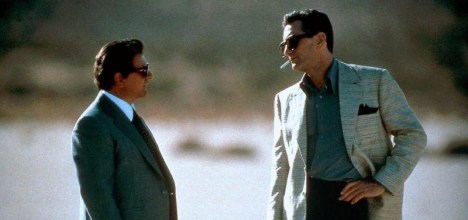
The podcast that I co-host, The 250, continued our belated Summer of Scorsese last week with a look at Goodfellas. This week, we’re looking at Casino. It is a fun and broad discussion that is well worth your time, but it spurred some of my own thoughts about Martin Scorsese’s 1995 gangster classic.

When Casino was released, it experienced something of a minor backlash.

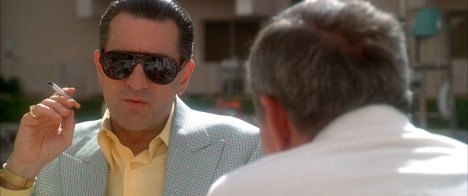
Part of this backlash was motivated by the film’s perceived similarities to Goodfellas – Scorsese had made another soundtrack-heavy period-piece mob movie starring both Robert DeNiro and Joe Pesci, adapted from the work of Nicholas Pileggi. To a certain extent, this was fair. There were legitimate concerns that Scorsese was simply repeating himself, and that any comparisons to Goodfellas did not flatter Casino.

These problems were compounded by content. At time of release, Casino was Scorsese’s longest movie, clocking in at just shy of three hours. That is a lot of mobster movie, particularly if that movie felt in anyway derivative of the appreciably shorter Goodfellas. There were also rumblings of the movie’s brutality and violence, which was seen as being particularly excessive and graphic. These complaints circulated even before Casino hit cinemas. Peter Travers summarised the mood, “Even before Casino opened, the black cloud of letdown hung over Scorsese’s epic tale.”

However, time has been kind to Casino. Although the film undoubtedly still exists in the shadow of Goodfellas, it has come to be recognised as one of the great crime films and to merit some appreciation on its own terms. Casino is a fascinating piece of work. It is bold and ambitious, epic and sweeping. However, what is most striking about Casino is not how it compares to Goodfellas, but how it contrasts. The differences are instructive.

Casino is often categorised as a mob movie, and it is definitely that. It is a story about gangsters and organised crime. However, it is also a western. It is perhaps the closest that Scorsese has come to making a traditional western in his entire cinematography. More than that, while Goodfellas is anchored in the character of Henry Hill, Casino lacks a similar hook. Both Sam and Nicky are much more oblique characters than Henry; Sam is less proactive, and Nicky is much more brutal. They are harder to invest in, tougher to root for.

However, this allows Casino to take a much wider view of this world and the people that inhabit it. Casino is arguably a religious parable, a story about mankind’s destruction of paradise and the inevitable exile that followed. In that sense, Casino feels like more of a bridge between Goodfellas and Scorsese’s more overtly religious-tinged parables like Bringing Out the Dead or Silence than it initially seemed. This is a story about heaven on earth, and the fallen sinful human beings who turn that heaven into a nightmarish hell.

Continue reading

“Your Reminiscence”: Martin Scorsese’s “Cape Fear”, Nostalgia, and Parental Anxiety…

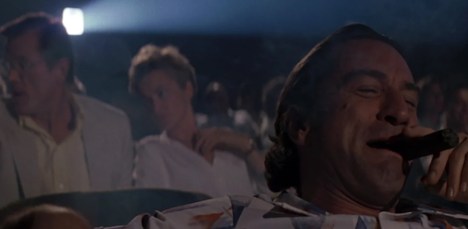
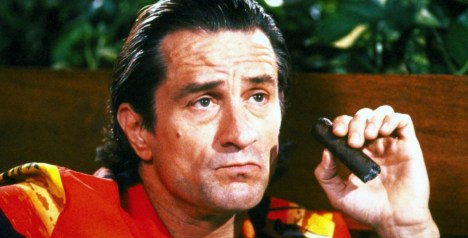
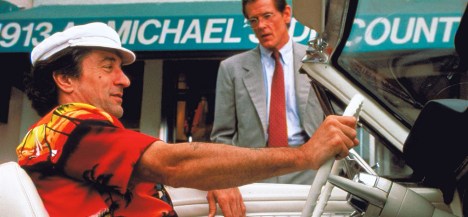
The podcast that I co-host, The 250, continued our belated Summer of Scorsese last week with a look at Goodfellas. This week, we’ll looking at Casino. It is a fun and broad discussion that is well worth your time, but the season skips over large swathes of Scorsese’s filmography. So I thought it might be worth taking a look back at Cape Fear.

Cape Fear is often overlooked in terms of Martin Scorsese’s filmography.

It falls in the gap between the instant classic Goodfellas and the sleeper masterpiece Casino. It shares that gap with The Age of Innocence, which is one of the films in Scorsese’s filmography that has been begging for a reappraisal and seems more likely to receive critical attention than a trashy remake of a pulpy sixties thriller. (The Age of Innocence recently received a re-release as part of the high-end Criterion Collection.) Indeed, Cape Fear seems designed to be seen as disposable in the context of Scorsese’s filmography.

At best, Cape Fear is typically seen as a curiosity – and potentially a worrying one. While Roger Ebert praised the film, he lamented “a certain impersonality in a film by this most personal of directors.” There was a whiff of moral panic to Kenneth Turan’s review, which asked, “Are we, perhaps, too quick to heap praise on films just because they are expertly done, shrugging off the troubling nature of the content? Is an audience’s increasing avid addiction to increasingly twisted thrills any justification for cheering on the people who provide them?”

However, there’s a lot interesting happening in Cape Fear. Most obviously, the film is a vehicle for Scorsese’s love of a certain style of directorial technique. The original Cape Fear had been directed by J. Lee Thompson, who had worked as a dialogue coach under Alfred Hitchcock. The film arrived two years after Alfred Hitchcock’s Psycho, and the influence of Hitchcock is obvious on Thompson’s work; it’s scored by Hitchcock collaborator Bernard Herrmann, editted by Hitchcock veteran George Tomasini and features art direction from Robert Boyle and Alexander Golitzen.

However, what’s particularly interesting about Cape Fear is the way in which it actively translates the original movie from the early sixties to the early nineties, playing not only on the same underlying fears that informed the original, but also understanding that they existed in a different context during the nineties. It’s a movie that cannily and shrewdly transposes those two times, tapping into the same fears, but in a way that demonstrates both how those fears have evolved – and also how they haven’t.

Cape Fear is a lurid b-movie thriller, but in the most interesting and unsettling ways. It is a film fascinated by what lurks beneath the surface.

Continue reading