I’m thrilled to be launching 3-Minute Reviews on Escapist Movies. Over the coming weeks and months, I will be joining a set of contributors in adding these reviews to the channel. For the moment, I’m honoured to contribute a three-minute film review of Those Who Wish Me Dead, which released in cinemas and on HBO Max this weekend.
Spiral: From the Book of Saw is an interesting, if dysfunctional, franchise extension.
The obvious point of contrast is something like Jigsaw, the last attempt to restart the Saw franchise. Jigsaw was released in 2017, two years after Star Wars: Episode VII – The Force Awakens, and it bet big on a particular kind of nostalgia. It was a film that consciously aspired to evoke the memory of the Saw franchise among an audience that had probably seen an entry or two in the franchise a decade earlier and had vague memories of the experience.
Rocking the boat.
Jigsaw offered a much more polished take on the Saw template, eschewing the grimy green and grey aesthetic of the previous seven films in favour of a crisp sheen. Still, the film worked very hard to demonstrate its affection and veneration for the source material, even while offering superficial updates like moving the action into the countryside and swapping blades for lasers. The company logos at the start of Jigsaw appeared over a remix of Hello Zepp. Billy the Puppet got a makeover. Tobin Bell got considerable screentime as John Kramer, and the film tied itself to his back story and history.
Spiral takes a very different approach to its nostalgia. The film is the first in the series not to feature the character of John Kramer. Billy the Puppet has also been retired. While a variation on Hello Zepp does eventually play, Spiral holds it back and makes the audience wait for the pay-off. Spiral is very much part of the larger Saw franchise, and contains the requisite death traps and even brings back director Darren Lynn Bousman, but it feels like a consciously pared down and “back to basics” approach to the franchise that strips out a lot of the clutter that has accrued over the franchise’s long life span.
Bloody horrific.
This is most notable with the film’s sharp genre shift. While all of the earlier Saw movies had some procedural element that followed law enforcement’s efforts to track down and stop the serial killer, Spiral centres this thread. Spiral is arguably a forensic thriller with gory elements, rather than a gory horror with a dash of forensic thriller for flavour. It’s a clear attempt at a fresh start, with Spiral even relegating the Saw brand to the subtitle while leaning more heavily on the spiral and pig imagery that was largely secondary in the original franchise.
The result is fascinating, even if it doesn’t quite work. Spiral is arguably a “back to basics” take on the Saw franchise, going so back to basics that it draws more heavily from the serial killer thrillers that originally inspired Saw than it does from the Saw movies themselves.
I published a new In the Frame piece at The Escapist this evening. With the release of Spiral: From the Book of Saw this weekend, it seemed like a good excuse to take a look back at the larger Saw franchise.
For good and for ill, the Saw movies are inexorably tied to the George W. Bush era, with their meditations on torture and their emphasis on moral hypocrisy. However, discussions of the franchise tend to overlook the way in which the films intersect with another millennial trend: reality television. The Saw franchise is the rare horror movie franchise that is actively engaged with the idea of watching horror movies. In particular, in the relationship that exists between horror movies and their audiences – and whether those watching at home are observers or participants in the carnage.
You can read the piece here, or click the picture below.
I’m thrilled to be launching 3-Minute Reviews on Escapist Movies. Over the coming weeks and months, I will be joining a set of contributors in adding these reviews to the channel. For the moment, I’m honoured to contribute a three-minute film review of Spiral: From the Book of Saw, which is releasing in cinemas this weekend.
Zack Snyder’s Army of the Dead arrives with relatively few expectations.
There’s something very refreshing and very appealing in this, particularly given the way that Snyder has become a cultural flashpoint due to his work on films like Man of Steel and Batman vs. Superman: Dawn of Justice, not to mention everything involving the production and release (and subsequent restoration) of Justice League. With all of that in the rear view mirror, it is exciting to sit down and watch as Zack Snyder movie that is… just a Zack Snyder movie.
Warding off evil.
Indeed, Army of the Dead is arguably something of a throwback for the director, marking a return to his earliest work. As a hyper-violent zombie action movie with a satirical edge, Army of the Dead invites comparisons to his first feature-length film, his remake of George A. Romero’s Dawn of the Dead. However, Army of the Dead is not a belated sequel or continuation. It is that rare modern big-budget genre film that stands as much on its own as it is possible for a high-concept zombie movie.
Army of the Dead is not a masterpiece by any stretch. It’s a little indulgent and overlong, suffering from the familiar pacing and tonal issues that affect many movies produced by Netflix. However, Army of the Dead is a fun and interesting genre if approached on its own terms. More than anything, freed from the constraints of established properties and shared universes and the ensuing scrutiny, Army of the Dead feels like Snyder is actually having fun. It is hard to begrudge it that.
I’m thrilled to be launching 3-Minute Reviews on Escapist Movies. Over the coming weeks and months, I will be joining a set of contributors in adding these reviews to the channel. For the moment, I’m honoured to contribute a three-minute film review of Zack Snyder’s Army of the Dead, with is releasing in cinemas on Friday and will be on Netflix next week.
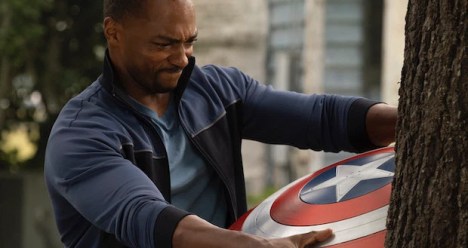
I published a new In the Frame piece at The Escapist yesterday evening. With the wrapping up of the first season of The Falcon and the Winter Soldier, it seemed like a good time to take a look back at the show’s first season – and, in particular, how it positions itself within the larger Marvel Cinematic Universe.
The Marvel Cinematic Universe is thirteen years old this May. It spans 24 films, a handful of television series and almost a dozen separate film franchises. That is a lot of baggage. Indeed, it seems like the MCU has reached a point where the baggage of its earlier installments exerts almost as much gravity as the source material itself. The Falcon and the Winter Soldier feels like a prime example of this, with the series very much engaged in conversation with the films in the Captain America franchise.
You can read the piece here, or click the picture below.
I published a new column at The Escapist earlier in the week. Given that The Bad Batch launched this week on Disney+, it seemed like a good opportunity to take a look at the way in which it solidifies “Order 66” as an unlikely lynchpin of the larger Star Wars universe.
There are any number of big events in the Star Wars canon, many of which have been depicted on screen – the destruction of Alderaan, the Battle of Yavin, the Battle of Hoth, the Battle of Endor. However, it’s striking that the event that has played most frequently across a wide variety of Star Wars media is the implementation of “Order 66” from the end of the prequels. It speaks to both the power of the event itself, its versatility and scale, but also to how the prequels have been rehabilitated and integrated thoroughly into the canon.
You can read the piece here, or click the picture below.
So, as I have mentioned before, I am doing some film critic work at The Escapist. Part of that includes long-form video criticism, such as this piece which is now available to watch at the Escapist YouTube Channel, looking at Peter Weir’s underrated maritime masterpiece, Master and Commander: The Far Side of the World.
I published a new column at The Escapist earlier in the week. With the release of Shadow and Bone on Netflix last week, it seemed a good opportunity to take a look at the state of the young adult in modern Hollywood. in particular, the ways in which the genre is dependent on an ineffable star quality.
The young adult boom really kicked off with the Harry Potter series. However, not all the adaptations that followed succeeded. Looking back over the various attempts to tap into that market, it becomes clear that the series that triumphed tended to share one key factor: lead performers who had genuine movie star charisma and energy.
You can read the piece here, or click the picture below.




















 the m0vie blog
Non-Review Review: Army of the Dead
Zack Snyder’s Army of the Dead arrives with relatively few expectations.
There’s something very refreshing and very appealing in this, particularly given the way that Snyder has become a cultural flashpoint due to his work on films like Man of Steel and Batman vs. Superman: Dawn of Justice, not to mention everything involving the production and release (and subsequent restoration) of Justice League. With all of that in the rear view mirror, it is exciting to sit down and watch as Zack Snyder movie that is… just a Zack Snyder movie.
Warding off evil.
Indeed, Army of the Dead is arguably something of a throwback for the director, marking a return to his earliest work. As a hyper-violent zombie action movie with a satirical edge, Army of the Dead invites comparisons to his first feature-length film, his remake of George A. Romero’s Dawn of the Dead. However, Army of the Dead is not a belated sequel or continuation. It is that rare modern big-budget genre film that stands as much on its own as it is possible for a high-concept zombie movie.
Army of the Dead is not a masterpiece by any stretch. It’s a little indulgent and overlong, suffering from the familiar pacing and tonal issues that affect many movies produced by Netflix. However, Army of the Dead is a fun and interesting genre if approached on its own terms. More than anything, freed from the constraints of established properties and shared universes and the ensuing scrutiny, Army of the Dead feels like Snyder is actually having fun. It is hard to begrudge it that.
Continue reading →
Filed under: Non-Review Reviews | Tagged: aliens, apocalypse, army of the dead, brutality, dave bautista, greed, heist, i am legend, mercenaries, non-review review, objectivism, review, social commentary, the end of the world, violence, zack snyder, zombies | Leave a comment »