• Following Us

  • Categories

  • Check out the Archives


  • Awards & Nominations

New Escapist Column! On Deconstruction of the “Matrix” Sequels…

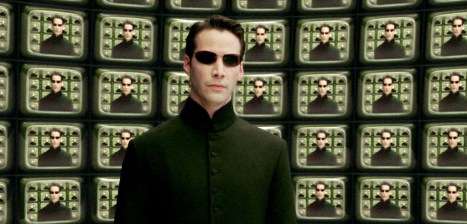
I published a new column at The Escapist yesterday. With the looming release of The Matrix Resurrections, it seemed like a good opportunity to take a look back at The Matrix and its two sequels The Matrix Reloaded and The Matrix Revolutions.

The Matrix is one of the great “Chosen One” narratives of the late nineties, and a film that had a profound cultural impact. Its legacy is surprisingly controversial, and that makes the two sequels to the film particularly interesting. Both Reloaded and Revolutions play as a response to the themes and ideas of The Matrix, picking apart the “Chosen One” narrative and the easy “us vs. them” binary. In contrast, Reloarded and Revolutions explore how that sort of mythmaking is often part of larger systems of oppression.

You can read the piece here, or click the picture below.

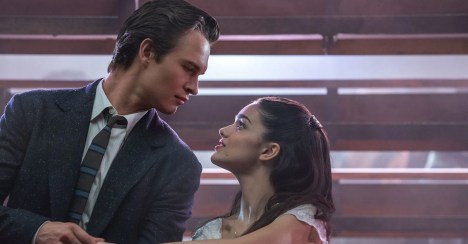
Non-Review Review: West Side Story

In some ways, Steven Spielberg’s adaptation of West Side Story is a match made in heaven, a union that feels as perfect as the story’s central romance.

After all, West Side Story is one of the quintessential American texts. In its review of the classic Robert Wise and Jerome Robbins adaptation, The Hollywood Reporter described the film musical as “the one dramatic form that is purely American and purely Hollywood”, and West Side Story is a musical that takes that idea to its extreme, with a show-stopping number literally titled In America. More than that, the previous cinematic adaptation stands as one of the virtuoso examples of classic Hollywood studio filmmaking, with its beautiful production design, large cast, and beautiful backlot.

“Do you want to dance or do you want to fight?”

Steven Spielberg is perhaps the most purely American and most purely Hollywood director of his generation. He is just as much a monolyth of American popular culture as West Side Story or even the cinemative musical. Writer Arthur Ryel-Lindsey might have sarcastically declared that “Steven Spielberg is American culture”, but there’s a great deal of truth in it. Depending on who you ask, Spielberg is “the defining American populist of his generation”, “possibly the greatest American director”, or even simply “synonymous with cinema.” So West Side Story feels like a wonderful synthesis of material and director.

Plus, you know, Spielberg knows how to direct sharks.

“Maria, you gotta see her…”

Continue reading

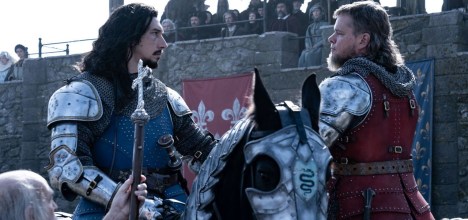
New Escapist Column! On “The Last Duel”, “Dune”, “The Green Knight”, and Being the Hero of One’s Own Story…

I published a new column at The Escapist at the weekend. With the release of Dune and The Last Duel on home media, it seemed like a good opportunity to take a look at the overlap between the two films, along with The Green Knight.

All three stories are recognisable as traditional epics, medieval or pseudo-medieval adventures featuring men who perceive themselves to be the heroes of their own narratives. However, all three films cleverly interrogate that idea of story and narrative, asking what it means to be the hero of one’s own story and who gets to control the narrative. It’s a fascinating and interesting trend, and it’s notable that all three films premiered within a few months of each other.

You can read the piece here, or click the picture below.

New Escapist Column! On What Three More “Spider-Man” Movies Might Mean For the MCU…

I published a new In the Frame piece at The Escapist this evening. With reports that Sony have plans for another trilogy of movies built around Tom Holland’s Peter Parker, it felt like a good time to reflect on what that might mean.

After all, most Marvel Cinematic Universe properties seem to be content with trilogies. Robert Downey Jr. and Chris Evans tapped out after three films. There is some suggestion that directors James Gunn and Peyton Reed may be done with their properties after completing their third films. So it’s interesting to imagine a world where Tom Holland has headlined six solo Spider-Man movies. What challenges might this pose for the Marvel Cinematic Universe? What opportunities?

You can read the piece here, or click the picture below.

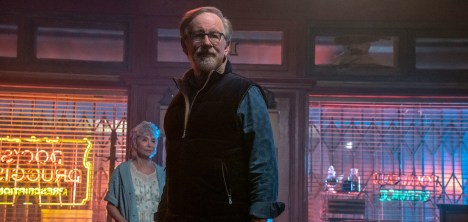
New Escapist Column! On The Reflective and Introspective Nature of Late Steven Spielberg…

I published a new In the Frame piece at The Escapist on Friday. With the looming release of West Side Story, it seemed like a good opportunity to take a look at the late career of Steven Spielberg.

Spielberg is a director who defined and shaped Hollywood, largely by inventing the modern blockbuster with Jaws. What is really interesting about so much of his twenty-first century output, starting with A.I. Artificial Intelligence and continuing into films like Ready Player One, is the sense in which Spielberg seems to be grappling with the long-term and unintended consequences of how he shaped cinema, to the point that many of his modern movies – from War Horse to The Post – seem to be the kinds of movies that he squeezed out of the market.

You can read the piece here, or click the picture below.

New Escapist Column! On the Quiet Revolution of Disney’s Modern Princess Movies…

I published a new In the Frame piece at The Escapist this evening. With the release of Encanto this weekend, it seemed like a good opportunity to talk about the animated “princess” movies being produced by Disney.

Disney has always been associated with these movies, dating back to the breakout success of Snow White and the Seven Dwarves. However, the company has also long had a complicated relationship to them, and in particular the way in which they are perceived as movies aimed at young girls. However, the past decade has seen the studio clever and consistently reinventing this archetypal “fairy tale” sort of story for the twenty-first century, to the point that it’s arguably that the run of movies from Tangled onwards has been the most consistent of the studio’s output.

You can read the piece here, or click the picture below.

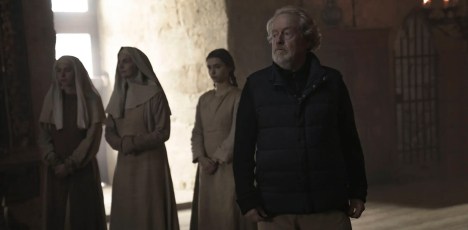
New Escapist Column! On Letting Ridley Scott Be a Grumpy Old Man…

I published a new In the Frame piece at The Escapist this evening. With the release of House of Gucci, Ridley Scott has had a chance to talk about the financial failure of The Last Duel, blaming “millennian” audiences.

Scott’s comments have generated considerable online outrage, fueling more than a few clickbaity headlines designed to stoke anger. It’s a familiar process, which is why so many interviews seem to consist of asking really great directors what they think about superhero movies so that the outlet might be able to go viral with a spicy headline. In truth, Scott’s a filmmaker who has been working for well over half a decade. He’s an 84-year-old man who made two movies in the middle of the pandemic – one of which is actively good, and both are at least interesting. Maybe he can be a grumpy old man.

You can read the piece here, or click the picture below.

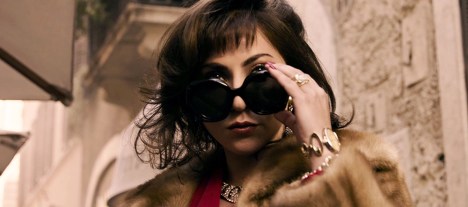
Non-Review Review: House of Gucci

At its core, House of Gucci is the story of how the handbag is made.

Trying to convince his nephew Maurizio to take the reigns on the family business, Aldo Gucci explains that the cows that provide the leather for the company’s products are part of a long dynasty. Much like Aldo and his brother Rodolfo inherited the company from their own father Guccio Gucci, these cows are the direct descendents of the animals upon which the brand was established. To Aldo, Gucci is a fmaily business, right down to the cows that are fattened for slaughter. Aldo insists that the cows deserve praise for what they have given their owners. However, the cows still inevitably get skinned.
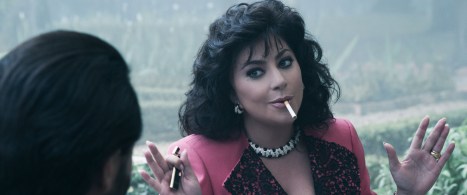
Where there’s smoke…

House of Gucci returns time and again to this animal imagery. “Gucci is a rare animal,” Domenico De Sole warns Patrizia Reggiani at one point, as the family consider how best to maintain the brand. “It must be protected.” It’s no coincidence that, towards the climax of the movie, the investors debating the future of the family’s ownership of the brand enjoy delicious cuts of steak. It’s rare, of course, the blood visible as they cut into it. The imagery is hardly subtle. Perhaps Aldo and his family have more in common with the cows than they’d like to acknowledge.

House of Gucci feels like something of a companion piece to two other recent Ridley Scott films, The Counsellor and All the Money in the World. Both feel like extrapolations of themes that have bubbled across the director’s filmography, from his earliest work on movies like Alien and Blade Runner. They are cautionary tales about the terrible things that people will do to one another for money, shaped by the ironic understanding that even after all these terrible things are done, nobody really wins. House of Gucci is not a particularly subtle movie, but it doesn’t need to be.
Glass act.

House of Gucci is similar to The Counsellor and All the Money in the World in other ways, as a movie that feels significantly less than the sum of its parts. Then again, what parts they are. House of Gucci doesn’t really hang together cohesively as a movie, often feeling like several smaller movies wrestling for control of the narrative. Every major member of the cast feels like they are the star of their own movie, but not necessarily an essential part of this movie. House of Gucci puts Howard Hawks’ “three great scenes” hypothesis to the test, compiling a number of compelling individual scenes that rarely add to something greater.

House of Gucci is an interesting, disjointed, uneven but strangely compelling study of what wealth does to people – particularly when it no longer needs them.

A familiar ring to it.

Continue reading

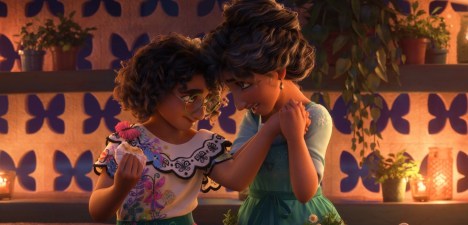
Non-Review Review: Encanto

One of the most interesting and overlooked entertainment trends in the past decade has been the extent to which Disney’s animated films have quietly become the studio’s most reliable output, ahead of higher-profile properties like Star Wars or the Marvel Cinematic Universe. Indeed, it’s possible to argue at least convincingly that Disney’s animated films have been more consistent in quality than those from Pixar, even allowing for Pixar’s success with movies like Inside Out.

The studio entered the twenty-first century in a state of crisis over its traditional animated features. There was a perception that the studio’s classic “princess movies” like Beauty and the Beast or The Little Mermaid or Pocahontas or Mulan were outdated, and that the studio needed to reconfigure its image to appeal to young male demographics. The acquisition of other brands like Star Wars eased the pressure somewhat, and the studio’s animated output has become more comfortable in its own skin with female-led animated projects including Tangled, Frozen, Moana, Frozen II and Raya and the Last Dragon.

Family portrait.

The studio’s animation division has spent the past decade tinkering with the formula and assumptions that drive these sorts of films, in some ways cutting to what was always the heart of the genre. Love stories are now optional for female leads. Villains are more complex and multifaceted. Themes are richer and more ambitious. It’s perhaps too much to suggest that Disney has spent the past decade quietly and carefully deconstructing and then reconstructing the familiar “princess movie” storytelling engine, but it’s also not inaccurate. The studio has done this in a careful and considered manner, never feeling false or cynical.

In some ways, Encanto feels like the culmination of this larger trend. It is a movie that is instantly recognisable as part of the familiar animated “princess movie” template, a musical about a young woman in a remote location coming into her own to find her identity. It’s a stunning piece of animation, with a charming cast and some catchy musical numbers. However, it’s also a surprisingly thoughtful and clever subversion of some of the core ingredients in these sorts of movies. It’s a story about a lead character whose epic adventure begins at home, who finds herself without needing to leave the house.

Food for thought.

Continue reading

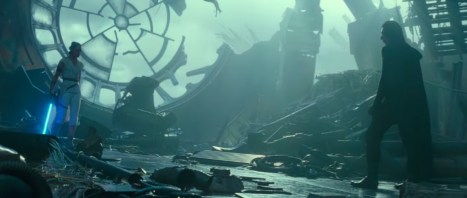
New Escapist Column! On Squaring the Circle with Nostalgic Sequels Like “The Rise of Skywalker” and “Ghostbusters: Afterlife”…

I published a new In the Frame piece at The Escapist this evening. With the release of Ghostbusters: Afterlife this weekend, it seemed like a good opportunity to take a look at the larger trend of the modern nostalgia sequels, and the paradoxes at play within the genre.

By their very nature, belated sequels like Star Wars: Episode VII – The Force Awakens require the heroes to have left something unfinished or undone for years or even decades. Often, this involves forcing the heroes’ children to effectively grapple with the exact same problem that haunted their parents. There’s a recurring theme of generational failure running through these stories, a sense that the failure of these older heroes to wrap up their own stories exists at odds with the nostalgia that powers such stories.

You can read the piece here, or click the picture below.