• Following Us

  • Categories

  • Check out the Archives


  • Awards & Nominations

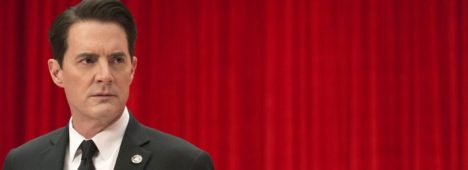
No, “Twin Peaks: The Return” is Not a Movie

It is December.

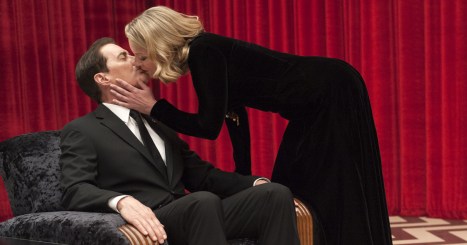
As tradition dictates, the major publications are rolling out their “best of” lists. One of the more interesting trends of the “best of” season in 2017 has been the repeated suggestion that David Lynch’s Twin Peaks: The Return should be considered an eighteen-hour movie. It made the Sight & Sound and Cahiers du Cinema polls, and even got a write-in vote at the Los Angeles Film Critics Awards. This is interesting on a number of levels, because it suggests that labelling The Return as a feature film is not a lone act of contrarianism, but something of a minor trend.
Of course, there are grey areas between film and television. There always have been, given the similarities in the technology and mechanism. Film can be shown on television, and television can be shown in cinemas. There are television movies and film series, and it is often possible for stories that start in one form to transform into the other. The boundaries are not as absolute as they are with theatre or prose, where the technical form is so fundamentally different that any comparison is ridiculous. After all, consider the debate over movies released on Netflix, or films edited for television.

The Return is not an ambiguous area, though. It is a fairly simple case. It is a television series. And there is nothing wrong with that.
Continue reading

Non-Review Review: I, Tonya

I, Tonya is a biopic for the post-truth era. It is also brilliant.

The subject of I, Tonya will be casually familiar to most viewers, the figure skater Tonya Harding who was implicated in an attack on fellow figure skater Kerrigan. The incident was a flashpoint for the nascent twenty-four hour news cycle in the early nineties, although most people remember it as a warm-up for the O.J. Simpson case only shortly afterwards. As such, I, Tonya feels like the perfect window through which to examine the modern era’s obsessive celebrity-focused culture and the desire to turn our heroes into monsters for the audience’s viewing pleasure.

Putting her own spin on it.

I, Tonya is fascinating on that level alone. Its characters repeatedly break the fourth wall in an attempt to steer and control the narrative, but occasionally do so to indict the audience for their complicity. I, Tonya is a film that understands it cannot be about this media maelstrom without being part of this media maelstrom. There’s a canny knowingness to I, Tonya, an understanding that a movie about culture’s slipping grip on the idea of reality cannot be too earnest or too sincere.

I, Tonya repeatedly suggests that its story may stray into the realm of fantasy and fiction, but the movie still packs a real punch.

Get your skates on, mate.

Continue reading

Non-Review Review: The Disaster Artist

The Disaster Artist opens by professing its love for its subject, the enigmatic Tommy Wiseau.

A variety of talking heads, primarily comedians, make a reasonable case for The Room as a beloved cult classic. The segment is short, but it sets the tone for a lot of what follows. The Disaster Artist doesn’t exactly obscure the (infamous) difficulties experienced during the production of that cult classic, mostly caused by the fragile ego and highly strung creative force behind the movie. However, there is also a sense that The Disaster Artist has an abiding affection for its subject, a sincere appreciation for the sheer force of Tommy Wiseau’s will.

Wiseau guy.

The Disaster Artist is ultimately a heartwarming tale about an outsider overcoming nearly impossible odds (which are not helped by the temperament of the outsider himself) to realise his dreams. Tommy Wiseau comes to Hollywood and decides to make something of himself, despite being told that he has no talent and no charisma, and that the best he could hope for would be to be cast as a “malevolent presence.” Wiseau proves all of his doubters wrong by shepherding his vision through a disastrous production cycle and releasing a cult classic.

It just so happens that Wiseau’s vision is absolutely terrible.

Edge of your seat stuff.

Continue reading

Non-Review Review: The Shape of Water

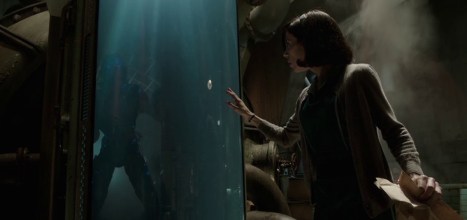
The Shape of Water is a beautiful emerald fairy tale, told from the fringes.

Set in the early sixties, against the backdrop of “the last days of a fair prince’s reign”, The Shape of Water promises to regale audience members with the story of “the princess without a voice” and “the monster who tried to end it all.” However the most striking aspect of The Shape of Water is in how it chooses to focus its magical story. The Shape of Water is a story largely about those who are silenced on the margins, right down to its decision to cast Sally Hawkins as protagonist Elisa Esposito, a mute cleaner working in a secret government lab.

He’s in a glass case of emotion.

The Shape of Water is very much an exploration of the concept of “the other”, of the lives of those who exist outside the confines of “normal” society. The film’s central antagonist is a happily married white American man, who finds himself set against a collection of misfits and outcasts; a mute orphan, a black cleaning lady, a gay designer, an immigrant scientist, and a monstrosity pulled from the depths of the Amazon river. Coasting from the conservative fifties, Colonel Richard Strickland faces the threat that everything he accepts as granted might be washed away.

The Shape of Water suffers from some minor pacing problems in its romantic adventure, but these are minor issues in a haunting and enchanting piece of work.

The Creature from the Black Ops Department.

Continue reading

Non-Review Review: Three Billboards Outside Ebbing, Missouri

“All this anger. It only begets more anger.”

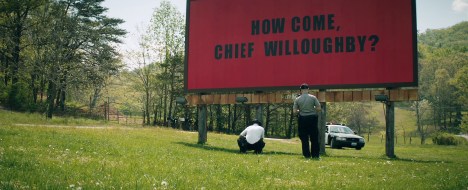
Ironically enough, given the title, the anger in Three Billboards Outside Ebbing, Missouri never seems to ebb. Martin McDonagh’s small town black comedy drama is a parable about grief that metastasises into all-consuming rage. Fire is a recurring fixation for Three Billboards Outside Ebbing, Missouri, a potent metaphor for both the scorched earth left behind by trauma and the tendency of such anger to swallow up everything in its path. Three Billboards Outside Ebbing, Missouri is a cautionary fable.

Reading the signs.

Three Billboards Outside Ebbing, Missouri benefits from a number of different factors. McDonagh’s script is smart and well-constructed, wry in the right places and emotional when it counts, imbuing the characters and their surroundings with an organic and lived-in quality that enriches the story built around them. The locations are atmospheric and effective, creating a sense of place that extends beyond mere geography. The cast is fantastic, particularly supporting turns from Woody Harrelson and Sam Rockwell.

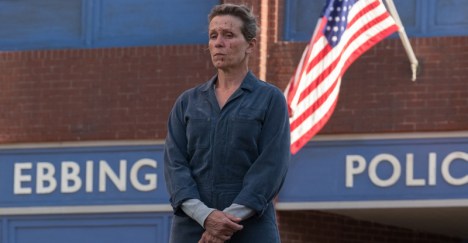
However, Frances McDormand is the engine that drives Three Billboards Outside Ebbing, Missouri. While the film features several set pieces built around fire, the hottest flame burns at the heart of the central character. As enraged mother Mildred Hayes, McDormand captures the energy and the depth of a woman raging against a system that let her down, an unjust world that denies her closure, and her own sense of guilt and responsibility.

Ebbing and flowing.

Continue reading

New Podcast! Talking “Justice League” with Speakin’ Geek!

So, much to the relief of Andrew Quinn, Justice League did not make The 250.

Nevertheless, the wonderful Graham Day thought it might be interesting to discuss it with me. He very kindly invited me to guest on his podcast Speakin’ Geek for a follow-up to our discussion of Man of Steel and Batman vs. Superman on the crossover episode between Speakin’ Geek and The 250.

You can hear what I thought about Justice League below.

Non-Review Review: Brigsby Bear

Brigsby Bear is a sweet, if slightly uneven, ode to the act of reclaiming problematic art.

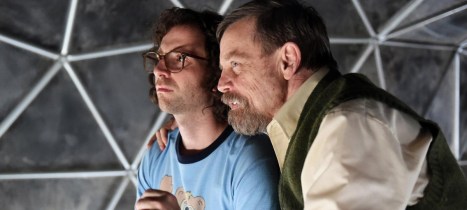
The concept of Brigsby Bear is simple. James Pope is a twenty-something-year-old manchild who has grown sheltered from the outside world, living with his parents in a converted shelter locked away from the world. James’ only interaction with the outside world is through the internet, where he maintains contact with fans of the only show still broadcast on the airwaves, the eponymous anthropomorphised bear.

Bearing his soul.

However, one day James discovers that this is all an elaborate lie, that the world does not work the way that he thought it did. Brigsby Bear is positioned at the centre of this betrayal, with James discovering that the show was never what it appeared to be. As James struggles to come to terms with the reality of his situation, he finds himself struggling to make peace with the bear at the centre of these amateurish and endearing morality plays.

Brigsby Bear suffers from tonal issues, struggling to balance the darkness at its core with the whimsy on its surface. However, the movie plays as a compelling study of trauma and recovery, of the power of fannish obsession, and the art of taking back art that has been tainted or undermined by subsequent revelations. Indeed, Brigsby Bear is arguably more relevant now than it was when it was produced.

“Disney are really going to extremes to stop me leaking details on The Last Jedi.”

Continue reading

Marvel and Netflix’s The Punisher (Review)

Given how Iron Fist turned out, The Punisher could have been a catastrophic misfire.

Iron Fist was a show that landed at the wrong cultural moment, a tale of thoughtless cultural appropriation landing right at the moment when pop culture was engaging with tough questions about the tendency of western entertainment to co opt foreign culture for its own amusement. Of course, Iron Fist was also a terrible television series on its own terms, with a variety of fundamental problems; an awkward lead, a convoluted plot, flat action sequences. The film’s clumsy blundering into the middle of that larger culture discussion was icing on the proverbial cake.

“The only person you’re punishing is yourself.”
Yes, the first episode includes this line. Completely unironically.

On paper, The Punisher seems ready to wade into a similar debate. By its nature, The Punisher is the story of an angry white man with a gun, and it will arrive on Netflix forty-seven days after what was arguably the bloodiest mass shooting in recent history and twelve days after another recent massacre. More than that, The Punisher arrives at a point in time when there are larger debates about the use of force in dealing with suspected criminals, and the lack of consequences for law enforcement representatives who have shot and killed minorities. This is a minefield for The Punisher to navigate.

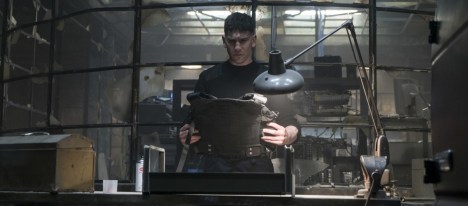
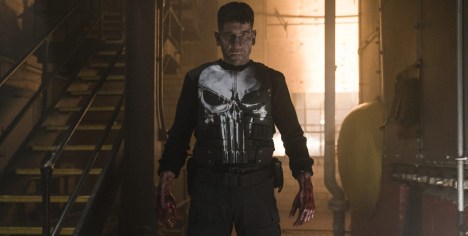
The good news is that The Punisher (largely) avoids this potential minefield. The bad news is that The Punisher does this by largely not being a show about The Punisher.

Skullduggery.

Continue reading

Non-Review Review: Justice League

The Parademons, the monstrous zombie bugs at the heart of Justice League, smell fear. It is a lucky thing that they don’ smell desperation, because otherwise they’d eat the movie alive.

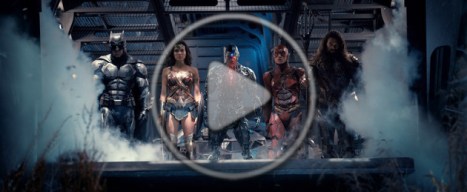
Justice League is not a movie so much as a two-hour attempt at atonement. It is an extended apology from Warner Brothers to the most vocal internet denizens, an obvious attempt to backpedal away from the controversial and divisive (and provocative) attempts to jump-start their shared comic book universe with Man of Steel and Batman vs. Superman. Richard Donner’s Superman inspired audiences to believe that a man could fly; Justice League serves as evidence that a film franchise can grovel.

The Just Us League.

Justice League is contrite and submissive. Anything resembling a jagged edge has been carefully sanded down, anything resembling a unique identity stripped from the film. Justice League has listened to the internet’s overblown criticisms of Man of Steel and Batman vs. Superman, and decided that the best response is to offer something generic and appeasing. Justice League has the feeling of a studio mandated checklist captured on celluloid, a list comprised primarily of “don’t”s; don’t run over two hours, don’t be so dark, don’t be pretentious, don’t be political.

The result is a movie that feels defined by what it isn’t, an empty space much larger than that created by the absence of Superman. It is a movie without any ambition or any personality. It wants so desperately to be loved, but ultimate feels hollow.

Out of their League.

Continue reading

Non-Review Review: Daddy’s Home 2

Daddy’s Home 2 is awkward and broad, with too few laughs and too much dead air.

As the title suggests, Daddy’s Home 2 is the sequel to the similarly uninspired Daddy’s Home, in which Will Ferrell finds himself competing for the affection of his stepchildren with their biological father, played by Mark Wahlberg. Daddy’s Home 2 seeks to add some extra excitement into the mix by bringing another generation into the mix; John Lithgow joins the cast as father to Will Ferrell’s character, while Mel Gibson is cast in the role of withholding parent to Mark Wahlberg’s emotionally stunted adult.

Bad dads.

Daddy’s Home 2 largely tries to coast on the charm of these four male leads, bouncing scenarios and concepts off them. Some of these jokes are diverting, but Daddy’s Home 2 is largely free from big belly laughs. Outside of a couple of very effective set pieces, Daddy’s Home 2 sets itself the bar of “reasonably diverting.” The film occasionally stumbles past that, but there is never a sense of Daddy’s Home 2 has been honed or crafted. Even at ninety-six minutes, the movie feels bloated and over-extended.

Daddy’s Home 2 tries to paper over its weaknesses with an emphasis on the charm of its four leading performers, most shamelessly in its final act when Will Ferrell all but addresses the audience directly as he sings the praises of the cinema as a communal experience in which people might be alone with everybody. Daddy’s Home 2 is a film that never pushes itself too hard, content to wallow in its own mediocrity.

It’s not that funny.

Continue reading