• Following Us

  • Categories

  • Check out the Archives


  • Awards & Nominations

Non-Review Review: Suburbicon

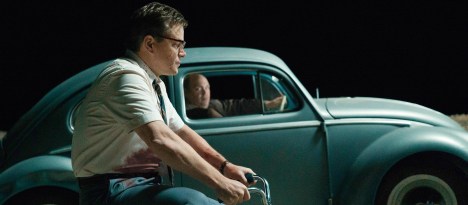
Suburbicon is a disjointed mess of a feature film. It is a gonzo black comedy that never quite coalesces, but sustains itself with enough energy that it never completely falls apart.

Suburbicon is a bizarre hybrid. Watching the movie, one gets a sense that the film has been stitched together from two core stories. Indeed, this was very much the case; the central plot of Suburbicon was original written by the Coen Brothers as a grotesque comedy of murder and mayhem, while the movie’s prominent subplot was grafted on later by director George Clooney and collaborator Grant Heslov to add a sense of social realism to this late fifties Americana. These two elements never quite cohere, which means Suburbicon never feels truly focused.

Stress testing.

There is a telling moment around half-way through the film, when an insurance investigator has stopped by the family residence at the heart of the story. Investigating a suspicious claim, the gentleman is clearly fishing. “In the end,” he reflects philosophically, “it all comes down to one word.” Without any elaboration, he allows his mind to wonder and the conversation to drift. He only returns to that  train of thought when guided by his interviewee. “What is it?” they ask. He is lost. “What?” They clarify, “The word?” The investigator takes a moment to get back on track.

That small conversational aside captures what is most appealing and most infuriating about Suburbicon, a movie that lacks a strong core and finds itself caught between two very different stories without any strong focus on either. Suburbicon is never boring, packed with strange turns and driven by a pitch black sense of humour. However, it never seems entire sure of what it is.

Cycles of violence.

Continue reading

“My World Doesn’t Exist Anymore.” Man of Steel, Batman vs. Superman, and the Rejection of Nostalgia

Man of Steel and Batman vs. Superman are deeply flawed films. However, they are also breathtakingly ambitious films.

There are very few big budget blockbuster films that look and feel like Man of Steel and Batman vs. Superman. Actor Henry Cavill has diplomatically described Batman vs. Superman as a “niche” film in order to account for the openly hostile fan and critic reaction to the movie. There is a sense that Cavill was trying to offer an apology without an apology, to appease certain vocal segments of fan culture without throwing his work under the bus. However, there is some truth in his words.

It is tempting to wonder how much of the vocal and aggressive online response to Man of Steel and Batman vs. Superman comes down to the fact that these movies challenge popular perceptions of these iconic characters. Comic book writer Mark Waid was very vocal in his dislike of Man of Steel, not on the basis of the direction or the choreography or the framing or the craft, but because the film misunderstood “the essential part of Superman.” These complaints were echoed across the the blogosphere.

An unchallenged and unspoken assumption crept into discussions and debates around Man of Steel and Batman vs. Superman. The primary argument seemed to be that this wasn’t really Superman and this wasn’t really Batman, because these characters were so impossible to reconcile with the popular image of these characters. Many criticisms of Man of Steel and Batman vs. Superman measured them against other iterations of the characters, real and imagined. Man of Steel wasn’t colourful enough. Superman doesn’t kill. Lex Luthor is not Mark Zuckerberg.

The idea was that Man of Steel and Batman vs. Superman violated some unspoken compact with the audience, that it offered a version of these characters and their world that didn’t line up with audience expectations. Indeed, this is perhaps most notable in the inevitable comparisons between Zack Snyder’s work and the output of Marvel Studios. Marvel Studios had spent the better part of a decade building a reputation as a studio that was faithful and respectful of its source material, to the point of slavishness. Marvel Studios offered uncomplicated, straightforward adaptations.

However, there is a sense that Man of Steel and Batman vs. Superman were rather consciously rejecting the culture of nostalgia that has become so dominant and overwhelming in contemporary blockbuster cinema, that the films represented a conscious effort to challenge audience expectations and to push provocative and ambitious interpretations of these characters and their mythos. Indeed, it is hard not to see the audience’s vicious and aggressive response to Man of Steel and Batman vs. Superman as a response to that.

Continue reading

CinÉireann – Issue 1 (November 2017)

Sin é Cin É!

Announcing CinÉireann, a new monthly magazine focusing on Irish film. It’s full of interesting and exciting news about Irish cinema, including films in development and on release, as well as long-form articles on everything from Irish filmmakers to co-productions to the changing multimedia landscape.

It is largely the work of the wonderful Niall Murphy over at Scannain, and I am thrilled to have provided two articles to the opening issue. (One of them is even the sort-of cover story, a piece focusing on the themes of The Killing of a Sacred Deer.) There’s a host of talent involved. You can read CinÉireann as a digital magazine directly. You can even subscribe and get future issues delivered to you directly.

Or click the picture below.


Non-Review Review: Murder on the Orient Express (2017)

Murder on the Orient Express feels like a very conscious effort to disprove the notion that “they don’t make them like this any more.”

Lead actor and director Kenneth Branagh clearly relishes the opportunity to create a decidedly retro murder mystery. Murder on the Orient Express might contain a handful of action scenes and copious amounts of computer-generated imagery, but Branagh is very clearly channelling a more classical style of film making. Released in early November, Murder on the Orient Express has the look and the texture of an old-fashioned Christmas television treat; a fantastic ensemble reenacting a classic murder mystery on lavish sets with heightened melodrama.

Like a train in the night…
Or, you know, the day.

Branagh’s imitation is affectionate, but it is also laboured. Murder on the Orient Express feels like a nostalgic homage to the old ensemble-driven melodramas that were a dime-a-dozen, but there is something uncanny about it. Early in the film, the Belgian detective Hercule Poirot deduces that a fellow passenger is a dealer in forgeries, passing off unconvincing copies as historic artifacts. There is a sense that Branagh is attempting something similar, trying to construct something with the texture of a more classic piece of cinema, but without any of the spirit or the energy.

Murder on the Orient Express is charming and engaging, its enthusiasm for its premise and setting infectious in places. However, it also as lifeless as the corpse at the centre of the mystery.

Cold case.

Continue reading

North by Northwest to Psycho: The Breakdown of Moral Order on the Edge of the Sixties…

In the space of three years, Hitchcock produced Vertigo, North by Northwest and Psycho.

Each of those three films is (rightly) regarded as a classic, and it is astounding that a single director could produce three such films back-to-back with only a year between each. Each of those films is massively influential, each of those films is loved by critics and audiences alike, and each of those films is radically different than the other two. Hitchcock remains one of the most influential and respected film directors of all time, and these three consecutive classics demonstrate his remarkable control of the form.

The road to nowhere.

It is important to separate the modern perception of these films from the reaction to them upon release. Very few classics are accurately identified as such by contemporary critics, often settling into that role over time. Vertigo was originally met with a somewhat muted critical response by critics and struggled to break even on release. Pyscho was largely dismissed by critics as the time as something crass and inelegant. In contrast, the contemporary critical reception of North by Northwest was a lot warmer.

However, time has arguably been kinder to Vertigo and Psycho than to North by Northwest. Vertigo is frequently identified as one of (if not the) best films ever made. Psycho is frequently cited as one of the most formative (and perhaps the best) horror films ever made. In contrast, North by Northwest can feel overshadowed by the films that flank it, even if it is hard to feel too sorry for a film that have been described by both Martin Scorsese and Peter Bogdanovich as “perfect.”

A shady deal…

Still, there is a sense that the lightness of North by Northwest has been held against it. Ben Oliver has stated that North by Northwest is “not typical film-school fodder.” Nathan Rabin explains that North by Northwest is a “glorious trifle of an adventure film” placed “between two of Hitchcock’s heaviest and most tormented films.” David Shariatmadari has speculated that “perhaps the lack of Freudian handwaving leads people to rate it poorly in comparison.” There is a sense that North by Northwest is somehow lesser than the heavier films around it.

Of course, this speaks to broader trends in how critics talk about art. There is a tendency to prioritise drama over comedy, to dismiss superficially lighter material in favour of weightier content. (Genre fare faces a similar bias, although it seems that science-fiction and horror are more likely receive a revaluation in the medium- to long-term.) North by Northwest is a lighter and fluffier film than either Vertigo or Psycho, but does that make it inherently lesser than either of them. More to the point, there is a surprising amount of Psycho to be found in North by Northwest.

The final curtain.

Continue reading

Non-Review Review: The Killing of a Sacred Deer

The Killing of a Sacred Deer is cold, clinical and Kubrick. Perhaps too much so in places. It is also mesmerising and haunting.

“Do you understand?” Martin asks a confused Steven towards the climax. “It’s a metaphor. My example. It’s metaphorical.” As one might expect from director Yorgos Lanthimos, The Killing of a Sacred Deer is very much couched in symbolism and metaphor. As the title implies, a reference casually suggested by a minor character quite late in the film, The Killing of a Sacred Deer might be best understood as a modern update of Iphigenia in Aulis, the tragedy of the Greek general Agamemnon who was forced to sacrifice his daughter to a vengeful god.

The man upstairs.

However, that is an incomplete prism through which The Killing of a Sacred Deer might be understood. The tale of a patriarch faced with an impossible choice to protect his family from a sinister outside force, The Killing of a Sacred Deer is a study of masculinity and responsibility. The film is an interrogation of sex and power through a surreal lens, skewed through psychological horror and pitch black comedy. The Killing of a Sacred Deer is never entirely abstract, but it is very rarely literal. It exists in a surreal and uncomfortable space that enhances the audience’s unease.

The Killing of a Sacred Deer is an uncanny piece of cinema, an ethereal moral fable that lingers long after its resolution.

Putting the matter to bed.

Continue reading

I Came, I Thor, I Conquered: The Strange Postcolonial Politics of the Thor Trilogy…

The Thor franchise has never been particularly consistent.

Compared to the Iron Man or Captain America films, the three Thor films have lacked a clear sense of unity or direction. Part of this is down to the lack of a singular creative vision across multiple films in the trilogy. Jon Favreau provided a very clear statement of purpose when he worked on the first two Iron Man films, a loose improvisational style tailored around the personality of Robert Downey Jnr. The Russo brothers ensured that Captain America: The Winter Soldier and Captain America: Civil War were of a piece with one another, pseudo-political action movies.
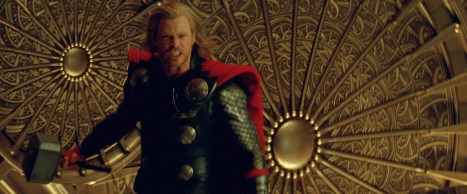
In contrast, the Thor franchise has always felt like the runt of the litter. The first film in the series was directed by Kenneth Branagh, and bristles with the excitement of getting to play in the comic book world of grand language and bright colours. Branagh pitches Thor as the most classic superhero movie; he borrows the Dutch angles from Batman! and the bright aesthetic from Superman. In many ways, Thor is the most undervalued film in the Marvel Cinematic Universe, perhaps the best distillation of the company’s formula applied to the character best suited to it.

Branagh did not return for the sequel, Thor: The Dark World. Marvel initially hired Patty Jenkins, but that fell through due to creative differences. Jenkins would demonstrate her ability to direct mythology-themed superhero action with Wonder Woman, but Marvel replaced her with Alan Taylor. Taylor was a television director, and by all accounts was treated as such by the studio. The film ended up an overstuffed tonal mess, often feeling like a half-hearted (and confused) imitation of the wave of “prestige-tinted blockbusters” that were popular at the time.
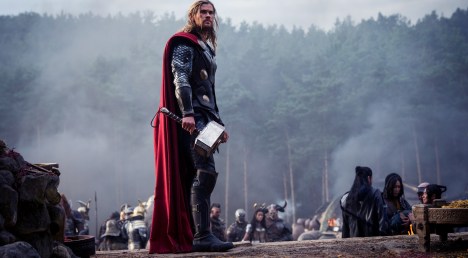
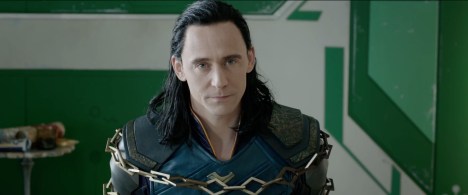
The failure of the sequel would lead to a significant delay between the second and third films in the series, not to mention a complete change of direction. The third film in the trilogy, Thor: Ragnarok, would be directed by New Zealander Taika Waititi. Waititi was a comedy director best known for his work on What We Do in the Shadows and The Hunt for the Wilderpeople, who pitched the film as a superhero version of Withnail & I. The result was a film that felt utterly unlike either of the two earlier entries, even sending its title character out into deep space.

As such, the Thor films all exist at odds with one another. There is no consistent throughline to the series. The setting, the tone, the quality, the narrative focus; all of these elements change from one film to the next. The title character is introduced in Thor when he gets hit by a van, can become an inter-dimensional peacekeeper in The Dark World, and wield ray guns and steal space ships in Ragnarok. Attempting to impose structure or consistency upon the Thor films is an act of madness, one compounded when trying to integrate them into The Avengers or Avengers: Age of Ultron.
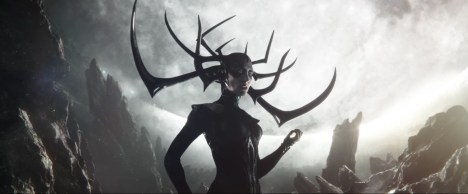
And yet, in spite of all of this, there are small themes and ideas that simmer through the three films in the franchise, recurring fascinations. In particular, the Thor trilogy is particularly fascinated with the idea of empire. In shifting away from the idea of Asgardians as literal gods or living stories, the franchise instead settled on the notion of Asgard as an imperial power tasked with bringing order to “the nine worlds.” With its magnificent spires, idyllic surroundings, exaggerated British accents, the Thor movies return time and time again to the idea of Asgard’s golden throne as the seat of empire.

Each of the Thor movies approach this idea in different ways, but they all play with the question of imperial legacy in a manner that is arguably more political than anything in The Winter Soldier or Civil War.

Note: This post contains spoilers for Thor: Ragnarok. Continue at your own risk.

Continue reading

Star Trek: Voyager – Warhead (Review)

If Relativity featured a time bomb, then Warhead focuses on a smart bomb.

Star Trek: Voyager is a fascinating television show. It is a television show very firmly rooted in the listlessness of the nineties, reflecting cultural anxieties and uncertainties; these millennial anxieties reflected in stories like 11:59. At the same time, it is also structured as something more overtly nostalgic than the other Star Trek spin-offs, a conscious throwback to the retro science-fiction of the forties and the fifties; this sensibility reflected in the nuclear parables of Jetrel or The Omega Directive, the infiltrator narratives of Cathexis or In the Flesh.

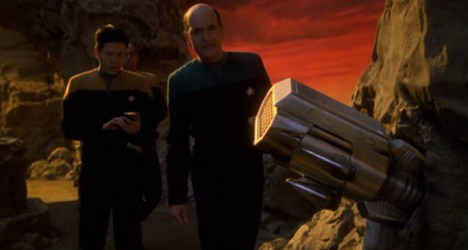
“Yes, that is a rocket in that pocket of rock, and yes it is happy to see us.”

In many ways, Warhead represents a perfect fusion of these two approaches. Warhead is a story that is strongly anchored in uncertainties about the legacy of the Second World War, the tale of a sentient weapon of mass destruction with the capacity to cause untold destruction that exists beyond the capacity of human reason. Warhead is also a philosophical parable about identity and determinism, a discussion about what it means to have a sense of self and whether an individual’s reality is shaped by their design and their programming.

The result is a strange hybrid story that captures two of the competing facets of Voyager in a single forty-five minute episode.

Explosive drama.

Continue reading

Non-Review Review: The Florida Project

The Florida Project is a beautifully made and deeply condescending film.

Director Sean Baker beautifully captures the sense of listlessness that defines an unlikely community of Tampa residents clustered in the motels that adorn the Strip. Painted in bright colours and christened with familiar-but-non-copyright-infringing names like “Futureworld” or “Magic Castle”, these motels come to embody a purgatory for residents of the area who live in spaces originally designed to accommodate tourists. These characters live in the shadow of Disneyland, but never seem to arrive.

Somewhere over the rainbow.

The Florida Project is an impressive piece of work from a technical standpoint. Baker assembles an impressive cast, drawing out a quiet and moving performance from Willem Dafoe and establishing relative newcomer Brooklynn Prince as a face to watch. Baker’s compositions are impressive, lots of static shots that provide a sense of scale for the characters who seem tiny in comparison to the themed gift shops and giant motels that threaten to swallow them whole. In particular, Alexis Zabe’s cinematography beautifully captures this sun-drenched limbo.

However, there is a patronising cynicism at the heart of The Florida Project, and its portrayal of childhood poverty. The Florida Project is candid in its exploration of the horrors of poverty, of characters who have been failed by all the institutions around them desperately trying to stay afloat. However, it is also very calculated in how it chooses to present family life in the midst of these failures and compromises. The Florida Project tries to mesh a romantic and wistful sketch of childhood with a brutal depiction of live on the margins, and the rest feels disingenuous at best.

Wilderness years.

Continue reading

Non-Review Review: Thor – Ragnarok

Thor: Ragnarok is a pure pop superheroic pleasure.

Thor has always been the most archetypal member of the Avengers, the character cast in the most conventional superheroic mould. Captain America was a soldier; Tony Stark and Bruce Banner designed weapons; Black Widow was an assassin; Hawkeye was a cosplayer with a bow and arrows. In contrast, Thor was a literal demigod. He looked the part of a conventional superhero, with his billowing red cape and his awesome power.

To Hela back.

Part of the joy of superhero stories is the way in which they form a strange oral history tradition; the stock comparison is to modern mythology, and there are certain shades of that. Superhero stories provide a lens through which classic and archetypal stories might be reimagined and reconstructed. Building on Chris Claremont’s characterisation of Wolverine, James Mangold pitched the superhero as the spiritual descendant of the samurai in The Wolverine and of the cowboy in Logan.

Thor: Ragnarok understands the potential of the comic book superhero as a framework for remixing and reimagining classic tales, as a weird cultural cocktail that effortlessly blends countless different flavours. In this respect, director Taika Waititi is being faithful to the source material. The appeal of Stan Lee and Jack Kirby’s work on Thor was the synthesis of classic mythology and retro science-fiction to construct something that was utterly unique. Thor was both a Norse god and a cosmic champion, a superhero and a mythic figure.

Wave after wave.

Thor: Ragnarok is perhaps a little over-stuffed, particularly in its opening act. Ragnarok races to hit plot points and fill in details, with an ensemble that feels far too deep for a two-hour-and-ten-minute romp. The biggest problem with Ragnarok is that the movie is practically overflowing with delight and joy. This not a serious problem by any measure. The movie never drags, and its goofy charm is never anything but infectious. Ragnarok could be structured and paced better, but the chaotic nature of the movie is part of its appeal. Ragnarok constantly threatens to burst.

The result is a movie that lacks the finesse and efficiency that define the best of the Marvel Cinematic Universe, but one that is overflowing with an energy and an eagerness that are endearing.

The ties that bind.

Continue reading