• Following Us

  • Categories

  • Check out the Archives


  • Awards & Nominations

New Escapist Column! On “Black Panther” and Childlike Wonder…

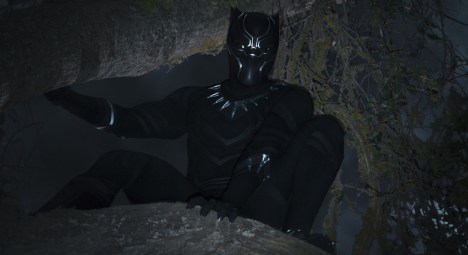
I published a new In the Frame piece at The Escapist this evening. With the tragic passing of Chadwick Boseman over a week ago, I have been thinking a lot about Black Panther. In particular, what makes it special.

It isn’t simply that Black Panther was the first superhero movie on this scale to feature a predominantly black cast from a black director. It was also the extent to which director Ryan Coogler understood the power of superheroes. Very few superhero movies are written with an understanding of what superheroes represent and why they are important, instead often falling into the trap of power fantasies rather than empowerment fantasies. Black Panther is the rare superhero movie that dares to see its world through the eyes of a child, and is more powerful for that.

You can read the piece here, or click the picture below.

“I’m Not an Animal!” Raging Bull and Pushing the Boundaries of the Empathy Machine…

The podcast that I co-host, The 250, launched a belated Summer of Scorsese last week with a look at Taxi Driver. This week, we’re looking at Raging Bull. It is a fun and broad discussion that is well worth your time, but it spurred some of my own thoughts about Martin Scorsese’s 1980 black-and-white boxing film.

“So, for the second time, [the Pharisees]
summoned the man who had been blind and said:

‘Speak the truth before God.
We know this fellow is a sinner.’

‘Whether or not he is a sinner, I do not know.’
the man replied.

‘All I know is this:
once I was blind and now I can see.’
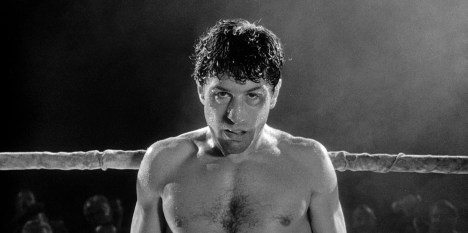
By Scorsese’s own admission, Raging Bull was a “kamikaze” film.

By the end of the seventies, Scorsese was personally and professionally wiped out. The director had just gone through his second divorce. He was recovering from a cocaine addiction that had almost killed him. Scorsese had attempted to capitalise on the critical and commercial success of Taxi Driver by making New York, New York. The film was intended as an update of the classic MGM musicals shot in a New Hollywood style, but it was a critical and commercial failure.

The New Hollywood era was ending around Scorsese. William Friedkin had been brought down to earth by the critical and commercial failure of Sorcerer, which had the misfortune to open opposite Star Wars. While Apocalypse Now had become a hit, the film’s troubled production was already the stuff of Hollywood legend. Indeed, it has been suggested that Scorsese was able to sneak Raging Bull through United Artists because its production overlapped with the attempts to fight fires on Michael Cimino’s studio-killing flop Heaven’s Gate.

Scorsese was committed to seeing through his vision of Raging Bull. He wanted to make a film that satisfied him, even if it was to be the last film that he ever made. The result is a singularly abrasive piece of work. It is a biography of the boxer Jake LaMotta that paints a harrowing and horrifying sketch of an innately violent man who succeeds in alienating everybody close to him and destroying every opportunity that he has to build a better life for himself.
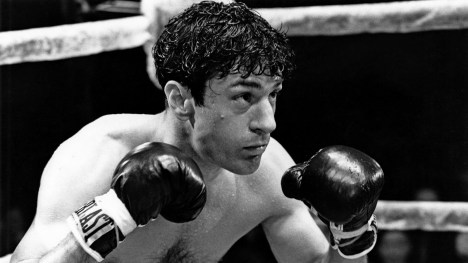
Even watched forty years after its original release, Raging Bull is an uncompromising and unflinching portrayal of a protagonist who is deliberately and aggressively unlikable. This is a bold and daring move. Studio biographies are often designed to soften the rough edges of their subjects, to temper biting commentary with glimpses of humanity. Even Oliver Stone’s Nixon offers a surprisingly sensitive study of a subject that the audience might expect the director to skewer.

However, this is the power of Raging Bull. Roger Ebert famously described film as an “empathy machine”, and Raging Bull seems to probe the limits of that idea. The audience spends two hours inside the head of Jake LaMotta, and sees the man with his all his flaws and through all his failings. The film then asks its audience, having subjected them to that brutality and violence, to look on Jake as a human being deserving some measure of compassion and empathy. Raging Bull accomplishes this, one of the most remarkable feats in Scorsese’s filmography.
Continue reading

New Escapist Column! On Disney’s Chinese Gambit with “Mulan”…

I published a new In the Frame piece at The Escapist this evening. With the release of Mulan as a premium video on demand this weekend, it seemed like the perfect opportunity to take a look at what the film represents in terms of Disney (and larger Hollywood’s) relationship with China.

The streaming release of Mulan is just one prong of Disney’s rollout strategy for a film that reportedly has a larger budget than The Lion King or Beauty and the Beast. The company has an eye on the Chinese box office, which makes sense given that China has become a global powerhouse in terms of box office. Mulan has been consciously tailored to appeal to Chinese audiences, but this is really just the culmination of Hollywood’s long-running courtship of Chinese censors and audiences, a trend that has been in motion for over a quarter of a century.

You can read the piece here, or click the picture below.

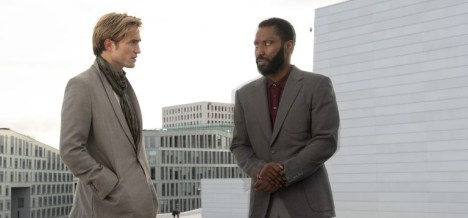
New Escapist Column! On “Interstellar”, “TENET” and the Competing Visions of the Future…

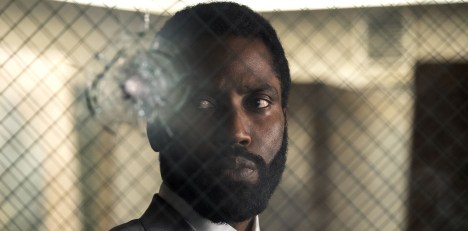
I published a new piece at The Escapist earlier today. With the release of TENET, it seemed worth taking a look at some of the core themes of the film.

TENET has most frequently been discussed in the context of its relationship to Inception, but it is perhaps most interesting to discuss in relation to Interstellar. Both of those films are about the relationship between the present and the future, exploring the dynamic between mankind and a projected future version of themselves. Interstellar is a story about the hope held by the future, but TENET offers a more cynical perspective.

You can read the piece here, or click the picture below.

New Escapist Column! On “Sicario” and the Forever War on the Final Frontier…

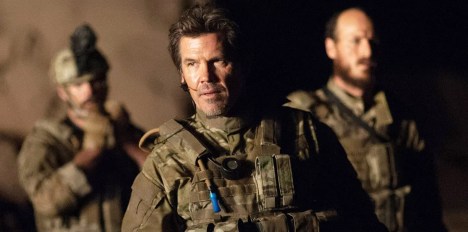
I published a new In the Frame piece at The Escapist this evening. The teaser for Denis Villeneuve’s Dune playing in cinemas, and with the film celebrating its fifth anniversary this September, I thought it was worth taking a look back at Denis Villeneuve’s Sicario.

Sicario is a film about boundaries – both literal and metaphorical. Set at the edge of the frontier, on the Mexican border, it is story about blurred lines and brutal transgressions waged as part of a murky war with extremely abstract objectives without a singular and clearly defined enemy. As such, it becomes a story about the idea of war waged on the idea of the frontier, a grim and cynical update of both the western and the war movie for the twenty-first century.

You can read the piece here, or click the picture below.

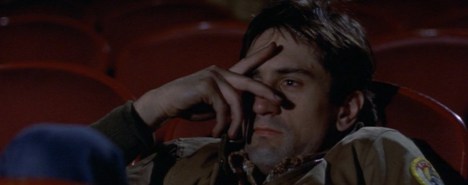
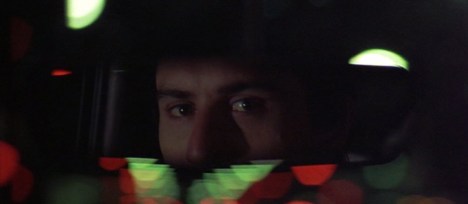
“You’re a Real Cowboy!” The Haunted Emptiness of Travis Bickle in “Taxi Driver”…

The podcast that I co-host, The 250, will be launching a belated Summer of Scorsese this week with a look at Taxi Driver. It is a fun and broad discussion that is well worth your time, but it spurred some of my own thoughts about Martin Scorsese and Paul Schrader’s 1976 classic.

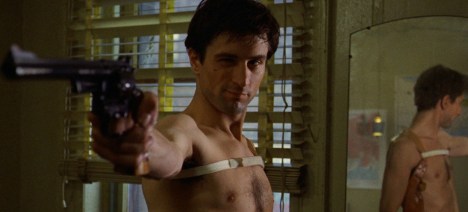
Even watched today, there is something deeply unsettling about Martin Scorsese’s Taxi Driver.

Travis Bickle is a haunting figure, drifting through the night in what writer Paul Schrader has repeatedly described as a “metal coffin.” Of course, Taxi Driver is a film of the seventies. The New York through which Bickle moves no longer exists – the one famously (but not actually) told to “drop dead” by Gerard Ford. Bickle is a Vietnam veteran, later sequences revealing scars on his body, and even his mohawk is drawn from experiences of soldiers who served in that war. Even beyond this, the vacuous-but-wholesome politics of Palantine evoke the disillusion of the post-Watergate era.

However, there is also a timelessness to Travis Bickle. His strange isolation in a city populated by millions of people is a manifestion of Emile Durkheim’s concept of “anomie”, the weird loneliness that human beings can feel when trapped in confined spaces with countless anonymous neighbours. More than that, as countless observers have explained in the nearly half-century since Taxi Driver‘s release, Bickle’s murderous possessiveness towards Betsy and Iris feels eerily prescient in an era of mass shootings and manifestos by entitled angry young men.

What is most striking about Taxi Driver is the emptiness of Travis Bickle. Bickle is a young man who seems to be completely lacking in any sense of identity or self, any strong sense of who he is or what he wants. As much as Taxi Driver presents Bickle as a nightmare of urban living, he is also a reflection. He is an empty vessel that seems to have been shaped by the world around him without any deeper understanding or comprehension of what that means. Bickle isn’t a person so much as a manifestation of a culture so far in decline that it has folded into itself.

Indeed, much of how Bickle sees the world is informed and shaped by the forces around him, perhaps even unconsciously and passively. Bickle offers a glimpse of American masculinity in crisis, of decades of westerns and pulp adventures that have been digested and processed and rehashed until there is no meaning underneath it all. It’s possible to read Taxi Driver as a reiteration of The Searchers, one of the greatest westerns ever made and one of Martin Scorsese’s famous films. However, it isn’t Taxi Driver recreating The Searchers so much as Bickle himself.

There’s an uncomfortably warped sensibility to all this, a bitter meaninglessness that serves as an indictment of the world around him. Travis Bickle is a monster, but he is a monster manifested from the collective unconscious of a city (and perhaps a world) trapped in decline and decay.

Continue reading

New Escapist Review! “TENET”

I have actually already reviewed TENET for this blog. However, given the state of the pandemic in the United States, The Escapist did not feel comfortable asking its writers to attend cinema screenings. As I am based in a country that is dealing with the crisis (relatively) well, I have stepped into the gap to provide written reviews for movies not receiving a streaming release.

This is unlikely to be a long-term dynamic, but I was flattered at the invitation and was happy to substitute in for this particular situation. This is a very unusual time. The review is much more conventional and concise than the reviews on this site, and even has a numerical score attached. I feel like a proper film critic. You can read the review here, or click the picture below.

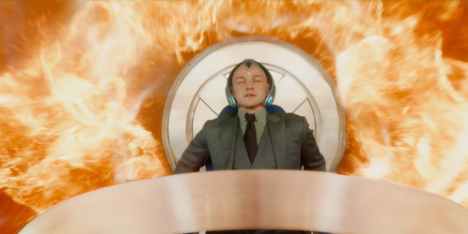
New Escapist Column! On “Dark Phoenix” Taking the X-Men Into the MCU…

I published a new In the Frame piece at The Escapist this evening. With New Mutants limping into cinemas this week and drawing the shutters down on the X-Men Cinematic Universe, it seemed like an appropriate opportunity to reflect on the dying days of a shared universe.

Dark Phoenix is not a great film by any stretch of the imagination, but it is a fascinating one. It is a movie that embodies the strange listlessness of the X-Men franchise in the wake of X-Men: Days of Future Past, reflecting on the failed attempt to turn the series into a generic superhero franchise in X-Men: Apocalypse. It is a movie about the nightmare of stripping out any sense of identity from the merry mutants and packaging them as conventional and straightforward superheroes.

You can read the piece here, or click the picture below.

New Escapist Video! Introducing “In the Frame”…

For about a year now, I have been writing the In the Frame column twice weekly at The Escapist on Mondays and Fridays. Today, we have a very special announcement. We are looking at launching a companion video series, In the Frame. Hopefully it’ll be releasing on Mondays, but you can get a sense of what we have planned by taking a look at the teaser below or watching the video here.

New Escapist Column! On The Riddler….

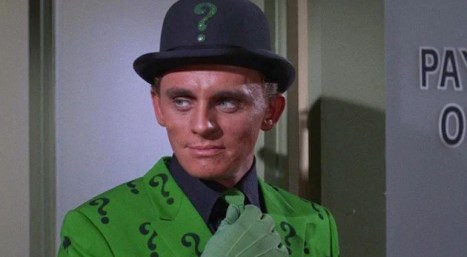
I published a new In the Frame piece at The Escapist this evening. With DC’s Fandome event unveiling a new trailer for The Batman at the weekend, it seemed like a good time to take a look the Riddler.

The Riddler is an interesting character for a number of reasons. He is considered one of the most iconic Batman villains out there, but he’s also a character who is difficult to write; who disappears for extended periods of the Caped Crusader’s history. His prominence is largely due to the work of actor Frank Gorshin in Batman!, but Gorshin’s performance has gone on to be hugely influential on later iterations of the Joker. As a result, the Riddler occupies a strange place. He is the ghost of Batman’s Silver Age, which makes him an interesting antagonist for the modern Dark Knight.

You can read the piece here, or click the picture below.