• Following Us

  • Categories

  • Check out the Archives


  • Awards & Nominations

New Escapist Video! “Free Guy – Review”

I’m thrilled to be launching movie reviews on The Escapist. Over the coming weeks and months, I will be joining a set of contributors in adding these reviews to the channel. For the moment, I’m honoured to contribute a three-minute film review of Free Guy, which is releasing theatrically in Europe and the United States this weekend.

“Stay Out of the Light”: The Black-and-White Morality of “Raiders of the Lost Ark”…

This August, the podcast that I co-host, The 250, is doing a season looking at all four Indiana Jones films as part of our “Indiana Summer.” Last week, we looked at Raiders of the Lost Ark, and I had some thoughts on the film.

Raiders of the Lost Ark is a film of stark contrasts.

This is true in a very literal sense. Director Steven Spielberg and producer George Lucas had envisaged the film as a loving homage to classic black-and-white film serials, so it only makes sense that cinematographer Douglas Slocombe would populate the film with shadows and silhouettes. Spielberg has talked about wanting “a much moodier, almost neo-Brechtian style of light and shadow for this film”, and it’s notable that the lead character’s costume design was intended to be “immediately recognisable in silhouette.”

While Raiders of the Lost Ark is a visually rich film saturated in deep colours and strong images, it is also a movie obsessed with light and shadow. Indiana Jones is first introduced literally stepping out of the shadows. “Stay out of the light,” he warns a companion during the film’s opening scenes. Many of the film’s most striking images – like Jones visiting an old flame or workers toiling in the desert – are shot to make use of shadow and silhouette.

After all, much has been made of Steven Soderbergh’s Raiders, an experimental edit of the movie that strips out all sound and colour to repurpose Raiders of the Lost Ark as a black-and-white silent film. Soderbergh did this in an effort to force the audience to “watch this movie and think only about staging”, drawing attention to how carefully constructed Raiders of the Lost Ark was as a piece of film. After all, the movie is arguably as pure a cinematic rollercoaster as ever existed, a triumph of pure filmmaking.

However, there’s something revealing in this sharp contrast – in the clear boundaries that Raiders of the Lost Ark draws between light and darkness in its cinematic storytelling. At its core, Raiders of the Lost Ark is a movie about good and evil at work in the world, and the movie is anchored in the belief that good will prevail and evil will be judged. It’s a fascinating film, one that provides an interesting contrast with Steven Spielberg’s later work at the turn of the millennium on projects like A.I. Artificial Intelligence, Minority Report, Munich and even Indiana Jones and the Kingdom of the Crystal Skull.

Raiders of the Lost Ark is a striking piece of cinematic mythmaking, one that feels very true to its time and one firmly anchored in its director’s sensibility.

Continue reading

New Podcast! The Escapist Movie Podcast – “The Suicide Squad Accomplishes Its Mission”

The Escapist have launched a movie podcast, and I was thrilled to join Jack Packard for the twenty-second episode of the year. With the release of The Suicide Squad on streaming and in cinemas, there was only one movie to discuss. The Suicide Squad was one of my favourite films of the year so far, so I was thrilled to geek out about it.

You can listen to back episodes of the podcast here, click the link below or even listen directly.

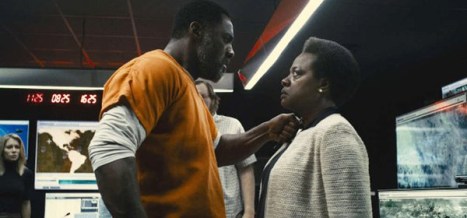
New Escapist Column! On How “The Suicide Squad” Deconstructs Amanda Waller…

I published a new In the Frame piece at The Escapist this evening. With the release of The Suicide Squad, it seemed like a good opportunity to take a look at one small-but-clever aspect of James Gunn’s superhero sequel.

The character of Amanda Waller is a pop culture archetype. She is an example of the ruthless intelligence operative who will cross whatever line it takes in pursuit of what she believes to be the greater good. Outside of comic books, one need only look at the character of Jack Bauer. Within the modern superhero landscape, the archetype is embodied by Nick Fury. These characters might be edgy or ambiguous, but they are also undeniably cool. Gunn’s approach to Waller in The Suicide Squad is interesting in large part because it rejects that idea of effortless cool in favour of something a lot blunter and more horrific.

You can read the piece here, or click the picture below.

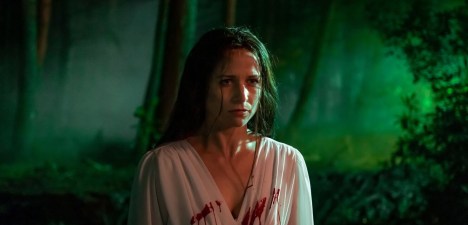
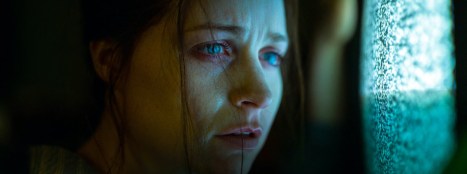
Non-Review Review: Censor

Censor is a love letter to the era of so-called “video nasties” and an exploration of the moral panic that tends to encompass discussions of the genre.

Niamh Algar plays Enid, the eponymous moral guardian with a traumatic back story who has committed herself to protecting the nation’s sanity by watching and rating the low-rent horrors flooding the market. Over dinner conversation, Enid takes offense when her mother asks if she has seen any good movies recently. “It’s not entertainment, Mam,” Enid snaps. “I’m protecting people.” It’s very clear that Enid believes this, taking meticulous notes and engaging in rigorous debates about exactly how much eye-gouging the public can tolerate.

The Green Night.

On the surface, Censor is a movie with a plot that loosely suggests something akin to Hardcore or 8mm. Throughout the film, hints are dropped about Enid’s traumatic past, including the mysterious disappearance of her younger sister while the two girls were playing together. When the latest film from a provocative auteur named Frederick North crosses her desk, Enid seems to recognise one of the on-screen victims. Is her sister still alive? Has she been swallowed by this world of exploitation horror cinema? More to the point, can Enid finally rescue her and bring her home?

The beauty of Censor lies in how co-writer and director Prano Bailey-Bond plays with this familiar set-up, building a movie around the idea that horror movies are a form of escapism for moral guardians as much as the intended audience, a space into which these people can project their own nightmares and anxieties without ever having to confront the reality of the world around them.

Signalling concern.

Continue reading

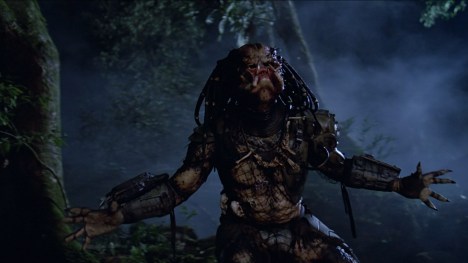
New Escapist Column! On the the Folly of Franchising the Predator…

I published a new In the Frame piece at The Escapist yesterday. With news that Dan Trachtenberg’s new Predator film might receive an edit for PG-13, it seemed like a good opportunity to take a look at the difficulty in trying to reshape the iconic eighties movie monster into a modern franchise.

The appeal of the Predator is very simple. It hunts. It’s a concept that is perhaps best suited to a mode of franchising that doesn’t really exist any more, a set of reasonably budgeted sequel films that swap out characters and locations while retaining the core concept. However, modern franchises demand more. They demand world building, mythology, scale, spectacle and a shared universe. There’s something absurd about trying to retroactively apply that to the Predator as a concept.

You can read the piece here, or click the picture below.

New Escapist Column! On Hollywood’s Next Franchising Trend, the “Requel”…

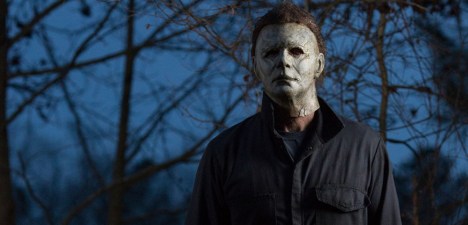
I published a new column at The Escapist today. The success of David Gordon Green’s Halloween and the announcement of his upcoming Exorcist trilogy seemed like a good time to discuss one of the more interesting modern trends in studio franchising: the rebooted sequel, or the “requel.” The idea is that if an original movie is iconic, but subsequent sequels have devalued the brand, the studio can just roll the franchise back to the earlier beloved film and effectively start franchising again from that point onwards.

It is a frustrating and unsettling trend that illustrates the cannibalistic feeding frenzy that is modern franchising. Hollywood has already franchised every viable property, but this approach allows studios a second (or third) bite of the apple by effectively erasing perceived mistakes and rolling the clock back to earlier and more nostalgia-friendly points in the shared continuity. It’s interesting to see this approach becoming increasingly mainstream.

You can read the piece here, or click the picture below.

New Escapist Column! On the “Jungle Cruise” and the Journey Into the Uncanny Valley…

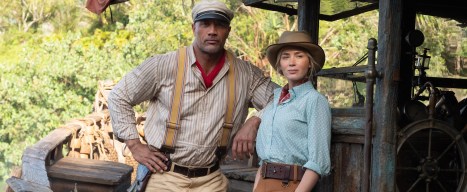
I published a new In the Frame piece at The Escapist this evening. With the release of Jungle Cruise this week, it seemed like a good opportunity to take a look at the Dwayne Johnson and Emily Blunt vehicle.

It isn’t particularly surprising that Jungle Cruise takes place in an unreal environment. After all, this is a feature film based on a theme park ride. However, it is striking how completely and how eagerly it rejects anything resembling reality. Jungle Cruise draws openly from films like The Mummy, The African Queen, Raiders of the Lost Ark, Romancing the Stone and Pirates of the Caribbean: The Curse of the Black Pearl, globe-trotting adventures that blend special effects with beautiful location work. In contrast, Jungle Cruise unfolds entirely within the hard drive of a computer.

You can read the piece here, or click the picture below.

New Escapist Video! “The Suicide Squad – Review”

I’m thrilled to be launching movie reviews on The Escapist. Over the coming weeks and months, I will be joining a set of contributors in adding these reviews to the channel. For the moment, I’m honoured to contribute a three-minute film review of The Suicide Squad, which is releasing theatrically in Europe this week and in cinemas and on HBO Max in the United States next weekend.

New Escapist Video! “Jungle Cruise – Review”

I’m thrilled to be launching movie reviews on The Escapist. Over the coming weeks and months, I will be joining a set of contributors in adding these reviews to the channel. For the moment, I’m honoured to contribute a three-minute film review of Jungle Cruise, which is releasing theatrically and on Disney+ Premiere Access this weekend.