• Following Us

  • Categories

  • Check out the Archives


  • Awards & Nominations

Annihilation – Vol. 1-3 (Hardcover) (Review/Retrospective)

This is the fifth in a series of comic book reviews that will look at the direction of Marvel’s mainstream shared universe over the past five or so years – primarily with a focus on The Avengers as they’ve been attempting to position the property at the heart of their fictional universe. With The Avengers planned for a cinematic release in 2012, I thought I’d bring myself up to speed by taking a look at Marvel’s tangled web of continuity. This is more of a tangential entry, though, as we’re going into space with marvel’s “cosmic” titles. But still, sometimes you need to go away to come back.

When people think of the Marvel crossover events of the past decade, they’ll name ones like Civil War or Secret Invasion or House of M. Very few will mention Annihilation, Marvel’s first big cosmic crossover event of the past ten years, but those few will generally speak quite highly of it.

The Silver Surfer goes for gold...

Continue reading

Is TV the Natural Medium of Comic Book Adaptations?

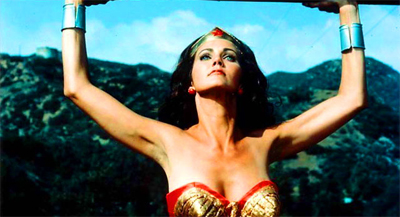
It recently surfaced that David E. Kelley (creator of Ally McBeal and The Practice) is working on a Wonder Woman television show. Presumably it will be somewhat less campy than the Linda Carter version. Last month news broke that there are plans for a television version of Neil Gaiman’s epic story The Sandman. Later this month we’re see the airing of a live action version of Robert Kirkman’s critically acclaimed zombie comic book The Walking Dead. Part of me wonders if this is the logical shift in the market. After all, comic books arguably have more in common with television than they do with movies. So is this the real future of these adaptations?

It's a Wonder we didn't think of this earlier...

Continue reading

Lex is More: Bringing Lex Luthor to the Screen…

I’ve been swamped with real-world work this week, so announcing that Zach Snyder would be directing the new Superman movie and that General Zod would be the primary bad guy on Monday (and a plot synopsis on Tuesday) really threw me for a loop. Anyway, I cobbled together some thoughts on bringing Superman to the big screen. I’ll hopefully have some more general thoughts early next week.

Lex Luthor shouldn’t be so hard to get right on the big screen. I mean, it’s not from lack of trying. The character is more than just Superman’s arch-enemy, he’s a member of his supporting cast. More than the Joker to Batman, Luthor is inexorably linked to the Man of Steel – no matter which enemy is invading Metropolis, Luthor is usually helping them or hindering them or figuring out a way to turn the events to his advantage. As such, he has appeared in all but one of the live action Superman films released over the past three-and-a-half decades, even where he isn’t the main adversary (as in Superman II, where he attempts to manipulate Zod’s vendetta against Superman). And yet, despite being portrayed by two incredibly talented actors – Kevin Spacey and Gene Hackman – the big screen never managed to essence of Luthor’s character. Zack Snyder was earlier this week named director of the Nolan Superman reboot, and although General Zod was named the villain of the film I’d be fairly certain that Luthor will put in an appearance. So, how do you do Lex Luthor right?

Green there and done that?

Continue reading

Civil War (Review/Retrospective)

This is the fourth in a series of comic book reviews that will look at the direction of Marvel’s “Avengers” franchise over the past five or so years, as they’ve been attempting to position the property at the heart of their fictional universe. With The Avengers planned for a cinematic release in 2012, I thought I’d bring myself up to speed by taking a look at Marvel’s tangled web of modern continuity. Get an overview of what I’m trying to take a look at here.

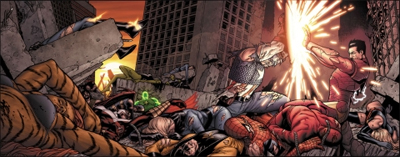
Civil War was Marvel’s big event of 2006-7, and – as this lovely deluxe edition loves to remind you – it was “the industry’s best selling series in over a the decade”. The premise of the series is straight-forward enough – it’s a conflict between the heroes of the Marvel Universe (it’s all there in the title) – and perhaps that is the reason that the series has arguably had more crossover mainstream appeal than the vast majority of comic book crossovers. Marvel have produced a lovely deluxe hardcover which contains just about everything you could possibly want from the event, it’s just a shame I’m not overly impressed by the event itself.

I'm sure we can iron this out...

Continue reading

House of M (Review/Retrospective)

This is the third in a series of comic book reviews that will look at the direction of Marvel’s “Avengers” franchise over the past five or so years, as they’ve been attempting to position the property at the heart of their fictional universe. With The Avengers planned for a cinematic release in 2012, I thought I’d bring myself up to speed by taking a look at Marvel’s tangled web of continuity. Get an overview of what I’m trying to take a look at here.

The X-Men represent the oddball of mainstream superhero comic books. In a genre and medium dedicated offering a static setup – things never really change or resolve – the X-Men are built upon the very idea of evolution. The whole basis of the franchise is the pursuit of equality by the genetically distinct mutant population, the idea that they and mankind can grow together. It has even been frequently suggested that these super-powered individuals represent out future or our replacements. However, the only way to actually tell a story like that is to follow it through to its logical conclusion – to let the ball roll and to let the world change. It feels a little counterproductive for Charles Xavier and his students to still be fighting for the same rights as everyone else nearly fifty years on – it might even seem a little stale. Grant Morrison’s superb New X-Men run offered a solution of sorts – it gave us a world where humanity would be extinct in a couple of generations and showed the growth and relationship between human and mutant subculture. Gone was the minority struggling against an oppressive majority – a more complex example of race relations had come into play with “mutant music” and “mutant slang” making their impression on the youth, amid a silent and almost invisible middle-class backlash. This was an ingenious approach which demonstrated the relevance of the franchise. Unfortunately, Marvel were not quite pleased with this – some people even, ridiculously, accused Morrison of telling all the remaining X-Men stories – and decided to set things right. They did that through House of M.

Dive in...

Continue reading

Planet Hulk (Review/Retrospective)

This is the second in a series of comic book reviews that will look at the direction of Marvel’s “Avengers” franchise over the past five or so years, as they’ve been attempting to position the property at the heart of their fictional universe. With The Avengers planned for a cinematic release in 2012, I thought I’d bring myself up to speed by taking a look at Marvel’s tangled web of continuity. We’re taking a bit of a detour this week, but it’ll feed into Marvel’s event-driven central narrative fairly shortly. Get an overview of what I’m trying to take a look at here.

Finally. Hulk knows who to smash.

– Hulk, less than ten pages into the event

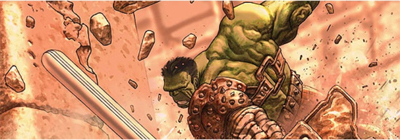
Planet Hulk is perhaps a prime example of the type of event-driven storytelling that has become increasingly common at Marvel in recent years. It isn’t really an event of itself, but there’s a strong smell of editorial mandate behind the plot. The key objective – and one conceded by the powers that be – was to isolate the Hulk character from the greater Marvel Universe during the Civil War event (which he would arguably have considerably complicated) and position him for the follow-up event World War Hulk. As such, exiling the Hulk to a foreign planet and watching him play out his own version of Gladiator isn’t exactly the most fluid storytelling direction. However, it’s to the credit of author Greg Pak that the story works as well as it does.

A smashing good time...

Continue reading

Brian Michael Bendis’ Avengers – New Avengers Vol. 1-2 (Hardcover) (Review/Retrospective)

This is the first in a series of comic book reviews that will look at the direction of Marvel’s “Avengers” franchise over the past five or so years, as they’ve been attempting to position the property at the heart of their fictional universe. With The Avengers planned for a cinematic release in 2012, I thought I’d bring myself up to speed by taking a look at Marvel’s tangled web of continuity. Get an overview of what I’m trying to take a look at here.

Alright. I figure I sound a bit hypocritical complaining about the impact of big events on Marvel’s storytelling continuity without reading said big events. Well, actually, I don’t think I’m a hypocrite – I think it’s perfectly reasonably that a reader should be able to pick up Ed Brubaker’s Captain America without having to worry about Mark Millar’s massive Civil War crossover which they either don’t know enough to care about or know enough not to care about. However, I feel like maybe – just maybe – I should try to ride this “cross-continuity” thing out just once and see if the story somehow justifies the damage it causes to the cohesion of individual runs.  Yes, I’m going to jump head-first into the event-populated minefield of continuity which is recent Marvel history, and I will be using New Avengers as a checklist to that. I’m going down the rabbit hole, following the arc from Civil War through to Siege.

Sentry is responsible for the Carnage in this run...

Continue reading

Batman: Arkham Asylum – A Serious House on a Serious Earth

Batman’s not afraid of anything.

It’s me. I’m afraid.

I’m afraid that the Joker might be right about me. Sometimes… I question the rationality of my actions. I’m afraid that when I walk through those asylum gates… When I walk into Arkham and the doors close behind me…

It’ll be just like coming home.

– Batman explains his unease at going into Arkham Asylum to Jim Gordon

I have to admit, I was somewhat surprised to hear recently that Grant Morrison’s Arkham Asylum is a somewhat “divisive” book. It is, one hand, highly critically praised and the best-selling graphic-novel of all time, yet Morrison scholars are quick to describe it as “much maligned”. I’ll admit that I took my time getting around to reading it – partially due to the fact that DC refused to keep the hardcover in print – but I eventually buckled and got myself the softcover 15th Anniversary Edition. What I found was one of the most densely challenging, cleverly constructed and brilliantly gothic depictions of the Dark Knight I have ever encountered (indeed, it might even be “simply the most” rather than a safer “one of the most”). It’s beautiful, it’s dark and it’s tough – but it’s also immensely rewarding. Come with me into the Asylum.

Batman comes home…

Continue reading

Geoff Johns’ Run on The Flash – Wonderland, Blood Will Run & Iron Heights

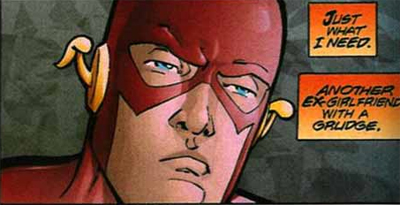
Geoff Johns is pretty much on top of the world. He’s a renowned comic book writer, who has got to work on all his favourite childhood properties – in many cases making them as popular as they’ve been in decades. He’s in charge of DC’s multimedia approach – he’s the guy in charge of the movies and television shows based around the iconic properties. Without his work on the character, next year’s Green Lantern movie wouldn’t be happening. And yet he had to begin somewhere. Although it doesn’t represent his earliest work in comics by a long stretch, in 2000 he took over as writer on The Flash. Despite a string of solid work behind him – and a really successful run for Mark Waid on the title – it was this creative pairing which would arguably propel both writer and character into the spotlight like never before. A decade later, Johns has returned to the book which made him famous, so I think it’s time to begin a trip down memory lane.

Wally's going to have to think fast...

Continue reading

Wednesday Comics: Metamorpho

Earlier this week I reviewed Wednesday Comics, a rather spanking anthology from DC Comics. I kinda figured, however, it might be worth my while to break out some of those fifteen stories on their own (but not all of them) and discuss them, as it’s easy to lose sight of a particular writer/artist’s work in an anthology. And hey! It’s Neil Gaiman!

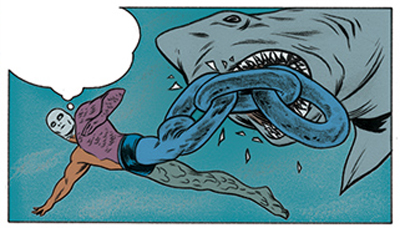
Good old Metamorpho. If ever there was a cult DC property, good old Rex Mason would be in the running. He isn’t exactly the highest profile name in the DCU – he’s not even B- or C-List (which makes it hilarious when this script introduces us to “the Metamorpho Fans of America”, followers of “the most popular comic book in America”, and he even has his own TV show). But those who know him love him and his basic concept – he “can transform himself into 94 elements!” – is wonderfully hokey. Hokey enough, perhaps, that he seems a perfect fit for the conscious throwbacks of Wednesday Comics. Indeed, that this was the character writer Neil Gaiman and artist Michael Allred chose to work on shouldn’t really be a surprise, nor should the fact that it’s one of the very few strips in the collection which boldly experiments with the format.

That shark needs a fast food chain...

Continue reading