• Following Us

  • Categories

  • Check out the Archives


  • Awards & Nominations

Geoff Johns’ Run on Green Lantern – Brightest Day (Review)

It must be difficult to follow an absolutely huge event like Blackest Night, which cemented Green Lantern as one of DC’s largest franchises (perhaps second only to the Batman books under Grant Morrison). After all, the gigantic crossover was the culmination of over five years of work by architect Geoff Johns, and it might have been easy for the writer to pack it all in and call it a day. However, he didn’t. This collection, covering the entire New Guardians story arc, is very clearly a bridge between two big Green Lantern events – Blackest Night and War of the Green Lanterns. It also works a launching pad for a whole host of other titles, from Brightest Day to Emerald Warriors to Green Lantern Corps. However, the collection works at its very best when it is smaller in scope, and more intimate – when it pauses to wonder what happens to a world-saving superhero when the heat of the great big galactic threat has passed.

Hal's still got really poor self-image...

Continue reading

Absolute Crisis on Infinite Earths (Review/Retrospective)

This January, I’m going to take a look at some of DC’s biggest “events.” This week I’ll be taking at the event that started it all, Marv Wolfman and George Pérez’s Crisis on Infinite Earths, reprinted in DC’s oversized and slipcased Absolute line.

It’s interesting to reflect on Crisis on Infinite Earths, more than a quarter of a century after the twelve-issue maxi-series was published. In the time since, it seems like the editorial purpose driving the event – the desire to “simplify” DC’s tangled and messed continuity into one single and unified history by abolishing the myriad of alternate continuities – has been somewhat undone with the return of the multiverse in 52 and Final Crisis, but this arguably allows Wolfman and Pérez’s epic to be considered on its own merit. Although the series might not be as important as it once was in explaining the sometimes bizarre way that all of DC’s published line fit together, I think you can still see a huge influence of this crossover in the stories that the authors at DC are telling, and how they approach them.

Holding out for some heroes...

Continue reading

Brightest Day (Hardcover Vol. 1-3) (Review/Retrospective)

This January, I’m going to take a look at some of DC’s biggest “events.” This one’s not so much an “event” as a bi-weekly miniseries, but let’s count it anyway…

Balancing the internal storylines is a tough task for any anthology, especially one running over the course of an entire year. In this respect, 52 feels like the exception rather than the rule. It’s a fairly fundamental problem with Brightest Day that not all of the plotlines are interesting (and certainly not all of the time). It’s a rather strange phenomenon: the early issues try to balance the characters somewhat evenly across the issues, and feels somewhat awkward in trying to devote an equal amount of space to stories that aren’t equally compelling; on the other hand, the second and final thirds seems more comfortable devoting large stretches of single issues to certain characters (and to have other members of the ensemble go unheard from for issues at a time), which has the bizarre effect of meaning that a cliffhanger or two isn’t picked up for two or three chapters. It’s a tough balance to get right, and I’m sad to say that Brightest Day doesn’t acquit itself particularly admirably. It’s a shame, because there are some interesting ideas here.

Everything burns...

Continue reading

Alan Moore’s Run on Swamp Thing – Saga of the Swamp Thing (Books #5-6) (Review/Retrospective)

This January, I’m going to take a look at some of DC’s biggest “events.” You can probably guess which event I’m leading into, but I don’t want to spoil it…

Alan Moore’s Swamp Thing is a run to treasure. I mean, I’m looking forward to getting my hands on Scott Snyder’s new run on the character, especially since DC have decided to release it in hardcover, but Moore’s Swamp Thing remains one of Moore’s longer runs in mainstream comic books, demonstrating that it is possible for an extended in-continuity run on a (relatively) mainstream character to still transcend the expectations of the superhero genre. The eighties were full of fascinating creative ideas in comics, both in miniseries, independent and mainstream books, but I’d still argue that Moore’s Swamp Thing is remarkable due to its work redefining the superhero genre and its impressive length.

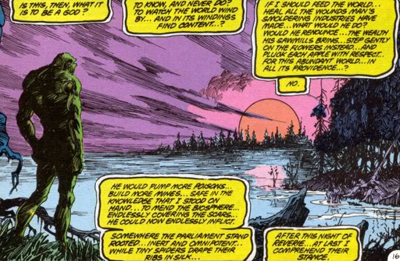
Into the sunset...

Continue reading

Alan Moore’s Run on Swamp Thing – Saga of the Swamp Thing (Books #3-4) (Review/Retrospective)

This January, I’m going to take a look at some of DC’s biggest “events.” You can probably guess which event I’m leading into, but I don’t want to spoil it…

I have never read Swamp Thing before. This trip through these lovely (but sadly not oversized or filled with extras) hardcover editions of Alan Moore’s iconic run on the title has been my first encounter with the character. This is Moore’s longest tenure on a mainstream comic book, and the one which introduced him to the mainstream. What’s astounding here is not only how Moore manages to offer something which still stands up as something unique and challenging, but also offers a fairly exciting and well-written book on his own terms.

I have a burning desire to read more...

Continue reading

Brad Meltzer’s Run on Justice League – The Lightning Saga (Review/Retrospective)

This January, I’m going to take a look at some of DC’s biggest “events.” This week I’ll be taking a look at Brad Meltzer’s impact on the DC universe. This is a crossover with Geoff Johns’ second run on Justice Society of America.

I can’t help but feel like having Brad Meltzer write this Justice League was a huge waste of what could have been a very impressive run. After all, Meltzer is a big novelist, and turning his attention to DC was a big deal at the time. More than that, though, it seemed like a move that could have pushed the Justice League very much to the fore. Imagine a team of DC’s most iconic properties, helmed by a respected and successful author, and sold outside of comic book stores. Imagine the trade paperback possibilities – I imagine there’s potential to get a Brad Meltzer Justice League book into the hands of somebody who has never read comic books before, and that’s got to be a win. Indeed, the book seems to acknowledge that by advertising a foreword by Patton Oswalt on the front page – it screams “mainstream! mainstream!” Unfortunately, though, it’s the only aspect of this crossover that does, leaving me with only a faint taste of what might have been. It’s not that it’s bad – it’s that it could have been so much better.

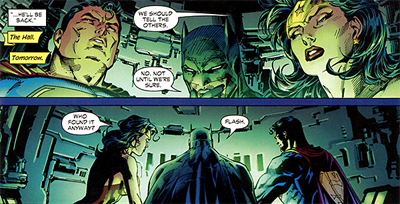
The whole trinity...

Continue reading

Brad Meltzer’s Run on Justice League – The Tornado’s Path (Review/Retrospective)

This January, I’m going to take a look at some of DC’s biggest “events.” This week I’ll be taking a look at Brad Meltzer’s impact on the DC universe.

Justice League has always been a bit of a funny little book. The concept is so straight-forward that you’d imagine it would be quite difficult to muck up. After all, it’s a series about DC’s most powerful and iconic heroes teaming up to do impossibly cool stuff and to look good while doing it. DC has been doing this long enough to have an idea of what works on the title and what doesn’t. While Justice League International has its fans, it’s hard to argue that the appeal of the Justice League wasn’t encapsulated by Grant Morrison’s hugely successful nineties run. As such, putting the big characters back on the title shouldn’t seem like a big event of itself – it should be the default setting. So it always seems to me a bit strange when DC relaunch the series with a big name writer and the iconic line-up, only for editorial to inevitably screw things up down the line.

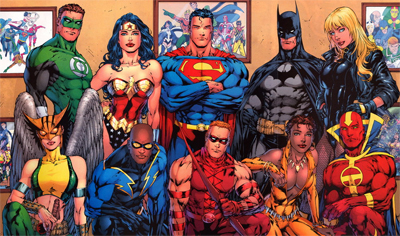
Team photo...

Continue reading

Absolute Identity Crisis (Review/Retrospective)

This January, I’m going to take a look at some of DC’s biggest “events.” This week I’ll be taking a look at Brad Meltzer’s impact on the DC universe.

Identity Crisis is the first in the trilogy of stories that built off the original Crisis on Infinite Earths to offer a fairly significant reevaluation of the modern DC universe, examining where the characters and the fictional landscape was as compared to where it had been decades before. I’ve argued that Marvel went through a similar period of introspection from House of M through to Siege, but DC seemed to engage with the concept on a more direct level. Written by best-selling novelist Brad Meltzer, Identity Crisis is an attempt to explore the rather fundamental changes that occurred in superhero comics during the nineties, often as a direct response to The Dark Knight Returns or Watchmen, giving us a more cynical depiction of the concepts and characters that we take for granted. It’s controversial – as any similar reimagining would be – and, to be frank, it’s a bit of a mixed bag.

However, it’s always fascinating, even if it is grimly so.

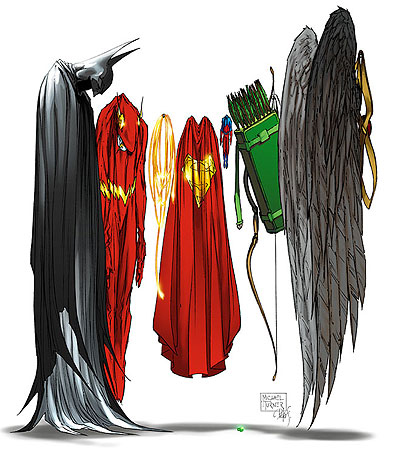
Time to hang it up?

Continue reading

Flashpoint (Review)

This January, I’m going to take a look at some of DC’s biggest “events.” I’ll be starting with the most recent one, Flashpoint, following a week full of Flash stories.

Our world is in a violent transition of great change.

– President Obama tells us how it is

I really liked Flashpoint. I liked Flashpoint almost as much as I enjoyed Blackest Night, and far more than I enjoyed most big blockbuster “event” comic books. I think that Flashpoint buckles under the weight of the relaunch that followed – I find it quite sad that so many fans initially ignored the event only to jump on at the last minute because it was “suddenly important.” Does Flashpoint offer a fitting send-off to a version of the DC shared universe that dates back to Crisis on Infinite Earths? It doesn’t really, even if it offers some compelling arguments in favour of the relaunch that followed. Still, it’s a fascinating story about the icons who populate this shared universe, and what makes these enduring characters such heroic figures. Or, rather, what doesn’t make them heroic figures.

Flash sideways…

Continue reading

Geoff Johns’ Run on The Flash – The Dastardly Death of the Rogues & The Road to Flashpoint (Review)

This January, I’m going to take a look at some of DC’s biggest “events.” I’ll be starting with the most recent one, Flashpoint, following a week full of Flash stories.

It’s hard not to look at Geoff Johns’ return to The Flash and wonder what might have been. After all, his original run solidified Johns as a talent to watch in the superhero field, fed into his iconic Green Lantern run and paved the way to his ascent up the DC food chain. And it’s quite clear that DC were putting a lot of energy into pushing The Flash as the next “breakout franchise”, clearly hoping that Johns could find an angle on the character and mythos that would push the book up the sales charts to match the Batman and Green Lantern franchises. That obviously didn’t happen, but it feels like a shame because it very nearly could have happened, had things gone a little differently.

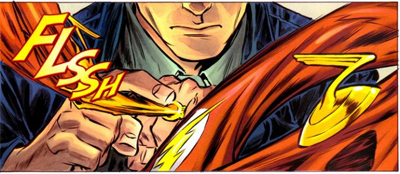
Flash! A-ha! He saves every one of us!

Continue reading