












This August (and a little of September), we’re taking a trip back in time to review the second season of The X-Files. In November, we’ll be looking at the third season. And maybe more.
No matter how you cut it, the creative team of Stefan Petruscha and Charles Adlard were prolific. The duo only worked on The X-Files comics book for seventeen months between January 1995 and May 1996, but they put out a phenomenal amount of work. On top of sixteen issues of the monthly series, there were also two digests, a number of short stories and an annual. In most cases, some of this work would be outsourced to another creative team, but Petrucha and Adlard remain the creative team for Topps’ X-Files comic.
While this undoubtedly required a great deal of creative energy from Petrucha, churning out scripts on a regular basis, it is worth pausing to praise artist Charles Adlard. These days, for a variety of reasons, it seems that major comic book artists have difficulty producing twelve twenty-odd-page issues in a year. Not only was Adlard able to meet that objective, he was able to do that while drawing a large volume of supplementary material, including this feature-length annual.
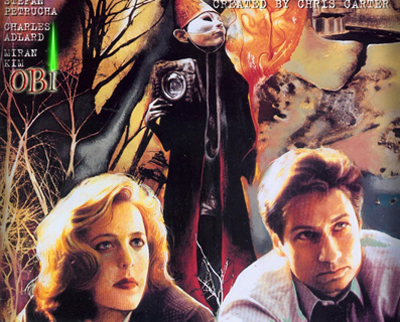
All about Eve…
It’s remarkable how consistent it all is. One of the advantages of a tie-in comic book with a steady creative theme is that there’s a much clearer authorial voice. Although Chris Carter oversaw the production of The X-Files, the demand of weekly network television mean that some episodes got more attention than others, and that particular voices tend to shine through. Darin Morgan writes his own version of The X-Files, as do Glen Morgan and James Wong or Howard Gordon or Vince Gilligan. (This isn’t a bad thing, by the way.)
On a comic, with all the issues written by the same author and illustrated by the same artist, there is a bit more consistency. Even though Hallow Eve is a stand-alone one-shot story that exists quite separate to Petrucha and Adlard’s twelve-issue meta-arc, it fits quite comfortably with their themes and subtexts. It’s an episode about history and memory, and perception and reality.

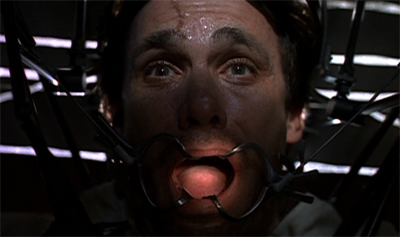
Shocking…
Filed under: Comics, The X-Files | Tagged: Charles Adlard, eve, faith, ghosts, history, memory, mitochondrial eve, mulder, rational, religion, scully, Stefan Petrucha, the x-files, Topps, x-files | 2 Comments »








 the m0vie blog
Star Trek: Deep Space Nine – Equilibrium (Review)
The September and October, we’re taking a look at the jam-packed 1994 to 1995 season of Star Trek, including Star Trek: Deep Space Nine and Star Trek: Voyager. Check back daily for the latest review.
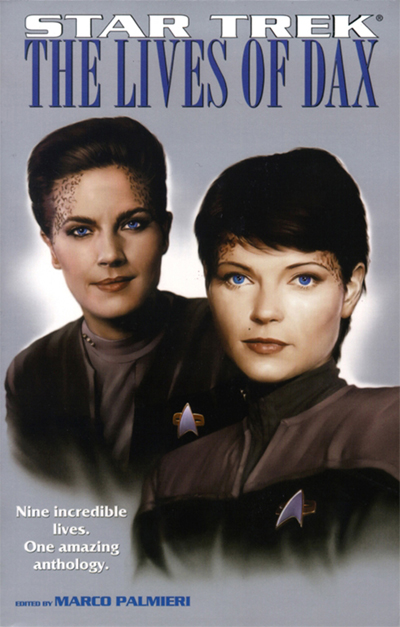
Equilibrium is another troubled Dax episode. Dax is probably the hardest character on the Star Trek: Deep Space Nine cast to write for, if only because of the character’s central premise. “Well-adjusted functionally immortal alien slug inside a young woman’s body” is a nice character description, but it’s hard to ground a character-driven story in that. It’s tempting just to turn the Dax symbiote into a convenient macguffin that can drive various plots.
To date, Playing God is really the only Dax-centred episode of Deep Space Nine that has placed the emphasis on Jadzia rather than the slug inside here. (Although Blood Oath did at least try to deal with how a current Trill host deals with obligations incurred by past lives.) In Dax, the symbiote was a gateway to a pretty conventional and generic murder mystery story. In Invasive Procedures, the symbiote was something particularly valuable to be stolen and exploited.
The biggest problem with Equilibrium is that – like Dax and Invasive Procedures before it – the episode uses the Dax symbiote as a springboard to a story that is more driven by Sisko and Bashir than it is by Jadzia Dax. While Equilibrium does have a great hook and some biting social commentary, Dax feels more like a plot point than a character in her own right.
Shocking behaviour…
Continue reading →
Filed under: Deep Space Nine | Tagged: 1994, 1995, america, Anger, bitterness, class, Dax, deep space nine, ds9, ennui, equilibrium, reflection, René Echevarria, ron moore, social commentary, Trill | 5 Comments »