• Following Us

  • Categories

  • Check out the Archives


  • Awards & Nominations

Doctor Who: Last Christmas (Review)

There’s a horror movie called Alien? That’s really offensive. No wonder everyone keeps invading you.

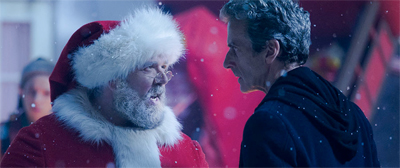
Last Christmas is perhaps the most Moffat-esque Christmas Special of the Moffat era.

As such, it is an episode that will inevitably provoke a strong reaction, playing as it does to the writer’s strengths and interests in Doctor Who. As a show, Doctor Who has a long history of crashing genres into one another. One of the most endearing aspects of the show is the way that it can be a completely different show from week to week. One week, it is a western; the next, it is a horror film. One episode is a period adventure; another is a science-fiction comedy. Doctor Who is a show about a mad man in a box who crashes into random stories.
doctorwho-lastchristmas4

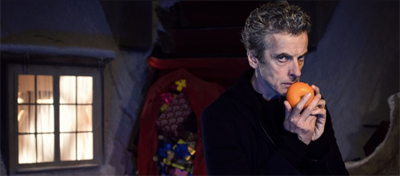
Last Christmas is quite overt about this. When Shona wakes up towards the end of the episode, we are treated to a glimpse of her “to do” list for Christmas Day, which happens to feature a variety of clear influences on the episode. Strangely, she plans to open her Christmas Day binge with a double-bill of Alien and The Thing From Another World, before taking a breather and returning for Miracle on 34th Street – you really do need a bit of space before properly digesting the truly heavy stuff. (She’s also marathoning the Hugo-winning Game of Thrones.)

Last Christmas is a story that is incredibly (and almost cheekily) aware of its own fictionality. As with so much of Moffat’s Doctor Who, it is a story about stories. And dreams, which are really the same thing. “Time travel is always possible in dreams,” the Doctor observes, to borrow a quote from The Name of the Doctor. Dreams and stories.
doctorwho-lastchristmas Continue reading

Star Trek – The Immunity Syndrome (Review)

The first Star Trek pilot, The Cage, was produced in 1964. To celebrate its fiftieth anniversary, this December we are reviewing the second season of the original Star Trek show. You can check out our first season reviews here. Check back daily for the latest review.

The Immunity Syndrome is an underrated masterpiece, the first genuine classic overseen by producer John Meredyth Lucas.

It is bold, brilliant and more than a little bit weird. This is Star Trek as pure sixties science-fiction. It is a psychedelic ecological tale focused on mankind’s place in the larger universe. It doesn’t just pit the Enterprise against a giant space amoeba, it suggests that the universe itself is a singular gigantic organism, a complex system in which the Enterprise is just one part. The Immunity Syndrome is weird and wonderful, eerie and beautiful in equal measure. It is one of Star Trek‘s most effective encapsulations of the sixties.

Freak out!

Freak out!

Continue reading

Star Trek – The Galactic Whirlpool by David Gerrold (Review)

The first Star Trek pilot, The Cage, was produced in 1964. To celebrate its fiftieth anniversary, this December we are reviewing the second season of the original Star Trek show. You can check out our first season reviews here. Check back daily for the latest review.

David Gerrold is one of the very few Star Trek writers to become an established science-fiction writer after his work on the television show.

Sure, writers like Ronald D. Moore and Brannon Braga have continued to work in genre television and film, but Gerrold is unique in that he has built up a reputation as a formidable science-fiction novelist. “By any reasonable definition David Gerrold is a major figure in science fiction,” the New York Times has argued. It seems hard to disagree. If Roddenberry had produced Star Trek a decade or so later, he may have been approaching David Gerrold the same way he approached Ray Bradbury or Theodore Sturgeon.

Gerrold joined the writing staff in the second season of Star Trek, following a number of failed pitches. The writer managed to sell The Trouble With Tribbles, which became one of the most iconic and memorable Star Trek episodes ever written. He was such a success that he was drafted in to punch up I, Mudd – the script going into production before The Trouble With Tribbles. Gerrold would hang around for the third season of the show and would become one of the defining voices on Star Trek: The Animated Series with D.C. Fontana.

galacticwhirlpool

Gerrold remained busy in the long gap before Star Trek: The Next Generation, writing a string of well-regarded one-off science fiction novels in the seventies; however, perhaps his best-known work in the interregnum was The War With the Chtorr, his series of novels documenting an alien invasion of Earth. When he fell out with Gene Roddenberry over the production of The Next Generation, Gerrold would launch his popular Star Wolf series – a bunch of novels adapted from a television pitch that feel very much like his vision of The Next Generation.

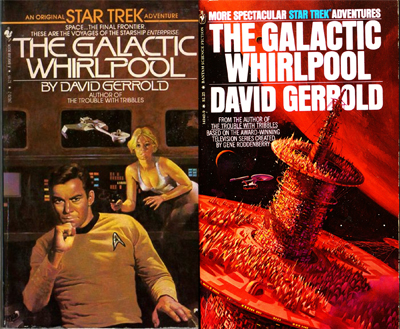
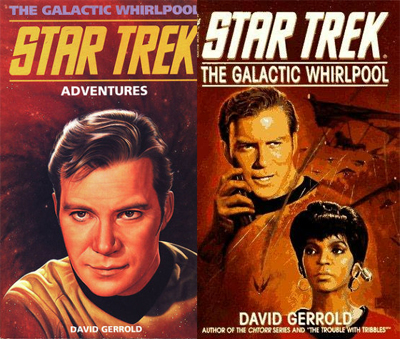
However, despite this success outside Star Trek, Gerrold remains quite attached to that massive shared universe. Indeed, he recently adapted his own infamously lost Next Generation script – Blood and Fire – for Star Trek: Phase II. However, this was not Gerrold’s first “non-televised” piece of Star Trek. The author was responsible for The Galactic Whirlpool, the fourteenth Bantam Star Trek novel published in 1980. The novel was published shortly before the license was handed over to Pocket Books, and is a remarkable accomplishment.

galacticwhirlpool2 Continue reading

My 12 for ’14: Dawn of the Planet of the Apes and Talkin’ ‘Bout a Revolution…

With 2014 coming to a close, we’re counting down our top twelve films of the year. Check back daily for the latest featured film.

The world has always seemed like it was on the cusp of something – like there was a powder keg ready to errupt. The infamous “doomsday clock” has never been further than seventeen minutes from midnight, and – outside of that brief moment of post-Cold War euphoria – mankind has always been living within a quarter-of-an-hour from the end of existence as we know it. Nuclear weapons. Global warming. Biological warfare. Economic collapse. All possible world-enders.

The new millennium has been dominated by the threats of terrorism and of global warming, unconventional opponents that can difficult to engage. However, 2014 brought its own particular brand of uncertainties and discomforts. In February, a revolution in the Ukraine sparked a political crisis in Europe, pushing Russia to loggerheads with Europe and the United States. Since August, Ferguson has been simmering away, the imagery of the protests burnt into the collective unconscious. The Syrian Civil War has faded from the front pages.

dawnoftheplanetoftheapes11

The word “revolution” seemed to simmer away in the background, with certain young activists actively travelling to Ferguson in search of their own revolution. Writing in Time magazine, Darlena Cunha compared the trouble in Ferguson to the civil unrest which gave rise to the American Revolution. Demonstrating no shortage of self-importance, actor and comedian Russell Brand published his own manifesto – helpfully titled Revolution – in whish he pledged to lead a global revolution.

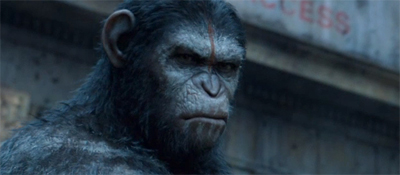
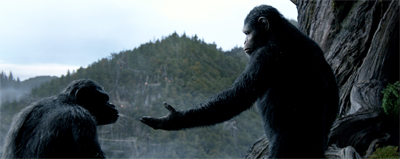
“The revolution can not be boring,” Brand advised readers. They seldom are. Revolutions are typically bloody, brutal, violent, horrific. There is a reason that wars of independence tend to be followed by civil wars and internal strife. Although the idea of revolution holds a romantic allure, history demonstrates that revolutions seldom help those most in need of assistance. “Meet the new boss,” the Who teased on Won’t Get Fooled Again, “same as the old boss.” Dawn of the Planet of the Apes is a harrowing and compelling exploration of revolutionary bloodshed.

dawnoftheplanetoftheapes3 Continue reading

Star Trek – Obsession (Review)

The first Star Trek pilot, The Cage, was produced in 1964. To celebrate its fiftieth anniversary, this December we are reviewing the second season of the original Star Trek show. You can check out our first season reviews here. Check back daily for the latest review.

The Star Trek franchise really does like Moby Dick, doesn’t it?

The show had done its first appropriation of Herman Melville’s iconic story of obsession and revenge earlier in the second season with The Doomsday Machine. In that episode, Commodore Decker sought to avenge the loss of his crew upon an unstoppable planet-killing machine. However, the basic formula quickly worked its way into the franchise’s blood. Obsession casts Kirk in the role of Ahab, albeit with a radically different ending and tone. After all, it is very cast Ahab as the heroic lead of a weekly television show.

"It's behind you!"

“It’s behind you!”

Star Trek II: The Wrath of Khan would return to Moby Dick for inspiration. Khan would even paraphrase from the book, without a hint of self-awareness or irony. After that point, it seemed like the franchise was more interested in mimicking the themes of The Wrath of Khan , which inevitably meant carrying over the themes of Moby Dick as well. Nevertheless, Star Trek: Voyager did its own variant of Moby Dick in Bliss and Star Trek: First Contact would reference the book directly.

Obsession is a competent if unspectacular episode, one that suffers from the fact that it has been done better and more compellingly in recent memory. However, given all the changes taking place behind the scenes, Obsession flows surprisingly well.

It really sucks to be a red shirt, eh?

It really sucks to be a red shirt, eh?

Continue reading

Star Trek: Alien Spotlight – Tribbles (Review)

The first Star Trek pilot, The Cage, was produced in 1964. To celebrate its fiftieth anniversary, this December we are reviewing the second season of the original Star Trek show. You can check out our first season reviews here. Check back daily for the latest review.

There is something delightfully gonzo about trying to write a comic book from the perspective of a bunch of Tribbles.

IDW’s Alien Spotlight series did not always work as well as it might, but the delightful done-in-one format of stand-alone stories told from the perspective of iconic Star Trek aliens allowed for a bit more versatility and flexibility than the line was normally afforded. Alien Spotlight: Cardassians was set after the end of Star Trek: Deep Space Nine. Alien Spotlight: Borg featured a delightfully clever logical paradox and a Borg invasion. Alien Spotlight: Klingons allowed Keith R.A. DeCandido to work his magic with the Klingons. Alien Spotlight: Romulans served as a springboard for John Byrne towards his Romulans saga.

You think you've got tribbles?

You think you’ve got tribbles?

There were more than a few disappointments along the way, but the Alien Spotlight series stands as one of the highlights of IDW’s Star Trek licensing. Alien Spotlight: Tribbles is a very odd piece of work. It is the kind of high-concept story that might feel like a gimmick and feels stretched over a single issue, let alone an arc. However, it is just silly enough that it works. Telling the story of a conflict between a bunch of Klingons and a human freighter crew through the eyes of the Tribbles is a fascinating idea.

While there is a sense that writer Stuart Moore occasionally has to stretch to get the story to where it needs to go, but Alien Spotlight: Tribbles is a delightfully charming (if perhaps a little too light) Star Trek diversion.

Laugh it up, fur ball...

Laugh it up, fur ball…

Continue reading

My 12 for ’14: Locke and mad roads driving men ahead…

With 2014 coming to a close, we’re counting down our top twelve films of the year. Check back daily for the latest featured film.

On paper, Locke seems like an incredibly indulgent high-concept. Tom Hardy drives a car for an hour-and-a-half? He is the only actor who actually appears in the film? He spends most of the runtime on his mobile phone, rather than listening to his own preselected mix tape? Writer and director Steven Knight could at least throw in a sense of imminent danger. After all, Phone Booth had police cars and a sniper; Cellular had Chris Evans running around a lot; Grand Piano had… well, a grand piano.

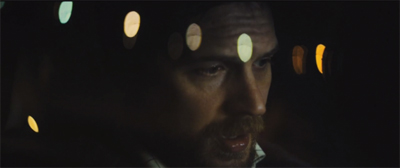
However, Locke works beautifully. There are a lot of different reasons for the film’s success, but Steven Knight deserves a great deal of the credit as writer and director. The highest stakes in Locke are those furthest from the protagonist; the birth he is racing towards, the family he is racing away from, the construction job he has abandoned. We never leave the car. We experience those moments of tension and dread and anxiety and uncertainty right along with Ivan Locke. There is nothing to see beyond the lights of the car on the road, nothing beyond the disconnected voices on the other end of the line.

locke4

It takes a very singular vision to get a story like that to screen. Knight has enjoyed a long career as a writer for the screen. Most recently, Knight wrote Peaky Blinders for the BBC, a stylish crime drama set in twenties Birmingham starring Cillian Murphy. His theatrical scripts are of a similarly high caliber, including Dirty Pretty Things and Eastern Promises. However, Locke marks only the director’s second time behind the camera for a theatrical release. The result is staggeringly confident.

Locke is a movie that could easily have collapsed in on itself. Avoiding that sort of stumble would have been enough to mark it as a success. However, Locke not only avoids the many potential problems with the premise, but also surpasses all expectations. It is hard to decide whether the result is a delightfully thrilling drama or a terrifically dramatic thriller, but – regardless of classification – it is a damn fine piece of cinema.

locke1 Continue reading

Star Trek – The Gamesters of Triskelion (Review)

The first Star Trek pilot, The Cage, was produced in 1964. To celebrate its fiftieth anniversary, this December we are reviewing the second season of the original Star Trek show. You can check out our first season reviews here. Check back daily for the latest review.

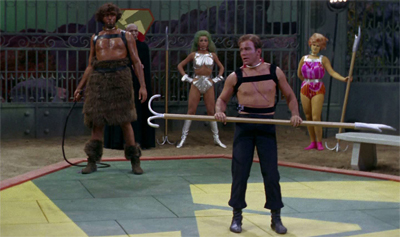
The Gamesters of Triskelion is not a great episode of Star Trek. Although filmed after Obsession, even if the production order lists it before that episode, The Gamesters of Triskelion feels like we’re watching producer John Meredyth Lucas finding his feet. It’s an episode that feels light and looks relatively cheap, formed from a collection of clichés that would already be familiar to Star Trek fans or fans of pulp science-fiction.

Perhaps the best thing that can be said about The Gamesters of Triskelion is that it has a decidedly pulpy charm to it. The entire episode looks like it was lifted from the cover to some trashy paperback, and the plot is recycled from stock science-fiction concepts and themes. While this isn’t enough to sustain an entire fifty minutes of television, it does allow the episode to feel a little distinctive and memorable… if not necessarily in a good way.

Shat happens...

Shat happens…

It is amazing how much of the franchise’s memorable iconography and imagery comes from weaker episodes of the classic Star Trek. It’s a testament to the show’s production design team, that could always find a way to make Star Trek look impressive, even on a tight budget and a short schedule. There’s also something enduring about the bizarre images that Star Trek could throw up on screen, even when the scripts were lacking; from space!Lincoln in The Savage Curtain to half-black/half-white racism in Let That Be Your Last Battlefield.

Of course, there are episodes that are both great and iconic at at the same time, like Mirror, Mirror. Still, rewatching the show, it is hard to believe just how much of the popular perception of Star Trek comes from episodes that are of… questionable quality. After all, The Gamesters of Triskelion seems to have made an impression. It seems to be a go-to reference for Matt Groening’s television shows.

Throwing a bit of stick about...

Throwing a bit of stick about…

Continue reading

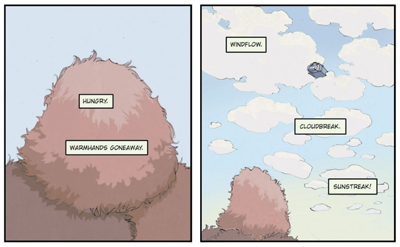
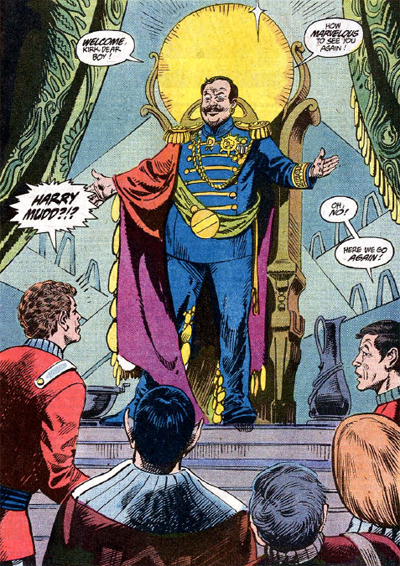
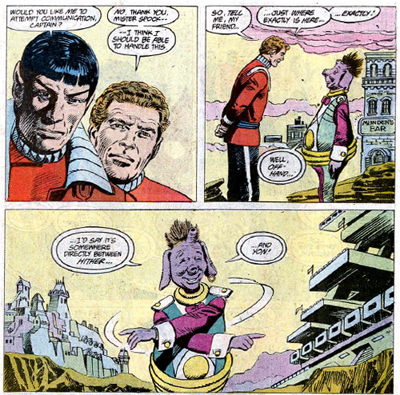
Star Trek (DC Comics, 1984) #39-40 – The Return of Mudd (Review)

The first Star Trek pilot, The Cage, was produced in 1964. To celebrate its fiftieth anniversary, this December we are reviewing the second season of the original Star Trek show. You can check out our first season reviews here. Check back daily for the latest review.

By its nature, Star Trek had very few recurring guest stars – outside of recurring extras and the supporting senior staff.

Star Trek was a prime-time science-fiction show in the sixties. As such, it was strongly episodic. More than that, it was a show that included its stated goal – “to explore strange new worlds” – in a narration over the opening credits. As such, the show did not tend to bring back too many recurring characters. Gene L. Coon had tried to introduce a recurring foil for Kirk in the second season, but Robert Justman had vetoed the reappearance of Kor in A Private Little War and Coon would depart before he could follow through on plans to make Koloth a recurring adversary.

Our man Mudd...

Our man Mudd…

Of course, this has not stopped Star Trek fans from seizing on various one-shot characters from the three seasons of the original Star Trek. Despite only appearing in Errand of Mercy, Kor has become a frequently recurring character in the Star Trek mythos. Gary Seven has spun off from Assignment: Earth into a string of novels and comics. Christopher Pike only appeared with Kirk in one single story, but there is a huge amount of literature dedicated to him. Still, this means that the elements which do recur are given a bit more weight.

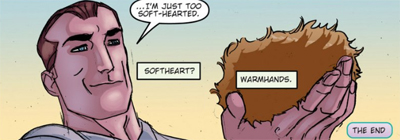
Klingons, Romulans and Vulcans are a vital part of the Star Trek mythos. Khan Noonien Singh only appeared in Space Seed and Star Trek II: The Wrath of Khan, but his memory haunts the franchise to the point where he was revived for Star Trek Into Darkness. Harry Mudd has the distinction of being the only non-crewmember to recur within the original run of eighty episodes. So it is no surprise that Harry Mudd has become one of the most frequently recurring guest stars in the history of the franchise.

Kirk meets quirky...

Kirk meets quirky…

Continue reading

My 12 for ’14: The Guest and a Halloween Christmas Movie…

With 2014 coming to a close, we’re counting down our top twelve films of the year. Check back daily for the latest featured film.

2014 was a spectacular year for genre work. Perhaps emboldened by the success of genre fare (shared universes! talking apes! killer racoons!) in the summer movie season over the past number of years, it seemed like both major and minor studios were more willing to play with concepts that could easily seem absurd or throwaway.

’71 blended its historical real-world setting with the claustrophobia one might expect to find in horror thriller – a zombie movie set in seventies Belfast. The Babadook is a awards-caliber study of disillusioned parenthood that just happens to use the language of a supernatural horror. Birdman is a blistering Hollywood satire and character study driven by imagery and iconography more traditionally associated with fantasy. There has always been genre overlap, but it seemed particularly pronounced this year.

theguest

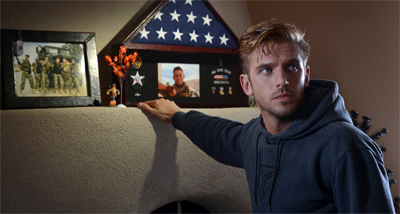
The Guest revels in its pulpy nature, offering a gleefully absurd intersection of a classic slasher movie with a more traditional holiday fare. The story of a mysterious visitor who moves in with the family of a deceased soldier, The Guest is wry and quick-witted, subversive and cheeky in equal measure. Anchored by a script from Simon Barrett that refuses to pull any punches, razor-sharp direction from Adam Wingard and a superb central performance from Dan Stevens, The Guest is a pure pulpy pleasure.

In many respects, The Guest feels like what would happen if you asked John Carpenter to make a Christmas movie. Only set at Halloween.

Flying the flag...

Flying the flag…

Continue reading