• Following Us

  • Categories

  • Check out the Archives


  • Awards & Nominations

The X-Files: Season One (Topps) #2 – Deep Throat (Review)

This February and March, we’re taking a trip back in time to review the fourth season of The X-Files and the first season of Millennium.

Season One feels like a very odd way to franchise The X-Files.

Topps had enjoyed tremendous success with their licensed tie-in comic book, so it made a certain amount of sense to try to milk the franchise as much as possible. After all, they had already tried a number of other promotions, like releasing “digests” to supplement that monthly series and releasing tie-in comics to appear with magazines like Wizard. So offering another series that would publish on a regular basis starring Mulder and Scully made perfectly logical sense.
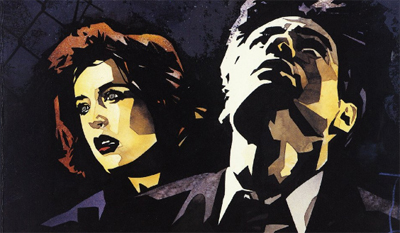
The truth is up there...

The truth is up there…

About a year after the release of their adaptation of The Pilot, Topps decided to push ahead with a series of regular adaptations of first season episodes of The X-Files. They reissued their adaptation of The Pilot as the first comic in the series, and then began publishing new adaptations of those early episodes written by Roy Thomas and illustrated by a rotating team of artists. The comics would be about twice as long as the issues of the monthly series, but would only publish once every two months. The monthly series was priced a $2.50, with Season One priced at $4.95.

It is hard not to feel quite cynical about Season One, particularly in an era where these classic episodes of The X-Files stream of Netflix and entire seasons are available to purchase at very low prices.
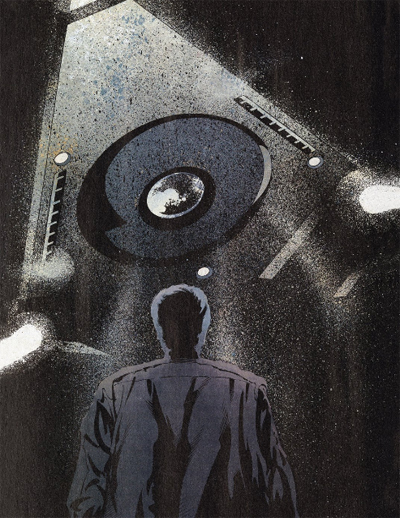
The shape of things to come...

The shape of things to come…

Continue reading

The X-Files – Season 4 (Review)

This February and March, we’re taking a trip back in time to review the fourth season of The X-Files and the first season of Millennium.

The fourth season of The X-Files is a work of chaotic genius.

While the third season of The X-Files is one of the most consistently well-made seasons of television ever produced, the fourth season is a lot more uneven. There are a lot of reasons for this. Chris Carter was busy launching Millennium. Fox had decided to press ahead with The X-Files: Fight the Future. Behind the scenes, it was chaotic. Glen Morgan and James Wong hung around for half the season before leaving to work on their own pilot, a planned script from Darin Morgan fell through, Chris Carter’s attention was divided.

xfiles-musingsofacigarettesmokingman17

However, the fourth season represents something of a changing of the guard on the writing staff, a transition between two generations. The fourth season sees the permanent departure of writers Glen Morgan, James Wong and Howard Gordon. These were all writers who worked hard to give The X-Files its unique flavour and identity in the show’s earliest years. The X-Files would not be the same show without the input of those three writers. It is a shame to see them depart, although four years is a long time in the industry.

In contrast, the fourth season also sees younger talent rising up. It sees the first collaboration of Vince Gilligan, John Shiban and Frank Spotnitz. The trio would become one of the most consistent (and productive) writing ensembles on the series. The fourth season also saw the rapid ascent of Vince Gilligan, who had only contributed one script to the third season; Gilligan’s three solo scripts for the third season are iconic and influential in their own right. These are the voices that will steer The X-Files through to the end of its nine-year run.

xfiles-paperhearts22

As such, the fourth season feels transitional. It is a season that lacks the finely-honed efficiency that defined the third season, in favour of a more ambitious and even experimental style. The result is a season that feels wildly creative, a joyous cacophony rather than a harmonious symphony. The fourth season may not always hit the notes, but it is doing something very fresh and exciting. There is an energy and enthusiasm to the season that carries even some of the weaker episodes.

The fourth season is not consistently brilliant, but it is more than occasionally transcendental.

xfiles-max15

Continue reading

Star Trek: Enterprise – A Night in Sickbay (Review)

Next year, Star Trek is fifty years old. We have some special stuff planned for that, but – in the meantime – we’re reviewing all of Star Trek: Enterprise this year as something of a prequel to that anniversary. This April, we’re doing the second season. Check back daily for the latest review.

A Night in Sickbay may be the most divisive episode of Star Trek: Enterprise ever broadcast.

On the one had, it seems like fans hated the episode with an incredibly passion. The Agony Booth described A Night in Sickbay as “the worst episode of one of the most cringe-worthy shows of the last ten years.” The episode is frequently included in those very popular “worst episodes ever!” polls that the internet loves so much. The only episode that seems more certain to provoke fan vitriol is These Are the Voyages…, the series finalé which has little to say about the actual series.

"I am THIS sorry..."

“I am THIS sorry…”

However, the hatred for A Night in Sickbay is not universal. It was one of two Enterprise episodes to make the shortlist for the 2003 Hugo Award for Best Dramatic Presentation in the “short form” category. More than that, A Night in Sickbay actually polled ahead of the other nominated episode of Enterprise, Carbon Creek. Even in commercial terms, A Night in Sickbay was a success, earning the highest ratings (and share) of the show’s second season.

It seems that A Night in Sickbay exists in a rather strange grey area. It enjoys the support and appreciation of members of the cast and even those outside Star Trek fandom, while it provokes nothing but hatred from hardcore fans. This immediately makes A Night in Sickbay a fascinating watch; any show that can provoke such a polarising response must have some interesting aspects.

Smile!

Smile!

Continue reading

Millennium – Season 1 (Review)

This February and March, we’re taking a trip back in time to review the fourth season of The X-Files and the first season of Millennium.

Millennium is a strange television show.

It is quite clear that Chris Carter and Fox both had a very different understanding about how best to follow on from the success of The X-Files. Fox clearly wanted another popular hit, a television show that it could plug comfortably into its 9pm Friday slot and grow into a multimedia franchise. The network spent a phenomenal amount of money promoting Millennium, with advertising and screenings and other publicity attempts. This approach paid off; The Pilot broke all sorts of records for Fox.

millennium-lamentation11

However, Millennium could not sustain those viewing figures. Over the first season, it haemorrhaged viewers. Chris Carter was not trying to present an accessible and popular pop hit; instead, Carter was taking advantage of the success of The X-Files to construct something decidedly more esoteric. Millennium is a tough show to watch. It is grim, unrelenting and oppressive. It is a show about darkness in the world that tends to roll up its sleeves and jump right in. Millennium has a clear idea of what it wants to be, but what it wants to be is alienating and uncomfortable.

On just about any level, the first season of Millennium is more accomplished than the first season of The X-Files. The production is more confident, the ideas are much bolder, the themes are much clearer. In fact, the first season of Millennium even holds up well when stacked against the fourth season of The X-Files on an episode-by-episode basis. But that’s not the problem. By definition, “Lance Henriksen fights serial killers and the concept of evil in America” will never be as popular as “David Duchovny and Gillian Anderson fight aliens and monsters and weird stuff!”

millennium-pilot11

The first season of Millennium is a show that offers a distinctive and uncompromising auteur vision which cares little for what the audience might want or expect. For better or worse, that approach would prevent Millennium from ever approaching the critical or popular support that The X-Files had already begun to accrue at the end of its own first season. The result is a television show that was never going to rival The X-Files as a pop culture phenomenon , but which serves as a bold philosophical statement from its creator.

“This is who we are,” the opening credits state, unapologetically. They seem to be speaking for the show as much for society.

millennium-bloodrelatives13 Continue reading

Star Trek: Enterprise – Dead Stop (Review)

Next year, Star Trek is fifty years old. We have some special stuff planned for that, but – in the meantime – we’re reviewing all of Star Trek: Enterprise this year as something of a prequel to that anniversary. This April, we’re doing the second season. Check back daily for the latest review.

Dead Stop is an interesting beast.

One of the stronger episodes from the second season of Star Trek: Enterprise, Dead Stop follows on directly from the events of the previous episode without serving as a direct continuation. It is very rare to see this approach taken on Star Trek, and it’s the perfect example of the sort of episode-to-episode connections that were lacking during the show’s first two seasons. Dead Stop is not a direct follow-on to Minefield, but it is fascinated with the fallout from that episode.

A model ship...

A model ship…

And yet, despite this, Dead Stop is also based around one of the most generic premises imaginable – a sentient space station with a sinister agenda. With a few choice edits, the premise could easily be adapted for Star Trek: The Next Generation or Star Trek: Voyager. Indeed, it’s not too difficult to imagine Kirk and Spock dealing with the rogue space station at some point during their five year mission. It is a story that could – in broad strokes – even work for a television anthology series.

The beauty of Dead Stop is the way that it blends these two conflicting elements together, to construct a show that feels like it showcases the best parts of Enterprise while working from a core story that could be told across the franchise.

Piecing it together...

Piecing it together…

Continue reading

The X-Files (Topps) #32 – Crop Duster (Review)

This February and March, we’re taking a trip back in time to review the fourth season of The X-Files and the first season of Millennium.

Crop Duster feels rather generic.

That is a shame. After all, John Rozum’s script hits on all sorts of big themes related to The X-Files. It is a story about a small community that has its own secrets, haunted by the legacy of sins long past. The paranormal evil at work in the rural community of Kelly in Kentucky ultimately masks a more mundane story about human violence and betrayal. There is a sense that the basic ingredients of Crop Duster should add up to more than a disposable one-shot. Unfortunately, they don’t.

Alien bodies...

Alien bodies…

Continue reading

The X-Files – Gethsemane (Review)

This February and March, we’re taking a trip back in time to review the fourth season of The X-Files and the first season of Millennium.

Agent Mulder died late last night from an apparent self-inflicted gunshot wound to the head.

– Agent Dana Scully, 22nd October 1997

xfiles-gethsemane27 Continue reading

Star Trek: Enterprise – Minefield (Review)

Next year, Star Trek is fifty years old. We have some special stuff planned for that, but – in the meantime – we’re reviewing all of Star Trek: Enterprise this year as something of a prequel to that anniversary. This April, we’re doing the second season. Check back daily for the latest review.

Shuttlepod One worked very well in the first season, didn’t it?

The episode was one of the highlights of the first season, received very well by both the cast and fandom. So it makes sense to revisit that basic set-up early in the second season. This time it isn’t Malcolm Reed and Charles Tucker facing death in the cold void of space. Instead, Jonathan Archer and Malcolm Reed find themselves struggling with a mine as a countdown ticks away in the background. Facing all-but-certain death, characters are thrown into conflict with one another. Sparks fly, drama happens.

Let's go outside.

Let’s go outside.

To be fair, Minefield ups the stakes dramatically. It takes the same high-stakes characters-against-the-void drama that made Shuttlepod One such a success and then blends it with Star Trek: First Contact and throws the Romulans into the mix just two months before the release of Star Trek: Nemesis. It is very much a high-concept cocktail of episode, a show with a lot going on and a lot of focus in contrast to the more relaxed pace of something like Carbon Creek.

Minefield does feel a little bit too derivative and like it is promising something that never quite arrives. However, it is built around a very sound structure, makes good use of the special effects available for the show, and gives Scott Bakula and Dominic Keating a chance to play off one another. It offers a lot of promise for the second season, only to be retroactively tainted by the fact that the second season never delivers on any of these promises.

All I need is the air that I breath...

All I need is the air that I breath…

Continue reading

Millennium – Paper Dove (Review)

This February and March, we’re taking a trip back in time to review the fourth season of The X-Files and the first season of Millennium.

Millennium is an odd show in a number of ways.

The most obvious of these oddities is the sense that each of the three seasons feels like a different television show. The first season is markedly distinct from the second, the second is clearly delineated from the third. It is a very strange structure, one explained by the fact that the three seasons were overseen by three different creative teams with three very different visions of the show. One of the results of this approach is that each season finalé becomes a de facto series finalé, an episode bidding farewell to a particular vision of the show.

This is what it feels like... when doves cry...

This is what it feels like… when doves cry…

Paper Dove bids farewell to the “serial-killer-of-the-week” mechanics of the first season. Of course, there would be later episodes that would feature serial killers. In fact, The Mikado is possibly the best serial killer the show ever did. The Beginning and the End seems explicitly about killing off the “serial-killer-of-the-week” so that the show can invest its time and energy in other pursuits. However, stripped down to its core, Paper Dove takes the show’s approach to serial killers to its logic conclusion.

Although the show has featured serial killers with motivations that might be easily understood and perhaps even pitiable, Henry Dion is the show’s first serial killer to becomes almost sympathetic; it is one of the rare times that the show manages to capture the banality of evil, as opposed to the show’s traditional approach – one that brushes up against (and occasionally crosses over into) a sensationalist or gratuitous approach to serial killer pathology.

Picture this...

Picture this…

Continue reading

Star Trek: Enterprise – Carbon Creek (Review)

Next year, Star Trek is fifty years old. We have some special stuff planned for that, but – in the meantime – we’re reviewing all of Star Trek: Enterprise this year as something of a prequel to that anniversary. This April, we’re doing the second season. Check back daily for the latest review.

Although it was the second episode of the season broadcast, Carbon Creek was the first episode of the second season produced.

There are a variety of reasons for this. The fact that it only featured three primary cast members would have meant that everybody else got a little extra vacation time. With a lot of location shooting and a production design outside the Star Trek norm, it likely made sense to get it out of the way first. From a budgeting and production standpoint, the show likely benefited from a bit more time than episodes like Shockwave, Part II or Minefield.

"We come in peace...

“We come in peace…”

However, even outside of these pragmatic production concerns, Carbon Creek helps to set the tone for the second season of Star Trek: Enterprise. It is a largely nostalgic and romantic exercise, a rather light stand-alone episode that feels like it wallows in the iconography and conventions of Star Trek. Indeed, the teleplay is credited to Chris Black, the only new writer to survive the writing staff departures that Mike Sussman jokingly referred to as “purges.”

Black is in many respects the first “native” Enterprise writer – the first writer to last more than a season who had not worked on Star Trek: Voyager. As such, it seems only appropriate that he should set the tone for the season ahead.

Vulcan hustle...

Vulcan hustle…

Continue reading