• Following Us

  • Categories

  • Check out the Archives


  • Awards & Nominations

Non-Review Review: The Man From U.N.C.L.E.

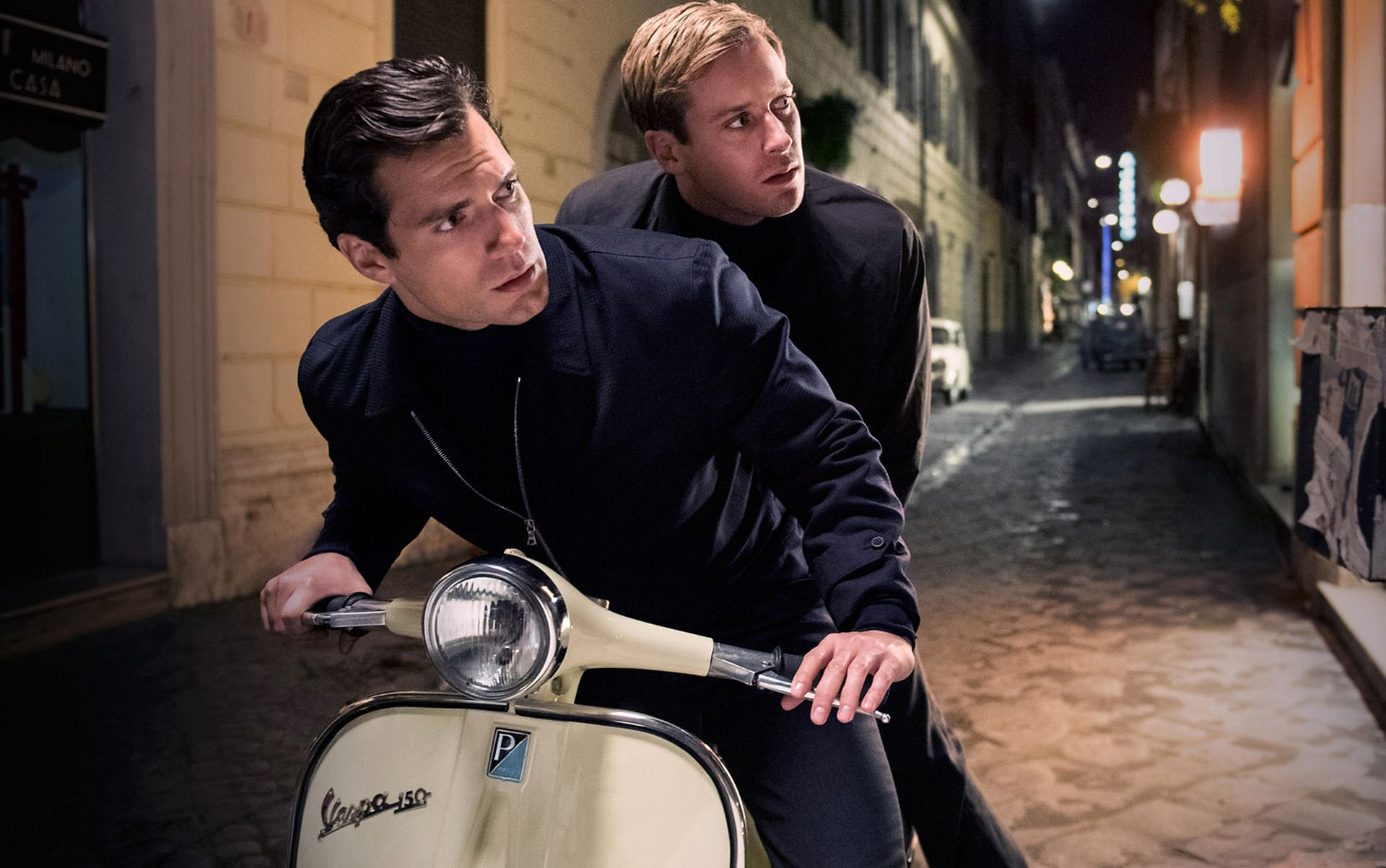
The Man From U.N.C.L.E. has style and charm. It doesn’t have much more than that, but never underestimate how far style and charm can get you. Guy Ritchie has always had a nice a sense of movement, and The Man From U.N.C.L.E. always moves at a nice pace, even when it’s not entirely sure where it is going. A film so light that it threatens to get caught in the gust as it breezes by, it is also important never to overestimate how far style and charm can get you either.

Ride along...

Ride along…

Continue reading

Star Trek: Enterprise – Twilight (Review)

Next year, Star Trek is fifty years old. We have some special stuff planned for that, but – in the meantime – we’re reviewing all of Star Trek: Enterprise this year as something of a prequel to that anniversary. This August, we’re doing the third season. Check back daily for the latest review.

Twilight is a fascinating piece of Star Trek.

There are some significant flaws with the episode, particularly in how it treats T’Pol as a character and the eagerness with which it grabs at the famed “reset button.” However, despite these problems, Twilight is pretty much perfectly positioned. Eight episodes into the third season, the new status quo has been established. The ground rules have been laid down. Over the past seven episodes, fans have been given a sense of how the third season of Star Trek: Enterprise is supposed to work.

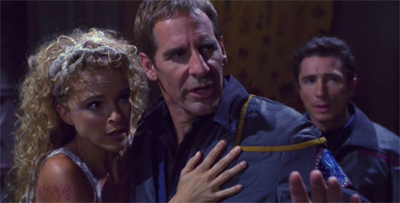
Keep your shirt on, Archer...

Keep your shirt on, Archer…

However, there is a palpable sense of unease about the larger arc – a question of how Star Trek can tell a story like the Xindi arc while remaining true to itself. The Shipment was an awkward attempt to impose a traditional Star Trek moral structure upon the season. North Star and Similitude are very much traditional Star Trek morality tales set against the backdrop of the larger arc. Like many of the stronger shows towards the tail end of the second season, these episodes seem to ask how you can apply old Star Trek standards to the twenty-first century.

Twilight is an episode about what happens if the Xindi arc goes wrong. Obviously, this is a story about what happens if Archer cannot save Earth from the Xindi, documenting the slow death of mankind as they are hunted through the cosmos. However, on an external level, Twilight is a story about what happens if Star Trek bungles this big grasp at relevance. It is no coincidence that the debilitating impairment that Archer develops involves his long-term memory. If the franchise forgets itself, all is lost.

Everything dies...

Everything dies…

Twilight is not just the story about the death of Earth or the death of humanity. It is a story about the death of Star Trek. Two years earlier, the franchise had seemed almost invincible; the idea of there not being any Star Trek on the air after the end of Star Trek: Voyager seemed almost absurd. However, by the time that the show had reached the third season, its existence was very much in peril. Twilight is a story about how horrible and apocalyptic the future might be; how Star Trek might find itself hobbled and then destroyed.

As its name implies, Twilight is a lament for the franchise; perhaps a tacit acknowledgement that the show was nothing more than a dead man walking at this point. The result is a surprisingly moving piece of television, a thoughtful and considerate examination of just how much is on the line for the franchise as well as the characters.

Waking dream...

Waking dream…

Continue reading

Non-Review Review: Paper Towns

There is an irony at the heart of Paper Towns. In many ways, it is a typical teenage coming of age fantasy. Quentin is approaching the end of his high school life, which has been spent buried in books. One night, the girl next door sneaks into his bedroom and takes him on a whirlwind adventure through the Orlando nightlife. Reconnecting with the enigmatic Margo for the first time since childhood, old feelings are reignited; Quentin allows himself to feel excited and alive. However, the next morning, Margo is gone.

As Quentin begins a bizarre treasure hunt to track her down, he finds himself caught up in a dynamic adventure. Deciphering a series of clues that offer an indication of where Margo might have gone, Quentin discovers that there is more to life than his own narrow experiences to date. The pursuit of Margo allows Quentin to come out of his shell. “You’re cute when you’re confident,” Margo assures him at one point in the film. “Less so when you’re not.” Inevitably, Quentin learns that he has to venture outside of his shell and push past his comfort zone.

Dream girl...

Dream girl…

This is a classic teen movie trope, reinforcing the sense that key to adolescent (and even adult) fulfilment is comfort in your own skin. It’s a nice idea, because it is undoubtedly true. However, Paper Towns is not particularly convincing in its thesis statement. For a film about the need to be comfortable with your teenage self, Paper Towns tries very hard. There is a crispness and efficiency to Paper Towns that belies its big central idea, a sense that the film is urging its central character to try something it is not comfortable enough to do on its own terms.

The result is a film that is charming and witty on its own terms, but which occasionally feels just as illusory as any of the fictitious locales to which the title alludes.

Shopping for trouble...

Shopping for trouble…

Continue reading

Star Trek: Enterprise – The Shipment (Review)

Next year, Star Trek is fifty years old. We have some special stuff planned for that, but – in the meantime – we’re reviewing all of Star Trek: Enterprise this year as something of a prequel to that anniversary. This August, we’re doing the third season. Check back daily for the latest review.

An episode like The Shipment has been inevitable since The Expanse was first broadcast.

Nobody watching The Expanse could have truly believed that Star Trek would ever truly lose itself in the midst of an epic War on Terror analogy. Trip’s character arc over the course of the third season is not hard to predict. His raw anger and hatred in The Expanse are not a new status quo for the character, they are very clearly the starting point for a character arc that will circle back around to the core values associated with Star Trek. Trip might be raw and vengeful, but he will come to forgive and heal.

Woah, woah, woah... he's on fire...

Woah, woah, woah… he’s on fire…

That is largely the arc of the third season, albeit with a coda where Archer punches out an evil lizard man atop a flying bomb, because evil lizard men and flying bombs are pretty damn fun. Indeed, the third season works through the bulk of its big moral arc in The Council, so that the final two episodes of the season can be devoted to “stuff blowin’ up real good” without any of those awkward analogies getting in the way. The effort to resolve the big moral arc of the season two episodes before the finalé would seem to suggest that this resolution is a foregone conclusion.

As such, The Shipment feels a little redundant – particularly this early in the season. It is an episode designed to reassure viewers that Jonathan Archer has not suddenly transformed himself into Jack Bauer. However, at this point in the season, the audience has been given little reason to fear that Archer has been so transformed. The Shipment seems like an overly preemptive reassurance that arrives a little bit too early for its own good.

#NotAllXindi

#NotAllXindi

Continue reading

Star Trek: Enterprise – Exile (Review)

Next year, Star Trek is fifty years old. We have some special stuff planned for that, but – in the meantime – we’re reviewing all of Star Trek: Enterprise this year as something of a prequel to that anniversary. This August, we’re doing the third season. Check back daily for the latest review.

If Impulse was Star Trek doing contemporary horror, then Exile is Star Trek doing gothic horror.

It is quite impressive how committed Exile is to its gothic horror trappings. Tarquin doesn’t just live alone in exile and project flattering images of himself; he lives in an honest-to-goodness gothic mansion lit by candles, where he dabbles in the occult while wearing what is a highly stylised dressing gown and between tending to the graves of his beloved(s). Exile does not skimp on its pulpy trappings. Like a lot of the early third season episodes, Exile would make for a satisfying dime-store paperback sci-fi novel; several images from the story would make a suitable cover.

It was a dark and stormy night...

It was a dark and stormy night…

That said, it is quite difficult to pull off gothic science-fiction. The original Star Trek pulled it off on a number of occasions – most obviously with The Squire of Gothos. The later spin-offs have struggled getting the right balance of po-faced seriousness with heightened absurdity. Star Trek: The Next Generation attempted Sub Rosa in its final season, while Star Trek: Voyager had some early experiments with Janeway’s gothic horror fantasy. Neither could be deemed a resounding success, and Exile stumbles a bit in the execution.

There are a number of leaps that the plot doesn’t quite articulate as well as it might. It is hard to believe that Archer would leave Hoshi alone with Tarquin, even with a phase pistol tucked under her pillow. The revelation of Tarquin’s powers should terrify the crew; having the ability to alter another person’s perception across lightyears is utterly unlike anything these explorers have seen before. However, everybody seems to accept it at face value so that the plot can move along at a reasonable rate.

Somebody has a fixation...

Somebody has a fixation…

The way that Exile ties back into the larger arc is somewhat clumsy, right down to the convenient segue into The Shipment that comes in the final scene. In many ways, the structure of Exile recalls that of Extinction, an effectively stand-alone story that contains a very trite nods to the larger Xindi arc without any substantive connection. Despite the vital exposition that Tarquin provides in his final scene (and the subplot involving the spheres), Exile feels rather unnecessary in the larger scheme of things.

And yet, despite all that, Exile has something quite interesting to say. Written by Phyllis Strong, directed by Roxann Dawson and starring Linda Park, Exile is a very rare episode of Enterprise. It is a story with a very clear (and somewhat prescient) feminist subtext that has some very astute observations to make about certain facets of what might be deemed “nerd culture.” Specifically, male nerd culture.

He sees you when you're sleeping...

He sees you when you’re sleeping…

Continue reading

Star Trek: Enterprise – Impulse (Review)

Next year, Star Trek is fifty years old. We have some special stuff planned for that, but – in the meantime – we’re reviewing all of Star Trek: Enterprise this year as something of a prequel to that anniversary. This August, we’re doing the third season. Check back daily for the latest review.

Impulse is a Star Trek zombie story.

It might sound absurd, but it works very well. After all, the Star Trek franchise rooted in pulp space horror, with extended stretches of the original show portraying space as haunted. In some ways, Impulse could be seen as a logical extension of Regeneration from late in the second season. Both episodes are very much modelled on the classic zombie horror movie formula, both deal with how traditional Star Trek morality applies to that formula, and both are even directed by veteran Star Trek producer David Livingston, who brings a nice kinetic feel to the adventures.

Dead space...

Dead space…

Impulse works a lot better than it really should. There are some plotting issues created by the secondary storyline grafted into the episode, and the show doesn’t quite develop its Vulcan themes as well as it might. However, it compensates for these issues with an incredible sense of energy and momentum. The third season of Star Trek: Enterprise might be the first season of Star Trek to be seriously facing cancellation in decades, but it had an entirely new lease on life.

Impulse is a bold and exciting piece of television, one that feel vital and urgent. It recaptures some of the appeal of the new status quo that had been somewhat squandered by Extinction and Rajiin.

Reed shirt...

Reed shirt…

Continue reading

Non-Review Review: Fantastic Four (2015)

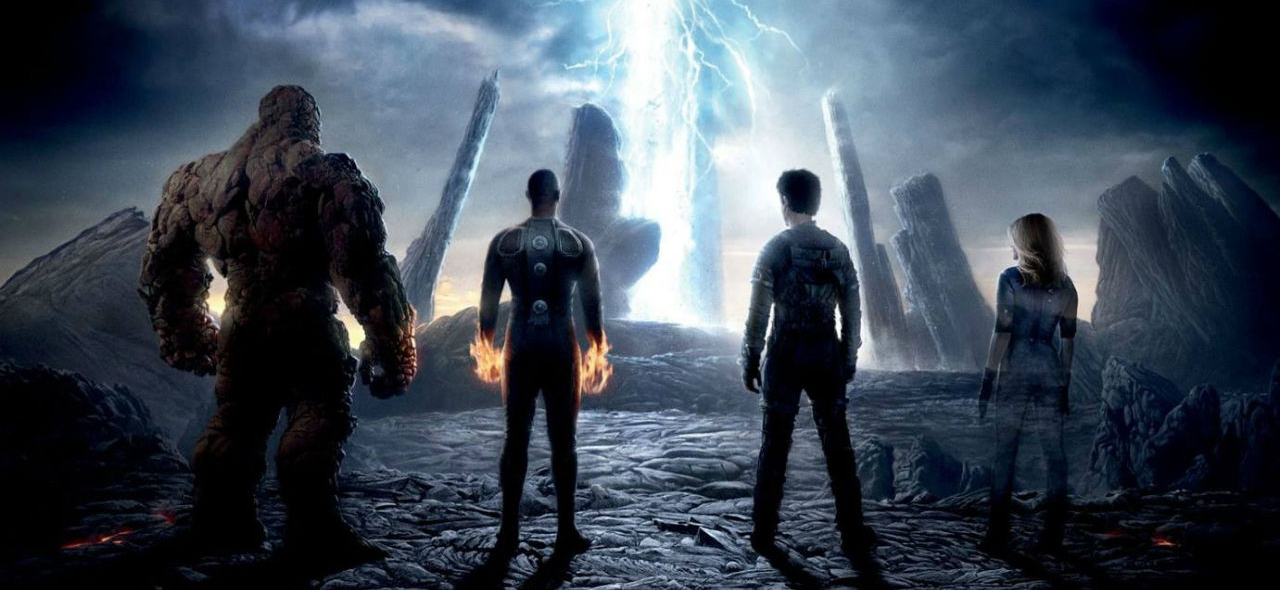
The second scene of Fantastic Four opens on a shot of a red neon sign reading “Grimm”, panning down slowly to a scrapyard packed with exhausted husks of old vehicles that have long outlived their usefulness. If you were to reduce Josh Trank’s Fantastic Four down to a single shot, that would be it; the purest possible distillation of this hundred-minute effort to adapt Marvel’s (literal) first family to the silver screen. It is possible to make a good Fantastic Four film, even if the movies bearing the family’s name suggest otherwise; The Incredibles proved as much.

What is remarkable about Fantastic Four is just how thoroughly and meticulously the edges have been sanded down, replaced with a misshapen grey blob that wants to be X-Men or The Avengers, or anything but what it is. All the moving parts of the film are compelling on their own merits. This is the first studio effort from Josh Trank. It is a vehicle for Miles Teller. It has a soundtrack from Philip Glass (and Marco Beltrami). It features Victor Von Doom in an era when studios have demonstrated they are not afraid of comic book tropes and absurdities.

Fantastic finish?

Fantastic finish?

Fantastic Four effortlessly squanders just about all that good will in a ruthlessly efficient manner, a demonstration of how brutal a bad script and a cynical edit can be. Trank only fleetingly shines through, commandeering the film for about ten minutes in the middle. Miles Teller is reduced to an exposition machine. Any unique identifiers on the Philip Glass soundtrack are pared down for generic superhero movie bombast. The film is so concerned that the audience won’t take a character named Doctor Doom seriously that he’s barely in the film.

The most interesting aspect of Fantastic Four is the recurring sense that the characters themselves openly resent the direction that the project took. Sadly, even Reed Richards cannot stretch far enough to bend the film back into shape.

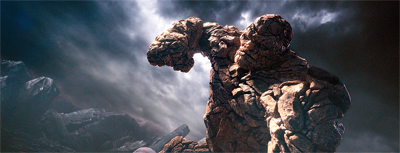
Clobbering time...

Clobbering time…

Continue reading

Star Trek: Enterprise – Rajiin (Review)

Next year, Star Trek is fifty years old. We have some special stuff planned for that, but – in the meantime – we’re reviewing all of Star Trek: Enterprise this year as something of a prequel to that anniversary. This August, we’re doing the third season. Check back daily for the latest review.

Rajiin is not as bad as Extinction. So there’s that.

Rajiin continues the pulpy theme that runs through the third season of Star Trek: Enterprise and into the fourth. There is a sense that the writing staff are cutting loose with a collection of decidedly retro science-fiction tropes that they found in the old storage cupboard. The third and fourth seasons have a gonzo energy to them, with elements like the reptile!Xindi and the evil!alien!space!Nazis feeling like ideas that escaped from the types of magazines where Benny Russell used to work.

"Captain, my scans report that she does have Bette Davis eyes."

“Captain, my scans report that she does have Bette Davis eyes.”

At its best, this new storytelling freedom allows the show to cut loose with ideas that would have made Star Trek: The Next Generation or Star Trek: Voyager blush. The show would never have attempted episodes like Impulse and North Star in its first or second season. Even if the episodes are not flawless, they have an energy and vitality that was sorely lacking in the first two years of the show. It feels like the writing staff are really having fun with the concept, playing with the sort of goofy ideas that they never would have attempted a year or so earlier.

Of course, there is a flip side to that coin. The biggest misfires of the third season are generally rooted in that pulpy storytelling style. Extinction was effectively a “lost race” story that felt like a throwback to colonial narratives about explorers in exotic parts of the world. Rajiin is the story of an alien seductress who our hero rescues from slavery, only to use her womanly wiles to seduce the crew for a sinister purpose.

"Hey, Kirk got to do this all the time!"

“Hey, Kirk got to do this all the time!”

Continue reading

Star Trek: Enterprise – Extinction (Review)

Next year, Star Trek is fifty years old. We have some special stuff planned for that, but – in the meantime – we’re reviewing all of Star Trek: Enterprise this year as something of a prequel to that anniversary. This August, we’re doing the third season. Check back daily for the latest review.

In many respects, The Xindi and Anomaly opened the third season as if it were the first season of a new show. In particular, Anomaly built consciously and cleverly off of Fight or Flight and Strange New World in providing a solid foundation for the year ahead. The comparison works quite well. By that logic, Extinction and Rajiin serve as Unexpected and Terra Nova. They are two of the weakest episodes of the season, harmed by their close proximity to the start of the year. Anybody wanting to reach Twilight or Damage has to get through Extinction and Rajiin.

In many respects, this early lag in the third season demonstrates just how inexperienced the creative team were at long-form serialised storytelling. The only arc comparable to the Xindi arc in the entire Star Trek franchise is the Dominion War arc on Star Trek: Deep Space Nine. There, the writers were clever enough to launch the new status quo with an unheralded six-episode interconnected story. The Dominion War had its share of duds, but the opening salvo was magnificently confident.

Archer's not feeling himself lately...

Archer’s not feeling himself lately…

In contrast, the third season of Star Trek: Enterprise suffers out of the gate. The Xindi and Anomaly do good work setting up plot points and character beats that will be of use later in the season, but there is no real sense that the writing staff has any idea what that use might be at this point of the season. Two episodes into the third season, the show is already back to fairly formulaic adventures that stand quite cleanly alone. It is not too difficult to imagine Extinction or Rajiin as episodes in any other season – albeit with some slight tinkering.

However, this is only part of the problem. Long-form storytelling need not become a burden. There is a great deal of value to be had in drifting away from a serialised story arc to tell a quality standalone tale. Unfortunately, Extinction is not a quality standalone tale. In fact, it is one of the worst episodes of Enterprise ever produced. Airing it as the third episode of a bold new season feels like a poor choice.

"C'mon, wouldn't you like to go back to being a torturing and almost genocidal human?"

“C’mon, wouldn’t you like to go back to being a torturing and almost genocidal human?”

Continue reading

Millennium – Season 3 (Review)

This July, we’re taking a trip back in time to review the sixth season of The X-Files and the third (and final) season of Millennium.

Three seasons is a good run.

It’s not a great run, but it is worth noting that Millennium ran longer than any of Chris Carter’s creations other than The X-Files. Given you grim and esoteric Millennium turned out to be, that is quite impressive. Notably, even the third season of Millennium performed better in the ratings than the first season of Harsh Realm. In many respects, Millennium is a very odd television show; it seems surprising that it lasted for three seasons. While fans (and many who worked on it) might have wanted more, Millennium is not a failure.

millennium-thesoundofsnow28

That said, the third season of Millennium is a disaster. There are a lot of reasons for this. The show was renewed by Fox quite late in the process, meaning the production team had little time to prepare. Glen Morgan and James Wong had no interest in returning to run the show, even if the rest of the staff would have them. Either due to time constraints or frustration, nobody asked Morgan and Wong about resolving the ending of The Time is Now. Michael Duggan was hired as showrunner, only to depart eight episodes into the season.

With all of this going on, the problems with the third season are entirely understandable. The season feels like a disjointed mess because there was chaos behind the scenes. The season was confused about its own continuity because the production team had no idea what to make of the second season. With ratings plunging, the show sought comfort in the familiar; there is an extended stretch near the start of the third season where it feels like the production team were trying to turn the show into a copy of The X-Files.

millennium-teotwawki22

The third season of Millennium has fairly terrible reputation among fans. This is not entirely undeserved; the early stretch of the third season contains a string of the worst episodes that Millennium ever produced. As sympathetic as the surrounding circumstances might make an audience to the show, that goodwill evaporates when confronted with episodes like The Innocents, Exegesis, TEOTWAWKI, Skull and Bones, Through a Glass Darkly, Human Essence and Omertà. The series improves dramatically in its middle section; but it is never consistent.

The third season contains a number of underrated episodes that do count among the best that the show ever produced, and a whole host of more interesting failures around those episodes. Perhaps the best thing that might be said about the third season is that it is interesting at least as often as it is bad. That might not sound like a ringing endorsement. It isn’t. The third season of Millennium doesn’t work. The reasons for this are entirely understandable, but that does not make it any easier to watch.

millennium-sevenandone24

Continue reading