• Following Us

  • Categories

  • Check out the Archives


  • Awards & Nominations

Non-Review Review: Hotel Transylvania 2

Hotel Transylvania 2 certainly has some moves.

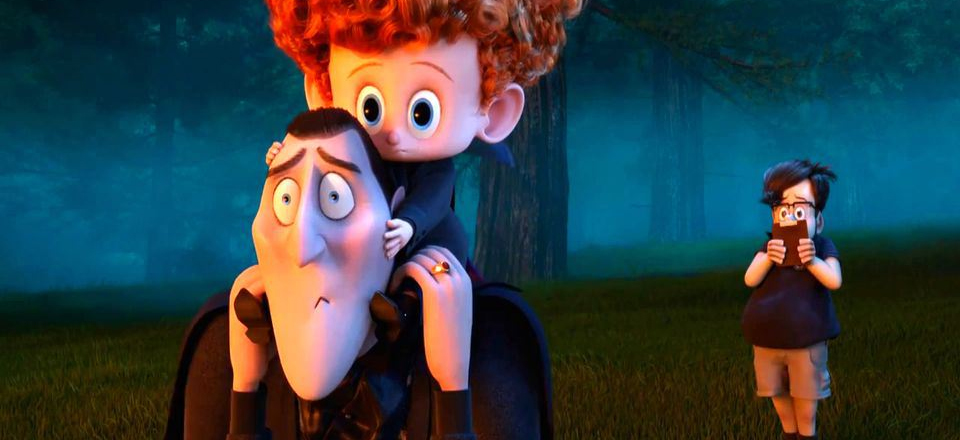
The film might be computer animated, but director Genndy Tartakovsky draws from more a classic style of cartooning. There are several points in Hotel Transylvania 2 where it seems like the film has reverted to a two-dimensional style, with figures standing in silhouette against the background. Even the human characters of Hotel Transylvania 2 take on an elasticity, stretching and distorting in the style of classic Looney Tunes. Hotel Transylvania 2 gets considerable mileage out of this slapstick element.

Drac pack's back...

Drac pack’s back…

It helps that the film is packed with gags. Not all the jokes land as well as they might, with the film leaning a little too heavily on some particularly cheap shots, but there is a sense that Hotel Transylvania 2 is more concerned with getting those jokes into the film than it is with actually constructing a narrative around them. The film packs an impressive quantity of humour into its ninety-minute runtime, with nothing in the film being allowed to overstay its welcome.

That said, the movie hits some speedbumps when it comes to plot and characterisation. Some of these issues are simply structural, with Hotel Transylvania 2 eschewing all but the most basic of set-up and pay-off in favour of energetic cut-away jokes and quick sight gags. Some of the issues are tonal, with the film wrapping up some very uncomfortable plot developments and decisions with a simple “all’s well that ends well” conclusion that ultimately avoids delving too deeply into any of the implications of certain characters’ actions.
Vamping it up...

Vamping it up…

Continue reading

Doctor Who: The Witch’s Familiar (Review)

“Of course, the real question is where I got the cup of tea. Answer: I’m the Doctor, just accept it.”

– the Doctor tells it how it is

As is the norm for Moffat-era Dalek episodes, The Witch’s Familiar is a mess… but it is an interesting mess.

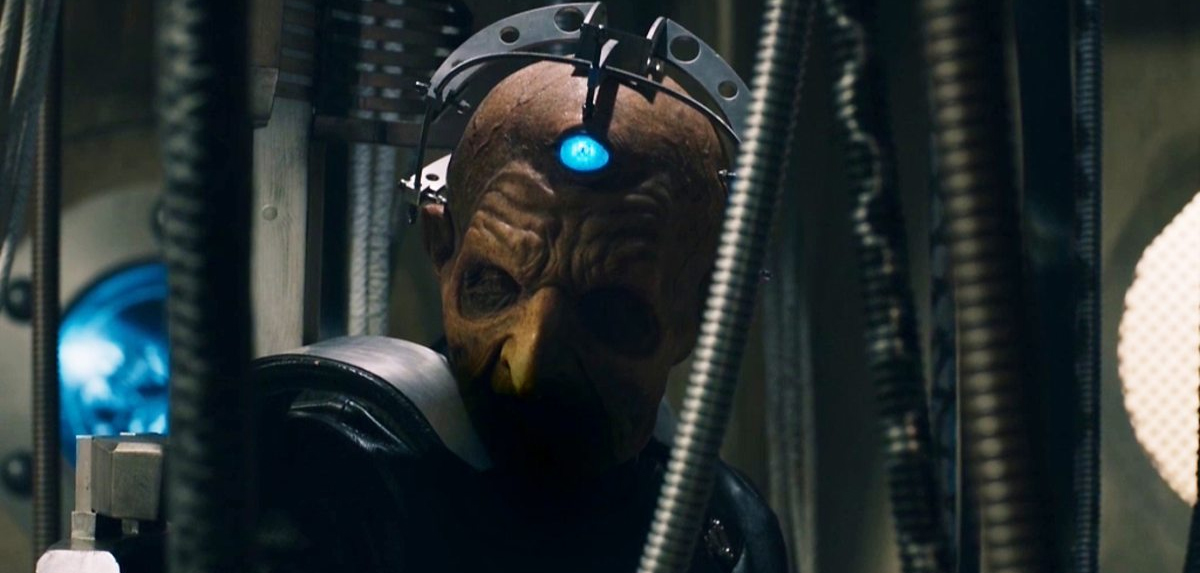
The Witch’s Familiar works best as a collection of intersecting character moments than a narrative in its own right. In some respects, The Witch’s Familiar feels like a season premiere in the same way that The Magician’s Apprentice did; it is light and breezy, with more energy devoted to character dynamics than to dramatic stakes. The Witch’s Familiar is quite blatantly set-up; it is all about establishing things that might possibly become more important later on. Davros is revived; the Hybrid is mentioned; Skaro is back in play.

Destiny of the Davros...

Destiny of the Davros…

The plot is all over the place, with Moffat’s script avoiding retreading old thematic ground about “the Oncoming Storm” and justifiable genocide by barely alluding to the moral quandaries that The Magician’s Apprentice set-up. When Davros alludes to the idea of the Doctor wiping out the Daleks through a single act of murder, or harnessing all that power for his own ends, it feels like Davros is just barreling through a check list of cheap shots that any major adversary is expected to land when facing the Doctor. The Dalek Emperor did it more convincingly in The Parting of the Ways.

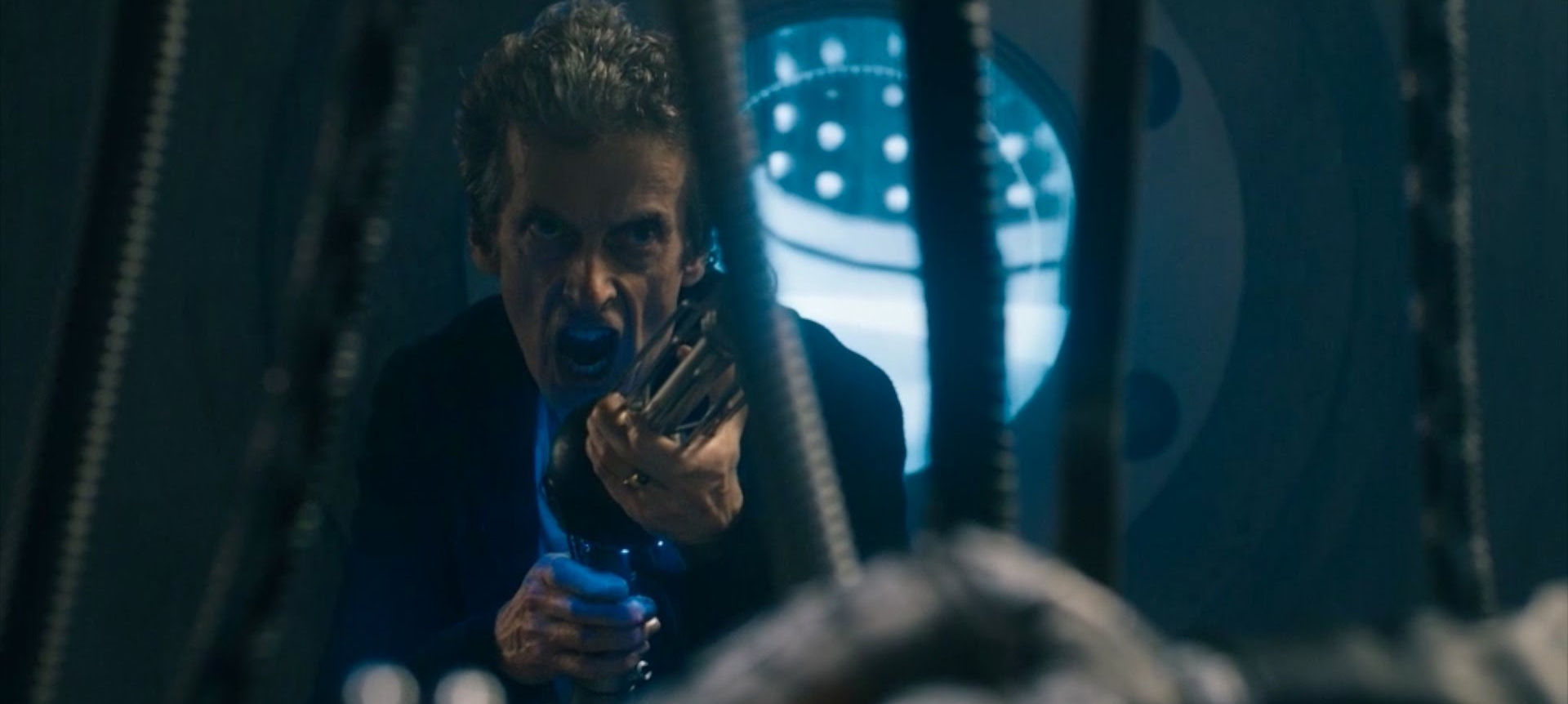
Still, this familiarity does allow The Witch’s Familiar to lock the Doctor and Davros in a room together for an extended period of time. It affords the pair the chance to trade barbs and to understand one another in a way that no previous story has attempted. One of the more interesting aspects of a season of ninety-minute stories told across multiple episodes in 2015 is that the format is remarkably different than a season of ninety-minute stories told across multiple episodes in 1989. This is a season of serialised stories, but it is not a return to the classic model.

Exterma- wait a minute!

Exterma- wait a minute!

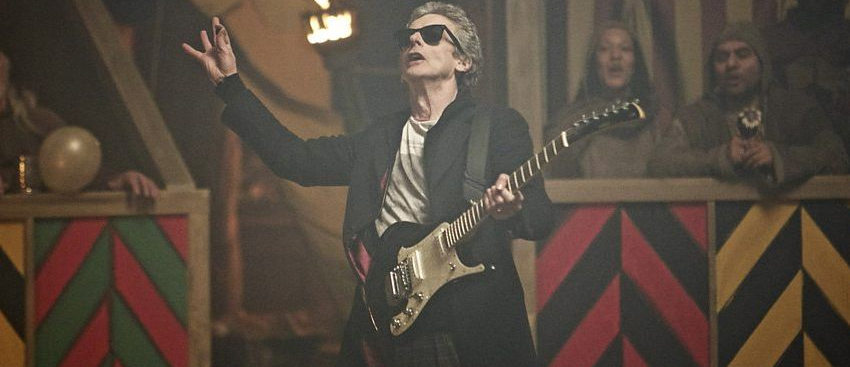
The classic series would never have been able to pull off this sort of quiet and understated interaction between the Doctor and Davros. The nature of a classic Dalek story was to build to a climax of the Doctor and Davros screaming at each other across the room; the pleasure of The Witch’s Familiar is the space that it affords both characters to move past the shouting and to something towards mutual comprehension. It helps that The Witch’s Familiar has two fantastic central performers in Peter Capaldi and Julian Bleach.

The Witch’s Familiar might be yet another example of the Moffat era trying and failing to construct an entirely functional Dalek story, but it is quite possibly the single best Davros story ever told. (Give or take a Revelation of the Daleks.)

Shades of grey...

Shades of grey…

Continue reading

Non-Review Review: Ghosthunters on Icy Trails

Ghosthunters on Icy Trails is derivative as anything.

The movie walks a very thin line between knowing self-aware homage and cynical appropriation. The movie’s script draws attention to many of its influences and inspirations, but there is frequently a feeling that many of these ideas and images worked much better the first time around. There some nice gags in there, and two solid central performances from Milo Parker and Anke Engelke, but Ghosthunters on Icy Trails frequently feels like a featherweight imitation of much more entertaining family films.

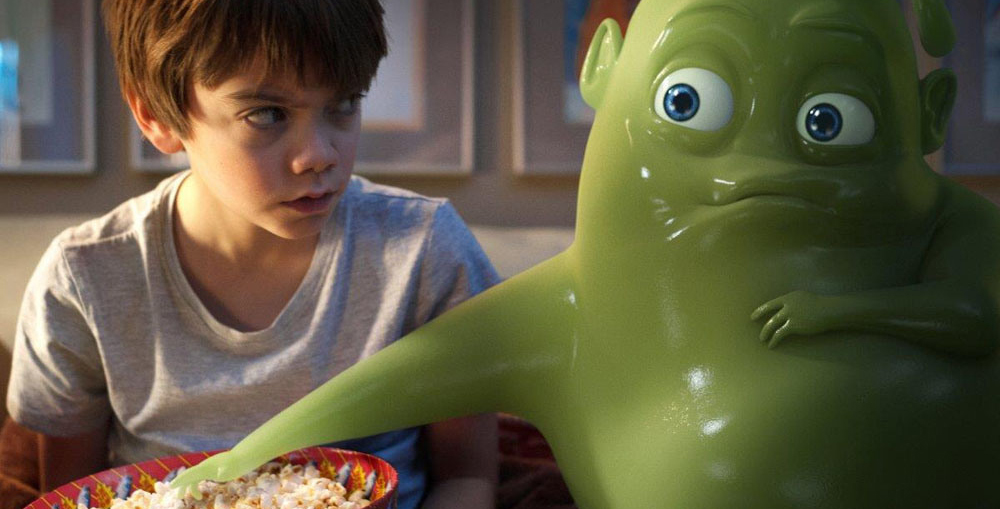
Pass the popcorn...

Pass the popcorn…

Continue reading

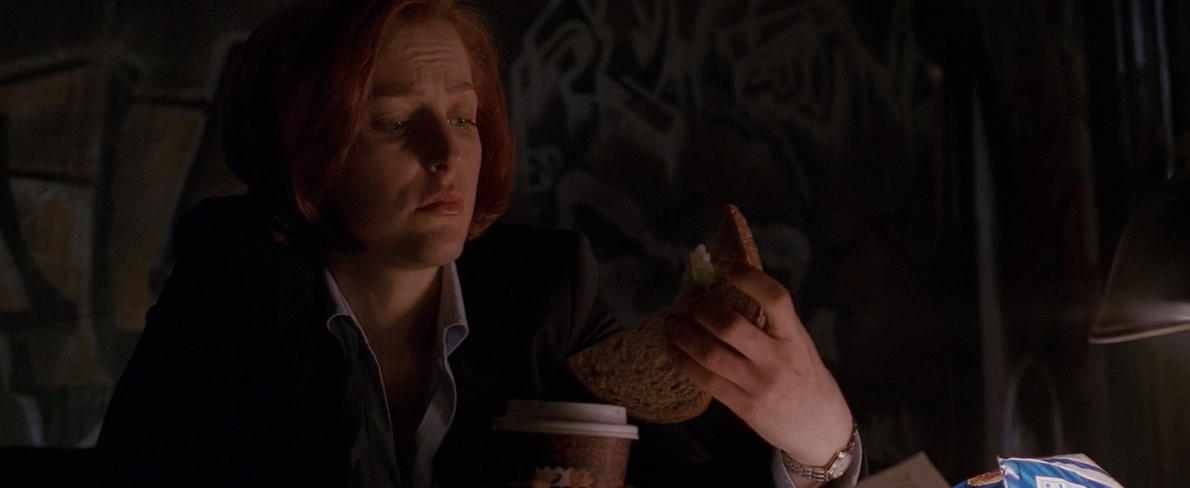
The X-Files – Chimera (Review)

This September, we’re taking a trip back in time to review the seventh season of The X-Files and the first (and only) season of Harsh Realm.

There is a sense of fatigue about the seventh season of The X-Files.

It makes a certain amount of sense. After all, seven years is a long time in television. It is a particularly long time when the staff are churning out more than twenty episodes in a year. One hundred episodes is typically considered the threshold for syndication success, but The X-Files crossed that with Unusual Suspects back in the fifth season. By this point, The X-Files is comfortably past one hundred and fifty episodes of television. That is a lot of television. Assuming one were to watch it straight through, that’s nearly five straight days of television.

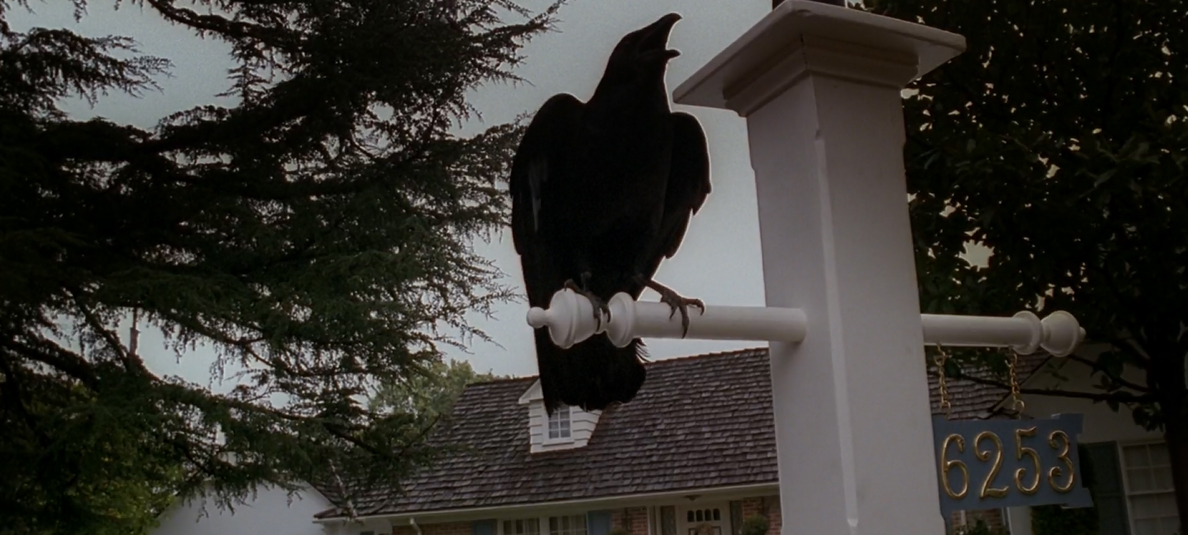
Quoth the raven...

Quoth the raven…

There comes a point where it feels old and outdated, where the sense of novelty and excited has faded to familiarity and dull routine. There comes a point where it feels like there is not much to talk about, because the show has already said a lot of what it has to say about a particular subject. It could be described as a “seven-year-itch”, but there is a reason why shows that last longer than seven seasons tend to rotate actors and producers more frequently than The X-Files has. Occasionally a blood transfusion is necessary to reoxygenate the blood.

Chimera is a perfectly solid episode of television. It is produced to the high standards of The X-Files, directed very well, and written in an efficient manner. However, it feels like it is covering a lot of well-trodden ground for the show with nothing new to say. Chimera feels like it is simply echoing sentiments the show had clearly articulated as recently as the sixth season; a curious blend of Terms of Endearment and Arcadia, but without the novelty or nuance of either. The X-Files has begun to feel as familiar as the rows of suburban houses it so fears.

Food for thought...

Food for thought…

Continue reading

Non-Review Review: The Martian

The beauty of The Martian lies in its relative simplicity. Although it runs a solid two-hours-and-twenty-minutes, the film seems a lot faster than many of its contemporaries because it keeps its eyes on a very simply central dynamic. Within the opening five minutes, the movie’s status quo is established with breathless efficiency; astronaut Mark Whatney is left for dead on the surface of Mars, and must struggle to survive as the entire planet figures out how to get him back alive.

The premise is very straightforward, and seldom gets more complicated than that. Mark tries to figure out how to stay alive as the greatest minds back home work on daring plans to establish communication and possible retrieve the lost astronaut. Along the way, both Mark and NASA suffer setbacks and reversals; complications abound and dilemmas present themselves. However, The Martian is always anchored in that very basic struggle against overwhelming odds and an indifferent universe.

Is there life on Mars?

Is there life on Mars?

The Martian is something of a genre cocktail. The movie’s tone and plot is perhaps best evoked by reference to Byron Haskin’s 1964 cult classic “Robinson Crusoe on Mars.” Mark’s plight is not too dissimilar to that of the Robert Lewis Stevenson protagonist, nor to that of Chuck Noland in Cast Away or the anonymous protagonist of All is Lost. However, the movie’s stellar setting serves as a gateway to a broader commentary on human codependency and association. Nobody gets there on their own; nobody gets back alone.

The Martian is a surprisingly heartwarming and life-affirming adventure, anchored in a charming central performance from Matt Damon and a very deep ensemble. Despite the massive sense of scale involved, Ridley Scott’s direction and Drew Goddard’s script work hard to keep it all personal. The Martian is a triumph.

Matt Damon was very excited about the film's release...

Matt Damon was very excited about the film’s release…

Continue reading

The X-Files – En Ami (Review)

This September, we’re taking a trip back in time to review the seventh season of The X-Files and the first (and only) season of Harsh Realm.

The seventh season mythology has a weird hazy feeling to it. It feels almost like a postscript.

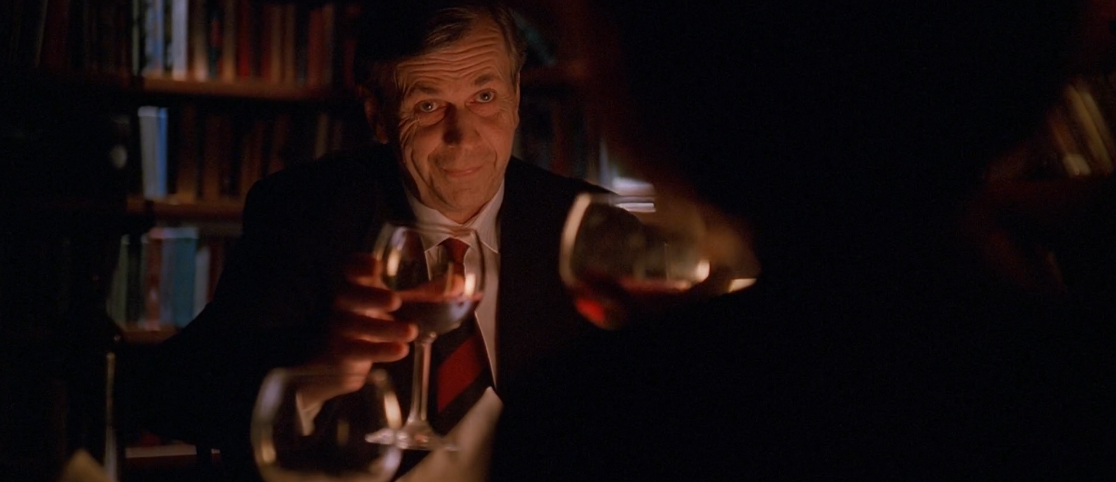
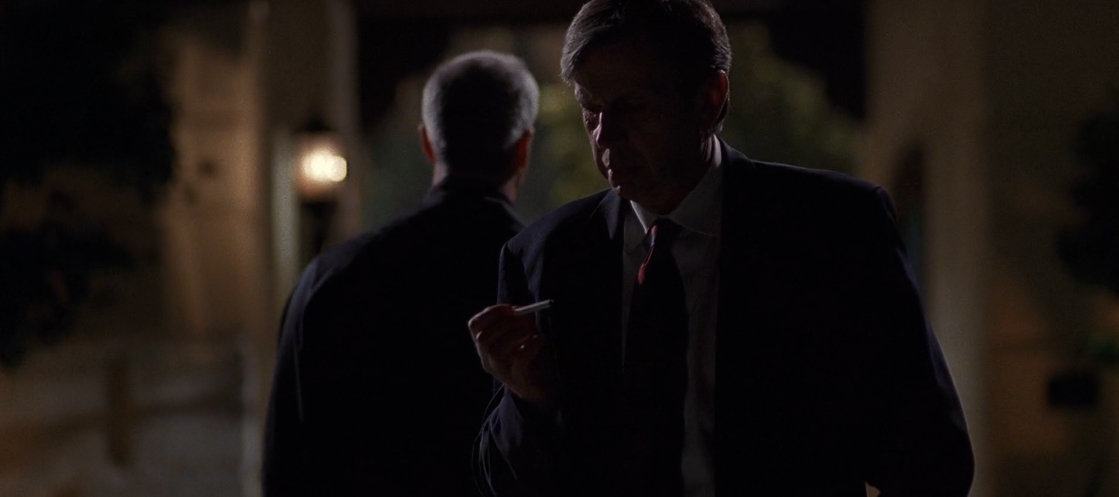
It is hard to explain what is happening with the mythology at this point. Two Fathers and One Son had promised an end to the over-arching conspiracy narrative, but it felt like something of a half-measure. The First Elder and the Second Elder were killed off, but most of the other major players remained. Although Scully congratulated Mulder on toppling the conspiracy in Biogenesis, the same episode seemed to off-handedly suggest that the Cigarette-Smoking Man was still working on it. He was still talking hybrids in The Sixth Extinction II: Amor Fati.

I'll drink to that...

I’ll drink to that…

At the same time, Two Fathers and One Son marked the end of the mythology as an on-going concern. The particulars of colonisation and the nature of the Cigarette-Smoking Man’s work were confined to limbo, some sort of bizarre twilight realm where they might exist or they might not; they simply drift around the show like ghosts. Whether or not Two Fathers and One Son actually resolved any aspect of the show’s overarching plot is open to debate; however, they very clearly suggested that the mythology was not the show’s central story going forward.

In the seventh season, it frequently feels like the mythology is a hazy backdrop against which character-driven stories might unfold. In The Sixth Extinction, an alien ship becomes a gateway to meditations on the nature of human existence while Krycek blackmails Skinner and Fowley still works with the Cigarette-Smoking Man. In The Sixth Extinction II: Amor Fati, the Cigarette-Smoking Man is making hybrids and murders Fowley, but the heart of the story is Mulder’s flirtation with temptation. Sein und Ziet and Closure have nothing to do with colonisation.

Smokey and the bandit...

Smokey and the bandit…

To be fair, this was arguably always the case with mythology episodes. In hindsight, it can seem like the mythology episodes were less part of an on-going story and more meditations on common themes tied into a shared continuity. Colony and End Game are spectacular pieces of television, but they are hard to reconcile with later revelations. The End arguably has more in common with Biogenesis than it does with the feature film into which it is supposed to tie. However, the mythology always held the promise of revelations and twists to propel it forward.

The principal effect of Two Fathers and One Son seems to have been to take away that sense of purpose and destination. The mythology is no longer building towards something or racing forward. Instead, the mythology stories seem to take place in the wasteland; a world in ruins, with only the fractured semblance of internal logic. En Ami continues the trend of setting character-driven stories amid the hazily defined unreality. Scully and the Cigarette-Smoking Man take a road-trip together through whatever is still standing.

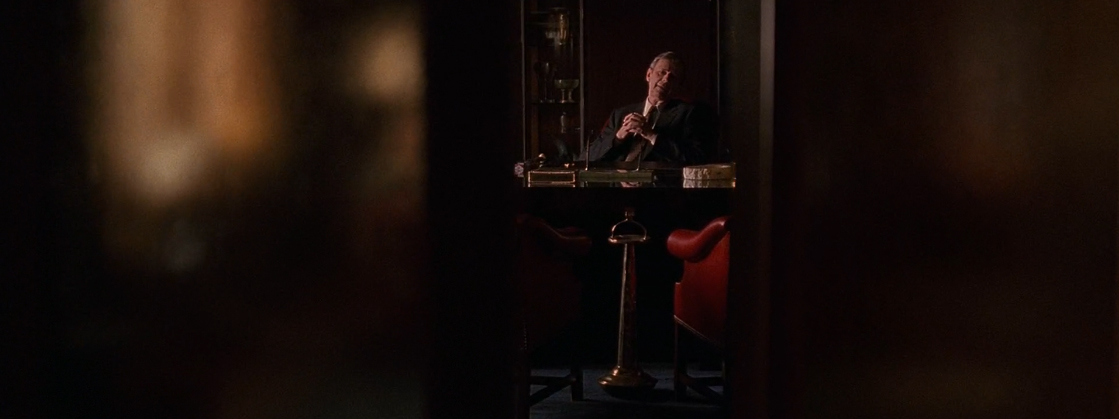
Peering through an open door...

Peering through an open door…

Continue reading

The X-Files – Theef (Review)

This November, we’re taking a trip back in time to review the seventh season of The X-Files and the first (and only) season of Harsh Realm.

Theef is an underrated seventh season episode, one often forgotten and overlooked as season seven moves firmly into its second half.

The episode represents another conscious attempt to get “back to basics.” Continuing the vein of Hungry or Millennium or Orison or Signs and Wonders, the script for Theef hopes to prove that the show can still produce a genuinely scary hour of television in its seventh season. It certainly succeeds; Theef is a delightfully unsettling story, one that borders on the downright nasty. From the closing shot of the teaser – a body suspended from a chandelier with the word “Theef” scrawled on a wall in his own blood – Theef goes for the jugular.

"I think he's trying to tell you something."

“I think he’s trying to tell you something.”

Continue reading

The X-Files – First Person Shooter (Review)

This November, we’re taking a trip back in time to review the seventh season of The X-Files and the first (and only) season of Harsh Realm.

On paper, this should be a slam dunk.

X-Cops was an incredibly risky and experimental episode of The X-Files that really pushed the show in an unexpected direction. The idea of crossing over into Cops was strange and surreal; it seemed like a gimmick that could backfire spectacularly. How could an episode of The X-Files adopt many of the identifiers and signifiers of Cops while still managing to tell its own story? It was a risky proposition, but writer Vince Gilligan and director Michael Watkins managed to pull it off, producing a definite highlight of the seventh season. (If not the final three seasons.)

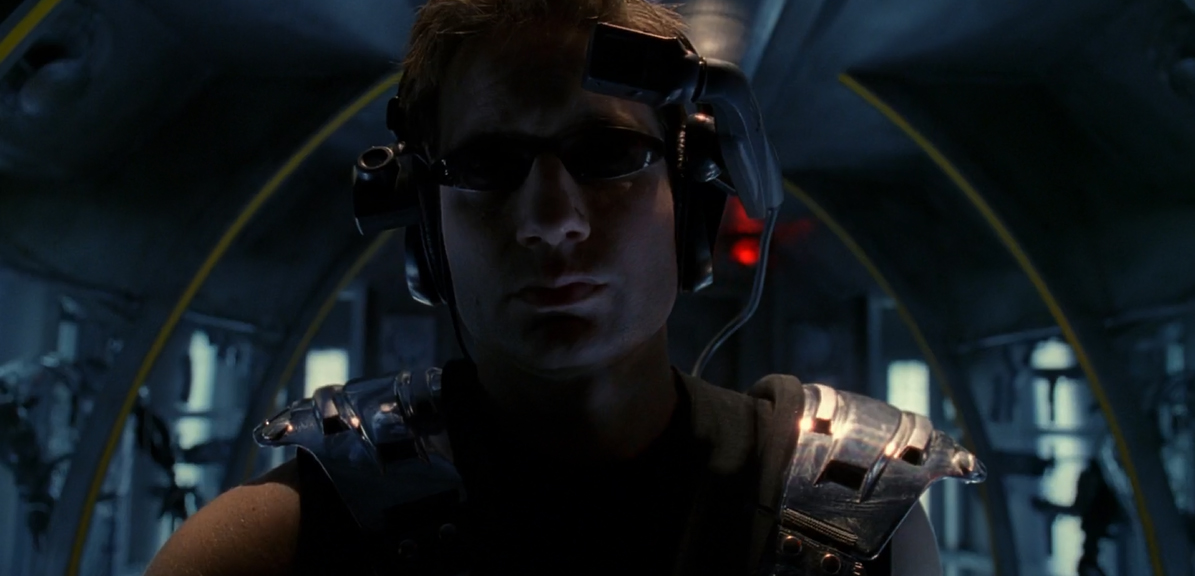
Game on.

Game on.

First Person Shooter is a similarly ambitious episode, but one that should be a much safer bet. While it pushes the show outside its comfort zone in terms of setting and concept, it does not stray too far from the basic X-Files template. It is written by outsider writers William Gibson and Tom Maddox, but could logically be seen an extension of their superlative script for Kill Switch. In fact, Kill Switch wasn’t even the show’s first “killer artificial intelligence” story; Howard Gordon and Alex Gansa had written Ghost in the Machine as the series’ eighth episode.

On paper, First Person Shooter is ambitious without being entirely unprecedented. Still, the script bends the show too far out of shape. The episode seems to warp and distort the series around it. Despite the fact that First Person Shooter contains far more of the trappings and structures of The X-Files than X-Cops, the episode feels far less comfortable in its own skin. First Person Shooter plays almost like an episode of The X-Files filtered through a lens of unreality; it feels like a textured wireframe model of an X-Files episode, wandering lost in the uncanny valley.

Game over.

Game over.

Continue reading

The X-Files – X-Cops (Review)

This November, we’re taking a trip back in time to review the seventh season of The X-Files and the first (and only) season of Harsh Realm.

There is a very serious argument to be made that X-Cops represents the last point at which The X-Files truly pushed itself.

There are experimental episodes later in the run that play with new narrative forms and concepts. Improbable features a snazzy musical number; Lord of the Flies intersects with stunt-driven television shows; Sunshine Days has the characters enter The Brady Bunch. However, X-Cops represents the last time that The X-Files allows itself to be completely submerged in a high-concept idea, following the concept through to its logical conclusion in the spirit of Jose Chung’s “From Outer Space” or Bad Blood or Triangle.

xfiles-xcops17a

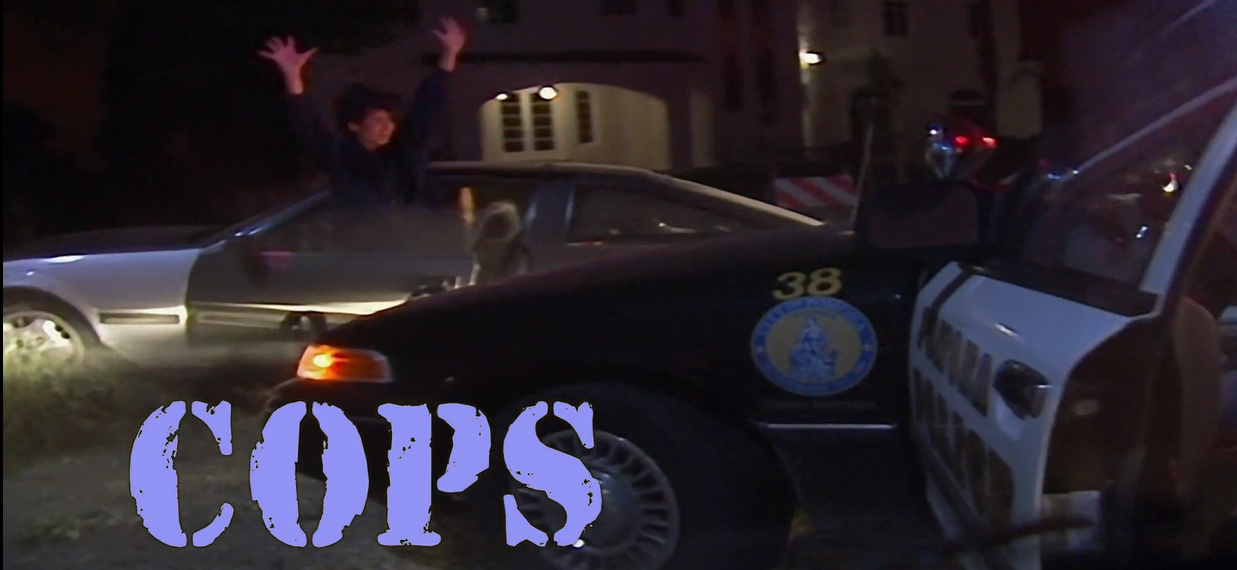
X-Cops features Mulder and Scully crossing over into an episode of Cops. However, the episode is told entirely from the perspective of the Cops production team, filmed and broadcast as if it were an episode of Fox’s long-running law enforcement reality television show. The camera becomes a performer in X-Cops, and at no point in the entire forty-five minutes does it “break character.” Barring the use of the X-Files opening credits sequence and superimposing the logo at commercials, X-Cops adopts the form and structure of Cops.

This is a boldly experimental piece of television; it is not the sort of episode that viewers expect from a show in its seventh season. This is a giddy and goofy concept more akin to enthusiastic student filmmaking than an established television institution. After Sein und Zeit and Closure suggested that The X-Files was winding down, X-Cops proves that there’s life in the old show yet. Sadly, this feels like something of a last gasp; there would never be quite as much life in The X-Files after this point.

xfiles-xcops2a

Continue reading

Doctor Who: The Magician’s Apprentice (Review)

“The TARDIS will not be entered. The TARDIS will be destroyed.

“Good luck with that. She’s indestructible.”

“Did the Doctor tell you that? Because you should never believe a man about a vehicle.”

 – The Daleks, Clara and Missy share some truths

The ninth season is certainly ambitious.

The idea of building an entire season around a series of interconnected two-parters is a departure from the show’s traditional format. It certainly makes it a lot harder to review the show on a week-by-week basis, if only because it means that reviewers are talking about each episode having only seen around half the story. That is not the way that people typically consume Doctor Who. Even modern DVD releases of the classic series package whole series together so it is not so much a four- (or six-) part episode as a single story.

Battlefield.

Battlefield.

Since it returned to television in 2005, Doctor Who has adopted an approach to narrative driven by the single episode as the default narrative unit. Sure, there were multi-part stories; but they were the exception rather than the rule. Sure, there were season long arcs; but they were largely driven by arc words and core themes as much as plot. This was, after all, the big controversy over Moffat’s “Impossible Girl” arc, which was presented as a plot mystery only to be revealed as a clever thematic point.

During the Davies era, the two-parters were typically allocated for big “event” episodes. There were roughly three in a season, and they allowed the show to adopt a bigger sense of scale and spectacle. The first two-parter was typically lighter and little bit toyetic (the “toy monster” two-parter) and the second was a lot darker and ominous (the “highlight of the season” two-parter). Davies would then use a two-parter to provide a suitably bombastic conclusion to the season, offering “blockbuster” family entertainment at the height of summer.

An axe to grind...

An axe to grind…

Continue reading