• Following Us

  • Categories

  • Check out the Archives


  • Awards & Nominations

Doctor Who: Arachnids in the U.K. (Review)

I’ve heard you’re only running because you’ve hated Trump for decades.

Please don’t mention that name.

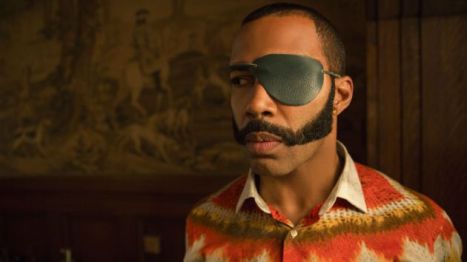
Arachnids in the U.K. is perhaps the best episode of the eleventh season of Doctor Who to date.

Arachnids in the U.K. feels like a nostalgic throwback to the Russell T. Davies era, which makes it feel of a piece with the first three episodes of the season. Executive producer Chris Chibnall has executed his spin on the traditional “present-past-future” triptych that was a hallmark of the early seasons of the revival, and so it is time to return to the contemporary United Kingdom in order to better develop the supporting cast and make some very broad political commentary about the modern world.

Finding its (eight) legs.

It is interesting to reflect on how far Doctor Who has come since its resurrection that this idea seems almost quaint, a nostalgic “back-to-basics” approach that seems lifted from thirteen years earlier. It is a valid and worthy approach to Doctor Who, and reflects Chibnall’s desire to make the show more populist and mainstream than it was during the more esoteric tenure of Steven Moffat. There is a reason that Davies was able to transform Doctor Who from a failed cult curiosity into one of the biggest things on British television using this template, after all.

At the same time, there’s something just a little worrying when the stand-out episode of the eleventh season feels like a perfectly serviceable mid-tier episode from the first four.

“Who is this Harriet Jones? I feel like we could make a deal with her. A tremendous deal.”

Continue reading

Non-Review Review: They’ll Love Me When I’m Dead

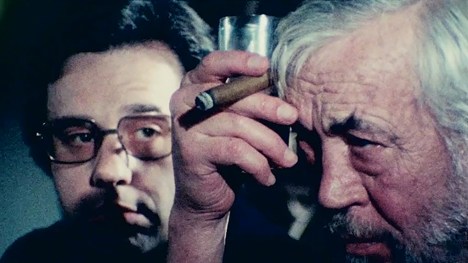
They’ll Love Me When I’m Dead serves as a convincing argument that The Other Side of the Wind works better as a story than as an actual object that exists.

They’ll Love Me When I’m Dead is a feature-length documentary that is only a few minutes shorter than its subject, providing an exploration of The Other Side of the Wind, from its conception through it development and into its long and storied afterlife. It is a very exciting and engaging tale, one that sweeps across Hollywood history, delving into a variety of nooks and crannies. It is a story that is intertwined with dissolving marriages and international politics, of bad luck and tremendous arrogance. All of this existing in the shadow of Orson Welles.
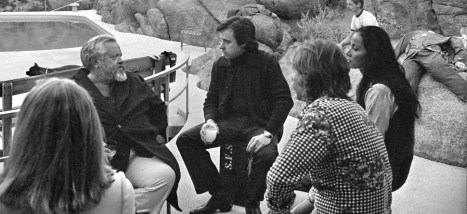
They’ll Love Me When I’m Dead offers an account of the production of Orson Welles’ ill-fated experimental piece of metafiction. It is perhaps a testament to The Other Side of the Wind that it occasionally feels like They’ll Love Me When I’m Dead can perhaps be folded into the wild ambitions of an ageing filmmaker working on a project that would not materialise during his life-time. Towards the end of They’ll Love Me When I’m Dead, archive footage of Orson Welles finds the auteur musing on his next project.

“Maybe it isn’t even the picture,” he confesses to the press. “Maybe it’s just talking about the picture.” Maybe The Other Side of the Wind is not the real headline. Maybe They’ll Love Me When I’m Dead is the real headline.

Continue reading

Non-Review Review: The Other Side of the Wind

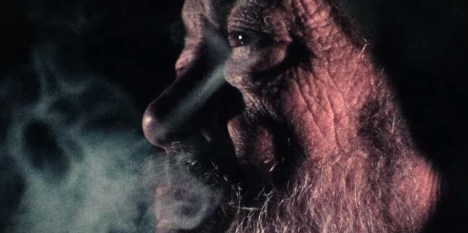
It is still strange to think of The Other Side of the Wind as an object that actually exists.

The film has haunted film films for decades, the prospect and potential of one last Orson Welles film that remains to be found long after the iconic director’s passing. The footage had all been shot. The material was gathered. All that had to be done was to journey through those hours and hours of material, in search of something resembling a feature film. It evokes that famous story about how Michelangelo approached sculpting, except that instead of a lump of marble, this work of art is to be subtracted from mountains of film.

Of course, there is a valid debate to be had about whether the version of The Other Side of the Wind that has been screened can claim to be the real or actual version. After all, the film arguably only ever existed inside the head of Orson Welles. After his passing, the only thing that could be released was an approximation of his vision, an impression of his filmmaking. This is particularly true given the extent to which Welles relied on editing in his filmmaking. Welles famously boasted to Cahiers du Cinema that editing was more important than mise en scene.

However, watching The Other Side of the Wind, there is a strong sense that Welles himself would approve this ambiguity, that he would actively encourage it. The Other Side of the Wind is a knowingly twisty and slippery piece of work, a wry and iconic piece of film that somehow still seems avante garde more than four decades after it was originally shot. There is a sense in which The Other Side of the Wind feels like sly and biting joke, one told by a comedian with pitch-perfect timing. Only one question remains. Who is the butt of this joke?

Continue reading

102. Silence of the Lambs (#23) – Halloween 2018

Hosted by Andrew Quinn and Darren Mooney, and this week with Doctor Bernice Murphy, The 250 is a (mostly) weekly trip through some of the best (and worst) movies ever made, as voted for by Internet Movie Database Users.

This time, a Halloween treat. Jonathan Demme’s The Silence of the Lambs.

At time of recording, it was ranked the 23rd best movie of all time on the Internet Movie Database.

Continue reading

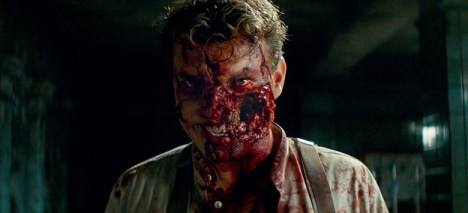
Non-Review Review: Overlord

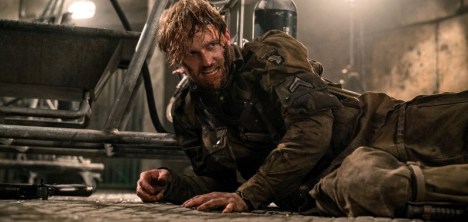
Overlord is a film that works a lot better in concept than in does in execution.

The idea of constructing a pulpy monster narrative around Nazi atrocities during the Second World War has a certain appeal to it. Not only does it evoke the sort of trashy fiction that that often existed at the margins of popular culture, but it also suggests the speculative lenses through which audiences process trauma, the way in which mass media filters horrors almost beyond human comprehension into something tangible and visceral, creating an uncanny and uncomfortable prism through which anxieties over these horrors might be channeled.

Russelling up some fun.

The horrors inflicted by the Nazis are almost impossible to fully comprehend; the systemic brutality inflicted upon those marginalised groups under their authority, the destruction that they wrought across Europe. These traumas linger in the popular memory. While the reality of those atrocities must never be forgotten or downplayed, there is something very powerful in the idea of translating that to the screen through the cinematic language of horror. Like Wolfenstein, Overlord seems to suggest an impressionistic portrait of the horrors of the period.

This approach is intriguing, and there are moments when Overlord works very well, when the film is creepy and unsettling in all the ways that it should be creepy and unsettling. However, the film suffers greatly when the script tries to impose a familiar framework on these horrors, when it runs through the checklist of storybeats expected for a major modern cinematic release. Put simply, Overlord works best when it aspires to be Captain America: The First Avenger, but as a horror film” and it works worst when it just tries to be Captain America: The First Avenger.

I want to take his face… off.

Continue reading

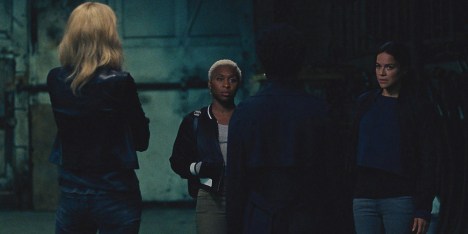
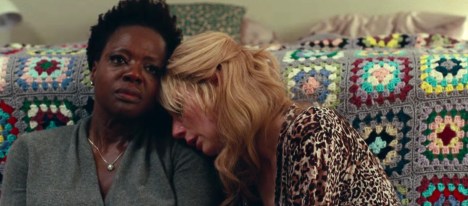
Non-Review Review: Widows (2018)

At its most basic, Widows is a testament to applying the skill and craft of two filmmakers working at the very top of their game to a sturdy and reliable genre framework.

The basic plot of Widows is relatively straightforward, adapted from Lynda LaPlante’s book by way of a very successful British television miniseries. A group of women find themselves drawn into an unlikely life of crime when their husbands are killed during a botched robbery. Caught between corrupt politicians and scheming gangsters, the women are thrown out of their comfort zone as their leader commits to completing a heist that was carefully and meticulously planned by her late husband. It’s pulpy, it’s trashy, it’s fun.

Widows of opportunity.

However, the beauty of Widows lies in applying the skill of Gillian Flynn and Steve McQueen to this set-up. Flynn is one of the biggest writers working today, known for both her novels and for her work on screenplays. Gone Girl was enough of a cultural force to turn its title into a verb, and embodied a certain kind of sleek self-aware trashy storytelling style. McQueen is a great writer in his own right, but already one of the most esteemed and respected directors working in contemporary cinema; known for his work on Shame or Twelve Years a Slave.

Widows is a movie that is completely unashamed of the trappings of its story, a familiar story about unlikely criminals who find themselves forced into “one last job”, with the biggest irony being that it is somebody else’s last job. Widows never looks down upon the heightened aspects of its narrative, nor does it feel a need to elevate or legitimise them. Instead, Widows allows its intelligence and insight to fold into the contours of this slick stylish crime thriller. The result is simply dazzling.

Stealy resolve.

Continue reading

New Podcast! Scannain Podcast (2018) #40!

It’s time for the latest Scannain podcast! A somewhat bumper edition this time.

This week, I join Grace Duffy, Luke Dunne from Film in Dublin and Phil Bagnall to discuss the week in film. As usual, we talk about the top ten and the new releases, as well as what we’ve watched this week. In this episode, we all debate Mandy, Grace discusses her rewatch of Arrival, Luke contemplates Bad Times at the El Royale and Phil ruminates upon Wonder Woman.

The bulk of this week’s news coverage is given over to Phil’s trip to the London Film Festival, and he discusses his highlights of the festival; his opinion on the headliners, his hidden gems and his disappointments. In other film news, we discuss the WANDA Feminist Film Festival in Belfast and the Galway Junior Film Fleadh.

The top ten:

  1. Kler (Clergy)
  2. Samson Et Dalila – Met Opera 2018 (Opera)
  3. Hunter Killer
  4. Venom
  5. First Man
  6. Johnny English Strikes Again
  7. Goosebumps II: Haunted Halloween
  8. Smallfoot
  9. Halloween
  10. A Star is Born

New releases:

  • Possum
  • The Guilty
  • Bad Reputation
  • An Evening with Beverly Luff Linn
  • The Hate You Give
  • Bohemian Rhapsody
  • Katie

You can download the episode here, or listen to it below.

Non-Review Review: Sorry to Bother You

Sorry to Bother You is striking, vibrant and vital. And essential.

Boots Riley’s directorial debut is a work of striking confidence, one that emerges almost perfectly formed with the skill and craft of a director much more experienced. Sorry to Bother You knows exactly what it is doing from one moment to the next, without any sense of hesitation of self-doubt. Sorry to Bother You is strikingly self-assured, maintaining an incredible level of high-energy across its runtime. This sustained propulsive dynamism in infectious, as the movie bounces from one big idea to the next.

Dialing up the social commentary.

The most obvious antecedents of Sorry to Bother You are the vibrant science-fiction social satires of the eighties, most notably the work of Paul Verhoeven that used a hyper-stylised aesthetic to depict the grosteque excesses of capitalism. Of course, the true horror of Sorry to Bother You lies in the sense of how the world itself has moved to close the gap over the past three decades. Although Sorry to Bother You unfolds primarily in a lightly fictionalised Oakland, the most unsettling aspect of the film is how close it feels to the modern status quo.

Sorry to Bother You is a work of bold vision.

Few satires are a patch on this.

Continue reading

Doctor Who: Rosa (Review)

“We don’t serve negroes.”

“Well, that’s good. Because I don’t eat them.”

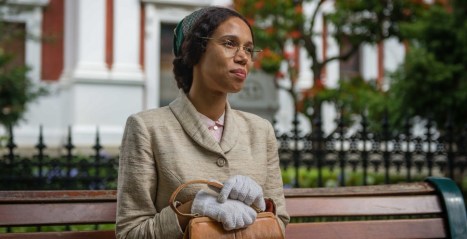
Rosa is undoubtedly well-intentioned and timely.

It is hard to imagine a more relevant or important episode of Doctor Who at this moment in time than one which acknowledges the history of racism within the United States, and the horrors inflicted upon its minority populations within living memory. (A “Brexit” episode might be closer to home, though.) This is, after all, a point in history where the President of the United States has been endorsed by the Ku Klux Klan, described nations with black populations as “sh!thole countries” and argued that Mexico is exporting rapists and murderers to the United States.

Park it here.

Of course, this isn’t just an American issue. The Brexit referendum in the United Kingdom was driven by racial anxiety, to the point that the “Leave” campaign unveiled billboards that evoked Nazi propaganda. In countries like Hungary, a resurgent ethno-nationalism is on the rise. Even on the day that Rosa was broadcast, there was a prominent news story about a white man on a Ryanair flight who insisted that a woman of Jamaican descent could not sit next to him. Rosa is certainly very timely and very relevant. It is important for children (and adults, frankly) to hear this.

There are problems, however. Rosa is a very worthy episode of television with a lot of very important things to say. In particular, its handling of Ryan and Yaz’s experiences in both the fifties and the present are very illuminating and insightful. That said, the episode runs into the same problems that haunt most of the series’ big “fixed point in history” narratives, in that it adopts a fundamentally conservative approach to history and predetermination, arguing that things can only be as they ever were. This may not be the best approach to a story about Rosa Parks.

Suitcase of the week.

Continue reading

89. The Intouchables (#38)

Hosted by Andrew Quinn and Darren Mooney and this week with special guest Kieran Gillen, The 250 is a (mostly) weekly trip through some of the best (and worst) movies ever made, as voted for by Internet Movie Database Users. New episodes are released Saturday at 6pm GMT.

This time, Olivier Nakache and Éric Toledano’s Intouchables.

Sparks fly and worlds collide when a wealthy quadriplegic hires an unemployed former felon to serve as his personal care nurse. Philippe and Driss forge an unlikely and heartwarming bond, coming to a deeper understanding of on another and the world around them.

At time of recording, it was ranked the 38th best movie of all time on the Internet Movie Database.

Continue reading