• Following Us

  • Categories

  • Check out the Archives


  • Awards & Nominations

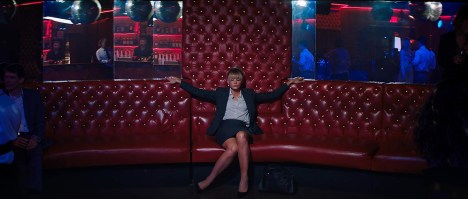
New Escapist Column! On the “The Hunt” as Empty Provocation…

I published a new piece at Escapist Magazine last week. This is one has been a while in the making, since at least August last year.

The Hunt was massive controversial before anybody had actually watched the finished cut of the film. It attracted the ire of Fox News and, through that, Donald Trump. Universal pushed the film back, eventually settling on a mid-March release date, with the advertising leaning heavily into that controversy as a selling point. As such, it’s impossible to discuss The Hunt without discussing the maelstrom around it. This means that the movie itself feels like a disappointment and a damp squib. Its potent political content is nothing more than empty provocation, its biting social commentary just an elaborate troll. The Hunt has nothing to say, which is particularly disappointing as it is sandwiched between the genuinely political provocations of The Invisible Man and Promising Young Woman.

You can read the piece here, or click the picture below.

173. I Know Who Killed Me (-#75)

Hosted by Andrew Quinn and Darren Mooney, and this week with guest Cian Sullivan from the Selected and Sissy That Pod, The 250 is a (mostly) weekly trip through some of the best (and worst) movies ever made, as voted for by Internet Movie Database Users.

This time, Chris Sivertson‘s I Know Who Killed Me.

Aubrey Fleming is a talented student, piano player and writer from the upper class surroundings of New Salem. She has lived a sheltered life, but this changes dramatically as a serial killer stalks the community. Disappearing after a football game, Aubrey is found dismembered but alive in a ditch. Rushed to hospital, she eventually regains consciousness. There’s just one complication. She claims to be Dakota, a stripper who has lived a much crueler life than Aubrey ever knew.

At time of recording, it was ranked 75th on the list of the worst movies of all time on the Internet Movie Database.

Continue reading

New Escapist Column! On the Narrative Patching of “The Rise of Skywalker”…

I published a new In the Frame piece at Escapist Magazine yesterday evening. This is one is a bit topical, the constant narrative patching of Star Wars: Episode IX – The Rise of Skywalker.

The Rise of Skywalker was released to something of a collective sigh. It was a spectacular mess of film, one full of dangling plot threads, unnecessary revelations and mountains of fan service. However, that messiness left a number of awkward lacunas, that were gradually filled in with supplemental material that revealed the nature of Lando’s arc and the identity of Rey’s father. All of this stuff radically alters the experience and understanding of The Rise of Skywalker, and the decision to strip that stuff out of the film itself illustrates how horrific the production process truly was. The awkward efforts to shoehorn this stuff back in are arguably comparable to the day-one patching of Cats to cover terrible special effects. This is not a flattering comparison.

You can read the piece here, or click the picture below.

Non-Review Review: Misbehaviour

Misbehaviour is a charming an engaging film that suffers slightly from the lack of a clear focal point.

Philippa Lowthorpe’s historical drama-comedy is set against the backdrop of the 1970 Miss World pageant in London. The event became something of a point of convergence in the cultural wars spilling over from the end of the sixties, a target for the anarchist fringe, the anti-apartheid campaign, and for the nascent women’s liberation movement. At the same time, a quieter revolution was taking place within the event itself. Grenada had sent its first contestant to take part, while South Africa sent a black woman to represent them for the first time.

Misbehaviour features an incredibly stacked cast and diverse array of perspectives, looking at the central event through a variety of radically different prisms. There’s a sense that Misbehaviour wants to offer a genuinely intersectional perspective on the events of that explosive contest, the film’s form resembling its core themes. It helps that Lowthorpe has assembled an increidbly charming cast, and that spending time with just about any member of the ensemble is a worthwhile endeavour of itself.

At the same time, though, the film struggles to balance its large ensemble. There are occasionally too many plates spinning, and too much space between them. By the time that the film has checked in on all the major characters and circled back around, dramatic momentum has been lost and the film has to spend a minute or two regaining its footing. As a result, Misbehaviour never works as well as it might, feeling a little too clumsy and broad. Still, there’s a lot to like about it.

Continue reading

Non-Review Review: The Hunt

The Hunt could never live up to the controversy.

After all, The Hunt was a film that attracted a considerable deal of attention. The basic premise of the movie finds a number of “deplorables” kidnapped and taken to a secret location, where wealthy liberals hunt them for sport. This premise attracted the attention of Fox News back in August. From there, it attracted the attention of the President of the United States. Donald Trump tweeted angrily about The Hunt, and within a day it was pulled from the release calendar.

The Hunt arrives in cinemas cresting that wave of controversy. The trailer for the new release date openly acknowledges the controversy and leans into it, encouraging prospective audience members to “decide for [themselves]” about it. So The Hunt arrives as an object of curiosity and fascination. Unfortunately, none of that feels earned. Indeed, it looks like the most remarkable thing about the shift in release dates was that it allowed The Hunt to avoid a direct class with the similar-but-superior “elites riff on The Most Dangerous Game” film Ready or Not.

The Hunt goes looking for controversy, but comes home empty handed.

Continue reading

Non-Review Review: Calm With Horses

This film was seen as part of the Virgin Media Dublin International Film Festival 2020. Given the high volumes of films being shown and the number of reviews to be written, these may end up being a bit shorter than usual reviews.

Calm With Horses is a solid, atmospheric crime drama.

There are very few surprises in Nick Rowland’s West of Ireland gangster film. The plot is fairly straightforward, focusing on a muscle-bound enforced for a local crime family who finds himself torn between the man that he wants to be and the tool that his employers see him to be. There are familiar dreams of escape, and those inevitable consequences that ripple outwards from a single morally-justified-but-strategically-stupid decision towards inevitable disaster. Thematically, Calm With Horses belongs to that familiar genre of violent men trying to live with their violence. Even the metaphors are familiar.

That said, Calm With Horses benefits from strong execution. The film received funding as part of the WRAP initiative, encouraging film production on the western coast of the island. Rowland skillfully leverages the film’s location work in Clare and Galway, providing his moody character study with a rich sense of atmosphere. In its strongest moments, Calm With Horses taps into a lingering melancholy that suggests a desolation extending beyond the rugged rural landscapes. There is a sense that these characters are as stark and haunted as the landscapes that they wander.

Calm With Horses doesn’t really offer any new twists on a familiar genre, but elevates its familiar trappings through the execution.

Continue reading

Non-Review Review: Promising Young Woman

This film was seen as part of the Virgin Media Dublin International Film Festival 2020. Given the high volumes of films being shown and the number of reviews to be written, these may end up being a bit shorter than usual reviews.

Promising Young Woman is a deeply uncomfortable watch. As it should be.

The basic premise of Emerald Fennell’s theatrical debut is decidedly thorny. Cassandra is a thirty-year-old woman who spends her weekends going to bars and acting so drunk that she can barely stand. Inevitably, a “nice guy” arrives to volunteer to help. He usually bundles her into the back of a taxi and takes her back to his place. Then, things get very uncomfortable – particularly when they realise that Cassandra is nowhere near as incapacitated as she appears to be. It’s a hell of a hook.

Promising Young Woman is the kind of film that is going to generate lots and lots of “discourse.” It will stoke strong opinions. It will spark uncomfortable conversations. It is an incredibly loaded film. All of this makes Fennell’s accomplishment all the more impressive. Promising Young Woman is a remarkably confident and assured debut feature, a film which navigates an almost impossibly fraught subject with a surprising amount of charm and wit. Promising Young Woman is heartbreaking and hilarious, raw and riotous, often pivoting between extremes in the space of a single scene. It’s a deft balancing act.

However, the most remarkable thing about Promising Young Woman isn’t just the way that Fennell manages all these tensions within the film. Promising Young Woman manages to create a palpable and compelling tension with the audience – a perfectly calibrated push-and-pull that knows exactly which buttons to push and when, for maximum effect. Promising Young Woman is a film that challenges its audience as much as its characters, and that is what makes it such a striking piece of film-making.

Note: It is probably best to see Promising Young Woman as blind as possible, without any real foreknowledge of what the film is doing or how it does it. This review will not go into too much depth, but discussing the film means discussing some of those mechanics. Consider this a light spoiler warning, and an unqualified recommendation.

Continue reading

172. Left Behind (-#33)

Hosted by Andrew Quinn and Darren Mooney, and this week with guest Andy Melhuish, The 250 is a (mostly) weekly trip through some of the best (and worst) movies ever made, as voted for by Internet Movie Database Users.

This time, Vic Armstrong’s Left Behind.

Captain Ray Steele has it all: a beautiful wife, a loving family, a successful job as a high-flying pilot. Still, he finds his eye wandering and temptation calling. Everything changes when disaster strikes during a long-haul flight, when Ray’s co-pilot and several passengers mysterious disappear without any reason whatsoever. What could possibly abduct passengers from an airplane mid-flight? And what happens to those who are left behind?

At time of recording, it was ranked 33rd on the list of the worst movies of all time on the Internet Movie Database.

Continue reading

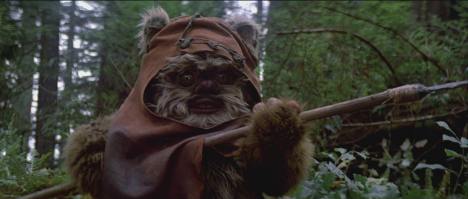
New Escapist Column! On the Ewoks as Quintessential “Star Wars”…

I published a new In the Frame piece at Escapist Magazine this evening. This is one I’ve been thinking about for quite a while: the Ewoks.

Conventional fan wisdom is that the Ewoks are crap. After all, they don’t even get a look in when Star Wars: Episode IX – The Rise of Skywalker returns to the ruins of the Death Star, ending up consigned to a brief cameo in the closing montage. There’s a certain strand of fandom that considers the Ewoks the weakest part of Star Wars: Episode VI – Return of the Jedi. This is a shame, as the Ewoks are actually one of the best parts of the film. More than that, they are on of the best parts of the franchise. They speak to the kind of things that only Star Wars could do, that gonzo blend of wholesome and radical.

You can read the piece here, or click the picture below.

The Unlikely Validation of Steven Moffat’s “Doctor Who” by Chris Chibnall…

To be entirely fair, the twelfth season of Doctor Who offers a marked improvement over the eleventh. It has a lot more enthusiasm and ambition, a stronger sense of ownership, and a higher baseline of competence.

Still, watching the twelfth season is a surreal experience. On the most basic of levels, the season does not contain a single episode as good as either of the eleventh season’s standouts, Demons of the Punjab or It Takes You Away. The best episode of the season is Fugitive of the Judoon, which is not so much an episode as a forty-odd minute teaser. The second best episode of the season hinges its climax on the moral argument that Percy Shelley’s life is worth more than millions in the future because he’s a “great man of history.” As such, it is a fundamentally flawed season.

At the same time, there is something interesting in the season’s relationship to the Moffat era. Every era of Doctor Who has an interesting relationship with the one that preceded it. The Third Doctor’s status as an establishment figure was best read as a reaction against the Second Doctor as a wandering hobo, with the Fourth Doctor’s bohemian sensibilities itself a reaction against that. Indeed, specific stories with the Hinchcliffe era seem to exist as plays upon (or critiques of) the Letts era, most notably Terror of the Zygons.

The Moffat era was no stranger to this, involving itself in an evolving conversation with the Davies era. The fifth season adhered religiously to the structure that Davies had employed for each of his four seasons, while later seasons would become structurally ambitious. The entirety of the ninth season seemed to be built outwards from Journey’s End, from the return of Davros and resurrection of Skaro in The Magician’s Apprentice to the reframing of the Doctor’s memory wipe of companion in Hell Bent. Moffat even affectionately named the “good Dalek” in Into the Dalek as “Rusty” in honour of Russell T. Davies.

As such, it is no surprise that the Chibnall era should have something to say about the Moffat era. To be fair, historical episodes like Nikola Tesla’s Night of Terror or The Witchfinders, along with attempts to ground the series in the companions’ domestic lives in Arachnids in the U.K. and Can You Hear Me?, suggest a stronger affinity for the Davies era. Still, the decision to open the twelfth season with a two-parter globe-trotting adventure (that morphs into a time-hopping adventure) in Spyfall, Part I and Spyfall, Part II feels consciously indebted to Moffat’s sixth season opener The Impossible Astronaut and Day of the Moon.

The most striking aspect of the twelfth season’s relationship to the work of Steven Moffat is how its season premiere and finale feel like long-delayed set-ups to punchlines that Moffat delivered years ago. In particular, Spyfall, Part II feels like the premise of Let’s Kill Hitler played depressingly straight, and The Timeless Children is essentially the sort of notionally “epic” continuity-fest that Hell Bent so studiously avoided. There’s something incredibly depressing in this, a sense that the Chibnall era not only missed the point of Let’s Kill Hitler and Hell Bent, but is committed to being the kind of stories that they so roundly mocked.

Continue reading