• Following Us

  • Categories

  • Check out the Archives


  • Awards & Nominations

New Escapist Column! In Praise of Michael Keaton’s Batman…

I published a new In the Frame piece at Escapist Magazine this evening. The big news this week was that Michael Keaton might be reprising his role as Batman from Batman and Batman Returns, so it felt like the right time to celebrate his contribution to the role.

Michael Keaton was a controversial choice for the role of Batman. Indeed, he’s arguably been underrated and underappreciated since he donned the cowl, with stock criticisms describing his interpretation of the Caped Crusader as bland or boring, especially in comparison to his villains. However, Keaton offered a fascinating and compelling portrayal of the Dark Knight, one worthy of celebration and praise. Keaton offered a version of Batman who felt more vulnerable and more insecure than other iterations, a child playing dress-up. It has aged remarkably well.

You can read the piece here, or click the picture below.

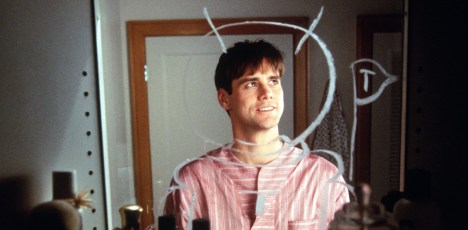
“The Truman Show” Didn’t Just Predict Our Future, But Also the Future of How Movies Would Be Sold…

More than twenty years after its release, it feels like everything that might be said about The Truman Show has already been said.

The Truman Show is that rare Hollywood blockbuster that feels somehow simultaneously timeless, timely and prescient. It speaks to anxieties that resonate throughout history, fears that were very particular to the cusp of the millennium, and to nightmares that were yet to come. It belongs at once to that age-old anxiety that the world is an illusion and human comprehension is insufficient, to the difficult-to-articulate existential uncertainty of the so-called “end of history”, to a future in which everybody would willingly become the star of their own Truman Show.

Indeed, The Truman Show seems to say so much about the world outside itself and the human condition that it’s possible to miss the film itself. Peter Weir’s late nineties blockbuster is a surreal slice of history itself, a relatively big budget mainstream release starring one of the most famous people on the planet, built around a rather abstract high concept. Not only was the film a massive critical success, it also managed to survive and prosper against a heated summer season.

While its actual themes and contents might be dystopian, The Truman Show itself offers an optimistic glimpse of a kind of blockbuster that seems increasingly unlikely.

Continue reading

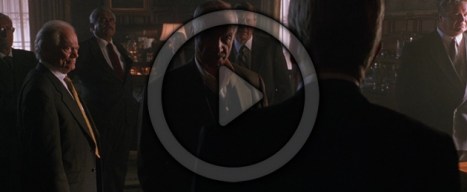
New Podcast! The X-Cast – Fight the Future Minute #55 (“The Syndicate III”)

So The X-Cast reached the end of the show’s fifth season, and approached The X-Files: Fight the Future. This naturally meant it was time for another breathtakingly ambitious project, so the podcast is going literally minute-by-minute through the first X-Files feature film. I’m joining the wonderful Kurt North for two brief stretches featuring the Well-Manicured Man.

This episode wraps up my first stretch of episodes discussing Fight the Future, taking a look at the end of the conversation between the Well-Manicured Man and the rest of the Syndicate around him. It’s a fun discussion that finally gets to the heart of Fight the Future, bringing Mulder and Scully back into the story and communicating the stakes clearly to the audience munching on their popcorn.

You can listen to the episode here, or click the link below.

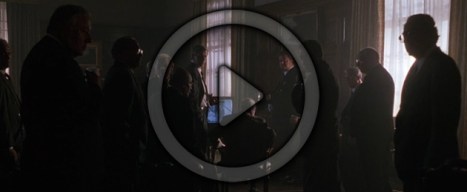
New Podcast! The X-Cast – Fight the Future Minute #54 (“The Syndicate II”)

So The X-Cast reached the end of the show’s fifth season, and approached The X-Files: Fight the Future. This naturally meant it was time for another breathtakingly ambitious project, so the podcast is going literally minute-by-minute through the first X-Files feature film. I’m joining the wonderful Kurt North for two brief stretches featuring the Well-Manicured Man.

The delineation between my second and third minutes on the project is a bit looser than the clear demarcation between the first and second, in that it is a continuation of the same scene. Still, Kurt and I take a little bit of a closer look at the character of Strughold, the special celebrity guest star “big bad” who is drafted in to provide suitable amounts of menace to Fight the Future and then never appears again – probably because Armin Mueller-Stahl was a bit above the show’s paygrade, even after it moved to Los Angeles.

You can listen to the episode here, or click the link below.


New Podcast! The Time is Now – Season 2, Episode 22 (“The Fourth Horseman”)

The Time is Now is winding down its coverage of the second season of Millennium, and I was flattered to be invited to discuss the first part of the two-part season finale The Fourth Horseman with the fantastic Kurt North.

I’ve talked a lot about my love of the second season of Millennium, and I’ve argued that the show has one of the finest season (and arguably series) finales in television history. The Fourth Horseman and The Time is Now were episodes that really shattered my expectations of what was possible on network television in the nineties. They are bold, provocative and melancholy episodes of television. They remain one of the most evocative depictions of the end of the world that I have ever encountered in media. So it was a thrill to get to discuss them.

As ever, you can listen directly to the episode here, subscribe to the podcast here, or click the link below.

Continue reading

Non-Review Review: Eurovision Song Contest – The Story of Fire Saga

Eurovision Song Contest: The Story of Fire Saga is a limp misfire.

There’s no doubt that the film comes from a place of affection and sincerity, reportedly inspired by writer and star Will Ferrell’s delight on discovering the camp weirdness of the Eurovision Song Contest. Indeed, The Story of Fire Saga has clearly been produced with the enthusiastic participation of the contest itself; the film uses a lot of branding associated with the event, features cameos from commentators like Graham Norton, and even ropes in a couple of past participants for its most endearing tribute to the surreality of the competition.

Marching on.

However, whether because it constrained by the official branding or simply by the limitations of Ferrell as an outsider looking in, The Story of Fire Saga doesn’t work. On a basic level of comedy mechanics, there are not enough jokes to sustain the indulgent two-hour runtime. On a more fundamental level, The Story of Fire Saga often fails to grasp what makes the Eurovision Song Contest such a beloved cultural institution. There’s a sense in which The Story of Fire Saga could be about almost anything else, and would be functionally the same movie.

This is a disappointment, particularly given that The Story of Fire Saga is being released in a year without the Eurovision.

A pretty weak ‘Vision.

Continue reading

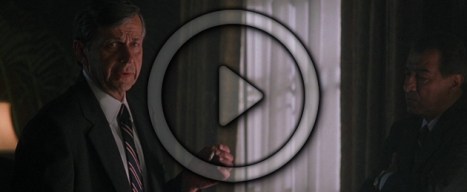
New Podcast! The X-Cast – Fight the Future Minute #53 (“The Syndicate”)

So The X-Cast reached the end of the show’s fifth season, and approached The X-Files: Fight the Future. This naturally meant it was time for another breathtakingly ambitious project, so the podcast is going literally minute-by-minute through the first X-Files feature film. I’m joining the wonderful Kurt North for two brief stretches featuring the Well-Manicured Man.

In some ways, this section of the film is an illustration of how tightly structured Fight the Future is, in terms of communicating exposition and character dynamics to an audience that may not be entirely up to date with the grand mechanics of the X-Files universe. So Fight the Future spends almost exactly a minute with the Well-Manicured Man before throwing him into conflict with the Syndicate. In doing so, it draws a contrast between the two that serves to very clearly define what distinguishes the Well-Manicured Man from his colleagues and partners.

Again, it would be too much to describe the storytelling here as elegant, but it does communicate things like character motivation quite clearly without distracting too heavily from the emotional crux of Fight the Future. Carter and Bowman both understand that the key is to communicate all of this as clearly and as quickly as possible, in order to get back to what is the movie’s real attraction, the movie-star tension between David Duchovny and Gillian Anderson. However, even with that in mind, the storytelling here is commendably efficient.

You can listen to the episode here, or click the link below.

New Podcast! The X-Cast – Fight the Future Minute #52 (“A Well-Manicured Man (Again!)”)

So The X-Cast reached the end of the show’s fifth season, and approached The X-Files: Fight the Future. This naturally meant it was time for another breathtakingly ambitious project, so the podcast is going literally minute-by-minute through the first X-Files feature film. I’m joining the wonderful Kurt North for two brief stretches featuring the Well-Manicured Man.

The Well-Manicured Man is – not so secretly – one of my favourite characters in the larger X-Files pantheon. This is partly because he’s played by the wonderful character actor John Neville, but also because he serves as an excellent analogy for the corrupting influence of the sort of power that runs through The X-Files. While the Cigarette-Smoking Man is transparently evil, and while the Elders are vaguely defined at best, the Well-Manicured Man is interesting in large part because he seems actually conflicted about what he has committed to.

In the first of this stretch of minutes, Fight the Future reintroduces the Well-Manicured Man in what is effectively a microcosm of the movie’s approach to storytelling. The audience is immediately given some understanding of who this character is, what he represents and what his motivations might be. It is more economical and effective than elegant, and a prime example of how Fight the Future was trying to position itself as a blockbuster rather than a cult film.

You can listen to the episode here, or click the link below.


Non-Review Review: Irresistible

Irresistible is a movie that largely exists to demonstrate that nobody hates the political left like the political left.

Jon Stewart’s second feature as writer and director essentially positions itself as a post-2016 political satire. Stewart’s former correspondent Steve Carell is cast as Democratic campaign manager Gary Zimmer, who is still nursing the wounds of the 2016 election. The film features two short table-setting prologues, the second of which finds Zimmer lying in bed on November 9th, 2016 as the news media plays back his unearned confidence in the face of the earth-shattering Donald Trump victory. There’s a sense in which Zimmer needs to be humbled.

Window into a broken system.

A couple of years later, both Zimmer and the party clearly still smarting from that humiliating defeat, a video comes across Zimmer’s desk. Recorded at a town hall in Deerlaken, Wisonsin, it shows a military veteran standing up for the rights of immigrants and minorities to a town administration desperate to lock them out of welfare. Colonel Jack Hastings appears to be the complete package, a white rural farmer with genuinely progressive politics. “He’s a Democrat,” Zimmer insists. “He just doesn’t know it yet.”

Stewart tries to position Irresistible as a biting social commentary on the state of the modern Democratic party and its awkward relationship with the white rural voters who are undergoing incredible political hardship as a result of a series of global recessions, and who feel increasingly disconnected from the political establishment. It’s an old theme that belongs to a rich cinematic tradition including films like Mister Smith Goes to Washington, and it should still resonate these days.

Making Hastings while the sun shines.

Unfortunately, Stewart’s satire is unfocused and tonally unbalanced. It’s never clear exactly what the film is saying, beyond expressing an understandable frustration with the establishment of the political left. However, the film’s anger is clearest when it is singularly focused as to imply a vacuum that simply doesn’t exist. More than that, Stewart occasionally seems to invest in the some sort of nostalgic and romantic fetishisation of the rural community that he so scathing ridicules in the political establishment.

This issue reflects a broader problem with the movie. Irresistible is tonally erratic at the best of times, alternating between a biting satire set in a world that is at least meant to be recognisable and a more cartoonish comedy populated by outlandish science-fiction elements. Stewart can’t seem to hone in on what Irresistible is trying to say about the political system, beyond the simple fact that political types are the absolute worst.

Dems the breaks.

Continue reading

New Escapist Column! On How Pixar Reinvented American Theatrical Animation…

I published a new In the Frame piece at Escapist Magazine this evening. This weekend marked the tenth anniversary of the release of Toy Story 3 and the planned release date of Soul, so I thought it was a good time to take a look back at what made Pixar special.

Everybody talks about how emotive Pixar films are, how much they resonate with audiences on that level. However, what’s most striking and impressive – and perhaps most influential – about Pixar’s output is the way in which the studio draws consciously from a wide variety of influences to tell a wide variety of stories. There’s a lot of variety in the Pixar canon, they films playing with a large number of genres in interesting ways, repurposing classic formulae for a much younger audience than would have been the intended audience for the original films in question.

You can read the piece here, or click the picture below.