• Following Us

  • Categories

  • Check out the Archives


  • Awards & Nominations

New Podcast! Scannain Podcast (2018) #8!

A packed week at the Scannain podcast, looking at the week in Irish cinema.

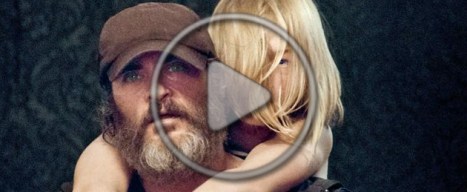
Still recovering from the Audi Dublin International Film Festival and the Oscars, I was delighted to join Niall Murphy and Grace Duffy on the podcast. We discussed all the usual topics: the mountains of films that we had watched during the festival, and while snowed in; the weekly top ten including Game Night, Lady Bird and Black Panther; and the slew of high-quality new releases including The Lodgers and You Were Never Really Here.

Check it out here, or give it a listen below.

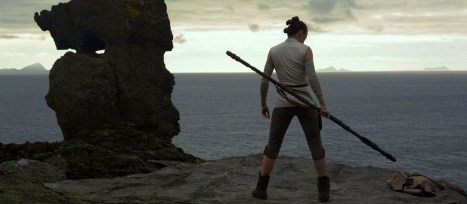
The Last Jedi, Dunkirk and the Death of the Hero…

One of the more interesting aspects of living through a pop culture moment is that it is often quite hard to properly assess anything from that subjective vantage point.

It is too easy to assume that this moment is the most important moment in history, to suggest that the entirety of history has been a path leading to this moment or to the moment just beyond it. There is also a clear desire to find signal in the noise, to sift through the nearly impossible volume of data that threatens to overwhelm any filter and find a pattern. As such, it is always tempted to declare particular movies as the important to this particular moment, or to find trends when none actually exist.

At the same time, there is something to be said for trying to sift through contemporary pop culture and to observe trends. In particular, to see how those trends reflect back on the world in which those films were produced and the world in which they were released. In particular, one of the more interesting aspects of Star Wars: Episode VIII – The Last Jedi and Dunkirk is a clear and conscious shift away from the conventional heroic narrative inside genres traditionally associated with such grand epic themes.

At a point in time when the political right seems to veering closer and closer to fascism, it is particularly striking to have last year’s sweeping science-fiction epic and last year’s highest profile war film both consciously rejecting the politics of the “strong man” and the “chosen one.”

Continue reading

Non-Review Review: Game Night

Game Night is a delightfully strange creation, the kind of film that feels willfully esoteric.

Game Night a comedy built around an extended whole plot reference to a largely forgotten-by-all-but-hardcore-devotees mid-tier nineties David Fincher movie. Despite amassing something of a cult following, and despite the fact that it has aged relatively well as an example of Fincher’s craft, The Game is largely seen as a curiousity in Fincher’s filmography. It lacks the gravity and cultural weight afforded to the Fincher films that impacted the zeitgeist and resonated with critics; se7en, Fight ClubZodiac, The Social Network.

A cheesy premise.

As such, it is strange to see a comedy built as an extended homage to The Game. Not that there is anything wrong with The Game. As with any Fincher film, it is a very well-constructed film and one that is satisfying on its own terms, even if it never elevates itself in the same way as the best of the director’s work. It seems like a strange choice for a loving spoof twenty years after the fact. Perhaps Game Night can be contextualised as one of the more bizarre and specific expressions of the nineties nostalgia otherwise referenced in films like Jurassic World or Independence Day: Resurgence.

However, what is especially striking about Game Night is its commitment to this singular extended reference. This is not a film recycling the basic concept of The Game, it is a film defined and shaped by The Game. While it is very clearly nested inside the framework of a contemporary studio comedy, Game Night proves endearingly invested in its inspiration. Game Night is very… well… game.

Getting on board with the premise.

Continue reading

Non-Review Review: Ni juge, ni soumise (So Help Me God)

This film was seen as part of the Audi Dublin International Film Festival 2018.

So Help Me God is a very strange film, in that it is very difficult to imagine how exactly this documentary got made.

Anne Gruwez is a judge working in Brussels. As part of her role in the criminal justice system, she not only supervises on-going investigations, but also hear minor cases on something approaching a one-on-one basis. So Help Me God follows roughly a year in the life of Gruwez, splitting its attention between her on-going stewardship of a cold case murder investigation and the more routine cases that she hears on a daily basis. What emerges is a fascinating and compelling examination of the Belgian legal system.

So Help Me God has an amazing amount of access to the workings of the criminal investigations overseen by and the criminal cases heard by Anne Gruwez. No faces are blurred, no voices are disguised. There is no artificial barrier created between the audience and the subjects, no attempt to disguise identities. In many ways, So Help Me God feels very much like a particularly eccentric workplace documentary, with little sense of any red tape or restrictions upon the production team. It is a testament to directors Yves Hinant and Jean Libon that they were able to construct such a candid film.

So Help Me God is fascinating and engaging viewing, even if there is a sense of something decidedly less quirky and amusing resting somewhere beneath its polished and charming exterior.

Continue reading

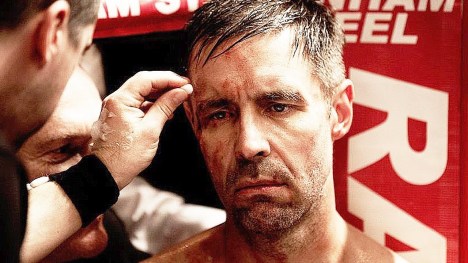
Non-Review Review: Journeyman

This film was seen as part of the Audi Dublin International Film Festival 2018.

Journeyman is a very traditional and formulaic film in some regards.

The plot and arc of the film are very familiar. Matty Burton is a veteran boxer, and World Middleweight Champion. During a bout defending his title against aggressive young challenger Andre Bryte, Matty suffers a catastrophic setback, and is left picking up his pieces and struggling to put his life back together. Along the way, the trauma has serious and profound consequences for the people around him, including his wife and his best friends. Journeyman hits most of the beats that the audience expects from a story like this, occasionally feeling formulaic and predictable.

However, Journeyman is a reminder that these are not fatal flaws in a feature film. After all, a formula becomes predictable for a reason; that familiarity comes from repeated exposure to it, and the repeated application of a narrative formula is a testament to its durability and reliability. Journeyman is in someways a blending of the typical boxing movie with the typical recovery movie, but also a demonstration of just how effective all of these conventions can be when applied with proper skill and energy.

Journeyman is a very conventional film, but it is also a deeply satisfying one.

Continue reading

New Podcast! Scannain Podcast (2018) #7!

Before the storm…

The arrival of “Storm Emma” and the “Beast from the East” ensured one of the most memorable Audi Dublin International Film Festivals in recent memory. Myself, Jason Coyle and Ronan Doyle took a bit of a breather in the middle of it all to talk about the best of what we’d already seen, what we thought would win at the Oscars, as well as the usual trip through the weekly top ten and the new releases.

Check it out here, or give it a listen below.

Non-Review Review: Hannah

This film was seen as part of the Audi Dublin International Film Festival 2018.

Hannah is a quiet, meandering movie elevated by a powerhouse central performance from Charlotte Rampling.

The second feature film by Andrea Pallaoro, Hannah unfolds primarily in silence – or in the absence of talking. There is dialogue, but it often seems incidental to the story being told. Much of the film consists of extended wordless passages, focusing on the eponymous character as she moves through the world. Dialogue is often perfunctory and functional, seldom exposition driving a scene. A lot of the sound in the film is ambient; a train approaching and then pulling into a platform, a cloth cleaning a gigantic glass door, water trickling from taps and faucets.

As the title implies, Hannah is essentially a character study. Charlotte Rampling plays the eponymous character, the film following her through her routine. Gradually, the film sketches out her world, first in broad pencil strokes and then in fine detail. Rampling anchors the film, conveying so much through her eyes and her expression, providing a strong emotional core to the film buried beneath an emotionally reserved exterior. Rampling’s performance is crushing and heartbreaking, and all the more powerful for its low-key nature.

However, Hannah is perhaps too low-key. Barring a bunch of clumsy symbolism, there are points at which the film feels like it might easily lapse into a coma without anybody noticing.

Continue reading

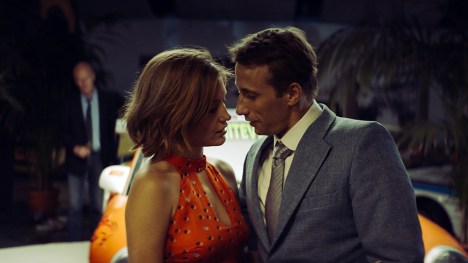
Non-Review Review: Le Fidèle (The Racer and the Jailbird)

This film was seen as part of the Audi Dublin International Film Festival 2018.

The Racer and the Jailbird is certainly a very strange film, and not in a particularly interesting way.

Running two hours and ten minutes, The Racer and the Jailbird is essentially two very different films stitched together. Michaël R. Roskam‘s third feature-length film is a curious hybrid, a passable eighty-minute Heat knock-off followed by an interminable European Lifetime Movie-of-the-Week. How stereotypical European, you ask? So European that it features a completely earnest reading of the line, “I am not pregnant with new life, but with death.” it is kind of brilliant, in its own ways. Many writers spend their lives in search of prose that purple.

To be fair, there is something interesting in the premise of The Racer and the Jailbird, and in its eventual narrative substitution. There is something be said for setting up a premise and then swerving dramatically to upset an audience’s expectations, to catch them off-guard by establishing a familiar set of genre elements and then twisting sharply in an unexpected direction. However, these sharp turns demand a very precise set of skills, including complete mastery of tone and narrative.

The Racer and the Jailbird lacks that control, and so misses the turn, spinning out of control and flipping dramatically before ending up as a mangled heap by the side of the road.

Continue reading

Non-Review Review: Unsane

This film was seen as part of the Audi Dublin International Film Festival 2018.

Unsane is off the wall.

The movie simply should not work, by just about any conceivable measure. Unsane is at once a conspiracy thriller criticism of the hypercapitalist impulses of the American healthcare system and a self-aware trashy nineties psychothriller about a young professional woman who may or may not be dealing with a stalker, all shot on an iPhone. It is One Flew Over the Cuckoo’s Nest meets Single White Female meets Tangerine. It is astounding that the film works as well as it does, that Unsane remains compelling and engaging even as it careens off the tracks.

A large part of this is down to a fantastic central performance by Claire Foy, who holds the thematically loopy and surreal adventure together through sheer force of will. Unsane subjects its protagonist to a cavalcade of horrors and twists, any one of which blatantly absurd upon even the most cursory of examinations. However, Foy anchors the film in a compelling and engaging central performance to manages to keep the audience both off-balance and sympathetic at the same time. It is a deft (and impressive) balancing act.

Similarly, writer and director Steven Soderbergh also deserves a great deal of credit for keeping Unsane from completely unspooling. For all the chaos and absurdity of the film, for all the tonal shifts and weird contrivances, for all the trashy genre tropes and gonzo plotting, it never feels like Unsane escapes its director. Soderbergh walks a fine line, producing a film that veers wildly and unpredictably, while also seeming to know exactly what it is doing. The result is bizarre, but engaging. It might be too much to describe Unsane as good, but it is good fun.

Continue reading

Non-Review Review: The Meeting

This film was seen as part of the Audi Dublin International Film Festival 2018.

The Meeting is a fascinating story, told terribly.

The real-life events that inspired The Meeting are genuinely moving. Nine years after she was sexually assaulted walking home from the bus, Ailbhe Griffith convenes a meeting with the man who raped her. In a small room, Ailbhe Griffith and Martin Swan engage in a dialogue about those events, about how that evening shaped both of their lives, and about the scars that linger. It took remarkable courage for Griffith to put herself in that room, and she is clearly a thoughtful and fascinating subject. There is a great movie to be made of this story.

Unfortunately, The Meeting is not that great movie. There are various reasons why The Meeting doesn’t work. Some of those reasons are justifiable and understandable, fair creative choices that simply don’t pay off in a satisfying manner and serve to undercut the narrative being constructed. However, some of those reasons are unjustifiable decisions that could never have worked even in abstract theory and which serve to turn The Meeting into a spectacularly ill-judged piece of cinema.

The eponymous meeting might have been a genuinely moving and affecting experience, but The Meeting is nothing short of a disaster.

Continue reading