• Following Us

  • Categories

  • Check out the Archives


  • Awards & Nominations

98. PK (#–) – Indian Summer 2018

Hosted by Andrew Quinn and Darren Mooney, and this week with special guest Giovanna Rampazza and Babu Patel, The 250 is a (mostly) weekly trip through some of the best (and worst) movies ever made, as voted for by Internet Movie Database Users. New episodes are released every Saturday at 6pm GMT, with the occasional bonus episode thrown in.

This year, we are proud to announce Indian Summer, a fortnight looking at two of the Indian films on the list. We hope to make this an annual event. This year, we’ll be covering Rajkumar Hirani’s PK and Rakeysh Omprakash Mehra’s Rang De Basanti. This week, we’re discussing the first of those two films, PK.

In the middle of the desert, a mysterious stranger arrives from a far away land. When events conspire to strand the visitor in this strange land, he makes a desperate attempt to get home. Along the way, he asks tough and probing questions about the bizarre world in which he has found himself.

At time of recording, it was not ranked on the Internet Movie Database.

Continue reading

New Podcast! Scannain Podcast (2018) #34!

It’s time for the latest Scannain podcast!

This week, I join Jason Coyle, Ronan Doyle, Grace Duffy and Andrew Quinn to discuss the week in film. As usual, we talk about the top ten and the new releases, as well as what we’ve watched this week. In this episode, we discuss the work and legacy (and delayed appreciation) of Agnès Varda, the charm of When Harry Met Sally, the appeal of the original Halloween and the horror of The Exorcist.

You can listen to the episode here, or click the link below.

Top Ten:

  1. The Nun
  2. Black ’47
  3. BlacKkKlansman
  4. Christopher Robin
  5. Hotel Transylvania 3: A Monster Vacation
  6. Mamma Mia: Here We Go Again!
  7. Incredibles II
  8. The Meg
  9. Searching…
  10. Ant Man and the Wasp

New Releases:

  • A Mother Brings Her Son to be Shot
  • The Predator
  • Crazy Rich Asians
  • King of Thieves
  • The Rider

New Podcast! The X-Cast – Season 3, Episode 15 (“Piper Maru”)

Having recovered from the madness that was The X-Cast Live, The X-Cast is back to its regular schedule.

I’m subbing in for Tony this week to discuss the third season mythology episode Piper Maru, the first part of a late-season two-parter largely dealing with the fallout from the AnasaziThe Blessing Way and Paper Clip trilogy while also introducing the black oil into the mythology. I’m lucky enough to be joined by Christopher Irish from The X-Files Lexicon.

The truth is in here. You can listen to the episode here, or click the link below.

Continue reading

“Black Panther”, “Crazy Rich Asians”, and American Dreaming in 2018…

The silver screen is not just a window, it is occasionally a mirror as well.

The cinematic gaze reveals a lot. Not just about the object in focus, but about the filmmaker (and the audience) behind the gaze. Although independent and arthouse cinema is thriving in the twenty-first century, and though home media is fundamentally changing the way that people consume media, the cinema will always be a communal space. A group of people sitting in a room together, bathed in projected light. There are obviously debates to be had about to what extent cinema reflects culture as much as it acts upon it, but there is undoubtedly a symbiosis there.

Cinema reveals a lot about contemporary culture, and not just “worthy” cinema that tends to get cited by critics as “the most important” or “the most timely” media of its particular moment. Indeed, there is perhaps something more revealing in looking at media that doesn’t consciously invite these comparisons, that doesn’t trumpet the manner in which it speaks to a particular moment. Sometimes it is more revealing to look at the films that aren’t saying anything, or at least are not consciously or overtly saying anything, about the current political moment.

In fact, it’s often a lot easier to get a sense of what is bubbling through the popular consciousness (or even the popular subconscious) by looking at low-budget “disposable” fare like horror movies than it is be interrogating more respectable and self-conscious fare. It is no coincidence that the past decade has seen a resurgence in haunted house and home invasion horror like The Conjuring, The Strangers, The Purge or even Don’t Breathe, reflecting anxieties about the American home as a site of horror in the wake of the subprime mortgage crisis.
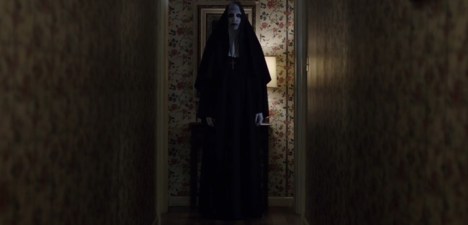
Popular cinema is similarly a fascinating prism through which to examine contemporary American culture, to get a sense of how the United States sees both itself and its relationship with the rest of the world. It’s a glimpse into the nation’s psyche, offering a messy and dynamic dive beneath the polished exterior. It cuts through a lot of contemporary politics, foregoing accuracy in favour of a general aesthetic. It is a sketch more than a portrait, but that sketch can be instructive and revealing of itself.

In particular, the twin releases of Black Panther and Crazy Rich Asians over the past year suggest something interesting about modern conceptions of the American Dream.

Continue reading

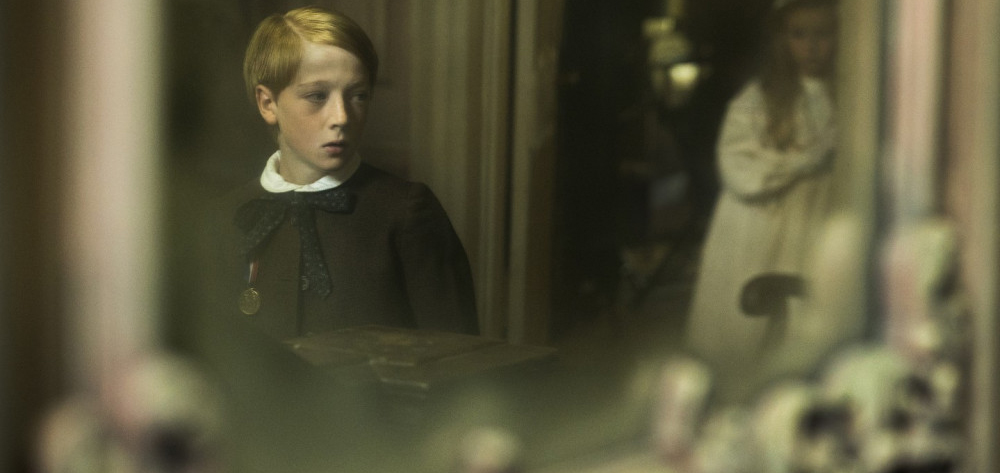
Non-Review Review: The Little Stranger

The Little Stranger could do with being a little stranger.

Gothic horror stories about haunted houses are often about more than just the building or the estate itself. They often serve as something at once larger and smaller; a prism through which the storyteller might examine both the society around the haunted house and the family unit trapped within. This is true of most haunted house stories, no matter where or when they are set. The Amityville Horror is about much broader familial anxieties than a mere spectre.

Stranger Things…

At the same time, it feels particularly true when applied to the more traditional and old-fashioned gothic haunted house stories, the kind of tales about old family estates in the middle of nowhere, that had once served to anchor political and economic power in a particular area, but had since watched modernity pass them by. These are the sorts of creepy houses frequently glimpsed in period pieces or older stories, whether in tales set in the England of Wuthering Heights or the New England of Edgar Allan Poe.

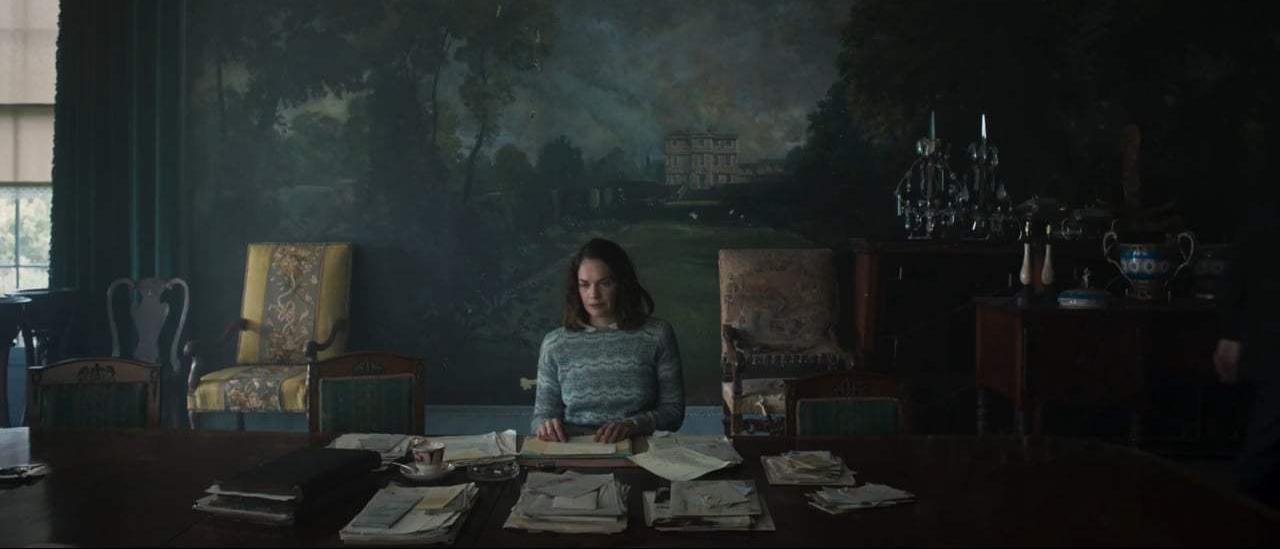
The Little Stranger belongs to this particularly strain of haunted house horror, unfolding on a once grand estate that is slowly surrendering itself to a rapidly-changing world. It is the story of a house in decay and decline, falling apart as it struggles to find its place in a world that might slowly shed the trappings of class hierarchies and where power might no longer be anchored exclusively in those families wealthy enough to own and maintain these grand estates.

A sorry estate of affairs…

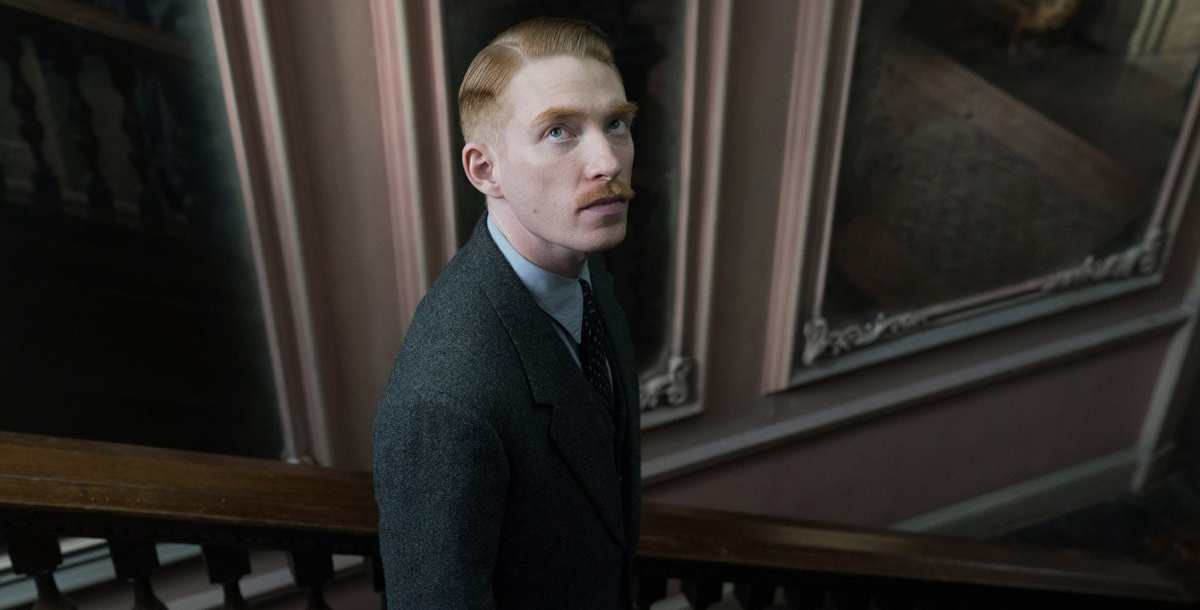
The Little Stranger works better as a mood than as a story, a slowly unravelling portrait of a household coming face-to-face with its own obsolescence, unsure both of whether it can do anything to arrest this collapse or even whether it wants to. The tale maintains a steady sense of unease across its runtime, largely down to a tremendous performance from Domhnall Gleeson as a character who remains ambiguous and unsettling even as he positions himself at the centre of the narrative.

The Little Stranger suffers from a fairly conventional and predictable plot, with little novel or insightful to say, relying on a series of revelations that are quite clear even fifteen minutes into the two-hour runtime. The Little Stranger is a little too familiar for its own good, a little too comfortable and sedate to really pack the necessary punch.

Farraday is far away.
Continue reading

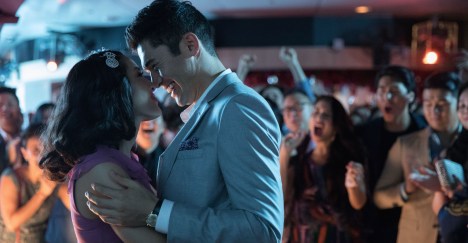
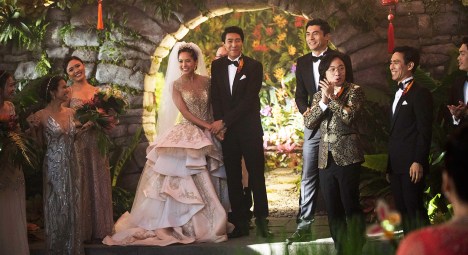
Non-Review Review: Crazy Rich Asians

The romantic comedy is, by its nature, an aspirational genre.

At its core, the romantic comedy is built around the idea that love conquers all, that soul mates exist, that there is one person in a million for every other person and that they are destined to find one another. The romantic comedy is aspirational in its presentation of love: the idea that everybody lives happily ever after, that every obstacle can be navigated if two people love one another. Of course, reality doesn’t always work out like that. This is just one reason why we tell stories; not just to tell us how the world is, but to insist how it should be.

Crazy, stupid, rich love.

This is perhaps why the romantic comedy is so often wedded to other fantasies; consider the ostentatious wealth depicted in most romantic comedies, but especially in Nancy Meyers films like It’s Complicated or Home Again. Romantic comedies present an idealised depiction of family life, where all differences can be reconciled and where practical concerns need never even be articulated. Even romantic comedies that aren’t explicitly about wealthy families luxuriate in a fantasy of wealth; very few families could realistically afford even the starter pack romantic comedy wedding.

There is nothing inherently wrong with aspiration, to be clear. Action movies and superhero films tend to indulge in a similarly idealised fantasy of heroism and strength of will, imagining worlds where many of the complications of everyday life can be shuffled into the background or wrestled into submission. However, the aspirations baked into romantic comedies are more tangible and more immediate, more recognisable even in their outlandishness.

“I mean, I’m rich. But I’m not crazy rich.”

Very few people will find themselves liberating a soccer stadium from terrorism, but most audience members have romantic relationships and many have weddings and even families. Even those audience members who don’t have their own spouses and children would have grown up within something resembling a familial structure. As a result, even the most outlandish romantic comedy offers something that more closely approximates lived experience.

Crazy Rich Asians fundamentally understands this aspirational nature of romantic comedies, and takes a great deal of pleasure in its display (and even celebration) of absurd wealth. The film’s title is a bold statement of purpose. There is something exhilarating in that.

Love don’t rom (com).

Continue reading

97. The Open House (-#58)

Hosted by Andrew Quinn and Darren Mooney, The Bottom 100 is a subset of the fortnightly The 250 podcast, a trip through some of the worst movies ever made, as voted for by Internet Movie Database Users. The Bottom 100 is a special series of episodes that will be randomly interspaced with regular releases, covering the way in which the Internet Movie Database recently renovated their list of the worst movies ever made to include more populist fare.

This time Matt Angel and Suzanne Coote’s The Open House.

Continue reading

New Podcast! Scannain Podcast (2018) #33!

Bringing us completely up to date with the Scannain podcast, it’s this week’s episode!

This week, I join Grace Duffy, Ronan Doyle and Luke Dunne from Film in Dublin for a jam-packed discussion of the week in film news. There’s a lot of great stuff here, covering everything from the closure of the Village Voice to the strong feelings that Luke and I had towards the Peter Berg and Mark Wahlberg action vehicle Mile 22. It’s also a big week for new releases, including Bart Layton’s American Animals, Corin Hardy’s The Nun and Lance Daly’s Black ’47. The latter of which will be the largest Irish cinematic release ever, screening in one hundred cinemas North and South.

Give it a listen at the link, or check it out below.

New Podcast! Scannain Podcast (2018) #32!

Bringing us almost up to date with the Scannain podcast!

This week, I join Jason Coyle, Alex Towers from When Irish Eyes Are Watching and Ronan Doyle to discuss the week in film, including what we watched, the latest news, the top ten and the new releases. This episode, Jay discusses the portrayal of the working class in Eden Lake, Alex remarks on his experiences with Studio Ghibli, Ronan reflects on the Orson Welles season at the Irish Film Institute and offers his take on The Children Act. We also, in the context of Mamma Mia: Here We Go Again, discuss the all-time top ten at the Irish box office.

New releases include Yardie, Cold War, Action Point, The Happytime Murders, Searching… and Upgrade.

Give it a listen at the link, or check it out below.

New Podcast! Scannain Podcast (2018) #31!

It’s time for the latest Scannain podcast.

This week, I join Graham Day from Speakin’ Geek, Alex Towers from When Irish Eyes Are Watching and Grace Duffy to discuss the week in film. Topics for discussion include the subtle brilliance of Lorne Balfe’s soundtrack to Mission: Impossible – Fallout, the rebranding of the Virgin Media Dublin International Film Festival, the “ageing out” of kid actors in long-running franchises, the drama around Danny Boyle’s departure from the latest Bond movie and the possible casting of Idris Elba as James Bond.

New releases include Alpha, Slender Man and The Children Act; the tail end of the podcast includes an extended discussion of Spike Lee’s latest film, BlacKkKlansman, which all four panelists have seen.

Give it a listen at the link, or check it out below.