• Following Us

  • Categories

  • Check out the Archives


  • Awards & Nominations

CinÉireann – Issue 2 (December 2017)

The new issue of CinÉireann had just been released.

I’m honoured to have a piece about modern film criticism in the magazine, along with wonderful work by Jay Coyle and Ronan Doyle among others. It’s a fantastic line-up of Irish film criticism talent writing about a fantastic line-up of Irish film, and it’s exciting to be a part of it.

As ever, thanks to the fantastic Niall Murphy over at Scannain for letting me be a part of it.

You can read CinÉireann as a digital magazine directly. You can even subscribe and get future issues delivered to you directly. Or click the picture below.

Everyone’s a Winner, Baby: “I, Tonya”, “The Disaster Artist” and the Modern Biopic

Watching certain genres over a number of years, patterns emerge.

A lot of this is down to success and influence. A lot of studio output is driven by what worked in the genre in recent years. This is why so many studios have tried to fashion their blockbusters into a “shared universe” after the success of The Avengers, or why so many franchise reboots went dark and gritty after The Dark Knight. However, other genres also shift in response to trendsetters, albeit in more subtle and nuanced manners. Some of these shifts can be attributed to critical response or awards success.

For example, following the success of Peter Morgan’s intimate and tightly-focused biographical scripts for The Queen or Frost/Nixon, a lot of biographies adopted a similar approach to their subjects, focusing on one particular incident in a life (or in two lives) that could provide a microcosm through which to explore big issues. This led to other biographies that tended to be built around specific events in the lives of their subjects rather than adopting a more holistic approach, like RushMy Weekend with MarilynHitchcock, Elvis and Nixon, Battle of the Sexes.

In the past two years, an interesting trend has emerged in terms of biographical pictures. Historically, biographies have tended to focus on historically noteworthy individuals who accomplished great things; Gandhi, The Aviator, My Left Foot, Milk. Even more ambivalent biographies were usually defined by the sense that those characters had changed the world; Nixon, J. Edgar, The Social Network. However, the last few years have seen an interesting shift away from characters who actually accomplished tangible change, and those who tried and failed.
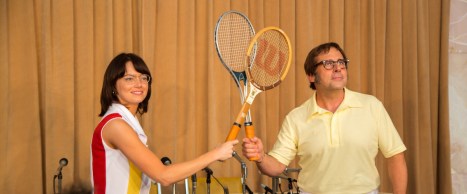
To be fair, there have always been biographies that acknowledged the valour of a failed attempt. Cool Runnings was a film about a the Jamaican bobsled team in which the characters did not even finish their Olympic event. Even in terms of fictional sports films, Rocky famously ended with the title character defeated after struggling for the entire film. However, in these cases, the film often acknowledged the valour in the attempt. The Jamaican bobsled team were competing for the first time and changing preconceptions about their country. Rocky was trying to pull himself out of poverty.

In contrast, more modern biographies seem willing to engage with the idea of failure to the point of mockery, exploring characters who have arguably been reduced to pop culture punchlines. Florence Foster Jenkins is the story of a socialite who cannot sing who dreams of performing in front of a rapt audience. Eddie the Eagle is the story of an awful skier who dreams of making it to the top of his profession. The Disaster Artist is the story of an eccentric with delusions of grandeur who through sheer force of will makes what might be the worst movie of all time.
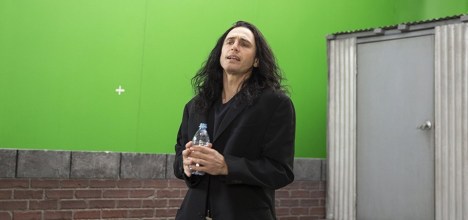
This represents an interesting shift away from many of the conventions of the biographical feature film, providing a sharp contrast with the high-profile prestige pieces that garnered awards and glory in the twentieth century. After all, these movies are not spoofs or comedies. They are not subversions of the biopic in the same way that Walk Hard might be considered to be, nor are they broad comedies adapted from real events like Thirty Minutes or Less. While these films include comedic elements, they are very clearly intended as serious works intended for serious contemplation.

So, what does this shift actually mean?
Continue reading

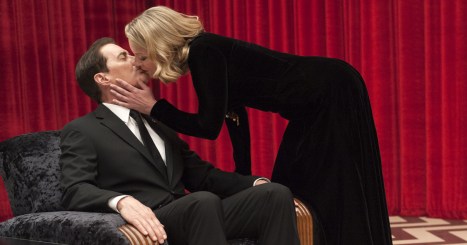
No, “Twin Peaks: The Return” is Not a Movie

It is December.

As tradition dictates, the major publications are rolling out their “best of” lists. One of the more interesting trends of the “best of” season in 2017 has been the repeated suggestion that David Lynch’s Twin Peaks: The Return should be considered an eighteen-hour movie. It made the Sight & Sound and Cahiers du Cinema polls, and even got a write-in vote at the Los Angeles Film Critics Awards. This is interesting on a number of levels, because it suggests that labelling The Return as a feature film is not a lone act of contrarianism, but something of a minor trend.

Of course, there are grey areas between film and television. There always have been, given the similarities in the technology and mechanism. Film can be shown on television, and television can be shown in cinemas. There are television movies and film series, and it is often possible for stories that start in one form to transform into the other. The boundaries are not as absolute as they are with theatre or prose, where the technical form is so fundamentally different that any comparison is ridiculous. After all, consider the debate over movies released on Netflix, or films edited for television.

The Return is not an ambiguous area, though. It is a fairly simple case. It is a television series. And there is nothing wrong with that.

Continue reading

Non-Review Review: I, Tonya

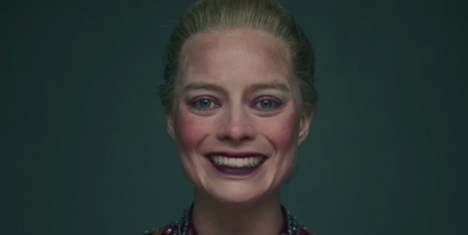
I, Tonya is a biopic for the post-truth era. It is also brilliant.

The subject of I, Tonya will be casually familiar to most viewers, the figure skater Tonya Harding who was implicated in an attack on fellow figure skater Kerrigan. The incident was a flashpoint for the nascent twenty-four hour news cycle in the early nineties, although most people remember it as a warm-up for the O.J. Simpson case only shortly afterwards. As such, I, Tonya feels like the perfect window through which to examine the modern era’s obsessive celebrity-focused culture and the desire to turn our heroes into monsters for the audience’s viewing pleasure.

Putting her own spin on it.

I, Tonya is fascinating on that level alone. Its characters repeatedly break the fourth wall in an attempt to steer and control the narrative, but occasionally do so to indict the audience for their complicity. I, Tonya is a film that understands it cannot be about this media maelstrom without being part of this media maelstrom. There’s a canny knowingness to I, Tonya, an understanding that a movie about culture’s slipping grip on the idea of reality cannot be too earnest or too sincere.

I, Tonya repeatedly suggests that its story may stray into the realm of fantasy and fiction, but the movie still packs a real punch.

Get your skates on, mate.

Continue reading

55. North by Northwest (#74)

Hosted by Andrew Quinn and Darren Mooney and this week with special guest Niall Murphy, The 250 is a (mostly) weekly trip through some of the best (and worst) movies ever made, as voted for by Internet Movie Database Users. New episodes are released every second Saturday at 6pm GMT, with the occasional bonus episode between them.

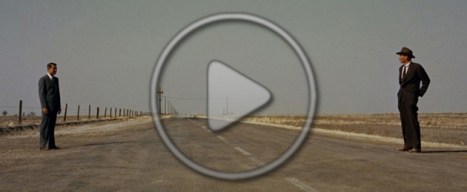
This time, Alfred Hitchcock’s North by Northwest.

Alfred Hitchcock’s espionage caper finds Madison Avenue advertising executive Roger Thornhill caught up in a series of unlikely events involving the assassination of a prominent official and the attempt to recover some precious microfilm. Over his head and out of time, Roger ill have to think on his feet to stay one step ahead.

At time of recording, it was ranked the 74th best movie of all time on the Internet Movie Database.

Continue reading

New Podcast! The X-Cast X-Files Podwatch – Episode #59 (Folie à Deux/The End)

I’m thrilled to be a part of The X-Cast X-Files Podwatch, a daily snippet podcast rewatching the entirety of The X-Files between now and the launch of the new season. It is something of a spin-off of The X-Cast, a great X-Files podcast run by the charming Tony Black. Tony has assembled a fantastic array of guests and hosts to go through The X-Files episode-by-episodes. With the new season announced to be starting in early January, Tony’s doing two episodes of the podcast per day, so buckle up. It’s going to be fun.

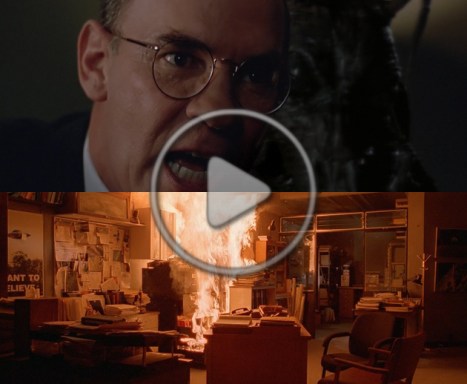
My final appearance (covering the final episodes) of the fifth season teams me up once again with the inimitable Clara Cook. We’re discussing the last two episodes of the season, Folie à Deux and The End, two episodes very clearly set up to lead in The X-Files: Fight the Future.

Continue reading

New Podcast! The X-Cast X-Files Podwatch – Episode #57 (Travelers/Mind’s Eye)

I’m thrilled to be a part of The X-Cast X-Files Podwatch, a daily snippet podcast rewatching the entirety of The X-Files between now and the launch of the new season. It is something of a spin-off of The X-Cast, a great X-Files podcast run by the charming Tony Black. Tony has assembled a fantastic array of guests and hosts to go through The X-Files episode-by-episodes. With the new season announced to be starting in early January, Tony’s doing two episodes of the podcast per day, so buckle up. It’s going to be fun.

My third (and penultimate) episode of the fifth season reteams me with the great Chris Knowles, a man who has forgotten more about The X-Files than I will ever know. We’re talking about the episodes Travelers and Mind’s Eye, both somewhat underrated fifth season episodes that (we think) tap into some of the show’s core strengths.

Continue reading