• Following Us

  • Categories

  • Check out the Archives


  • Awards & Nominations

Non-Review Review: The Ritual

The Ritual is a fairly conventional horror movie that is slightly elevated by a number of nice touches.

The Ritual is pretty predictable piece of horror, at least in the broad strokes. A group of friends set out on an international adventure together, tracking into the wild. The group is tied together by a common loss, but there are all manner of silent (and not so silent) resentments simmering beneath the surface. Journeying to Sweden, the quartet embark upon a hike into the wilderness. When fate intervenes, and forces them to cut their trip short, they make a choice to take a turn off the beaten track. They quickly come to regret that particular decision.

The Ritual belongs to a familiar genre of modern horror, the tale of adult friends who wander off into the wilderness and find themselves confronted by something primal and horrific; The Descent, The Blair Witch, Cabin Fever. Of course, these are all the descendants of classic horror movies offering similar warnings about daring to wander off the beaten track; The Hills Have Eyes, Deliverance, Texas Chainsaw Massacre. There is very little in the basic form of The Ritual that will catch many audience members off-guard, even in the jump scares.

The Ritual is elevated by technique, by attention to detail from writer Joe Barton and director David Bruckner. The Ritual never catches the audience off guard by zigging when one might expect it to zag, but it occasionally teases the possibility of zigging. There are any number of little touches that charm, minor subversions of horror movie conventions that enrich the more predictable beats. The film looks impressive, is paced nicely, and is very well cast. While none of this allows The Ritual to transcend its more stock qualities, it does add up to a well-made film.

Continue reading

Non-Review Review: Home Again

Home Again is an attempt at a classic screwball comedy where anything resembling a hard edge has been softened to a smooth felt.

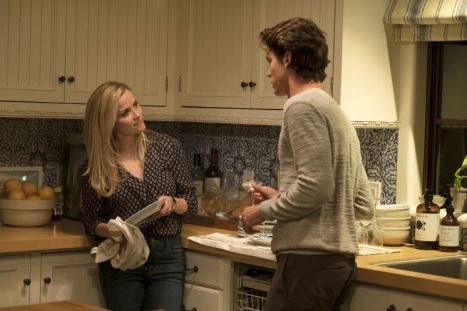
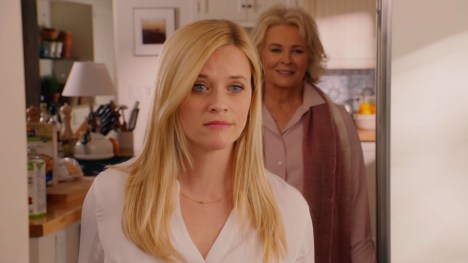
Writer and director Hallie Meyers-Shyer is clearly hoped to construct an old-school Hollywood farce, centring on a relatively recently singled mother who finds her world turned upside down when three handsome young strangers move into her guest house down the end of her garden. Naturally, Alice Kinney cannot anticipate how quickly these three young aspiring film makers will disrupt her family life, but the situation quickly escalates in a relatively unthreatening manner.

Home Again has a solid premise and a charmingly committed performance from Reese Witherspoon, but the movie feels far too gentle to really work. There is something strangely bloodless about Home Again, which means that the movie often struggles to get its own pulse racing. There is a sense that Home Again is far too worried about the possibility of offending anyone, even its own characters. Home Again is a film full of selfish, shortsighted and manipulative characters, but it never allows them to embrace those qualities in a way that might threaten the happy ending.

Home Again feels far too comfortable in itself to really work.

Continue reading

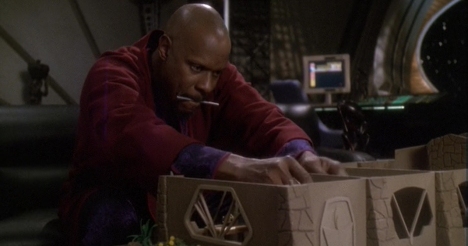
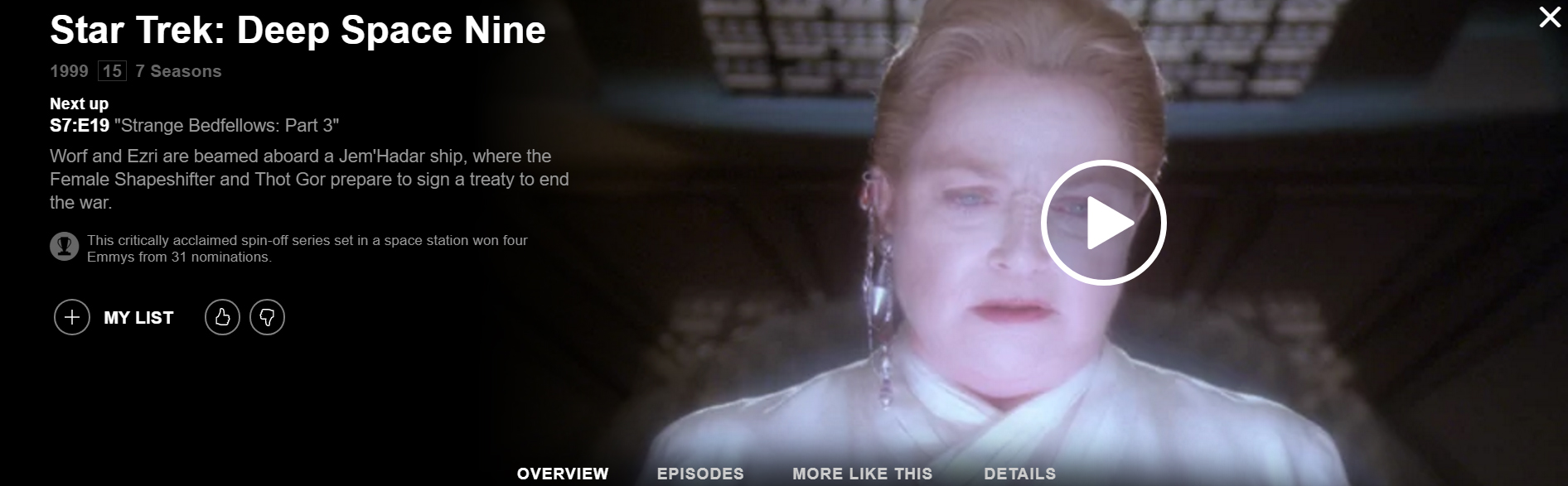
Star Trek: Deep Space Nine – Strange Bedfellows (Review)

Three seems to be the magic number when it comes to long-form plotting in Berman era Star Trek.

Star Trek: The Next Generation arguably pulled off a three-consecutive-episodes arc with The Best of Both Worlds, Part I, The Best of Both Worlds, Part II and Family. Even the continuity-adverse Star Trek: Voyager managed something similar with Scorpion, Part I, Scorpion, Part II and The Gift. Star Trek: Enterprise tried a number of three-episode arcs in its final season, even if only The Forge, Awakening and Kir’Shara really worked; Borderland was a preamble to Cold Station 12 and The Augments, while The Aenar was a postscript to Babel One and United.
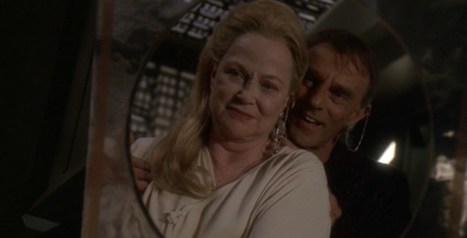
Super villain team-up.

Three episodes seems to work quite well for Star Trek: Deep Space Nine. The series’ second season premiere was the franchise’s first bona fides three-parter, The Homecoming, The Circle and The Siege. Even when it came to longer arcs, three consecutive episodes seemed be the limit; after Call to Arms, A Time to Stand and Rocks and Shoals, the arc opening the sixth season stumbled with Sons and Daughters before regaining its footing for Behind the Lines, Favour the Bold and Sacrifice of Angels.

As an aside, it also took three episodes for the alliance between the Dominion and Cardassia to properly integrate into the show’s mythology after the events of In Purgatory’s Shadow and By Inferno’s Light; the fifth season took a pause with Doctor Bashir, I Presume, A Simple Investigation and Business as Usual before beginning to unpack the consequences of that statusquo-shattering twist in Ties of Blood and Water.
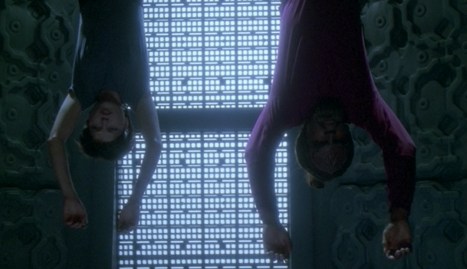
Hang loose.

There are any number of reasons why three works so well. Maybe three episodes allow for that classic three-act structure, the iconic storytelling template. Perhaps the production team on Deep Space Nine tended to work in chunks of three scripts at a time, with two or three subsequent scripts in development by the time that any given script was finished; if this was the case, it would mean that the production team was ready to start fresh with the fourth script. Whatever the reason, it is a familiar pattern.

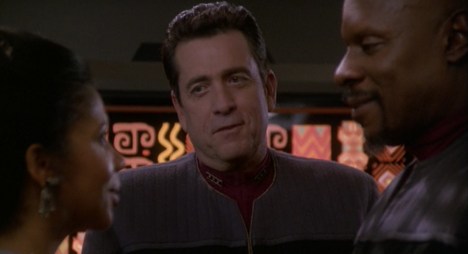
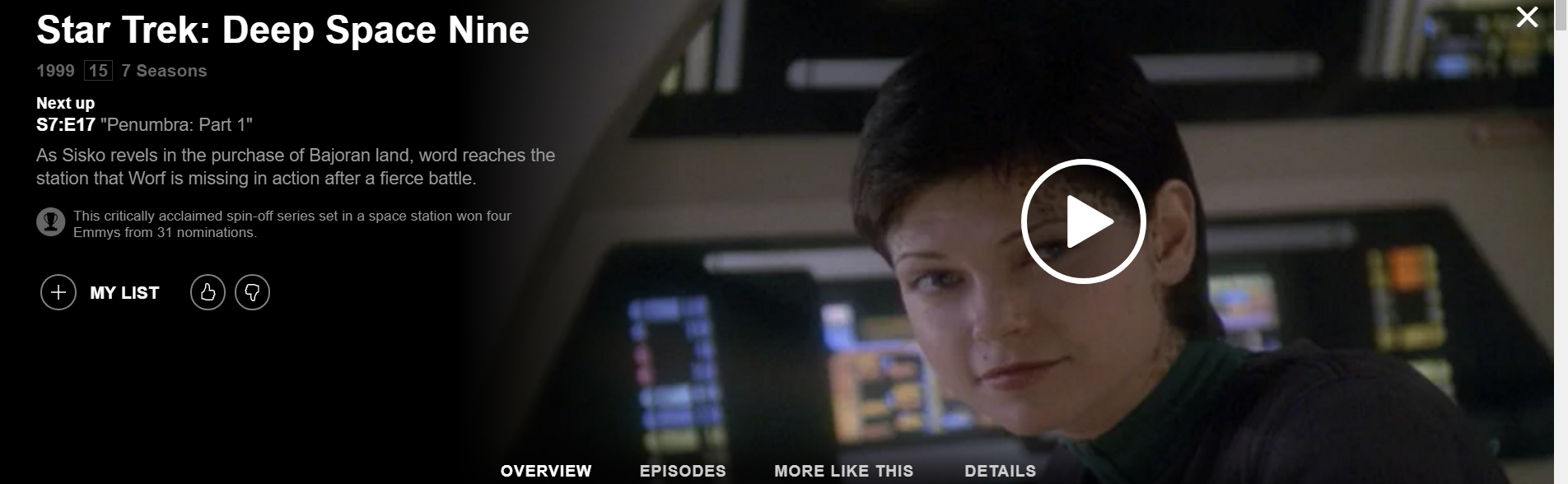
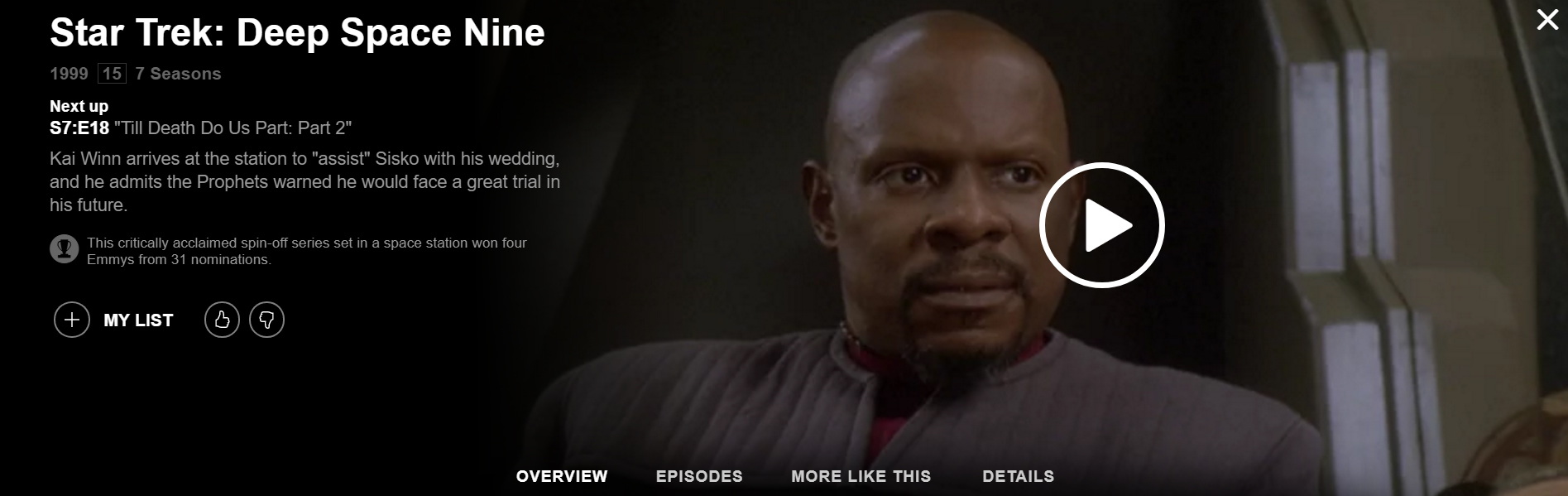
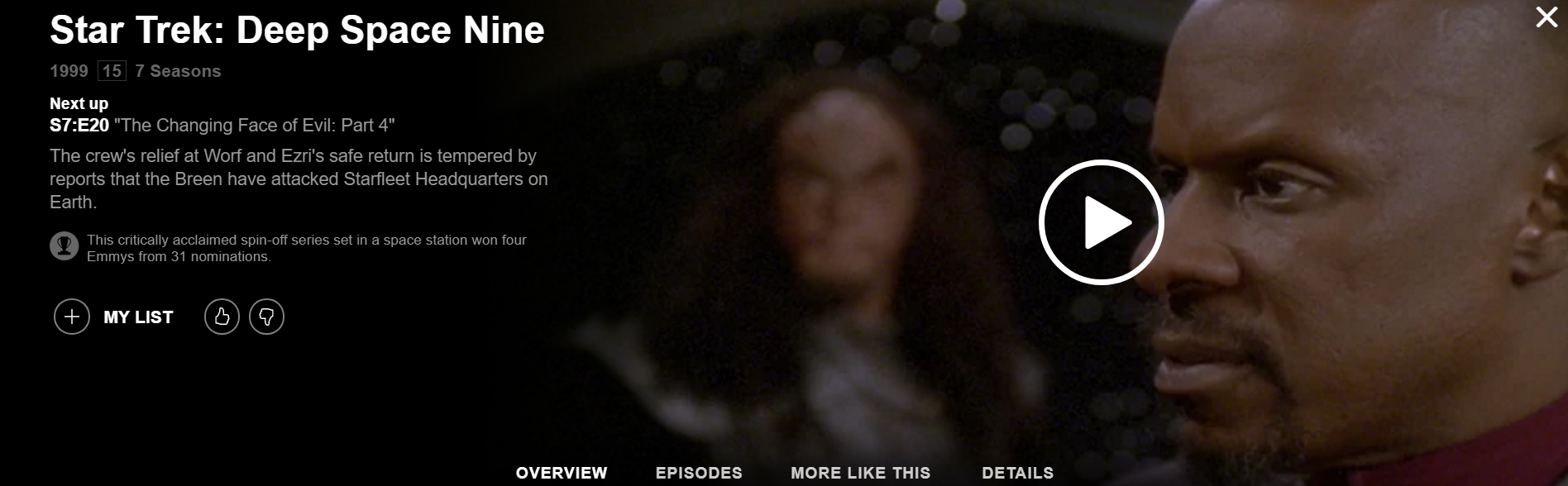
Although “the Final Chapter” is nominally a ten-episode arc, counting What You Leave Behind as two distinct episodes, the plot beats tend to flow in discernible three-episode chunks. Ezri’s mission to rescue Worf plays out over Penumbra, ‘Til Death Do Us Part and Strange Bedfellows. Gul Rusot is introduced in The Changing Face of Evil, is built up in When It Rains…, and meets his end in Tacking Into the Wind. Bashir discovers that Odo is sick in When It Rains…, figures out Section 31 is responsible in Tacking Into the Wind, and recovers the cure in Extreme Measures.
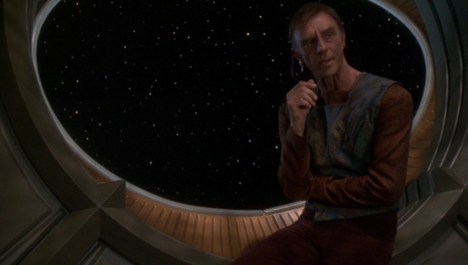
The window of opportunity is closing.

The opening salvo of this ten-episode arc was clearly intended as a three-part story. The original titles of the episodes were Penumbra, Umbra and Eclipse, suggesting an encroaching darkness that would cast a long shadow by the end of the third episode. Coincidentally or not, that would mark the end of the first third of the larger story arc. It suggests a very formal and careful structure, suggesting a three-act structure within the first act of a three-act structure. On paper, it is a very bold and ambitious piece of structuring from the Deep Space Nine writers.

However, the production struggle to maintain that structure. These ten episodes stumble when it comes to pacing and plotting. The weakest threads in this final run are those that feel either rushed or over-extended, which struggle to hit the right beats. Strange Bedfellows is an episode that struggles because it feels like its storythreads have either been stretched or compressed, the important events either pulled back into ‘Til Death to Us Part or pushed forward into The Changing Face of Evil. The result is an episode that feels stranded between bigger story beats.

No time for reflection.

Continue reading

44. Chinatown (#127)

Hosted by Andrew Quinn and Darren Mooney and this week with special guest Phil Bagnell, The 250 is a fortnightly trip through some of the best (and worst) movies ever made, as voted for by Internet Movie Database Users. New episodes are released every second Saturday at 6pm GMT, with the occasional bonus episode between them.

This time, Roman Polanski’s Chinatown.

When a seemingly routine investigation into spousal infidelity evolves into a political scandal, private investigator J.J. Gittes finds himself navigating the dark underworld of thirties Los Angeles. Sinister conspiracies, local politics, private ownership of public utilities. As Gittes digs deeper and deeper, he uncovers the rotten foundations upon which the city was built.

At time of recording, it was ranked the 127th best movie of all time on the Internet Movie Database.

Continue reading

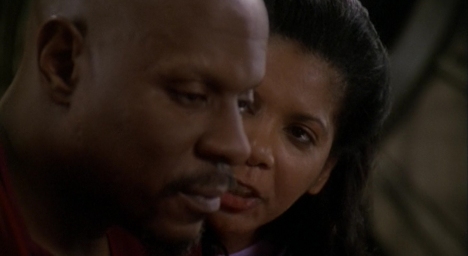
Star Trek: Deep Space Nine – ‘Til Death Do Us Part (Review)

Perhaps more than any other Star Trek show, Star Trek: Deep Space Nine is an epic.

Sure, Star Trek: Voyager has more than a few characteristics of epic storytelling; it is a mythic journey, much like The Odyssey and The Iliad before it. In fact, several episodes of Voyager borrow quite heavily from those earliest of stories, with Favourite Son feature a planet for of sirens and Bliss finding the crew confronted with the deep space equivalent of lotus eaters. However, the storytelling on Voyager was always too small and too episodic to embrace the potential for a sprawling galactic epic.

Wedded bliss.

In contrast Deep Space Nine is a story with a lot of breadth. Of course, there are any number of isolated and standalone episodes within the seven-year run of Deep Space Nine, but there is also a strong sense that these one-hundred-and-seventy-plus episodes of television can be taken together and fashioned into a single cohesive narrative that runs from Emissary through to What You Leave Behind. There are undoubtedly bumps and inconsistencies along the way, strange shifts in direction and sharp left turns, but the series hangs together relatively well as a single narrative.

This is particularly true when it comes to the final ten episode of the series, which are very much intended to draw down the curtain on seven years of storytelling, while reinforcing the sense that this has truly been an epic narrative.

Feels like coming home…

Continue reading

Star Trek: Deep Space Nine – Penumbra (Review)

Penumbra represents the beginning of the end, kicking off the epic ten-episode conclusion to Star Trek: Deep Space Nine.

To be fair, Deep Space Nine had already embraced serialised storytelling, whether in the seeding of gradually-building plotlines or its long-term character development. The show was most serialised in the audacious six-episode arc that opened the sixth season; A Time to Stand, Rocks and Shoals, Sons and Daughters, Behind the Lines, Favour the Bold and Sacrifice of Angels. In some ways, the ten-episode closing arc is ultimately an extension of that basic idea. However, it is also something more complex.

When the moon is in the seventh house in the Kendra Province…

In some ways, this last narrative experiment would be the boldest creative decision of the entire seven year run. The production team had strained a little bit in structuring and pacing those six linked episodes; Sons and Daughters was notably the runt of the litter, telling a relatively standalone story about Worf while essentially repeating Kira’s character arc from Rocks and Shoals in a much less effective manner. As such, trying to tie ten hours of television together into a single cohesive narrative was a bold move. Then again, Deep Space Nine had never been short of ambition.

It is tempting to treat this ten-episode run as a single story, and it kinda is; Netflix labels the forty-five minute episodes as “Part 1”, “Part 2”, “Part 3”, “Part 4”, “Part 5”, “Part 6”, “Part 7” and “Part 8.” However, the run can also be broken down into smaller chunks. ‘Til Death Do Us Part and Strange Bedfellows were originally titled Umbra and Eclipse, suggesting a three-parter. In contrast, TV Guide listed the first four episodes in the run as a four-parter. When It Rains… and Tacking Into the Wind are definitely a two-parter. Extreme Measures is practically standalone.

Build a final arc.

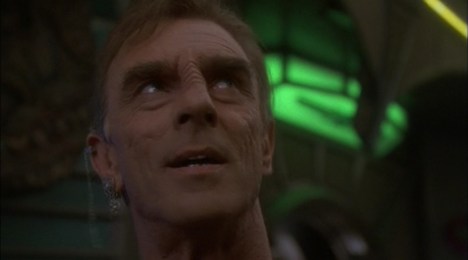
Admittedly, the storytelling falters in places, as the production team’s reach occasionally exceeds their grasp. Some of these issues are outside the control of the production team, such as the budgetary concerns that hinder Extreme Measures. Some of these issues are entirely within the control of the production team, such as the pacing of the subplot with Winn and Dukat that leads to the most transparent stalling tactic in When It Rains…. Individual story choices are occasionally misguided, such as the emphasis on the Breen or the Pah-Wraiths.

Nevertheless, these ten episodes hang together surprisingly well. There is a sense of purpose and momentum running through these episodes that strengthens even the weaker hours. More than that, this ten-part saga includes some of the strongest episodes in the entire franchise, with episodes like When It Rains… and Tacking Into the Wind feeling like the culmination of more than nine years of storytelling across two different series. Though individual elements of this sprawling epic might miss the mark, the whole is greater than the sum of its parts.

The Dukat is of Bajor…

Continue reading

Trump Trek: How Star Trek: Voyager is Perfectly Trumpian Star Trek…

Star Trek has built up a fascinating pop culture mythology around itself. There is an interesting dissonance between that memory and the reality.

The fond memory of a thing is not the thing itself. It is a cliché to observe that the line “beam me up, Scotty” was never actually said on the original show, but many casual fans associate the phrase with the franchise. Even hardcore Star Trek fans tend to gloss over the historical record in favour of affectionate memory. Many fans remember the pointed anti-Vietnam rhetoric of A Taste of Armageddon, Errand of Mercy or The Trouble with Tribbles. Few remember the pro-Vietnam tone of Friday’s Child, The Apple or The Omega Glory.

There is a tendency to believe that Star Trek has always been progressive, that the franchise has always embraced tolerance and actively pursued diversity. However, the reality is often more complicated than that. This why certain sections of the fanbase seem to react in abject terror to concepts like “Trek Against Trump”, a campaign organised by Armin Shimerman to protest the racism and xenophobia espoused by the (then-) candidate Donald Trump. One would imagine that rejecting sexism, racism, white nationalism would be a no-brainer for fandom, but it was not.

Indeed, this reactionary strain of fandom has come up time and again in the context of Star Trek: Discovery. Certain vocal sections of the fan base have objected to the diversity of the primary cast, despite the fact that Star Trek: Deep Space Nine arguably had a much more diverse ensemble. The backlash has reached the point that the cast have had to actually give interviews that racism is a very bad thing and that the franchise is very much about tolerance and understanding. Similarly, the news that the series would be overtly political has rattled some cages in fandom.

In theory, these reactions should be shocking. The Star Trek franchise has carefully cultivated a reputation for liberalism and idealism. Indeed, the Federation is quite explicitly socialist, something hinted at in Star Trek IV: The Voyage Home and explicitly confirmed in Star Trek: First Contact. On a more fundamental level, the franchise is about people from different cultures and with different values coming together to work in common purpose. It seems reasonably fair to argue the franchise would disagree with concepts like “the Muslim Ban” or “the Transgender Service Ban.”

However, the truth is that there has always been a reactionary streak lurking within the franchise. And nowhere has that reactionary streak been stronger than in Star Trek: Voyager, bleeding over into the creation and first two seasons of Star Trek: Enterprise.

Continue reading

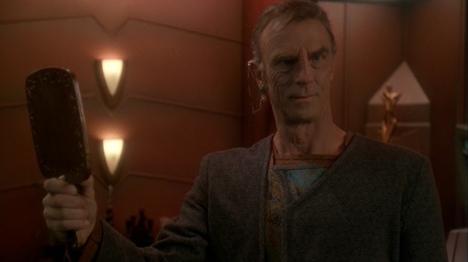
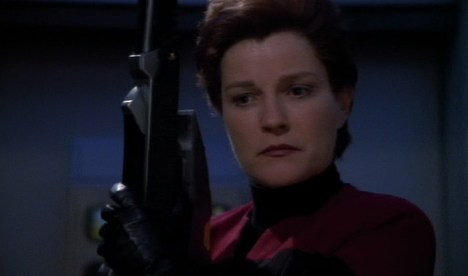
Star Trek: Voyager – Think Tank (Review)

Think Tank is a fairly stock episode of Star Trek: Voyager, a fairly generic plot built around an intriguing premise and bolstered by a notable guest star.

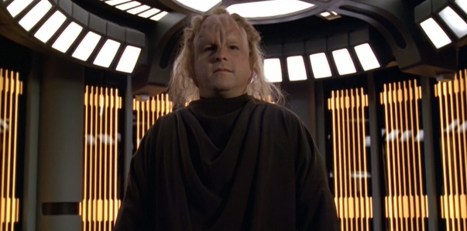
Think Tank has an interesting idea at its core, bringing the ship and crew into conflict with the eponymous organisation. The so-called “think tank” are a collective of eccentric individuals who solve problems across the galaxy. Naturally, these aliens tend to exact a very high price for their problem-solving skills. There is a potentially compelling story to be told here, an interesting puzzle box of an episode about competing interests and lateral thinking. It helps that Korrus, the nominal spokesperson of the group, is played by a very against type Jason Alexander.

By George, I recognise that alien!

However, the problem with Think Tank is that the episode works very hard to undermine any of the unique aspects of the story being told. Think Tank should be a unique experiment, an episode unlike any other in the larger Star Trek canon. Instead, Voyager whittles the nugget of the idea down to another threat-of-the-week story in which Janeway is menaced by a pair of alien interests that will never appear again. The result is the germ of a clever idea buried beneath a very stock Star Trek plot.

To be fair, it is possible to skillfully employ this narrative framework to support an intriguing concept; Counterpoint and Latent Image are both bold stories that feature one-and-done appearances from new alien threats, in service of interesting and novel stories. However, Think Tank embraces the generic narrative built around its core idea, leading to a very indistinct installment. Think Tank lacks the willingness to think outside the box.

Of Kurros it is.

Continue reading

43. Dangal – The Indian Film Festival of Ireland 2017 (#72)

Hosted by Andrew Quinn and Darren Mooney, The 250 is a fortnightly trip through some of the best (and worst) movies ever made, as voted for by Internet Movie Database Users. New episodes are released every second Saturday at 6pm GMT, with the occasional bonus episode between them. This week, the pair are joined by Babu Patel and Giovanna Rampazzo, with thanks to Siraj Zaidi and The Indian Film Festival of Ireland.

This time, Nitesh Tiwari’s Dangal.

When professional wrestler Mahavir Singh Phogat fails to fulfill his dream of winning a gold medal by wrestling for India, he vows that his sons will take home that prize in his stead. However, Phogat never fathers any sons; instead, he becomes parent to four girls. Undeterred, Mahavir commits himself to the idea that his daughters Geeta and Babita will realise that dream, regardless of any social pressures that might stand in their way.

At time of recording, it was ranked the 72nd best movie of all time on the Internet Movie Database.

Dangal is being shown as part of the Indian Film Festival of Ireland. It will be shown in Rathmines Public Library at 12pm, next Saturday 16th September 2017. Admission is free. Any Irish listeners of the podcast interested in watching the film are more than welcome; the film is introduced in broad terms at the start of the podcast.

Giovanna Rampazzo is also introducing a screening of two short films and the movie Waiting at 1pm, next Saturday 16th September 2017 at DIT Aunger Street.

Continue reading

Oh My God: Modern Cinematic Depictions of the Almighty…

Religion is understandably one of the great cinematic themes.

After all, religion provides a way of making sense of a seemingly chaotic world, of imposing order upon the universe. More than that, it connects into any number of other rich themes, from man’s place in the grand scheme of things to the art of creation. However, religion is understandably a subject that needs to be treated with some delicacy, joining sex and politics on topics to be avoided in dinner table conversation. Of course, there has always been a market for religious subject matter in cinema.

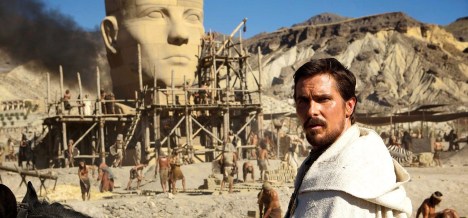
Classic Hollywood produced any number of broad religious epics for public consumption, films like Ben Hur, The Robe, The Ten Commandments. These stories blended familiar biblical narratives with large-scale spectacle, offering reassuring tales of conventional heroics often anchored in Christian iconography. These biblical epics faded from view towards the end of the sixties; perhaps tellingly, they faded out of view around the same time as that other American creation myth, the western.

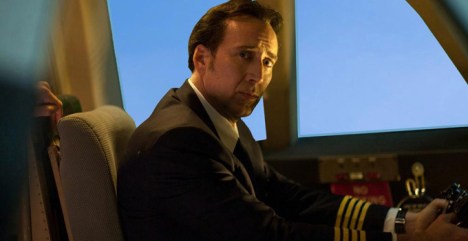
However, there remains a market for religious entertainment. The twenty-first century has seen an explosion of smaller Christian-based movie studios producing wholesome narratives couched in religious language and imagery. Films like Saving Christmas or God’s Not Dead are clearly calibrated to appeal to a very particular market instead of a broader audience, akin to specialty cinema like Bollywood. However, entire studios exist to feed this market and provide a solid return on a reasonable budget; just look at Left Behind, starring Nicolas Cage.

Nic Cage doesn’t get raptured. It turns out God has seen the remake of The Wicker Man.

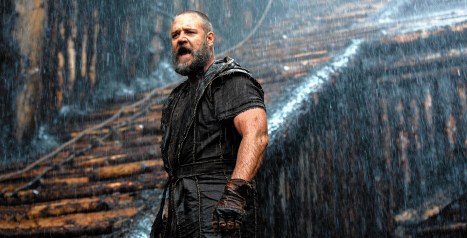
While these specialty studios are offering a much more conventional and old-school depiction of divinity and religion, there is something interesting happening in more mainstream cinema. The twenty-first century has seen a number of high-profile creators grappling with strong religious themes in explicitly Christian terms, and – in doing so – offering a number of provocative and subversive interpretations of God.

Note: the post will include spoilers for mother! If you have not seen the film yet, proceed at your own peril.

Continue reading