• Following Us

  • Categories

  • Check out the Archives


  • Awards & Nominations

Non-Review Review: Passengers

Passengers is a super creepy tale of male entitlement.

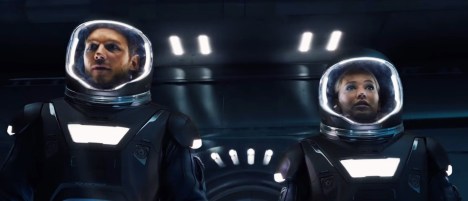
The movie has an intriguing science-fiction premise. On a sleeper ship intended to ferry passengers to the colony world of Homestead II, a freak accident awakens James Preston. The only problem is that Preston awoke far too early. Preston awoke approximately thirty years into a one-hundred-and-twenty-year voyage. The engineer is now destined to spend the rest of his life as the only waking inhabitant of a gigantic city ship, living and dying completely alone. It is a horrifying thought.
"We need a little space."

“We need a little space.”

There are suggestions of a powerful science-fiction epic to be found in the film. Jim finds his every physical need has been anticipated. He can live a life of material luxury. He will never want for food or space or activity. He effectively has a gigantic space craft all to himself. And therein lies the rub. Feeling almost like a sadistic episode of The Twilight Zone, Jim grapples with the question of what he will or will not do in order to end his loneliness. In his desperation, Jim makes a horrifying (if entirely understandable) decision.

The biggest problem with Passengers is that it strains too hard to make that decision palatable instead of terrifying. It is a super creepy tale of male entitlement that brushes aside any of this issues in favour of a much more conventional action romance.

Peace in a pod.

Peace in a pod.

Note: Very minor spoilers for Passengers follow. If you know the cast list, you can probably deduce where the movie is going from the opening ten minutes.

Continue reading

Star Trek: Voyager – Displaced (Review)

The Star Trek franchise has a reputation for being liberal and open-minded.

After all, the franchise is very much rooted in an extension of Kennedy-era liberalism, with the “final frontier” very much an extension of Kennedy’s “new frontier.” It is a franchise that is supposed to celebrate “new lifeforms and new civilisations” that it meets on “strange new worlds”, embracing the alien and celebrating diversity. The franchise is rooted in a utopian version of the future that has been portrayed as at least mostly socialist dating back to Star Trek: The Motion Picture at the latest.

The end is Nyrian.

The end is Nyrian.

However, there are also points at which Star Trek could be considered to be reactionary and conservative. The original Star Trek was nowhere near as progressive on matters of race and gender as many would claim. The first two seasons of Star Trek: Enterprise frequently played as endorsements of politics of the Bush era and the fear of the unknown. The third season of Star Trek: Voyager has been particularly conservative in its outlook; consider the treatment of sex in Blood Fever or Darkling, of the traditional family in Real Life, of globalisation in Unity.

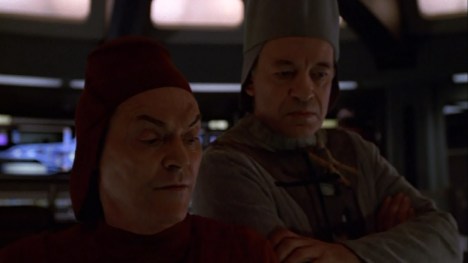
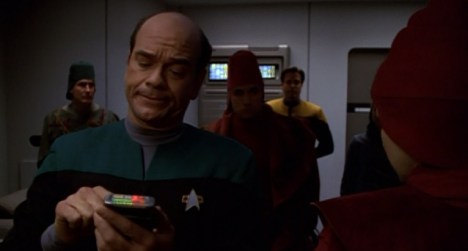
Displaced is perhaps the most striking example, an episode that is essentially a forty-five minute treatise on the risk posed by immigration.

Damn space immigrants, clogging up our space hospitals.

Damn space immigrants, clogging up our space hospitals.

Continue reading

11. Rogue One: A Star Wars Story – This Just In (#152)

Hosted by Andrew Quinn and Darren Mooney, This Just In is a subset of the fortnightly The 250 podcast, looking at notable new arrivals on the list of the 250 best movies of all-time, as voted for by Internet Movie Database Users.

This time, Gareth Edwards’ Rogue One: A Star Wars Story.

podcast-rogueone1

Continue reading

Star Trek: Deep Space Nine – Children of Time (Review)

Time is the fire in which we burn.

Children of Time comes towards the end of the franchise’s thirtieth anniversary season. By all accounts, the thirtieth anniversary season had been a resounding success. Star Trek: First Contact managed to please audiences and critics with a journey back to the beginning of the Star Trek universe. Star Trek: Deep Space Nine offered a crowd-pleasing homage to The Trouble With Tribbles in Trials and Tribble-ations. Even Star Trek: Voyager got in on the act with Flashback, Future’s End, Part I and Future’s End, Part II.

More than that, the franchise was thriving by just about any measure. Three casts were active simultaneously; two casts on television and one in cinemas. The thirtieth anniversary had garnered incredible media attention and had helped to remind audiences that the franchise was still chugging along a decade after its resurrection. To many observers, it appeared that the Star Trek had been resurrected. Against all odds, the television show that had been cancelled by NBC after only three seasons seemed to have been granted a form of immortality.

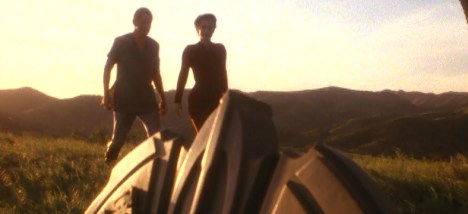
Walking into the sunset.

Walking into the sunset.

However, things were not as rosy behind the scenes. In fact, the franchise had been underperforming since the end of Star Trek: The Next Generation. The ratings would not become a real problem until the launch of Star Trek: Enterprise, but there were early signs that the franchise was in decline. Both Deep Space Nine and Voyager underwent cast revisions in their fourth seasons to try to solidify the ratings. Deep Space Nine got to keep its existing cast and add one new face, while Voyager had to fire one cast member to make room for the newest player.

Children of Time feels very much like a meditation and contemplation upon the theme of legacy, asking the characters on Deep Space Nine to wonder what they might leave behind.

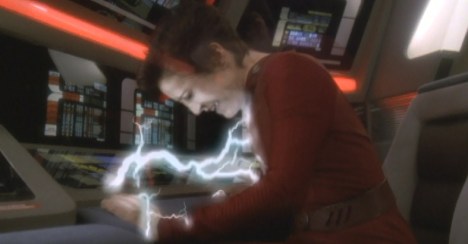
Shocking.

Shocking.

Continue reading

The Dark Knight Rises (and Falls) in 2016

As it draws to a close, there has been considerable reflection on the fact that 2016 has been a very “strange” year.

Of course, “strange” is perhaps a polite way of phrasing that sentiment. “Harrowing” might be another. “Depressing” could also fit. The year has been physically and emotionally draining for virtually everyone. It was the year that audiences around the world bid farewell to talents as diverse as David Bowie, Prince and Leonard Cohen. When it was determined that December 2016 would receive a “leap second”, it felt almost like an insult. Why should 2016 last one second longer than it absolutely has to? (Not that 2017 promises to be better.)

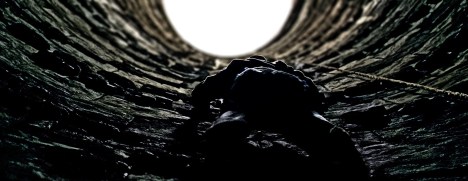
The hole in things.

The hole in things.

However, the biggest shocks of 2016 were political. Brexit and the election of Donald Trump shook the world to its core, and not just because the pollsters somehow failed to predict them. Those public votes were seen as stern rejections of liberalism and progressivism, of an angry and disenfranchised class striking back at what had been seen a disconnected and aloof elite. It was presented as a strike back against the establishment, against vested interests, an expression of rage – whether racial or economic.

Some of the best films of the year helped to capture that sense of anxiety and resentment. The Hateful Eight suggested that perhaps the United States had never reconciled itself following the end of the Civil War and perhaps it never would. Green Room suggested that there was still a primitive savagery lurking just off the main roads, nestled snugly in the heart of the country. The Girl With All the Gifts dared to suggest that those who reacted with panic and fear to change were likely to find themselves consumed by it.

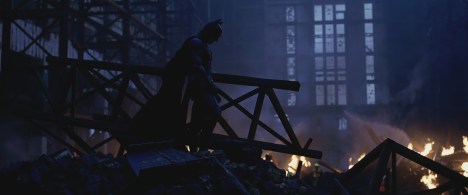
Everything falls apart.

Everything falls apart.

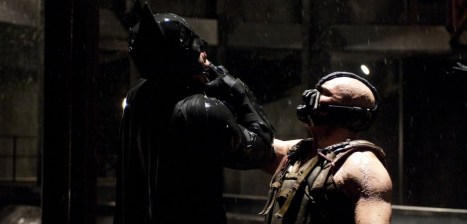
However, the movie that most successfully embodied 2016 was not released in 2016. It was released four years earlier. That film was Christopher Nolan’s The Dark Knight Rises, the conclusion to his groundbreaking Batman trilogy of films. Batman Begins had been released in 2005, and its meditations on fear made for a potent superhero story in the midst of the War on Terror. The Dark Knight was released in 2008, and seemed the perfect film to close out the Bush era. It was even described as “the first great post-Sept. 11 film.”

In some respects, The Dark Knight Rises was lost on its initial release. It seemed rather out of place, with audiences unsure how best to read the film. It was not the sequel that anybody had been expecting. Indeed, it seems fair to observe that it was not the sequel that Christopher Nolan would have been expecting as he worked on The Dark Knight. That had been a crime epic with political undertones. The Dark Knight Rises was a revolutionary epic and war movie, an odd combination for a film released in 2012. And yet it feels perfectly in step with 2016.

"Okay, maybe Batman vs. Superman wasn't everything that it could have been."

“Okay, maybe Batman vs. Superman wasn’t everything that it could have been.”

Continue reading

Non-Review Review: Why Him?

Why Him? is perhaps a little over-stretched.

Why Him? is built around a very stock comedy template. A hard-working old-fashioned father finds himself at odds with his daughter’s new boyfriend, leading to a clash of competing masculine egos. The most innovative aspect of Why Him? is the decision to filter this standard comedy plot through two more filters. Why Him? is simultaneously a raunchy R-rated comedy full of profanity and bodily-function jokes. It is also framed as a Christmas comedy, as much as a comedy set in and around Los Angeles can seem like a Christmas comedy.

Guess who's coming to (Christmas) dinner.

Guess who’s coming to (Christmas) dinner.

These are hardly the boldest of innovations. Why Him? is a paper-thin comedy that is somehow stretched out to run over one hour and fifty minutes. There are any number of gags that work and a solid cast that never rises to exceptional, but the fact is that all of these elements overstay their welcome by at least a good twenty minutes. It is telling that one of the biggest issues with Why Him? is repetition, where the movie attempts to spin out slight jokes that prompt a knowing smile into running gags that exhaust all good will.

Ironically enough, given the title, Why Him? never makes a compelling case for its own scale and length.

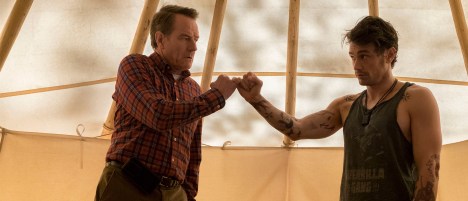
Fists of fury.

Fists of fury.

Continue reading

Star Trek: Voyager – Distant Origin (Review)

Like Remember before it, Distant Origin is a really great example of how Star Trek: Voyager‘s efforts to build a “generic Star Trek series can produce memorable and satisfying episodes of television.

There is very little about Distant Origin that demands to be set in the Delta Quadrant. In fact, Distant Origin arguably makes less sense as an episode set in the Delta Quadrant than it would as an episode set in the Alpha or Beta Quadrants. Episodes like The 37’s and Distant Origin (and the lies at the heart of Favourite Son) seem to suggest a lot of traffic between Earth and the Delta Quadrant beyond the Caretaker. It seems strange the Voth would migrate so far in search of a place to call home.

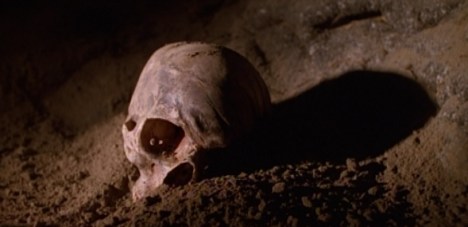
Skullduggery.

Skullduggery.

However, for all that Distant Origin feels like a strange fit for the series’ Delta Quadrant setting, it feels very much like quintessential Star Trek. Like Remember earlier in the season, Distant Origin is very much an old-fashioned Star Trek allegory that uses characters in cheesy make-up to comment upon contemporary issues. In Remember, it was the reality of holocaust denial. In Distant Origin, it is the age-old conflict of science-against-political-expedience. There is an endearing timelessness to the metaphor at the centre of the story.

With its dinosaur characters, its fixation upon evolution, and its doctrine of “origin”, Distant Origin seems very specifically tailored to the heated debates around science and creationism in American culture. However, the allegory is powerful enough that it maintains a potency even beyond that. Distant Origin has aged remarkably well, working effectively as a metaphor for climate change denial or even for historical revisionism in favour of the national myth. Distant Origin is both a season and a series highlight.

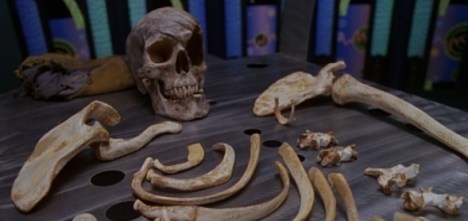
The bones of a theory.

The bare bones of a theory.

Continue reading

Non-Review Review: Silence

Faith is a curious thing.

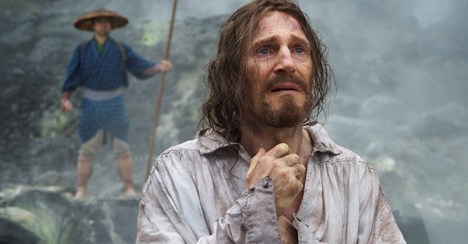
It is a fascinating concept, even (and perhaps especially) for those who lack it or wrestle with it. Pure and untempered faith in the face of a turbulent (and occasionally hostile) world is intriguing. It is something that many long to understand, even if it eludes them. Silence is very much a meditation (or an extended monologue) on the nature of religious belief playing out as a set of conversations and moral dilemmas. Characters wrestle with doubt and uncertainty, and particularly about what their faith means to them.

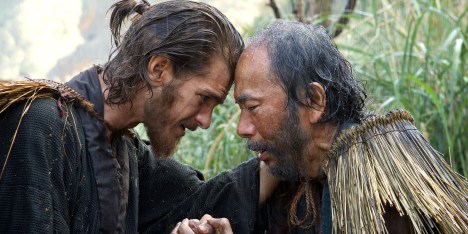
Easy pray.

Easy pray.

Silence is not a masterpiece or an epic. It is not one of Martin Scorsese’s major works, despite the energy and conviction with which he invests it. It is the weakest film from the director in a very long time, although that sounds very much like praising with faint criticism. Silence is a little too invested in its own dialogue with itself, as delivered through a series of monologues and occasionally through conversation between characters. Silence looks beautiful, but it often feels a little bit like a stunning visual companion to a book on tape.

And yet, in spite of all of this, there is an endearing earnestness to the film. Silence feels like the product of a long and considered reflection on the nature of faith and its place in the world. It never lacks for ambition or vision, playing as a two-and-a-half hour parable about suffering and transcendence. Silence is more interesting than successful, but that is largely because it is so very interesting.

Gotta have faith.

Gotta have faith.

Continue reading

Non-Review Review: Rogue One – A Star Wars Story

Rogue One: A Star Wars Story feels torn between two extremes.

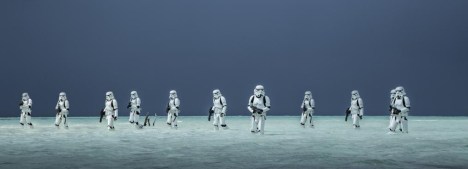
On one extreme, it is an epic war movie about a universe that is caught in turmoil. Through the lens of science-fantasy, Rogue One can tease out all manner of interesting ideas about the conflict at the heart of the Star Wars franchise. What does an interstellar war look like in the early years of the twenty-first century? What is the view of this epic confrontation from outside the cockpit of an X-Wing or the Millennium Falcon? There are points at which Rogue One almost plays as a war film that just happens to be set within the Star Wars universe.

Too TIE-d to continuity?

Too TIE-d to continuity?

On the other extreme, Rogue One often feels like a collection of deleted scenes intended to bridge Star Wars: Episode III – Revenge of the Sith to Star Wars: Episode VI – A New Hope. The basic premise of the film involves the theft of the Death Star plans that propel the plot of A New Hope, which should be enough to connect it to the parent franchise. Instead, the film is saturated with cameos and callbacks. While it makes sense for a number of minor characters to overlap, Rogue One contorts to include two of the franchise’s biggest characters.

So Rogue One is trapped between being an exciting and exhilarating glimpse of an existing franchise from a new perspective, and feeling just a little bit too much like fan fiction. It is no surprise that the former is much more interesting than the latter.

Watered down?

Watered down?

Continue reading

Star Trek: Deep Space Nine – Soldiers of the Empire (Review)

Soldiers of the Empire is a very effective illustration of just how far Star Trek: Deep Space Nine was willing to push the Star Trek franchise.

It is an episode that unfolds primarily on a Klingon Bird of Prey. This is nothing new. After all, Star Trek: The Next Generation produced A Matter of Honour in its second season, assigning Riker to serve on a Klingon ship as part of an exchange programme. However, that episode was told primary from a human perspective, the story centring on Riker adjusting and adapting to an alien culture before saving the day. When Worf joined the Klingon fleet in Redemption, Part II, the story kept cutting back to life on the Enterprise in his absence.

"Mahk-cha!"

“Mahk-cha!”

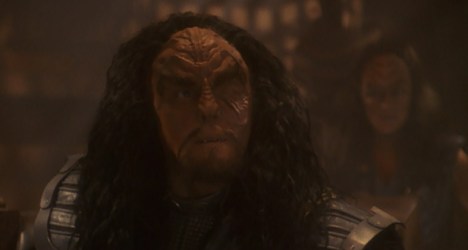
In contrast, Soldiers of the Empire is primarily focused upon the Klingon cast and the Klingon crew. Worf and Dax join the IKS Rotarran to support General Martok in his first command since escaping the Dominion prison camp at the end of By Inferno’s Light, but they are very much bystanders. Although Worf and Dax provide vital narrative functions in introducing the audience to Klingon customs and cultures, the narrative arc of the show belongs to Martok and the crew of the Rotarran. This is not a story about Worf and Dax, this is a story about Martok.

The result is an episode that really pushes the limits of the storytelling possibilities on Deep Space Nine, a reminder that the production team remain as ambitious as ever in the show’s fifth season. Soldiers of the Empire suffers from a few minor plotting issues, but it is exciting and compelling in a way that captures the very best of Deep Space Nine.

A sharp stabbing pain.

A sharp stabbing pain.

Continue reading