• Following Us

  • Categories

  • Check out the Archives


  • Awards & Nominations

Non-Review Review: Absolutely Fabulous – The Movie

Absolutely Fabulous: The Movie is that it feels very much like an extended special of the classic British sit-com. Sure, the film has an expanded budget that allows for some suitably glitzy location work. Of course, the film is stuffed to the gills with even more celebrity cameos than you could shake a stick at. However, there is very much a sense that Absolutely Fabulous has not been radically transformed in the transition from goggle box to silver screen. This is very much in the spirit and style of the source material.

That is perhaps both the best and worst thing that could be said about Absolutely Fabulous: The Movie.

Saundering off...

Saundering off…

Continue reading

The X-Files: Season 11 (IDW) #5 – My Name is Gibson (Review)

This June, we’re going to be taking a look at the current run of The X-Files, beginning with the IDW comic book revival and perhaps taking some detours along the way. Check back daily for the latest review.

It feels like Season 11 was barely getting started before it started winding down.

There is a leanness to Season 11, as if the eight-issue series exists primarily to wrap up all the loose ends spinning out of Elders so the series can be rebooted and relaunched in keeping with the new continuity established by My Struggle I. The new status quo set up in Cantus was striking. While the premise owed a lot to the set-up of Nothing Important Happened Today I and Nothing Important Happened Today II, putting Mulder on the run as a roving one-man freelance X-files division evoked The X-Files by way of Kung-Fu or The Incredible Hulk.

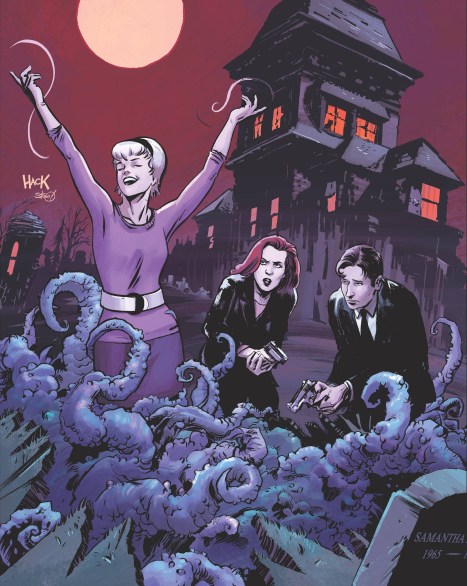
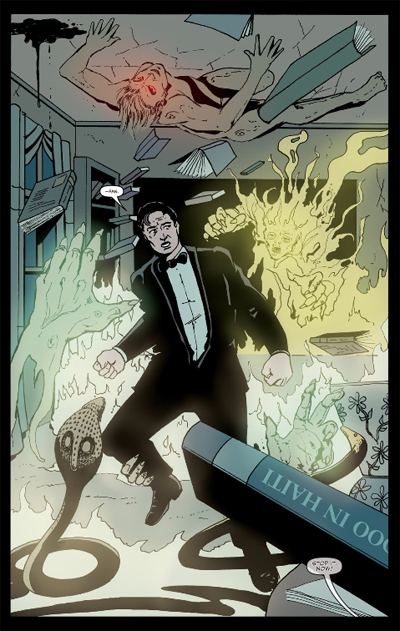
Bewitching.

Bewitching.

In some ways, the set-up felt like a striking homage to seventies pop culture. The wandering hero is a staple of pop culture in general, but American pop culture in particular. In the sixties, it was The Fugitive. In the eighties, it was The A-Team. Nevertheless, the set-up evokes the mood and feeling of the seventies, of a nation lost and discovering itself in the wake of Watergate and Vietnam. Setting Mulder on that particular course was a very clever story hook. The X-Files owes a lot to seventies film and television, so this set-up felt strangely appropriate.

With that in mind, it feels somewhat disappointing that the new status quo comes to a close so quickly. At the end of Home Again, Mulder is taken into custody as a fugitive. With My Name is Gibson, Joe Harris begins aligning the pieces for the climax of his three-year run on Season 10 and Season 11. It seems like Season 11 is over before it has started, which seems quite disappointing given all of the promise on display.

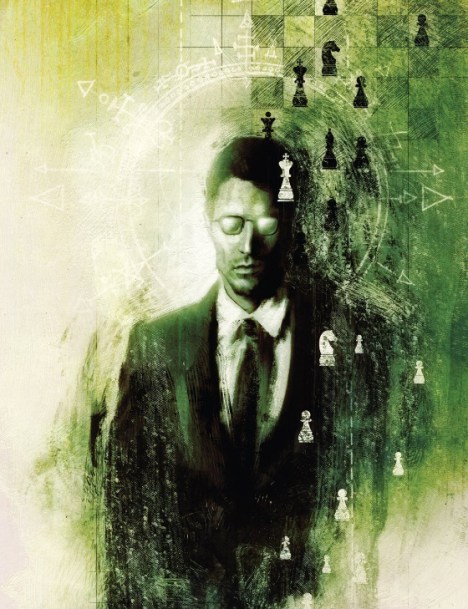
Chess master.

Chess master.

Continue reading

The X-Files: Season 11 (IDW) #2-4 – Home Again (Review)

This June, we’re going to be taking a look at the current run of The X-Files, beginning with the IDW comic book revival and perhaps taking some detours along the way. Check back daily for the latest review.

Home Again is perhaps a great example of the overlap that existed between IDW’s monthly comic series and the revival miniseries.

News that Mulder and Scully were coming back to prime time television broke in March 2015, just as writer Joe Harris was wrapping up work on his Elders arc and bringing The X-Files: Season 10 to a close. While most of The X-Files: Season 10 had unfolded as a live action revival was in a state of limbo, things had solidified by the time that The X-Files: Season 11 was announced. If Season 10 was haunted by the possibility that a live action revival might usurp its claim to legitimacy, then Season 11 was overshadowed by the certainty of that same prospect.

Mama's home...

Mama’s home…

However, both the revival and the comic book series seem to exist trapped within a weird dialogue with one another. To be fair, this was apparent even in the context of Season 10. The use of Gibson Praise as the primary antagonist of the comic book was forced by Chris Carter’s desire to “save” William for use in the revival miniseries. It seems likely that the Cigarette-Smoking Man’s absence from (and perhaps even the Lone Gunmen’s continued presence in) Season 11 speaks to similar logistical concerns.

Nevertheless, Home Again provides a wry point of intersection between the comic book series and the revival miniseries. It is, after all, a title shared between both.

Burying the past...

Burying the past…

Continue reading

The X-Files: Season 11 (IDW) #1 – Cantus (Review)

This June, we’re going to be taking a look at the current run of The X-Files, beginning with the IDW comic book revival and perhaps taking some detours along the way. Check back daily for the latest review.

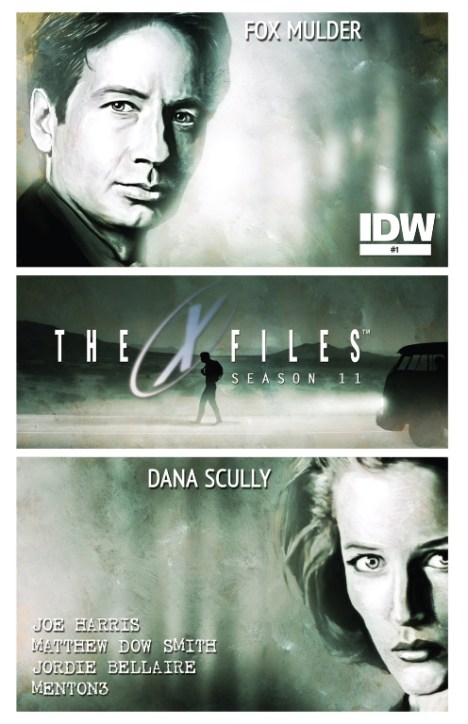
The X-Files: Season 11 is a truncated season, in more than one way.

While The X-Files: Season 10 ran for twenty-five issues with two annuals, a Christmas special and three tie-in miniseries, The X-Files: Season 11 is a more modest affair. The monthly series runs for eight issues, although there is a single Christmas special thrown in for good measure. More than that, there is a very clear condensed quality to the narrative. It feels like writer Joe Harris, along with artist Matthew Dow Smith and colourist Jordie Bellaire, are racing frantically towards the finish line.

See no evil.

See no evil.

This makes a certain amount of sense. After all, The X-Files: Season 11 was not the only big news to hit the fandom in February or March 2015. The creative team had done good work reviving the nineties science-fiction franchise, but news of a fresh season of X-Files comic books was always going to pale in comparison to news that Fox had managed to bring back Chris Carter along with Gillian Anderson and David Duchovny for a six-episode miniseries to air less than one year later.

The X-Files: Season 11 was always going to exist in the shadow of the louder and showier revival. In some respects, the entire eight-issue series feels like a frantic attempt to wrap up all the dangling threads set up in that initial run. It feels very much like the publisher getting its house in orders before that classic theme music plays on prime-time once again. The X-Files: Season 11 is a somewhat modest affair. Although that modesty is somewhat endearing.

On the road again.

On the road again.

Continue reading

Non-Review Review: The Neon Demon

Is it possible for a film set in the world of high fashion to be too superficial?

That is very much the crux around which Neon Demon pivots. Nicolas Winding Refn is a glorious stylish director with a strong visual sense and a provocative attitude. Thematically, his films tend to touch upon broad ideas like the correlation that exists between masculine identity and violence. It is familiar ground for anybody who has ever watched a film, followed a television show, read a book or even browsed a newspaper. Refn doesn’t necessarily do anything novel or compelling when it comes to his subject matter.

A cut throat industry...

A cut throat industry…

Instead, Refn offers a striking aesthetic that is lush and overwhelming. It is too much to suggest that Refn’s films would work just as well (or even better) with the volume turned down low. After all, Cliff Martinez’s scores are a key part of the appeal of Drive and Only God Forgives. More than that, the blunt metaphorical “nobody in the history of the world has ever talked like this” dialogue is very much part of the appeal. Characters in Neon Demon converse around one another, talking in abstracts and affectations. It is a pure pulpy delight.

At the same time, Neon Demon brushes up against its own limitations. When Refn draws on archetypal female characters, he seems to fall back on shallow sexist caricatures. “Are you food or are you sex?” one character asks young model Jesse early in the film. The movie suggests its own alternative (and sadly all too conventional) dichotomy. Refn’s female characters are reductive and crudely formed; just like his male characters. However, the reduction of the female characters in Neon Demon is much more problematic than that of his male characters.

This business can murder.

This business can murder.

Continue reading

The X-Files: Season 10 (IDW) (Review)

This June, we’re going to be taking a look at the current run of The X-Files, beginning with the IDW comic book revival and perhaps taking some detours along the way. Check back daily for the latest review.

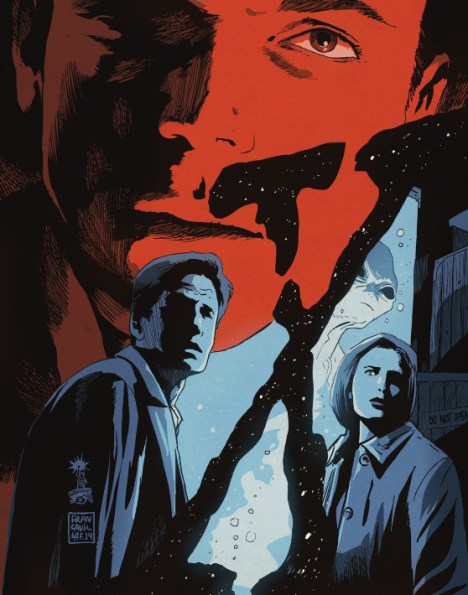
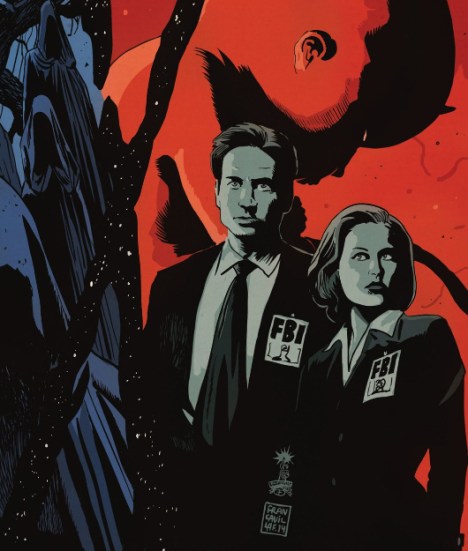
The X-Files: Season 10 is something of a mixed bag.

A significant portion of that is down to changes that took place in the background over the comic’s life cycle. When IDW first announced the series, The X-Files was largely considered to be a dead franchise with no viable future. By the time that the first arc (Believers) had wrapped up in October 2013, there were already murmurings about bringing the series back in one form or another. By the time that the second mythology arc (Pilgrims) was kicking off in April 2014, Chris Carter was already meeting with Glen Morgan to hammer it out.

xfiles-pilgrims55

By the time that the comic’s final arc (Elders) wrapped up in July 2015, the entire world had known for months that The X-Files would be coming back to television. This knowledge deflated the comic book relaunch somewhat. The X-Files: Season 10 had been launched with a “co-writer” credit for Chris Carter on the first five issues; he was afforded an “executive producer” credit on most of the rest of the line. What had been positioned as a semi-official continuation of the adventures of Mulder and Scully was swiftly reduced to a historical curiosity.

However, these developments affected more than just the perception of the series. When the comic launched, it was very much the only game in town. By the end of his first arc, Joe Harris was already forced to make concessions to the possible return of The X-Files in film and television. A lot of the mythology set up in Believers was hastily abandoned and brushed aside, with the characters even acknowledging as much in Monica & John. This put The X-Files: Season 10 at something of a disadvantage, with the sense the mythology was being rewritten on the fly.

xfiles-elders

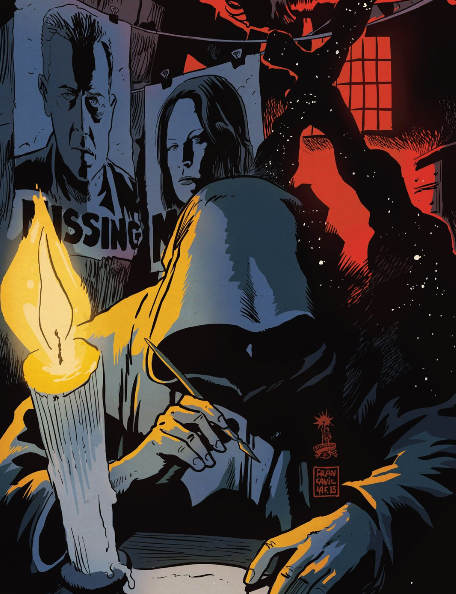
In a way, it felt like a lot of The X-Files: Season 10 was driven by a recurring conversation about its own validity and legitimacy. In More Musings of a Cigarette-Smoking Man, the eponymous character tries to piece together his own fractured continuity. In Pilgrims, a clone of Alex Krycek fought desperately to assert his individuality. In Monica & John, Monica Reyes lamented being abandoned and “forgotten.” In Elders, the clones of the conspirators lament the warping of their organisation into something grotesque.

While there was something suitably clever and postmodern to all of this, there was a sense that The X-Files: Season 10 was suffocating in nostalgia and continuity. Of the twenty-five issues published, only one (Chitter) was a completely original story that did not serve the return of a familiar premise or a meditation on some past point of continuity. The classic mythology dominated the series, but even many of the standalone stories played as continuity-filling “origin stories” for classic characters and concepts.

Missing in action...

Fluke Man got a very X-Files origin story in Hosts. Mister X got a very generic origin story in Being for the Benefit of Mister X. The Cigarette-Smoking Man explored his history in More Musings of a Cigarette-Smoking Man. Even the classic “I Want to Believe” poster got an origin story in G-23. This is to say nothing of the fact that Hosts and More Musings of a Cigarette-Smoking Man were explicitly sequels to The Host and Musings of a Cigarette-Smoking Man. At a macro story level, The X-Files: Season 10 often felt like an exercise in nostalgia.

Which is a shame, because it really feels like writer Joe Harris has a firm grip on The X-Files. The writer has a good handling on most his characters, particularly Mulder’s sarcastic and the tragedy of the Cigarette-Smoking Man. He understands the core themes underpinning the series and even finds a way to make those themes feel contemporary in stories like Chitter and Immaculate. However, the comic feels somewhat hobbled by its insistence on keeping the mythology running. The series has its eye on the past more than the future.

xfiles-immaculate27

Continue reading

Non-Review Review: Ice Age – Collision Course

Film franchises are delicate things. There comes a point at which certain concepts feel played out, at which familiar characters seem tired as they go through the proverbial motions. Over time, it can feel like a film franchise has done just about everything. It becomes harder and harder to generate conflict, to motivate the characters to action, to come up with credible stakes.

The art of franchise escalation is fine. It is more nuanced than most will readily acknowledge. Coming up with an organic reasons for an ensemble to reteam and embark on a new adventure can be tough enough after the original film, but it becomes a little exhausting by time that the fourth film rolls around. There is a point where even enlisting the audience feels like an insurmountable challenge.

Over the moon...

Over the moon…

However, there are film franchises that do manage to do this. After all, the Marvel Cinematic Universe is comprised of over a dozen franchise films. The James Bond series is more than twenty films long, but it still periodically finds a new groove. It is not impossible for a film franchise to find new and exciting possibilities past its third entry. Even earlier this year, Creed is testament to the appeal of a new approach.

On the other hand, Ice Age: Collision Course is a film that opens with beloved squirrel Scrat hijacking a space ship while chasing his nut and setting an asteroid on a collision course with our protagonists.

Men and women of mist-ery...

Men and women of mist-ery…

Continue reading

Non-Review Review: Independence Day – Resurgence

Independence Day: Resurgence is the very limit case of nineties nostalgia.

This is true in a very real sense. The film is released two decades after the massive success of the original film, which came to theatres in 1996 offering unprecedented and awe-inspiring destruction on a previously unimaginable scale. Independence Day changed the public’s expectations for blockbusters, reworking the scale of apocalyptic destruction that could populate big summer releases. However, as much fun (and as well loved) as the film was, nobody was really clamouring for a sequel.
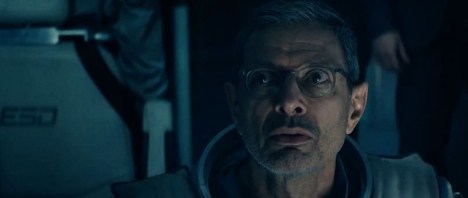
Jazzy Jeff, without the Fresh Prince.

Jazzy Jeff, without the Fresh Prince.

However, there is another truth about nineties nostalgia buried within this belated and bloated sequel. The nineties were a different time. They were a time at which Franci Fukuyami could make a semi-credible case that the United States stood at the end of history. The Cold War was over. The War on Terror had yet to begin. The Twin Towers still stood, and most Americans were oblivious to the existence of Osama Bin Laden or al-Qaeda. The economy was reasonably prosperous. Politics were relatively stable.

It is, of course, too easy to let nostalgia paint the nineties as some sort of “golden age.” There were horrific conflicts unfolding in Africa and Eastern Europe. There were clear shifts in American political rhetoric that paved the way for the current political climate. Paranoia and conspiracy theory were working their way into mainstream political discourse. However, the nineties were a time of much lower anxiety for most Americans, and time of peace rather than perpetual existential warfare.
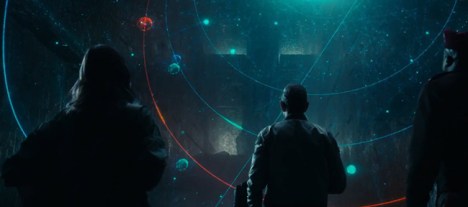
Maps to the stars.

Maps to the stars.

As a result, Independence Day had a radically different context in the summer of 1996 than it would in the summer of 2016. In 1996, the destruction of the White House and the Empire State Building could be treated as ridiculous escapism rather than traumatic repetition. The narrative of American individualism and exceptionalism was oddly endearing in the midst of a period of sustained global stability rather than an era of resurgent (and violent) political nationalism.

Even in terms of entertainment, the original Independence Day arrived at a point where it was enough for a blockbuster to be a blockbuster, where thematic resonance and political commentary were optional extras that were tolerated so long as they didn’t get in the way of the explosions. Independence Day was released at a point where it was enough for a movie to be “dumb fun” without carrying a deeper message. Without the internet to pick films apart and pour over their subtext, it was a lot easier to just release an unassuming spectacle.

Over the moon about it.

Over the moon about it.

More than that, the sheer practical limitations of filming a blockbuster helped to rein in a lot of potential excesses of a film on this scale. While there was always computer-generated special effects, a heavy reliance on practical models and practical effects tended to dictate both the scripting and the direction of the film. Although Independence Day was an ode to heightened spectacle, there were limits to that spectacle. There was only so much of the aliens that could be shown, there were moments where things couldn’t be exploding.

In short, Independence Day was very much the perfect movie for 1996. In its own way, Independence Day: Resurgence is an ode to that. It is also a reminder that this is no longer 1996.

Not quite the Gold(blum) standard.

Not quite the Gold(blum) standard.

Continue reading

The X-Files (IDW) Annual 2015 – Most Likely to… (Review)

This June, we’re going to be taking a look at the current run of The X-Files, beginning with the IDW comic book revival and perhaps taking some detours along the way. Check back daily for the latest review.

Most Likely to… is an interesting stories in a number of respects.

Most obviously, it represents a clear change in how IDW are approaching their X-Files license. When The X-Files: Season 10 was announced in January 2013, a big deal was made of the fact that it would be the “official” continuation of the adventures of Mulder and Scully. The comic line was very much an expansion of the series, to the point that the bulk of issues – including spin-offs like Conspiracy and like Millennium – took place following the events of The X-Files: I Want to Believe. The future of the franchise was up for grabs.

Flashback.

Flashback.

Most Likely to… is notable as the first X-Files comic published by IDW to unfold entirely within the continuity of the television series, rather than beyond it. Even the framing device in Year Zero was very much set during Season 10. The comic is dated as taking place in November 1999, which would place it early in the seventh season of the show. The dialogue makes it clear that this issue takes place before the events of Sein und Zeit and Closure. This choice of setting feels more like the Topps or Wildstorm comics than the IDW line.

This is a very interesting transition, given how keenly IDW had been focused on their position as the continuation of the franchise. However, it does demonstrate just how much as changed.

Burning down the house...

Burning down the house…

Continue reading

The X-Files: Season 10 (IDW) #21-25 – Elders (Review)

This June, we’re going to be taking a look at the current run of The X-Files, beginning with the IDW comic book revival and perhaps taking some detours along the way. Check back daily for the latest review.

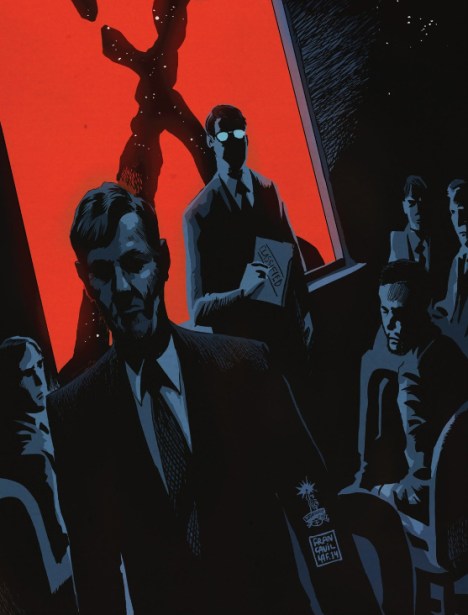
One of the more disappointing aspects of The X-Files: Season 10 and The X-Files: Season 11 is that it does very little to adapt the mythology to the twenty-first century.

The X-Files is very much a show rooted in the political and cultural context of the nineties. Everything about the show’s first seven seasons reflects the Clinton era, with the series perfectly capturing the zeitgeist in the weird lacuna between the fall of the Berlin Wall and the destruction of the World Trade Centre. At its peak, the show touched on underlying anxieties that are social, political and existential; it asked tough questions about identity in the final days of the twentieth century. As much as Friends or The Simpsons, The X-Files embodied the nineties.

The son becomes the father... And the pseudo-son...

The son becomes the father…
And the pseudo-son…

As such, any revival of The X-Files must face questions of relevance. The X-Files so perfectly captured the spirit of the nineties that removing the series from that context runs the risk of severely damaging it. What makes now such a perfect time for The X-Files? What does The X-Files have to say about contemporary culture? How will the show be tweaked for modern audiences and sensibilities? These are not trivial questions. Any X-Files revival should be more than just a nostalgic “victory lap.”

This question of relevance faced the revival miniseries, but it also faced The X-Files: Season 10. What does The X-Files mean in the modern world? Harris had broached the question in a number of different ways, perhaps most skilfully in his approach to the classic “small town horror stories” that populated the show’s nine-season run. Whereas those stories tended to touch upon themes of globalisation and the erosion of so-called eccentric spaces, Harris used stories like Chitter and Immaculate to explore a growing cultural divide in twenty-first century America.

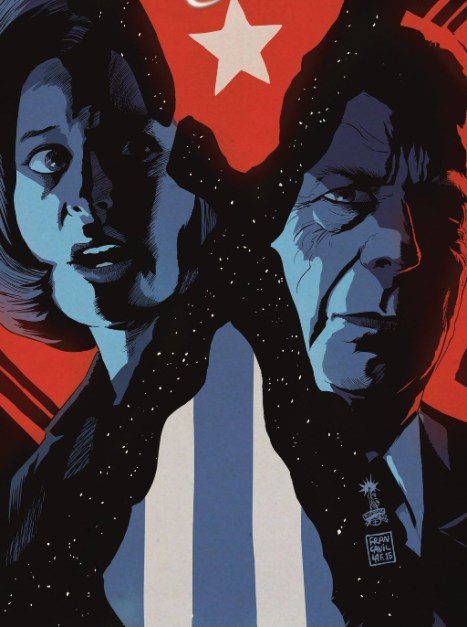
Cuba libre...

Cuba libre…

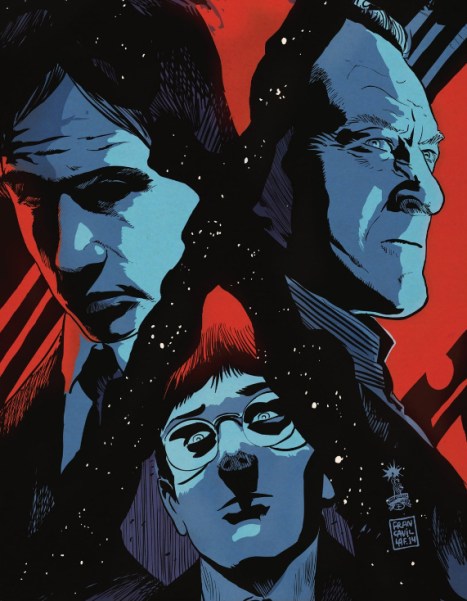
However, The X-Files: Season 10 does not work quite as well when it comes to updating the mythology for the twenty-first century. A lot of this is down to the strong nostalgic pull of the nineties mythology. Harris employs a lot of the same elements that were in play while the show was on the air; the same characters, the same dynamics, the same story beats. There were occasional nods towards the changing geopolitical realities, such as the use of black-oil-as-oil in Pilgrims. However, the revived mythology never engaged with the twenty-first century as well as it might.

Effectively serving as the season “finale”, Elders makes the strongest play for relevance yet. It consciously references and evokes the imagery of the War on Terror in its exploration of Gibson Praise’s revived conspiracy. Unfortunately, it doesn’t quite work.

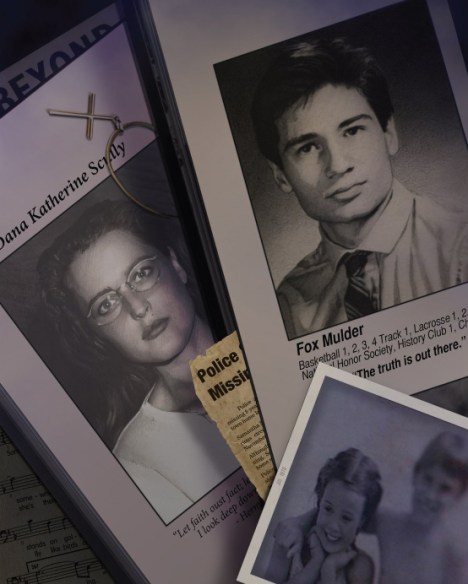
Cross to bear...

Cross to bear…

Continue reading