• Following Us

  • Categories

  • Check out the Archives


  • Awards & Nominations

Millennium – Luminary (Review)

This May and June, we’re taking a trip back in time to review the fifth season of The X-Files and the second season of Millennium.

Why is Frank Black still involving himself with the Millennium Group?

The second season of Millennium is a fantastically constructed piece of television, but there are a number of fundamental criticisms that can be leveled at this particular incarnation of the show. To some viewers, it is too much to watch the Millennium Group transformed from a consultancy firm in the style of the Academy Group into an ancient Christian cult obsessed with doomsday. Other fans may not be particularly fond of the surreal eschatology of the second season, finding it a bit more “out there” than stories about serial killers and more mundane evil.
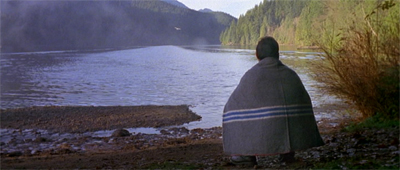
Cooling off period...

Cooling off period…

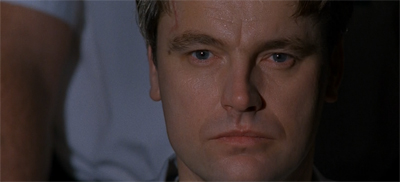
However, there are fans who have difficulty reconciling the version of Frank Black presented in the second season with the iteration who appeared throughout the first season of the show. The second season gave Frank a fondness for Bobby Darin and a sense of humour, but the change is more fundamental than that. The moral and righteous Frank was a pillar of certainty in an uncertain world. To some fans, it seems strange that Frank would remain involved in the Millennium Group as their paranoia and cultish behaviour became more and more apparent.

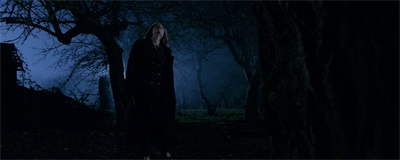
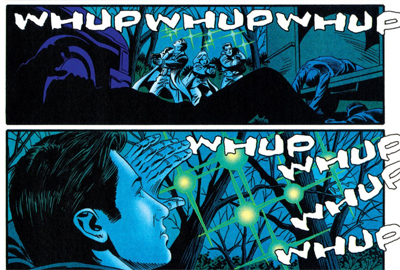
In many respects, Luminary seeks to answer that question. The second of Chip Johannessen’s three scripts for the second season ranks among his very best work for the show and the very best of the show in general. Johannessen has admitted that he was a little frustrated with the direction that Glen Morgan and James Wong took the show in its second year, and that scepticism bleeds through into Luminary. It is also what makes Luminary so compelling. It is a story about how Frank Black has lost himself over the last half-season, and needs to find his way back.

Night lights...

Night lights…

Continue reading

Non-Review Review: Spy

Spy is broad, but it is funny. It might just be the best collaboration between director Paul Feig and actress Melissa McCarthy.

Feig reteams with McCarthy following on from the critical and commercial successes of Bridesmaids and The Heat. Both films were frequently cited as leading a new wave in female-led comedy, proving that audiences and critics would respond to classic comedy movie tropes executed with a largely female cast. Although Spy features an ensemble that is more gender-balanced, it remains a feminist comedy. Feig’s screenplay is never heavy-handed in its gender politics, but it wryly aware of how its female characters are wading into a traditionally masculine space.

I spy a winner...

I spy a winner…

Continue reading

The X-Files – Schizogeny (Review)

This May and June, we’re taking a trip back in time to review the fifth season of The X-Files and the second season of Millennium.

Schizogeny has a pretty terrible reputation among some (or even most) fans of The X-Files.

During The A.V. Club’s coverage of the show’s fifth season, Todd VanDerWerff suggested that it “just might be the very worst episode of The X-Files.” Andrew Payne described the killer tress as the series’ “worst monster of the week.” Moving away from any sort of objective coverage, The X-Files Wiki lists the fact that Schizogeny is “generally considered by fans to be one of, if not the worst, X-Files episode” at the very top of “notes” section on the episode. It is fairly safe to say that Schizogeny is not well-liked.

The woodsman...

The woodsman…

And there are a lot of very valid reasons for this. There is a lot about Schizogeny that is not good; more than that, there is a lot that is just plain terrible. The writing is clumsy, the plotting is hazy, the special effects are jumbled, the dialogue is awkward. It is very difficult to tell what is going on at certain points in the story, and a truly woeful central performance from Chad Lindberg as Bobby Rich does not help matters. Schizogeny is not a classic episode of The X-Files, by any stretch of the imagination.

However, it is nowhere near as bad as its reputation suggests.

Go climb a tree...

Go climb a tree…

Continue reading

Non-Review Review: San Andreas

San Andreas is a b-movie that desperately wants to be taken seriously.

The film is at its best when it engages with its corniness. The characters make terrible baseball-related puns as the world falls to pieces. Our protagonist has a clever idea inspired by a passer-by’s choice of headware. Paul Giamatti sells his seismological terror. A desperate mother decides to plough a boat through a window into the room where her daughter is already close to death. The disaster relief efforts are interrupted so that the news reporters can thank the team of hard-working seismologists who predicted the disaster whole minutes before it happened.

Pilot error?

Pilot error?

However, the film has no real sense of tone or mood. The script longs for a deeper resonance, and so aims a lot higher than it can actually hit. The main characters spend most of the disaster working through the death of a child several years earlier, with cliché flashbacks striving for heart-breaking but landing on groan-inducing. Plot points are dutifully and awkwardly set up, with characters spending most of the first act spewing obvious foreshadowing more than meaningful dialogue.

The result is a mismatched and uneven piece of work, a disaster movie in more than the way that the production team intended.

"Um, I found a plot hole..."

“Um, I found a plot hole…”

Continue reading

Millennium – Goodbye Charlie (Review)

This May and June, we’re taking a trip back in time to review the fifth season of The X-Files and the second season of Millennium.

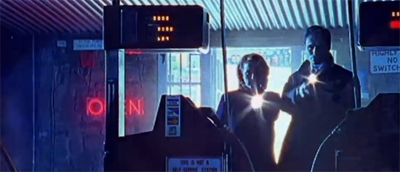
Goodbye Charlie is an interesting oddity at this point in the season. It is the closest thing that the show has done to an old-fashioned “serial killer” story in quite some time, while still remaining quite unique and bizarre. It is a story about a man who may (or may not) be a serial killer, opening with shots of that (possible) killer serenading his victims with a dodgy karaoke version of the already dodgy Seasons in the Sun. It is memorable and striking, a strange hybrid of familiar trappings and completely bonkers absurdity.

There are points where Goodbye Charlie does not work. There are moments when the script seems a little too knowing or a little too heavy-handed. However, there moments are generally fleeting. When Goodbye Charlie falters, it is only a slight misstep; there is never a sense that it might implode in the same way that Sense and Antisense or A Single Blade of Grass threaten to collapse in on themselves. More than that, as with a lot of the bumps in the road during the second season, the show is generally ambitious and energetic enough that it’s hard not to get drawn in despite the flaws.

Sing with me now...

Sing with me now…

There are two elements of Goodbye Charlie that really sell it. The first is Richard Whiteley’s script. It is perhaps a little stilted in places – most notably in the way that it awkwardly plays up the ambiguity around the case by having Frank and Lara repeatedly draw attention to the ambiguity around the case – but it is clever, fast and witty. The episode also benefits from the casting of Tucker Smallwood as Steven Kiley, who turns in one of the best one-shot guest appearances of the season as a character who might be an altruistic helper or a manipulative sociopath.

Goodbye Charlie is perhaps a little too uneven to count among the very best of the season, but it is a fascinating little episode. It is also perhaps an indication of how profoundly the show has changed over this half-season that Goodbye Charlie manages to feel like one of the more conventional episodes of the year.

Nuts to that...

Nuts to that…

Continue reading

“Mulder and Scully” by Catatonia (Review)

This May and June, we’re taking a trip back in time to review the fifth season of The X-Files and the second season of Millennium.

Things are getting strange, I’m starting to worry

this could be a case for Mulder and Scully…

If you needed proof that The X-Files was a cultural juggernaut in the mid-to-late nineties, look no further than Mulder and Scully.

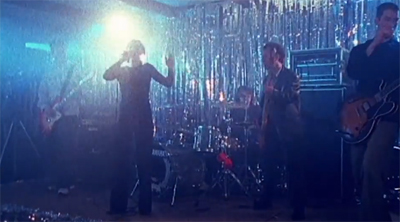
The first single off Catatonia’s International Velvet propelled the band to new heights of fame and fortune. Before the release of Mulder and Scully, the band had skulked around the bottom of the British charts; their biggest success before that point had been You’ve Got a Lot to Answer For, a song lucky to scrape the top forty. Indeed, reaching the third position in the United Kingdom charts, Mulder and Scully easily became the Welsh band’s largest pop hit. A month after the release of Mulder and Scully, its parent album would reach the top of the international charts.

catatonia-mulderandscully3

Having a Wales of a time…

Indeed, it could be argued that Catatonia’s success overlapped quite neatly with that of The X-Files. The core of the band’s “classic” line-up, Cerys Matthews and Mark Roberts, began writing songs together in 1992. The single Mulder and Scully and the album International Velvet represented the peak of their success. The band would release two more albums building off the success of International Velvet, before formally announcing the dissolution of the band in September 2001. It is an arc that roughly mirrors that of The X-Files – suggesting Catatonia were another nineties artifact.

Although Mulder and Scully was Catatonia’s biggest success, it is worth noting The X-Files had enjoyed a great deal of success in the British charts. Late in the show’s third season, the theme song had been released as a single in its own right. Mark Snow’s iconic opening credits music had climbed all the way to the number two slot. Nevertheless, Mulder and Scully is interesting because it is a massive hit about the show that came from outside the production office. The X-Files had conquered television, now it seemed to be laying claim to both cinema and the pop charts.

Sing when you're winning...

Sing when you’re winning…

Continue reading

Jameson Cult Film Club: Lethal Weapon

Watching a film with an audience really into it is a joyous experience.

For all that cinema is a social activity that takes place in a dark room with everybody staring in the same direction, there is a lot to be said about the communal nature of the activity. Bringing together a theatre full of people to celebrate a classic film is always a worthwhile activity. A lot of the films chosen by the Jameson Cult Film Club are familiar to audience members, but there is something to be said about actually experiencing a movie like Lethal Weapon with a room full of like-minded people.

Jcfc Lethal Weapon 87 Continue reading

The X-Files – Kitsunegari (Review)

This May and June, we’re taking a trip back in time to review the fifth season of The X-Files and the second season of Millennium.

Kitsunegari hits on a lot of fifth season anxieties for The X-Files.

The episode is rather clearly a sequel to a beloved third season installment, featuring a returning monster of the week for the first time since Tooms brought back Victor Eugene Tooms. In this case, Kitsunegari is built around Robert Patrick Modell, the mind-controlling psychopath from Vince Gilligan’s first script as a staff writer. Given the level of Gilligan’s skill, the affection for the episode, and the charm of actor Robert Wisden, Kitsunegari really should be a “can’t miss” script for the series.

Painting the town...

Painting the town…

However, Kitsunegari proves to be a surprisingly joyless experience. The script hinges on incredibly coincidence and contrivance, everything feels a little too familiar, and even Robert Wisden seems relegated to a small supporting role. (It is telling he earns an “and” credit instead of heading the guest cast.) Kitsunegari has a host of memorable set-pieces and effective visuals, but it feels curiously hollow. It feels like a script going through the motions, rather than trying to say something new or intriguing.

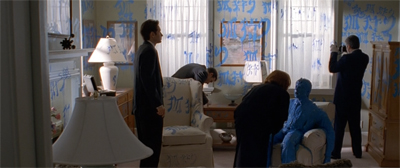
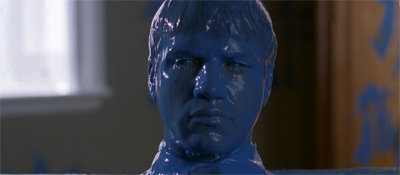
Then again, there is a sense that this is the point. Kitsunegari plays beautifully as a self-aware critique of soulless sequels, of half-hearted follow-ups and cash-ins on popular monsters and villains. Kitsunegari is almost an ingenious parody of these conventions, teasing the viewer with what it might look like if The X-Files began to eat itself. It teases the audience with a trashy sequel to a classic episode, and then delivers exactly that. Kitsunegari does not just demonstrate the law of diminishing returns, it practically revels in it.

Pushing the Pusher...

Pushing the Pusher…

After all, Pusher was an episode about a man with complete control of his own story. Robert Patrick Modell was able to change the world using nothing more than mere words, crafting a new identity and persona for himself, casting himself in role of a criminal mastermind pursued by dogged investigators. It is no wonder that Kitsunegari portrays Modell as exhausted and strung out. Kitsunegari is essentially a story about how Modell has lost control of the narrative, how it has begun to control him. In a way, he gives voice to the same concerns that haunt The Post-Modern Prometheus.

Of course, all this postmodern self-awareness is ingenious, but it still leaves one sizable problem with Kitsunegari. Kitsunegari is so effective at mimicking a soulless sequel that is almost indistinguishable from the real thing. The result is a well-constructed and clever little episode, but one that is not particularly enjoyable or fun.

"I'm blue, dabba-dee-dabba-di."

“I’m blue, dabba-dee-dabba-di.”

Continue reading

Millennium – Midnight of the Century (Review)

This May and June, we’re taking a trip back in time to review the fifth season of The X-Files and the second season of Millennium.

Midnight of the Century is a Millennium Christmas episode, as strange as that might sound.

In hindsight, it really should not seem so strange. After all, The X-Files had just done a big two-part Christmas episode with Christmas Carol and Emily. More than that, executive producers Glen Morgan and James Wong had demonstrated an affinity for holiday-themed episodes. The duo had written the Christmas-themed Beyond the Sea for the first season of The X-Files, and had commissioned The River of Stars while they were running Space: Above and Beyond. They had also written The Curse of Frank Black, a Halloween-themed Millennium episode.

Angels in America...

Angels in America…

Midnight of the Century is the second Millennium script credited to writers Kay Reindl and Erin Maher. The duo had been recruited by Morgan and Wong at the start of the second season, and had already produced A Single Blade of Grass. It was a messy episode, albeit one with flashes of genius. Midnight of the Century gives the two writers a much cleaner brief and a lot more room to work. As with The Curse of Frank Black, there is a wonderfully relaxed pace to Midnight of the Century, a sense it knows both where it’s going and how it wants to get there.

On paper, the idea of “a Millennium Christmas episode” sounds like the bleakest thing ever. However, while there are elements of melancholy involved, it is to the credit of everybody involved that Midnight of the Century feels so damn bittersweet.

A Black (family) Christmas...

A Black (family) Christmas…

Continue reading

The X-Files (Topps) #35-36 – N.D.E. (Review)

This May and June, we’re taking a trip back in time to review the fifth season of The X-Files and the second season of Millennium.

N.D.E. is a nice clever character-driven story, one that perhaps suggests a direction that John Rozum might have taken the monthly tie-in comic.

Ten Thirteen had made it quite clear that they did not want long arcs or ambitious storytelling from their licensed comic books. They wanted reliable straight-down-the-middle storytelling, with none of the playful self-awareness and meta-narratives that drove Stefan Petrucha and Charles Adlard’s work on the title. As a result, the comic has been rather more conservative in approach since John Rozum took over. His time on the title has not produced anything as cynical or grim as One Player Only or Home of the Brave.

Healing palm...

Healing palm…

While Rozum is undoubtedly limited by constraints imposed by Ten Thirteen, there is something disappointing about his run on the comic. Rozum has tended to favour done-in-one stories, single issue adventures that wrap up everything quite neatly within twenty-four pages. Rozum has grown quite efficient at this, but there is little room for nuance in stories like The Kanishibari, Silver Lining, Crop Duster or Soma. Rozum’s stories tend to work better when stretched out a little, with Be Prepared and Remote Control allowing room for nice character moments.

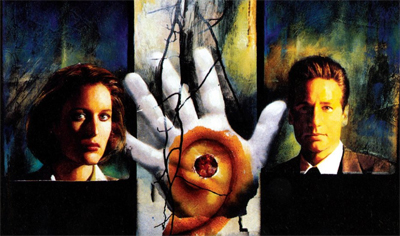
N.D.E. is another two-part story that takes advantage of that additional space to tell a story about Scully. N.D.E. has a fascinating central idea, and a number of clever twists, but it also allows room to explore Scully’s character and philosophy in more depth than the comic has really afforded her. N.D.E. is perhaps a bit clunkier than Be Prepared or Remote Control, but it is the strongest story of Rozum’s final year on the title. Looking at how well this approach works in those stories, it is a shame that Rozum did not employ it more frequently.

You can play the theme to The X-Files in your head if it helps...

You can play the theme to The X-Files in your head if it helps…

Continue reading