• Following Us

  • Categories

  • Check out the Archives


  • Awards & Nominations

Star Trek: Enterprise – Bounty (Review)

Next year, Star Trek is fifty years old. We have some special stuff planned for that, but – in the meantime – we’re reviewing all of Star Trek: Enterprise this year as something of a prequel to that anniversary. This April, we’re doing the second season. Check back daily for the latest review.

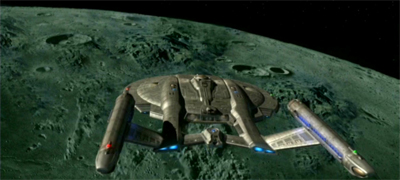
Just when it seemed like Star Trek: Enterprise was on a roll, it produces Bounty.

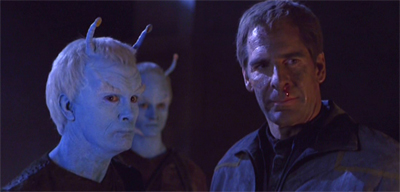
To be fair to writers Mike Sussman and Phyllis Strong, and showrunners Rick Berman and Brannon Braga, Bounty has all the makings of a network-mandated episodes. It is easy to see the stock plot elements manufactured from a checklist provided by the network. T’Pol in her underwear! Space battles! Klingons! The script also demonstrates a clear reluctance about some of these elements, as uncomfortable to be making Bounty as the viewers are to be watching it.

An enlightening experience?

An enlightening experience?

It is perhaps telling that Bounty was buried as the second half of a “double feature” with First Flight on initial broadcast. Not a feature-length adventure or a two-part episode, the scheduling of Bounty seems a little conspicuous, as if everyone involved is trying to get it out of the way as quickly and quietly as possible. Viewers watching UPN on 14th May 2003 would have tuned in for First Flight as usual. If they were lucky, they simply tuned out afterwards and returned to watch The Expanse a week later.

It is a much smoother transition from First Flight to The Expanse, but that does little to justify Bounty. The last stretch of the second season has generally done a good job of bidding farewell to a particular style of Star Trek. However, Bounty is an episode the embodies the worst tendencies of Enterprise. Sadly, those tendencies that may not actually be going anywhere.
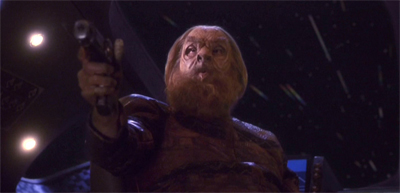
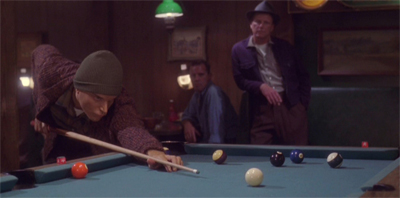
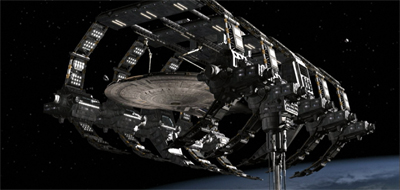
"You're gonna sit there, and like it."

“You’re gonna sit there, and like it.”

Continue reading

Star Trek: Enterprise – Cease Fire (Review)

Next year, Star Trek is fifty years old. We have some special stuff planned for that, but – in the meantime – we’re reviewing all of Star Trek: Enterprise this year as something of a prequel to that anniversary. This April, we’re doing the second season. Check back daily for the latest review.

It is weird to think that Star Trek was dying in early years of the twenty-first century.

After all, the original series had greatly increased its cultural cachet at the height of the Cold War. The adventures of James Tiberius Kirk offered an optimistic alternative to total nuclear annihilation and a doomsday clock that was rapidly approaching midnight. Logic would suggest that utopian fantasy was all the more essential when contrasted against harsh reality. In fact, it seemed like cynicism and pessimism thrived in the (relatively) peaceful and prosperous decade following the collapse of the Cold War. The X-Files and Star Trek: Deep Space Nine were inescapably products of the nineties.

I'm blue dabba dee dabba dii...

I’m blue dabba dee dabba dii…

So one imagines that the dread and fear that took root in the wake of 9/11 might somehow make the optimism and hope of Star Trek all the more essential. After all, pundits and commentators wasted no time in suggesting that irony and cynicism were passé. Stephen Thompson, editor of The Onion, suggested that the age of irony had ended only a week after the attacks.  Graydon Carter, editor of Variety, observed, “I think it’s the end of the age of irony. Things that were considered fringe and frivolous are going to disappear.” In a highly publicised Time article, Roger Rosenblatt rejoiced.

Of course, irony was far from dead, as films like Team America: World Police demonstrated. The Colbert Report became a cultural phenomenon. The Onion is still in business. However, the speed with which these commentators latched on to the idea of the death of irony suggested that the mood had changed perceptibly. Maybe not definitively, maybe not completely, but there was a change in the air. If ever there was a time for the optimism and the utopianism of Star Trek, it would be this particular moment.

"This is the point where everything changed..."

“This is the point where everything changed…”

However, it seemed like 9/11 eroded the franchise’s faith in utopia. Understandably – and perhaps inevitably – Star Trek: Enterprise found itself warped by images and iconography associated with the attacks. The tradition idyllic alien worlds associated with the franchise – visible in early episodes like Strange New World and Civilisation were quickly replaced by landscapes evoking the popular mood – apocalyptic cityscapes of Shadows of P’Jem and Shockwave, Part II, the deserts of Desert Crossing, the militaristic settings of Detained and The Communicator, or even the darkness of Rogue Planet.

It was as if 9/11 had warped the psychological landscape of the Star Trek universe, throwing everything into doubt. Far from responding to that real-world tragedy with optimism and hope, it seemed that Enterprise only lost certainty in itself. Cease Fire is an episode that feels plagued by self-doubt and insecurity, even as it tries to find its way back to the franchise’s trademark idealism. It may not quite find its way back to the path, but it makes a reasonable effort.

It's all in ruins...

It’s all in ruins…

Continue reading

Star Trek: Enterprise – The Seventh (Review)

Next year, Star Trek is fifty years old. We have some special stuff planned for that, but – in the meantime – we’re reviewing all of Star Trek: Enterprise this year as something of a prequel to that anniversary. This April, we’re doing the second season. Check back daily for the latest review.

The Seventh broadcast in early November 2002.

However, production had wrapped on the episode on the 11th of September, the anniversary of the 9/11 attacks. After the crew finished working on the shoot, they paused to observe a moment of silence in honour of all the lives lost in that attack. That same evening, President George W. Bush would speak about those tragic events in the shadow of the Statue of Liberty. It was a very tense and very delicate political and social climate. There was no distance from the atrocity yet.

Public enemy number one...

Public enemy number one…

In January 2002, the United States public still supported intervention in Afghanistan by an overwhelming majority. In October 2002, a survey by the Pew Research Centre would reveal that most Americans supported the idea of war with Iraq, a war that would launch in March 2003. Patriotism surged. In October 2001, the Patriot Act was enacted. In February 2002, the International Olympic Committee asked the Salt Lake Organising Committee to tone down the patriotism at the opening of the winter games.

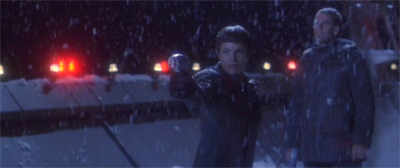
This was the climate in which The Seventh was produced, an episode about a rogue Vulcan operative who must be tracked down and apprehended for the greater good.

Snow down!

Snow down!

Continue reading

Star Trek: Enterprise – Minefield (Review)

Next year, Star Trek is fifty years old. We have some special stuff planned for that, but – in the meantime – we’re reviewing all of Star Trek: Enterprise this year as something of a prequel to that anniversary. This April, we’re doing the second season. Check back daily for the latest review.

Shuttlepod One worked very well in the first season, didn’t it?

The episode was one of the highlights of the first season, received very well by both the cast and fandom. So it makes sense to revisit that basic set-up early in the second season. This time it isn’t Malcolm Reed and Charles Tucker facing death in the cold void of space. Instead, Jonathan Archer and Malcolm Reed find themselves struggling with a mine as a countdown ticks away in the background. Facing all-but-certain death, characters are thrown into conflict with one another. Sparks fly, drama happens.

Let's go outside.

Let’s go outside.

To be fair, Minefield ups the stakes dramatically. It takes the same high-stakes characters-against-the-void drama that made Shuttlepod One such a success and then blends it with Star Trek: First Contact and throws the Romulans into the mix just two months before the release of Star Trek: Nemesis. It is very much a high-concept cocktail of episode, a show with a lot going on and a lot of focus in contrast to the more relaxed pace of something like Carbon Creek.

Minefield does feel a little bit too derivative and like it is promising something that never quite arrives. However, it is built around a very sound structure, makes good use of the special effects available for the show, and gives Scott Bakula and Dominic Keating a chance to play off one another. It offers a lot of promise for the second season, only to be retroactively tainted by the fact that the second season never delivers on any of these promises.

All I need is the air that I breath...

All I need is the air that I breath…

Continue reading

Star Trek: Enterprise – Carbon Creek (Review)

Next year, Star Trek is fifty years old. We have some special stuff planned for that, but – in the meantime – we’re reviewing all of Star Trek: Enterprise this year as something of a prequel to that anniversary. This April, we’re doing the second season. Check back daily for the latest review.

Although it was the second episode of the season broadcast, Carbon Creek was the first episode of the second season produced.

There are a variety of reasons for this. The fact that it only featured three primary cast members would have meant that everybody else got a little extra vacation time. With a lot of location shooting and a production design outside the Star Trek norm, it likely made sense to get it out of the way first. From a budgeting and production standpoint, the show likely benefited from a bit more time than episodes like Shockwave, Part II or Minefield.

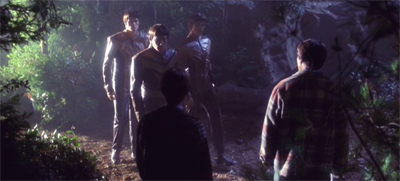
"We come in peace...

“We come in peace…”

However, even outside of these pragmatic production concerns, Carbon Creek helps to set the tone for the second season of Star Trek: Enterprise. It is a largely nostalgic and romantic exercise, a rather light stand-alone episode that feels like it wallows in the iconography and conventions of Star Trek. Indeed, the teleplay is credited to Chris Black, the only new writer to survive the writing staff departures that Mike Sussman jokingly referred to as “purges.”

Black is in many respects the first “native” Enterprise writer – the first writer to last more than a season who had not worked on Star Trek: Voyager. As such, it seems only appropriate that he should set the tone for the season ahead.

Vulcan hustle...

Vulcan hustle…

Continue reading

Star Trek: Enterprise – Season 1 (Review)

Next year, Star Trek is fifty years old. We have some special stuff planned for that, but – in the meantime – we’re reviewing all of Star Trek: Enterprise this year as something of a prequel to that anniversary. This January, we’re doing the first season. Check back daily for the latest review.

The first season of Star Trek: Enterprise is caught at a crossroads.

On the hand, it needs to be something new and exciting. The first Star Trek show of the new millennium, Enterprise has to find a way of updating the franchise and pushing forward. It has to find a way to challenge audience expectations and demonstrate that – after fourteen consecutive years and twenty-one overlapping seasons – Star Trek still has something fresh and exciting to offer fans. After all, the television landscape had changed significantly since the late eighties. It was time for Star Trek to change with it.

ent-brokenbow3

On the other hand, there’s a clear desire to seek familiar comforts. Star Trek has been on the air consistently for over a decade now. That wouldn’t be the case if the franchise didn’t have its own merits. There’s a sense that the first season of Enterprise is drawn to the idea that it can keep doing what worked before, offering generic Star Trek stories with a new cast and a new theme tune. This is still Star Trek, after all. There’s nothing gained by changing it to the point where it is unrecognisable.

Throughout the first season, these two impulses seem to be at odds with one another, leading to a surreal sense of whiplash. Episodes that feel as unique as Breaking the Ice, Dear Doctor or Shuttlepod One sit alongside generic shows like Civilisation, Sleeping Dogs or Rogue Planet. The show frequently pushes itself in interesting directions, only to pull relent as it approaches the point of committal. The result is a first season that is uneven, but intriguing, one that has great potential – if not necessarily the will to fulfill it.

ent-shockwavepart1m Continue reading

Star Trek: Enterprise – Shadows of P’Jem (Review)

Next year, Star Trek is fifty years old. We have some special stuff planned for that, but – in the meantime – we’re reviewing all of Star Trek: Enterprise this year as something of a prequel to that anniversary. This January, we’re doing the first season. Check back daily for the latest review.

Shadows of P’Jem is a wonderful episode. It is, in many respects, the first true post-9/11 episode of Star Trek: Enterprise, and it is a surprisingly thoughtful one at that.

In many respects, Enterprise has already established itself as Star Trek for the George W. Bush era. Archer is the franchise’s first white American male lead character since Kirk, and his contempt for politics and thirst for action mirrors the popular image of George W. Bush – a dynamic man with no time for questions or hesitation. Even little touches – like the fact that officers drink beer rather than champagne, or the anti-intellectual contempt that Archer and Trip feel towards Vulcans – suggest a Star Trek show that is very much in line with Bush’s America.

Shadows on Coridan...

Shadows on Coridan…

However, Shadows of P’Jem was among the first episodes written after the events of 9/11, and it’s an episode that seems quite thoughtful and introspective. The franchise has often used the Federation as a stand-in for American values and ideals. Shadows of P’Jem twists this idea on its head, offering the future Federation members as stand-ins for various facets of American foreign policy.

Shadows of P’Jem is a considerate and reflective look at what Walter Nugent termed “the habits of empire”, a look at the cost and consequences of imperialism in a post-colonial age, and how those issues tend to fester.

A night in sickbay...

A night in sickbay…

Continue reading

Star Trek: Enterprise – The Andorian Incident (Review)

Next year, Star Trek is fifty years old. We have some special stuff planned for that, but – in the meantime – we’re reviewing all of Star Trek: Enterprise this year as something of a prequel to that anniversary. This January, we’re doing the first season. Check back daily for the latest review.

The Andorian Incident is a strange little episode. On the surface, it’s a fairly standard and competently-executed hostage thriller. However, that only scratches the surface. The Andorian Incident is an episode that promises so much more, teasing the potential of Star Trek: Enterprise to evolve into perhaps the most “Star Trek-y of Star Trek shows”, exploring the foundation of the United Federation of Planets and how mankind really found its place in the wider cosmos, building a intergalactic confederation build on peace and tolerance.

The Andorian Incident seems more like a statement of intent from the show, which is a crucial part of any first season.

A bolt from the blue...

A bolt from the blue…

Continue reading

Star Trek: Enterprise – Broken Bow (Review)

Next year, Star Trek is fifty years old. We have some special stuff planned for that, but – in the meantime – we’re reviewing all of Star Trek: Enterprise this year as something of a prequel to that anniversary. This January, we’re doing the first season. Check back daily for the latest review.

Broken Bow is probably the strongest pilot in the Star Trek canon, with Emissary and The Cage vying for second place.

That’s not saying a lot. Broken Bow is still a troubled production with some rather sizeable issues marring what is otherwise an ambitious début for a new Star Trek show. Watching, Broken Bow – as with watching most of the first few years of Star Trek: Enterprise (or just Enterprise) – it feels like the show is at war with itself. It wants to be something new and fresh and exciting, but it also wants to be an important part of this larger tapestry. And the episode has difficulty reconciling that.

New (old) frontier...

New (old) frontier…

So we get new aliens like the Suliban, but a plot that revolves around the Klingons; we get an entirely new crew with a Vulcan science officer and Southern gentleman as the Captain’s best friend; we get a ship without most of the conveniences that we take for granted on Star Trek, but with substitutes and a resolution that relies on technological gimmickry; we get to explore an uncharted part of the Star Trek canon, but with the intrusion of the future to help make it feel a little more familiar.

From the first episode, Star Trek: Enterprise seems to exist as a show trapped between what it could have been and what it has to be. It’s a premise rich with potential, but which still feels a little too much like everything that came before.

Into the sunset...

Into the sunset…

Continue reading

Star Trek – Amok Time (Review)

The first Star Trek pilot, The Cage, was produced in 1964. To celebrate its fiftieth anniversary, this December we are reviewing the second season of the original Star Trek show. You can check out our first season reviews here. Check back daily for the latest review.

Amok Time was the fifth show produced for the second season of Star Trek, but was the first show to air. This isn’t unusual. The production and broadcast order of various Star Trek episodes have not necessarily matched up. On shows like Star Trek: The Next Generation or Star Trek: Deep Space Nine, this was usually due to production delays or changes on specific episodes. On Star Trek: Voyager, the first and second seasons produced episodes that would not be aired until the other side of summer.

However, on the original Star Trek, the production and broadcast order of the episodes is radically different. For example, Friday’s Child was the third episode of the second season produced, but the eleventh broadcast. This makes watching the show in production order on blu ray a delightfully frustrating experience. The first five episodes produced for the second season are split across three different discs.

Good wholesome family fun...

Good wholesome family fun…

Sometimes the changes in production order were purely practical. For example, The Man Trap was the first episode of Star Trek to air because it happened to be the most suitable of the episodes that had been produced to that point. The broadcast order of the first season introduced all manner of production and continuity glitches, with uniforms and cast changing seemingly randomly. Still, The Man Trap was felt to be, effectively, the least bad option to introduce new audiences to Star Trek.

Amok Time, the second season premiere, was an entirely different kettle of fish. This was easily the strongest of the three Star Trek season premieres, and there’s a sense that the production team knew this going into the episode. Designed to ruthlessly capitalise on the popularity and success surrounding the character of Spock, the episode was very clearly intended to put the show’s best foot forward for audiences returning to watch the second season. The result is one of the best episodes the franchise ever produced.

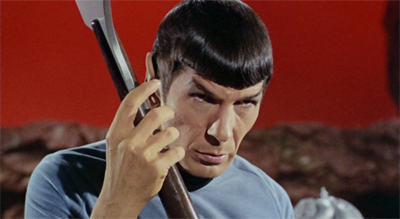
Spock remains as sharp as ever...

Spock remains as sharp as ever…

Continue reading