• Following Us

  • Categories

  • Check out the Archives


  • Awards & Nominations

Star Trek: Voyager – Phage (Review)

This September and October, we’re taking a look at the jam-packed 1994 to 1995 season of Star Trek, including Star Trek: Deep Space Nine and Star Trek: Voyager. Check back daily for the latest review.

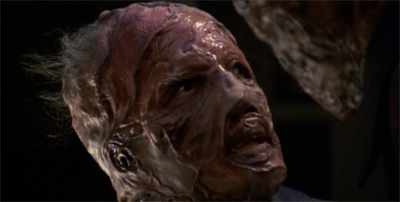
Phage is far from perfect. It is very far from perfect. However, there’s something rather endearing about this cheesy B-movie throwback written by Brannon Braga from a pitch by Timothy DeHass and first draft by Skye Dent. The Vidiians are probably the most memorably and effective aliens from the first three seasons of Star Trek: Voyager, feeling like they could have wandered into the show from some trashy late-night horror movie on another channel.

There’s a pulpy quality to the episode that makes it more enjoyable than many of the surrounding Voyager episodes, albeit one undermined by some of the more awkward resonances in the script.

The Vidiians survive by the skin of their teeth...

The Vidiians survive by the skin of their teeth…

Continue reading

Star Trek: Deep Space Nine – Life Support (Review)

This September and October, we’re taking a look at the jam-packed 1994 to 1995 season of Star Trek, including Star Trek: Deep Space Nine and Star Trek: Voyager. Check back daily for the latest review.

Life Support is the first episode of Star Trek: Deep Space Nine to air after Star Trek: Voyager went on the air. It’s amazing how quickly Deep Space Nine settled back into the role of “the other Star Trek show on television.” A lot of attention was focused on launching Voyager, with the show put in the awkward position of launching (and, in the years ahead, supporting) the new television network UPN. As a result, Voyager got a lot of press and a higher profile.

Deep Space Nine fell back into familiar routines. Life Support is far from an exceptional piece of Deep Space Nine. In fact, it’s a deeply flawed piece of television. However, it feels free of the identity crisis that dominated the first half of the third season. This is Deep Space Nine free of the expectations of being “the only Star Trek on television”, and allowed the freedom to just keep doing whatever it wants to do.

It doesn’t do any of the things that it wants to do particularly well, but it does them in its inimitable way.

Dead air...

Dead air…

Continue reading

Star Trek: Voyager – Time and Again (Review)

This September and October, we’re taking a look at the jam-packed 1994 to 1995 season of Star Trek, including Star Trek: Deep Space Nine and Star Trek: Voyager. Check back daily for the latest review.

It’s really remarkable the sense of self that Star Trek: Voyager had three issues into its run. It took Star Trek: The Next Generation two years to figure out what it wanted to be. Star Trek: Deep Space Nine only really settled down in its fourth season. Star Trek: Enterprise reinvented itself twice before it was cancelled. On the other hand, Voyager just seemed so aware of what it was and what it was going to be within only a few episodes.

Sure, there would be a few changes made in the years ahead. The Borg would appear in the third season; Seven of Nine would join the cast in the fourth. Janeway’s fickleness has yet to be firmly established; the Doctor hasn’t come to the fore. And, yet, three episodes in, it is quite possible to look at Star Trek: Voyager and get a sense of what the next seven years will be like. The shape of things to come.

Time and Again is a time travel story, but it’s also the first time that Voyager pulls a full-on end-of-episode reset. It will not be the last.

Guest starring: anomaly of the week!

Guest starring: anomaly of the week!

Continue reading

Star Trek: Voyager – Parallax (Review)

This September and October, we’re taking a look at the jam-packed 1994 to 1995 season of Star Trek, including Star Trek: Deep Space Nine and Star Trek: Voyager. Check back daily for the latest review.

Parallax feels like a seventh season episode of Star Trek: The Next Generation nested inside a first season episode of Star Trek: Voyager. It’s Brannon Braga’s first script for the show, having opted to join Star Trek: Voyager rather than moving over to Star Trek: Deep Space Nine. Braga would go on to become one of the longest-serving creative forces on televised Star Trek, becoming an executive producer on Star Trek: Voyager and creating (and producing) Star Trek: Enterprise.

Braga is a fantastic high-concept science-fiction writer. His scripts for The Next Generation count among the best the show ever produced – Cause and Effect, Parallels, Frame of Mind. The team of Brannon Braga and Ronald D. Moore ranks as one of the most consistently great collaborations in the history of Star Trek. On his own, Braga writes fascinating sci-fi concepts. His scripts for the various shows support that.

The problem is that Braga isn’t the franchise’s strongest character writer. Indeed, among the staff writers working on the first season of Voyager, Braga seems like the worst candid to draft in to write the big “establishing character dynamics” episode directly following the pilot. The problem with Parallax is that it’s a nice premise featuring a bunch of characters we don’t care about yet, and the script is more interested in the anomaly of the week than it is in getting us to care about those characters.

"It's like looking into the future..."

“It’s like looking into the future…”

Continue reading

Star Trek: Voyager – Caretaker (Review)

This September and October, we’re taking a look at the jam-packed 1994 to 1995 season of Star Trek, including Star Trek: Deep Space Nine and Star Trek: Voyager. Check back daily for the latest review.

So, Star Trek: Voyager.

Where do we begin? Voyager is probably the most divisive and controversial of the Star Trek spin-offs, the one that carries a lot of the blame for the franchise’s decline and decay in the mid to late nineties. It is the series that connects the tail end of the success story that was Star Trek: The Next Generation to the start of the dying gasp that was Star Trek: Enterprise. This spin-off had the misfortune to launch at the height of a revived franchise’s popularity and to finish as public interest waned.

Feels like going home...

Feels like going home…

Star Trek: Voyager felt like an act of hubris. It was positioned by Paramount to be the studio’s highest-profile television show. It was a feature of the television landscape, finally allowing Paramount the chance to leverage its own television network – a plan delayed since the late seventies, but deemed feasible in the mid-nineties. UPN branded itself “the first network of the new century”, a rather arrogant declaration. Caretaker was the first thing broadcast on UPN in early 1995, débuting to an audience of more than 21 million. However, Voyager would never reach those figures again.

Despite that success, things fell apart quickly. None of the shows that aired on UPN’s second night received a second season. The only shows to limp on to renewal from the network’s rocky first year were Voyager, The Sentinel and Moesha. Of these meagre freshmen hits. Voyager lasted the longest, with one more season to its name than Moesha. Over the summer of 1995, it was identified by The Los Angeles Times as the network’s “star survivor”, and the show upon which all of the network’s hopes rested. By 2000, five years later, the network had run up a debt of $800,000.
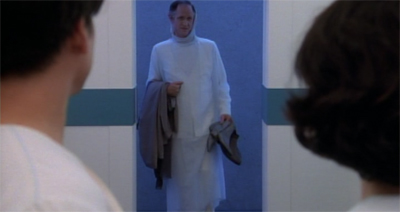
"I hope you don't mind, our tailors measured you while you were unconscious. It's all part of a standard probe."

“I hope you don’t mind, our tailors measured you while you were unconscious. It’s all part of a standard probe.”

That’s a lot of pressure for any television series to bear. Following (and, in the eyes of many, replacing) an illustrious predecessor, supporting the weight of a new television network, pushing into the future while remaining anchored to the past, it’s no wonder that Star Trek: Voyager wound up the confused mess that it became. Indeed, one can recognise many of the problems that would haunt the show through to its final season tied up in this pilot episode.

Continue reading

Star Trek: Deep Space Nine – The Search, Part I (Review)

The September and October, we’re taking a look at the jam-packed 1994 to 1995 season of Star Trek, including Star Trek: Deep Space Nine and Star Trek: Voyager. Check back daily for the latest review.

The Search, Part I is interesting. It is an episode that, in effect, serves as something of a second pilot for the show. It’s an episode that re-conceptualises the show, while taking a great deal of trouble to ensure that any new viewers will be brought up to speed. In fact, The Search is a rather disjointed two-parter as a whole. The first part feels like a lot of set-up with a cliffhanger tacked on to the end of the episode, while the second part is very clearly its own story.

It makes sense. At this point, Star Trek: Deep Space Nine is the only Star Trek on television. It’s a period that doesn’t last, and which is really just a scheduling fluke. The show’s second season continued on past the airing of All Good Things…, the final episode of Star Trek: The Next Generation. The third season began broadcasting before the airing of Caretaker, the pilot of Star Trek: Voyager. Star Trek: Generations was released somewhere in the middle. So the stretch where Deep Space Nine was “the only Trek on television” feels largely illusory.

Still, The Search, Part I feels like a conscious attempt to welcome any wayward Star Trek fans. Including, appropriately enough, new staff writer Ronald D. Moore.

Staring into space...

Staring into space…

Continue reading

Star Trek: Phase II (1978) – In Thy Image (Review)

This June, we’re taking a look at some classic Star Trek movie tie-ins. Check back daily for the latest reviews and retrospectives.

It’s interesting to imagine what might have happened if Star Trek: Phase II had actually made it to television.

The aborted attempt to produce a sequel live-action television show in the late seventies was ultimately scuppered by the success of films like Star Wars and Close Encounters of the Third Kind. Prompted by the success of these big-screen science-fiction epics, Paramount pushed for the franchise to move to the big screen. Star Trek: Phase II was abandoned and the pilot – In Thy Image – was reimagined as the script for Star Trek: The Motion Picture.

Many, including Judith and Garfield Reeves-Stevens, have argued that this was for the best. They wonder whether Phase II could have competed in the saturated science-fiction market of the late seventies. After all, one of the factors that lead to the decline of the franchise in the late nineties was the abundance of similar material out there. Given that the plan was to use Phase II to launch a television network, the obvious point of comparison as Star Trek: Voyager, which is not a favourable comparison.

Still, despite all this, it’s hard not read In Thy Image and wonder at what might have been.

st-iti7

Continue reading

Star Trek: The Next Generation – Up the Long Ladder (Review)

This January and February, we’ll be finishing up our look at the second season of Star Trek: The Next Generation and moving on to the third year of the show, both recently and lovingly remastered for high definition. Check back daily for the latest review.

It’s been a while since Star Trek: The Next Generation has been openly offensive. So, just in case you’d forgotten that this was the same production staff that gave us “Riker beams down to a planet of beautiful women and screws their heads on straight” or “Troi’s womb is occupied by an alien intelligence, isn’t that cute?”, the writing staff have conspired to remind us that just because prejudice doesn’t exist in the 24th century (tell that to the Ferengi!) doesn’t mean that it can’t exist inside a late twentieth century writing room.

Begosh and begorrah! The space Oirish are coming!

"Wait, we're actually filming this?"

“Wait, we’re actually filming this?”

Continue reading

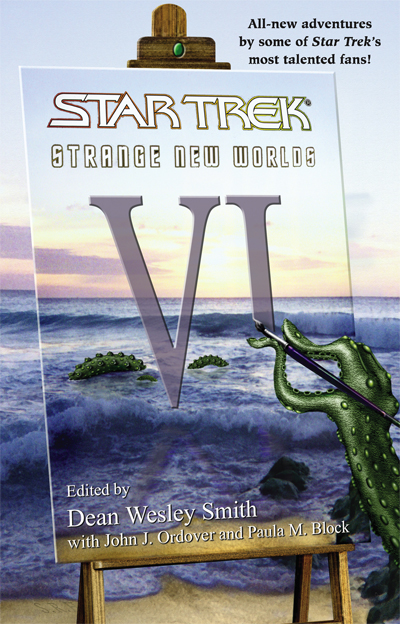
Star Trek: Strange New Worlds VI – The Beginning (Review)

This January and February, we’ll be finishing up our look at the second season of Star Trek: The Next Generation and moving on to the third year of the show, both recently and lovingly remastered for high definition. Check back daily for the latest review.

We’ll be supplementing our coverage of the episodes with some additional materials – mainly novels and comics and films. This is one such entry.

The Borg are, quite possibly, the most significant addition to the Star Trek mythos since the Klingons. They are one of the few modern pieces of Star Trek lore that will be instantly recognisable to a broader audience. They have featured, in some way, in all four of the Star Trek spin-off series. They are constantly rumoured and suggested as a viable antagonist for the rebooted film series. The Borg are a pretty big deal.

And yet, like so many pop culture villains, they seem less threatening the more we know about them. One of the more frequent complaints about the use of the Borg in Star Trek: Voyager was that it made the aliens more familiar, more understandable, more relatable. Continuing to build off the premise of the Borg Queen in Star Trek: First Contact, the Borg became an alien species that Janeway would reason and negotiate with, in stark contrast to Q’s characterisation of the collective in Q Who?

Although Star Trek: Enterprise did manage to turn the Borg’s fascination with mankind into a causal loop, televised Star Trek never managed to produce an origin story for those cybernetic monsters. Ever ready to fill in a perceived blank in the canon, the expanded Star Trek universe has actually proposed a number of origins for the Borg.

st-strangenewworlds6

Continue reading

Star Trek: Deep Space Nine – Season 2 (Review)

Star Trek: Deep Space Nine is twenty years old this year. To celebrate, I’m taking a look at the first and second seasons. Check back daily for the latest review or retrospective.

Well, that’s more like it. The second season of Star Trek: Deep Space Nine might not rank with the very best of the franchise, but it doesn’t have to. Deep Space Nine is still a young show, and Star Trek spin-offs have a long history of taking their time to find their feet. The second season of Deep Space Nine contains its fair share of classic or memorable episodes, but it’s defined by a sense that the producers are still trying to figure out what works and what doesn’t.

While the first season occasionally felt like the series was stumbling back towards safety, trying to become a lighter version of Star Trek: The Next Generation as faith in its premise wavered, the second season is a lot more confident in itself. It’s willing to play around a bit to figure out how to be the show that it wants to be. And there’s a sense, as the season winds to a close, that we’re almost there.

By the time we hit the second half of the season, it seems the show has learned to churn out inoffensive episodes that feel unique and distinctively Deep Space Nine – episodes like Playing God or Shadowplay. However, it’s in the final third that the show seems to figure out how make truly great episodes of Deep Space Nine.

ds9-playinggod22

Continue reading