• Following Us

  • Categories

  • Check out the Archives


  • Awards & Nominations

Non-Review Review: The Amazing Spider-Man II

What is remarkable about Marc Webb’s The Amazing Spider-Man II is how much it resembles a comic book. Not a particular comic book – although there are numerous shout-outs to iconic Spider-Man moments, right down to the choice of costuming – but in general terms. It isn’t that Marc Webb tries to construct his film to evoke the look and feel of a comic book – this isn’t Ang Lee’s Hulk; in fact, Webb seems much more comfortable here than he was with The Amazing Spider-Man, making a movie that feels more playful and relaxed within its medium.

Instead, The Amazing Spider-Man II borrows the structure of a comic book. It offers its own story, but that story isn’t constructed particularly tightly. Instead, the story seems to have been fashioned as part of a greater – as if part of a larger serialised narrative that has yet to take form. It’s quite distinct from the approach taken with Marvel’s Cinematic Universe, where the films feel more like blocks that fit together. Instead, this feels more like the second chapter in a larger story, without being dissolved completely into the larger narrative.

The Amazing Spider-Man II has its own themes and motifs, and it documents a pretty epic selection of events, but the emphasis isn’t so much on this one encounter as what this encounter says about its hero. It’s much more interested in what these events tell us about our hero than it is in documenting a single self-contained story. It’s a novel (and somewhat bold) attempt at a serialised superhero narrative, and the results are absolutely fascinating.
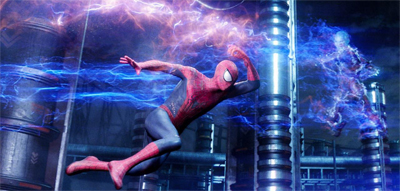
Electro-fying!

Electro-fying!

Note: The Amazing Spider-Man II is probably best seen absolutely blind, with no real information about its themes or the story beats that it might hit. I do try to keep the reviews as spoiler-light as possible (and we do have a spoiler-laden review available for your perusal), but if you are interested in seeing the film – I would recommend avoiding any discussion or review. It is good, if flawed; endearingly ambitious and engagingly bold; it does a lot of great things that excuse some cliché plotting, sacrificing novelty in some areas for storytelling efficiency.

Continue reading

The Amazing Spider-Man – The Gauntlet: Morbius – It Is The Life (Review)

This April, to celebrate the release of The Amazing Spider-Man 2, we are taking a look at some classic and modern comics featuring Spider-Man (and friends). Check back daily for the latest review.

At a scant fourteen pages (sharing a single issue with a larger Flash Thompson story), It is the Life feels like something of an interlude in the large scheme of The Gauntlet. While most of the stories in the cycle are relatively short and contained (with nothing running over four issues), this is an exceptionally brief encounter between Spider-Man and one his older foes-turned-allies.

At the same time, writer Fred Van Lente manages to pile a lot into the fourteen pages of It is the Life, maintaining a wonderful thematic consistency across the line. Editor Stephen Wacker has done a wonderful job managing his team of “web-heads” and making sure that The Gauntlet remains internally consistent and on-point. Despite the diversity in talent working on the sprawling Spider-Man epic, it never feels like the larger threads get away from any of the writers.

Even a short fourteen-page interlude manages to hit on many of the event’s core themes.

What's at stake?

What’s at stake?

Continue reading

The Amazing Spider-Man – The Gauntlet: Electro – Power to the People (Review/Retrospective)

This April, to celebrate the release of The Amazing Spider-Man 2, we are taking a look at some classic and modern comics featuring Spider-Man (and friends). Check back daily for the latest review.

Trying to channel Batman while writing Spider-Man is a risky business. The two characters are iconic – each can make a credible claim to be the most iconic character at their publisher, and perhaps the most iconic superhero ever. Both have imprinted themselves on the public consciousness; both have enjoyed multiple iterations across cartoons and movies; both have iconic stories and popular runs, as well as bucket loads of merchandise; both have truly wonderful supporting casts.

However, trying to use Spider-Man to evoke Batman is a risky move. You can end up with a mess like Spider-Man: Reign, demonstrating that the dark cynicism many associate with the Caped Crusader does not translate to the wall-crawling web-head. Alternatively, you get a sense that what makes Peter Parker unique and appealing is being crushed in a desire to fit a round peg in a square hole, like with The Amazing Spider-Man.

Shocking...

Shocking…

That said, The Gauntlet is a pretty spectacular Spider-Man story, one only enhanced by its similarities to the iconic Batman saga Knightfall. It’s a massive sprawling epic that seems to have been written with those comparisons in mind, with the writing staff very cleverly using the story as a springboard to emphasise the differences between Spider-Man and Batman. The Gauntlet, like Knightfall, is fundamentally a story about trying to break the central character a sinister new adversary launches a sustained assault using a collection of classic baddies.

However, The Gauntlet serves as an argument that Peter Parker can never be completely consumed by darkness. Even in his darkest hours, even when the story twists in a way that it really shouldn’t, there is an inherent optimism and reserve of strength and hope that keeps Spider-Man from tipping completely into the abyss. The entire Knightfall saga is about Batman clawing his way back from the abyss. The Gauntlet is about how Spider-Man really can’t be pushed into that abyss in the first place.

Swinging into action...

Swinging into action…

Continue reading

J. Michael Straczynski’s (and Ron Garney’s) Run on the Amazing Spider-Man – Civil War (Review/Retrospective)

This April, to celebrate the release of The Amazing Spider-Man 2, we are taking a look at some classic and modern comics featuring Spider-Man (and friends). Check back daily for the latest review.

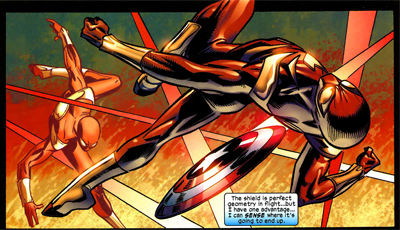
Spider-Man is a pretty important character in the whole Civil War event. Indeed, he’s probably the event’s third most important character – aside from Captain America and Iron Man. So it makes sense that J. Michael Straczynsi’s extended run on The Amazing Spider-Man would stop and engage with the massive crossover spanning the entire Marvel Universe. And, from a logistical “structuring a comic book crossover tie-in so it makes any sense to a reader picking up the book” point of view, Straczynski does a great job. You can read The Amazing Spider-Man without needing to even pick up the Civil War miniseries.

However, as a piece of writing on its own merits, Straczynski’s Amazing Spider-Man tie-in is a mess. Straczynski’s Amazing Spider-Man run has been collecting trouble aspects for quite some time, particularly when Straczynski seemed to brush up against the editorial demands for the book. Sins Past was perhaps the most obvious example, but with Civil War the comic entered a phase where it was pretty much an editorial means to an end. Everything from this point on was pushing towards One More Day, an event that would wipe decades of continuity from the title. (Including Straczynski’s run.)

Civil War really gets the ball rolling on these sweeping editorially-mandated changes, but that’s not the only problem with the story arc. Given Spider-Man’s importance to Civil War, and his role as defector from one side to the other, it seems like Spider-Man would really be the perfect lens through which Straczynski could explore the issue. Unfortunately, it quickly becomes clear upon which side of the issue Straczynski comes down.

A tangled web...

A tangled web…

Continue reading

Spider-Man: Reign (Review/Retrospective)

This April, to celebrate the release of The Amazing Spider-Man 2, we are taking a look at some classic and modern comics featuring Spider-Man (and friends). Check back daily for the latest review.

Spider-Man is not Batman.

This really should be self-evident, but it doesn’t seem to be. The biggest problem with Marc Webb’s The Amazing Spider-Man was that it wasted a lot of time telling audiences an origin story they all knew and had last seen a decade earlier. The second biggest problem was that the movie seemed to want to be a Batman film. There are a variety of tropes and conventions that work much better in a Batman story than they ever will in a Spider-Man story, and vice verse.

Unfortunately, The Amazing Spider-Man is far from the only Spider-Man story to make this mistake. Spider-Man: Reign, written and illustrated by Kaare Andrews, is essentially an attempt to use Spider-Man to tell another version of The Dark Knight Returns. It goes about as well as you might expect. (That is: not at all.)

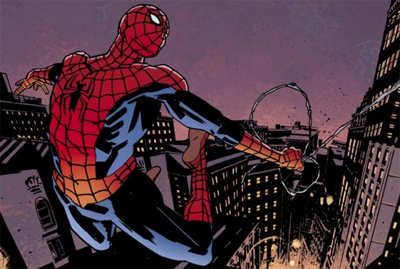
Swinging through the night...

Swinging through the night…

Continue reading

Non-Review Review: Red Riding – The Year of Our Lord 1974

This is the North. We do what we want.

– Craven explains how things work to Eddie

Red Riding is certainly an ambitious effort. David Peace wrote four books exploring violence and corruption in Yorkshire, centring around the morbid history of brutality in the North. Occupying a strange ethereal realm between fact and fiction, sometimes those crimes are fictionalised, but sometimes real murders and murderers intersect. The child murders of this first instalment, Red Riding: 1974, evoke the infamous Moors murders in Manchester during the sixties, while the arrest of an innocent party calls to mind the case of Stefan Kiszko. Adapting the series of four books into a trilogy of films, Red Ridingmakes for a fascinating – if gloomy – exploration of the darker pages in the region’s cultural history.

He’s gone far (Gar)field…

Continue reading

Dan Slott’s Run on The Amazing Spider-Man – Spider-Island (Review/Retrospective)

Dan Sott’s Amazing Spider-Man run has been pretty well received by fans. Credited with giving the title a sense of fun after the continuity-tangling mess of One More Day, Slott has managed to inject some fun back into the franchise. Or so I’ve heard. Despite being a fan of Slott’s Mighty Avengers, I remain somewhat disappointed that there’s been no effort made to collect his Amazing Spider-Man run into either an omnibus or an oversized hardcover collection. Still, I recently had the pleasure of devouring Slott’s Spider-Island plotline in a nice oversized hardcover, and I have to admit that I was more than a little impressed with Slott’s epic “event” comic book.

New York, New York, it's a hell of a town!

Continue reading

Non-Review Review: The Amazing Spider-Man

The Amazing Spider-Man is a jumble of clever ingredients thrown into a pot, stirred for two hours and yet never managing to produce that ideal flavour. There are moments in Marc Webb’s adaptation that are fantastic, as good as anything Raimi brought to the best of his films in the series, Spider-Man II. However, there’s also simply too much going on here for its own good. Running for two-hours-and-a-quarter, the film feels like one-part origin to two-part stand-alone adventure, unsure whether it should it is trying to rush through the motions of one of the most iconic origin stories ever told or if it’s trying to bring something a bit deeper to the table. When it gets going, it’s a solidly entertaining piece of film that does try to do something just a little new with the superhero formula, but it suffers from the same identity crisis as its lead and struggles to really find its own voice.

Peter’s not quite on top on the world…

Continue reading

Emo Spider-Man & Going Against the Nerd: It Isn’t Easy Being Geek…

The Amazing Spider-Man trailer debuted during the week and it was… kinda okay, I suppose. Nothing too shocking or gripping or incredible, and nothing to push it too high on a “must see” list that includes The Dark Knight Rises and The Avengers as two massive hits for my superhero fix. However, I was surprised at the rather immediate response from relatively mainstream sources to “emo Spider-Man.” Even non-geeks seem to have picked up on the fact that Peter Parker in a hoodie hunched over a text book is not a good sign. Surely Spider-Man III taught us that “goth Spider-Man” is not a good idea?

Continue reading

Ultimate Spider-Man Collection (Hardcover Volumes #1-3) (Review/Retrospective)

In 2000, Marvel did something genuinely bold with one of its pop culture icons. Of course, the early part of the last decade saw a breath of fresh air at the House of Ideas, with iconic and influential (and occasionally iconoclastic) runs on books like New X-Men, Fantastic Four, Amazing Spider-Man, X-Statix, Punisher and other titles like Daredevil or Alias. However, the formation of the Ultimate line of comics was perhaps the most significant creative gamble taken at the time. The idea was simple, and the timing perfect. With Sam Raimi’s Spider-Man around the corner, and Bryan Singer’s X-Men proving that superheroes were the stuff of summer blockbusters, it seemed like a perfect opportunity to launch a line of books that would be easily accessible to new readers, free from decades of tangled continuity and plot developments.

And, appropriately enough, the character chosen to spearhead this new line was arguably Marvel’s most iconic character, Spider-Man.

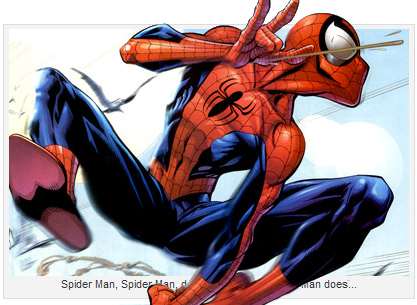
spidey

Continue reading