• Following Us

  • Categories

  • Check out the Archives


  • Awards & Nominations

Star Trek: Enterprise – Precious Cargo (Review)

Next year, Star Trek is fifty years old. We have some special stuff planned for that, but – in the meantime – we’re reviewing all of Star Trek: Enterprise this year as something of a prequel to that anniversary. This April, we’re doing the second season. Check back daily for the latest review.

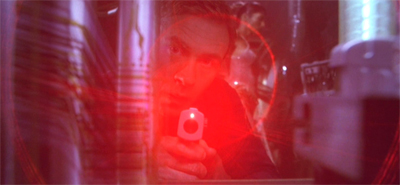
Precious Cargo is a disaster. It is a spectacularly terrible piece of television. It is the kind of episode that fans point towards when they want to belittle or diminish Star Trek: Enterprise.

To be fair, it isn’t as if the show has the monopoly on bad episodes of the franchise. After all, the original Star Trek gave us And The Children Shall Lead, The Way to Eden and The Apple. Star Trek: The Next Generation gave us Code of Honour, Angel One, The Child and Up the Long Ladder. Star Trek: Deep Space Nine produced Let He Who Is Without Sin, Profit and Lace and The Emperor’s New Cloak. Star Trek: Voyager is responsible for Fair Haven and Spirit Folk. When you produce twenty-something episodes of television a year, terrible episodes happen.
We are Trip, of Bored...

We are Trip, of Bored…

Indeed, they will keep happening. Precious Cargo cannot even make an indisputable claim to being the weakest story of the troubled second season. There are fans who will argue that A Night in Sickbay or Bounty deserve that accolade. Nevertheless, it seems like everyone is agreed that Precious Cargo is a disaster from start to finish. It is a collection of pulpy science-fiction clichés that feels overly familiar, a lazy comedy without any solid jokes and a complete lack of chemistry between the two leads.

Precious Cargo is a spectacular misfire, an ill-judged and poorly-constructed addition to the franchise.

"Wait, another Trip comedy episode?"

“Wait, another Trip comedy episode?”

Continue reading

Star Trek: Enterprise – Vanishing Point (Review)

Next year, Star Trek is fifty years old. We have some special stuff planned for that, but – in the meantime – we’re reviewing all of Star Trek: Enterprise this year as something of a prequel to that anniversary. This April, we’re doing the second season. Check back daily for the latest review.

Vanishing Point continues the “remix” formula that we’ve come to expect from the second season of Star Trek: Enterprise. In particular, Vanishing Point is a rather heady Star Trek: The Next Generation cocktail. It has shades of Remember Me, Realm of Fear, The Next Phase and even The Inner Light – with a healthy dose of Brannon Braga’s questions about the nature of reality. All of these elements blend together to form Vanishing Point, an episode that feels overly familiar and rote despite an intriguing set-up.

It is a shame that it doesn’t work better. Vanishing Point brings us back to the idea that Archer and his crew are pioneers in space exploration. The teaser reminds us that the crew of the Enterprise still don’t take the transporter for granted – that it is still something of a mystery to them, despite the audience’s familiarity with the device. Vanishing Point feels like the first time that Enterprise has emphasised this sense of novelty and inexperience since the first season.

Reflections...

Reflections…

However, the episode feels like something of a disappointment. The entire story turns out to be a gimmick and a twist. There is nothing wrong with this sort of storytelling. After all, the franchise has played these sorts of games before. Indeed, some of Braga’s best scripts – Frame of Mind and Projections come to mind – touch on similar ideas with similar twists. The problem with Vanishing Point is that these twists seem a bit too loose or too disconnected to properly resonate.

Vanishing Point feels like the rough sketch of a good episode doodled quickly on the back of a napkin, a collection of connective clauses all designed to keep the story ticking for forty-five minutes before ending on a fairly stock twist. There is a great deal of potential here, but Vanishing Point never quite delivers on it.

Trip Tucker: Space Tourist...

Trip Tucker: Space Tourist…

Continue reading

Star Trek: Enterprise – The Communicator (Review)

Next year, Star Trek is fifty years old. We have some special stuff planned for that, but – in the meantime – we’re reviewing all of Star Trek: Enterprise this year as something of a prequel to that anniversary. This April, we’re doing the second season. Check back daily for the latest review.

One of the biggest problems with positioning Star Trek: Enterprise as a prequel is that the original Star Trek was very much a product of its time. It is very difficult to line-up a television show broadcast in the early years of the twenty-first century with a series that was produced towards the end of the sixties. It is a completely different world, and so the show itself must inevitably be completely different.

This reflects itself in the production design of Enterprise. One of the more frequent fan complaints about the series concerns the design of the new ship. After all, it doesn’t look like anything Matt Jefferies would design. If anything, it looks like the missing link between a modern submarine and the Defiant from Star Trek: Deep Space Nine. All the pastels and mood lighting have been replaced with functional grey and buttresses. Kirk’s Enterprise and Archer’s Enterprise speak to two different aesthetics.

"What we've got here is failure to communicate..."

“What we’ve got here is failure to communicate…”

Of course, it is possible to land a little closer to the classic design as Scott Chambliss demonstrated with his work on JJ Abrams’ reboot. Then again, this only reinforces the point. The general mood and tone of design when Star Trek hit cinema screens in 2009 was markedly different from the mood and tone of design when Broken Bow first aired in 2001. It just so happened that one was more compatible with Jefferies’ original vision than the other. (And even then, Chambliss’ update is markedly different.)

However, while the design of the ship itself is a handy indicator of just how difficult it is to line up a show produced in the first decade of a new millennium to a show produced before man walked on the moon, there are more substantial cultural and social differences at play. The Communicator is another second season Star Trek mash-up, this time taking the ending of A Piece of the Action and offering a perfect example of how Enterprise could never be an entirely comfortable companion to classic Star Trek.

"Westmore's not gonna like this..."

“Westmore’s not gonna like this…”

Continue reading

Star Trek: Enterprise – A Night in Sickbay (Review)

Next year, Star Trek is fifty years old. We have some special stuff planned for that, but – in the meantime – we’re reviewing all of Star Trek: Enterprise this year as something of a prequel to that anniversary. This April, we’re doing the second season. Check back daily for the latest review.

A Night in Sickbay may be the most divisive episode of Star Trek: Enterprise ever broadcast.

On the one had, it seems like fans hated the episode with an incredibly passion. The Agony Booth described A Night in Sickbay as “the worst episode of one of the most cringe-worthy shows of the last ten years.” The episode is frequently included in those very popular “worst episodes ever!” polls that the internet loves so much. The only episode that seems more certain to provoke fan vitriol is These Are the Voyages…, the series finalé which has little to say about the actual series.

"I am THIS sorry..."

“I am THIS sorry…”

However, the hatred for A Night in Sickbay is not universal. It was one of two Enterprise episodes to make the shortlist for the 2003 Hugo Award for Best Dramatic Presentation in the “short form” category. More than that, A Night in Sickbay actually polled ahead of the other nominated episode of Enterprise, Carbon Creek. Even in commercial terms, A Night in Sickbay was a success, earning the highest ratings (and share) of the show’s second season.

It seems that A Night in Sickbay exists in a rather strange grey area. It enjoys the support and appreciation of members of the cast and even those outside Star Trek fandom, while it provokes nothing but hatred from hardcore fans. This immediately makes A Night in Sickbay a fascinating watch; any show that can provoke such a polarising response must have some interesting aspects.

Smile!

Smile!

Continue reading

Star Trek: Enterprise – Dead Stop (Review)

Next year, Star Trek is fifty years old. We have some special stuff planned for that, but – in the meantime – we’re reviewing all of Star Trek: Enterprise this year as something of a prequel to that anniversary. This April, we’re doing the second season. Check back daily for the latest review.

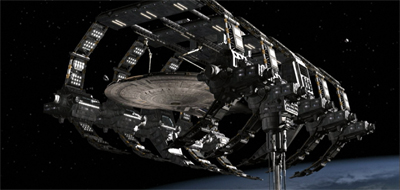
Dead Stop is an interesting beast.

One of the stronger episodes from the second season of Star Trek: Enterprise, Dead Stop follows on directly from the events of the previous episode without serving as a direct continuation. It is very rare to see this approach taken on Star Trek, and it’s the perfect example of the sort of episode-to-episode connections that were lacking during the show’s first two seasons. Dead Stop is not a direct follow-on to Minefield, but it is fascinated with the fallout from that episode.

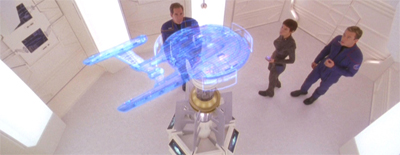
A model ship...

A model ship…

And yet, despite this, Dead Stop is also based around one of the most generic premises imaginable – a sentient space station with a sinister agenda. With a few choice edits, the premise could easily be adapted for Star Trek: The Next Generation or Star Trek: Voyager. Indeed, it’s not too difficult to imagine Kirk and Spock dealing with the rogue space station at some point during their five year mission. It is a story that could – in broad strokes – even work for a television anthology series.

The beauty of Dead Stop is the way that it blends these two conflicting elements together, to construct a show that feels like it showcases the best parts of Enterprise while working from a core story that could be told across the franchise.

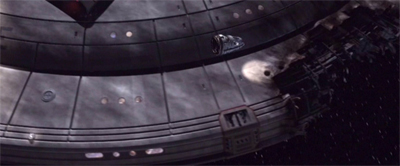
Piecing it together...

Piecing it together…

Continue reading

Star Trek: Enterprise – Carbon Creek (Review)

Next year, Star Trek is fifty years old. We have some special stuff planned for that, but – in the meantime – we’re reviewing all of Star Trek: Enterprise this year as something of a prequel to that anniversary. This April, we’re doing the second season. Check back daily for the latest review.

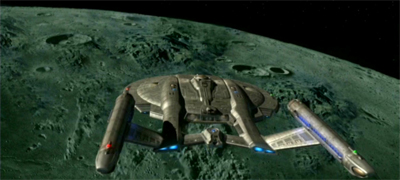
Although it was the second episode of the season broadcast, Carbon Creek was the first episode of the second season produced.

There are a variety of reasons for this. The fact that it only featured three primary cast members would have meant that everybody else got a little extra vacation time. With a lot of location shooting and a production design outside the Star Trek norm, it likely made sense to get it out of the way first. From a budgeting and production standpoint, the show likely benefited from a bit more time than episodes like Shockwave, Part II or Minefield.

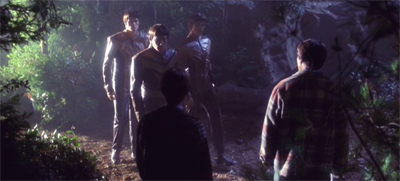
"We come in peace...

“We come in peace…”

However, even outside of these pragmatic production concerns, Carbon Creek helps to set the tone for the second season of Star Trek: Enterprise. It is a largely nostalgic and romantic exercise, a rather light stand-alone episode that feels like it wallows in the iconography and conventions of Star Trek. Indeed, the teleplay is credited to Chris Black, the only new writer to survive the writing staff departures that Mike Sussman jokingly referred to as “purges.”

Black is in many respects the first “native” Enterprise writer – the first writer to last more than a season who had not worked on Star Trek: Voyager. As such, it seems only appropriate that he should set the tone for the season ahead.

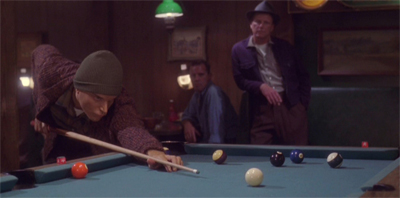
Vulcan hustle...

Vulcan hustle…

Continue reading

Star Trek: Enterprise – Shockwave, Part II (Review)

Next year, Star Trek is fifty years old. We have some special stuff planned for that, but – in the meantime – we’re reviewing all of Star Trek: Enterprise this year as something of a prequel to that anniversary. This April, we’re doing the second season. Check back daily for the latest review.

Shockwave, Part I was one of the stronger episodes of the first season of Star Trek: Enterprise.

Shockwave, Part II is not one of the stronger episodes of the second season of Star Trek: Enterprise.

"Tell me how many seasons we get!"

“Tell me how many seasons we get!”

Continue reading

Star Trek: Enterprise – Season 1 (Review)

Next year, Star Trek is fifty years old. We have some special stuff planned for that, but – in the meantime – we’re reviewing all of Star Trek: Enterprise this year as something of a prequel to that anniversary. This January, we’re doing the first season. Check back daily for the latest review.

The first season of Star Trek: Enterprise is caught at a crossroads.

On the hand, it needs to be something new and exciting. The first Star Trek show of the new millennium, Enterprise has to find a way of updating the franchise and pushing forward. It has to find a way to challenge audience expectations and demonstrate that – after fourteen consecutive years and twenty-one overlapping seasons – Star Trek still has something fresh and exciting to offer fans. After all, the television landscape had changed significantly since the late eighties. It was time for Star Trek to change with it.

ent-brokenbow3

On the other hand, there’s a clear desire to seek familiar comforts. Star Trek has been on the air consistently for over a decade now. That wouldn’t be the case if the franchise didn’t have its own merits. There’s a sense that the first season of Enterprise is drawn to the idea that it can keep doing what worked before, offering generic Star Trek stories with a new cast and a new theme tune. This is still Star Trek, after all. There’s nothing gained by changing it to the point where it is unrecognisable.

Throughout the first season, these two impulses seem to be at odds with one another, leading to a surreal sense of whiplash. Episodes that feel as unique as Breaking the Ice, Dear Doctor or Shuttlepod One sit alongside generic shows like Civilisation, Sleeping Dogs or Rogue Planet. The show frequently pushes itself in interesting directions, only to pull relent as it approaches the point of committal. The result is a first season that is uneven, but intriguing, one that has great potential – if not necessarily the will to fulfill it.

ent-shockwavepart1m Continue reading

Star Trek: Enterprise – Shockwave, Part I (Review)

Next year, Star Trek is fifty years old. We have some special stuff planned for that, but – in the meantime – we’re reviewing all of Star Trek: Enterprise this year as something of a prequel to that anniversary. This January, we’re doing the first season. Check back daily for the latest review.

Re-watching a television show with the benefit hindsight is a particularly intriguing experience. Knowing that certain plot lines or character threads will or won’t pay off can be a liberating experience. While a disappointing ending to a particular story can undermine a lot of what came before, foreknowledge of the inevitable anticlimax allows the viewer to manage their expectations and temper their enthusiasm. It stops the viewer from getting too involved with threads that lead to dead ends, and heightens appreciations for those that pay dividends.

The Temporal Cold War plot on Star Trek: Enterprise never went anywhere. This is rather obvious in hindsight, given that it has been a decade since the end of the show. However, it’s worth acknowledging that many viewers correctly predicted as much on the initial airing of Broken Bow in late 2001. None of the questions raised will be answered, none of the plot threads will be resolved. It will just sit there, nestled snugly in the heart of this Star Trek spin-off, possibly embodying the show’s unfulfilled potential.

Enterprise isn't quite going to make it to seventh (season) heaven...

Enterprise isn’t quite going to make it to seventh (season) heaven…

While the Temporal Cold War lacks a clear resolution, it does provide the impetus for some pretty good storytelling on its own terms. In many respects, the plot works best when it exists as a driving force in the background of an episode – rather than being pushed to the fore. This is probably why Cold Front and Shockwave, Part I work much better than episodes like Shockwave, Part II – episodes that use the Temporal Cold War as a jumping off point to character work and development, rather than an end of itself.

Shockwave, Part I is notable for ending the first season of Enterprise on a cliffhanger. This was the first time that the opening season of a Star Trek had show had closed on a cliffhanger. The other shows closed out their freshman season with open-ended stand-alone stories, with the last episodes in the first seasons of Star Trek: Deep Space Nine and Star Trek: Voyager emphasising how far their cast had come. In contrast, Shockwave, Part I closes the first year of Enterprise on an honest to goodness “to be continued.” And a good one at that.

Seeking a friend at the end of the world...

Seeking a friend at the end of the world…

Continue reading

Star Trek: Enterprise – Two Days and Two Nights (Review)

Next year, Star Trek is fifty years old. We have some special stuff planned for that, but – in the meantime – we’re reviewing all of Star Trek: Enterprise this year as something of a prequel to that anniversary. This January, we’re doing the first season. Check back daily for the latest review.

To be fair to Two Days and Two Nights, the episode itself isn’t a bad idea.

The stronger episodes of the first season have been those willing to allow the cast a bit of room to define their characters, luxuriating in the human side of mankind’s first real adventure to the stars. Episodes like Breaking the IceCold Front and Shuttlepod One were all built around character moments and interactions, featuring relaxed plotting that left room for the cast to develop their roles.

"So I'm coolin' at a bar, and I'm lookin' for some action.  But like Mike Jagger said, I can't get no satisfaction."

“So I’m coolin’ at a bar, and I’m lookin’ for some action.
But like Mike Jagger said, I can’t get no satisfaction.”

In theory, Two Days and Two Nights does the same thing. Essentially a “holiday episode”, the show features the senior staff of the Enterprise taking two days of vacation time on the surface of Risa. A series of loosely-connected adventures ensue, following members of the main cast as they try to take a break from it all. No points for guessing that very few members of the crew actually get the relaxing vacation they had hoped for.

The problem is that the plot threads all feel a little tired and awkward, coalescing into a Star Trek comedy episode that simply isn’t funny.

It all falls down...

It all falls down…

Continue reading